Struck down, but not destroyed

Sermon


Service

To download this video, press here to go to the download page. You may need to scroll down to see the download button.

Download Bulletin

Sermon for the Beheading of John the Baptist (Aug. 29)

Jeremiah 1:17-19 + Mark 6:17-29

I was already planning on commemorating the Beheading of John the Baptist today, when the news came in this morning about that wretched man, pretending to be a woman, who struck down over a dozen Christian school children as they attended Mass at their Catholic church. At least two of them were killed, while the rest were injured. Before the shooting, that servant of Satan had written a question on one of his rifle magazines. “Where was your God?”

Well, where was He? He was in the same place He was when the children of Bethlehem were struck down by King Herod the Great, the same place He was when John the Baptist was struck down by Herod’s wicked son, also named Herod, the same place He was when His own beloved Son was struck down by Pontius Pilate, who had conspired with the Jews, and with that same Herod in Jesus’ trial. God was there, using the evil intentions of wicked men to work all things together for good to those who love Him.

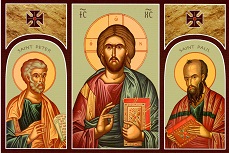
You know how much St. Paul also suffered in the name of this God. He was eventually beheaded, just as John the Baptist was. Even before that, he wrote this to the Corinthians. For what we proclaim is not ourselves, but Jesus Christ as Lord, with ourselves as your servants for Jesus’ sake…We are afflicted in every way, but not crushed; perplexed, but not driven to despair; persecuted, but not forsaken; struck down, but not destroyed; always carrying in the body the death of Jesus, so that the life of Jesus may also be manifested in our bodies. Paul was referring to himself and his fellow ministers of the Gospel, but his words apply to all Christians, including those Christian children who were struck down today, including also the prophet whose death we commemorate this evening, John the Baptist. They were struck down, but not destroyed.

What we proclaim is not ourselves, but Jesus Christ as Lord. That’s exactly what John had done when the Pharisees sent messengers to ask him who he was. I am not the Christ, he said, or Elijah, or the Prophet. I am the voice of one calling in the desert, Make straight the way of the Lord! John attracted large crowds to himself, but he didn’t preach, Look at me! Look at me! He pointed to Jesus and preached, Look, the Lamb of God who takes away the sin of the world! And when John’s disciples were bothered by the fact that many of John’s other disciples were leaving him as their teacher and going off to follow Jesus, the sentiment of John’s words is echoed in what Paul wrote to the Corinthians: You yourselves bear me witness, that I said, ‘I am not the Christ, but I have been sent before him.’ The one who has the bride is the bridegroom. The friend of the bridegroom, who stands and hears him, rejoices greatly at the bridegroom’s voice. Therefore this joy of mine is now complete. He must increase, but I must decrease.

And John did decrease from then on. He didn’t stop preaching, but instead of gathering more listeners, he attracted fewer and fewer. And then, as part of his office as a prophet in Israel, he “spoke truth to power.” He publicly preached against a public sin that had been committed by King Herod—Herod Antipas, tetrarch or “king” of the region of Galilee, the son of Herod the Great, who killed all those baby boys soon after Jesus was born. It was this same Herod Antipas before whom Jesus would eventually stand trial on Good Friday. This Herod had married Herodias, the ex-wife of his half-brother Herod II, also known as Herod Philip. Now, that was fine according to Roman law, and American law would certainly permit such a thing. But it was plainly forbidden by God’s Old Testament Law for an Israelite to marry his brother’s wife while his brother was still alive. So John simply, and fearlessly, and publicly denounced the king: It is not lawful for you to have your brother’s wife.

That was all. John didn’t incite an insurrection or try to get Herod dethroned. He just rebuked the king for his sin. But to publicly rebuke a ruler at that time was no harmless thing. There was no First Amendment-guaranteed free speech in Roman-occupied Israel. Didn’t John know he would be in danger for rebuking the king? Of course he knew. But unlike the average Jew, who had no call from God to publicly rebuke kings, John had been called by God to be a prophet, to speak the truth of God’s Word with divine authority, whether it was the Law that condemns sin or whether it was the Gospel that pointed penitent sinners to Christ. And as a prophet, John had the same command and the same promise from the Lord that the prophet Jeremiah had: Speak to them all that I command you. Do not be afraid of them, that I would cause you to be shattered before them. For behold, I have made you this day a fortified city, an iron pillar, and a bronze wall against the whole land, against the kings of Judah, against her princes, against her priests, and against the people of the land. And they will fight against you, but they will not prevail against you, for I am with you,” says the LORD, “to deliver you.”

The Lord delivered Jeremiah from being put to death by the Jews, but not from being kidnapped and abused by them. Nor did He deliver John the Baptist, whom Jesus proclaimed to be the greatest prophet ever to be born. Instead, the Lord allowed John to be arrested, imprisoned, and, eventually, beheaded at the whim of Herodias the adulteress and her wicked daughter, who got what she asked for: John’s head on a platter.

It’s so disgusting, so vile. It seems so meaningless, almost a bad joke. John, the greatest prophet, didn’t go out in a blaze of glory. He went out in shame and disgrace, from a human perspective. Instead of delivering him out of the hands of the wicked, God delivered John right into the hands of the wicked and gave the wicked exactly what they wanted.

Yes, John was struck down. But not destroyed, because eternal life, the unending life God has promised to those who love Him, is real. If a peaceful, happy, comfortable life on earth were the goal of human existence, then John would be among the biggest losers of all time. But that isn’t our goal. That isn’t the prize that God promises, not to His prophets, not to any of His children. He doesn’t promise a long, comfortable life on earth, or a peaceful earthly end. What He promises is that, even after our earthly end, no matter how shameful or painful or violent it may be, we will not be destroyed. We will not “taste death.” We will not lose out on the heavenly inheritance He has granted to all who believe and are baptized. On the contrary, He says, “Be faithful unto death, and I will give you a crown of life.”

Are you ready to end up like John? Preachers have to be. But so do all Christians, even our children, as we heard again in the brutal news coverage today. That’s why I actually find John’s beheading to be extremely comforting. Not that anyone hopes to be imprisoned or beheaded or gunned down. But it helps us not to be so terribly shocked when Christians are hated, targeted, and mistreated in the world. We have God’s own testimony that John was a faithful minister in His sight. And the fact is, sometimes faithful ministers, like John, like the apostle Paul, like Jesus Himself and most of the apostles, and countless Christians throughout the ages, including Christian children, suffer persecution, violence, shame, and death simply because they bear the name of Christ, which the devil hates, which the world aligned with the devil hates.

All the world sees when Christians are struck down is tragedy, abandonment by God, and failure. But that’s not the reality. The reality is that God has not hidden any of this from us, nor has He deceived us into thinking it would be any different. He told us exactly what we should expect from the world in this world. Hatred, rejection, scorn, and violence. Just as John did. Just as Jesus did. But even though they were struck down by the world, they ended their lives with God’s approval, being struck down, but not destroyed, with Jesus’ resurrection from the dead being the primary testimony of that, the proof that all who have been struck down for His sake will rise again in victory on the Last Day, while those who struck them down will suffer eternal wrath and torment for their crimes.

The beheading of John the Baptist forces us to confront the question, what are we really in this for, this preaching ministry, or this Christianity itself? What do we hope to get out of it? What do we expect from God? If the answer isn’t “Christ—only Christ, and His approval, and the future life that He won for us on the cross and that He has promised to give us,” then we’re in it for the wrong reasons and might as well get out now, because that religion, whatever it may be, is not Christianity. It’s a worthless sham. But if the answer is “Christ,” then we can smile in the face of the executioner, and in the face of any hardship or persecution or trial. We may be afflicted in every way, but we will not be crushed; perplexed, but not driven to despair; persecuted, but not forsaken; struck down, but not destroyed.

So pray for the conviction you need to face whatever the world might throw at you, so that, when the time comes, you’re ready to speak, ready to confess, ready to offer up your head, because you know the One in whom you have believed, that He will not abandon you to the grave, but will reunite your body with your head and give you a much better life in the life to come. Amen.

Posted in Sermons | Tagged , | Comments Off on Struck down, but not destroyed

Work while it is day, before the coming night

Sermon

Download Sermon

Service

To download this video, press here to go to the download page. You may need to scroll down to see the download button.

Download Service Folder Download Bulletin

Sermon for Trinity 10

1 Corinthians 12:1-11 + Luke 19:41-48

Last week, we heard St. Paul recount some of the terrible punishments that came upon Old Testament Israel when they stubbornly disobeyed God’s commandments. Today, we hear Jesus speak of a destruction that would be far worse. On the 10th Sunday after Trinity Sunday, the Church has traditionally remembered the destruction of Jerusalem in AD 70, which Jesus foretold in today’s Gospel. We remember it; we don’t celebrate it or rejoice over it. Jesus didn’t, either. He wept over it, before it happened, and His tears are recorded in today’s Gospel, which took place on Palm Sunday. No, we remember, and we learn from Jerusalem’s destruction, and from what Jesus said about it and did about it in the Gospel. When He saw the destruction coming, inevitable though it was, He worked all the harder with the time He had left during that Holy Week to save those few within Jerusalem who could still be saved, before the coming destruction. As He had said to His disciples on another occasion, I must work the works of Him who sent Me while it is day; the night is coming when no one can work. As long as I am in the world, I am the light of the world. And so we learn from Jesus to do the same, to work while it is day, before the coming night, before the destruction that once came upon Jerusalem comes upon the rest of the world, as it most certainly will.

First, a little background. Jesus is riding into Jerusalem from the Mt. of Olives on a donkey’s back, in fulfillment of Zechariah’s prophecy, Rejoice greatly, O daughter of Zion! Shout, O daughter of Jerusalem! Behold, your King is coming to you; He is righteous and having salvation, lowly and riding on a donkey. It should have been a day of rejoicing for Jerusalem, and, in fact, many were rejoicing that day as Jesus, whom many thought to be the Messiah and the King of the Jews, was riding into the holy city. They were singing His praises and celebrating His arrival to do…something important (they didn’t really know what). To “save” them, somehow. And Jesus accepted their praises and was glad for them. But He also saw past them, saw how the leaders of the city would seek to kill Him, and would be successful. But He saw past that, too, past His resurrection, and ascension into heaven, past the Day of Pentecost. The real tragedy He foresaw was that, even after His Christians would spend the next 40 years preaching the Gospel in Jerusalem, calling the Jews to repentance and faith in the name of Jesus for the forgiveness of their sins, the Jews, as a nation, Jerusalem, as a city, would never receive Him as their Savior from sin, as the King of the kingdom of heaven.

Foreseeing that, He also foresaw the dreadful punishment God would send upon Jerusalem, as a testimony to the world of what happens when you turn down God’s gracious offer of salvation through Christ. As he drew near, he looked at the city and wept over it, saying, “If only you knew, yes, on this very day—your day!—what would make for your peace! But now it is hidden from your eyes. For the days will come upon you when your enemies put up an embankment around you and surround you and besiege you on every side. And they will raze you to the ground, you and your children within you; and they will not leave one stone upon another within you, because you did not know the time of your visitation.

It’s not that God forced the Jews to reject Jesus as the Messiah. It’s not that God failed to tell them what the Messiah would be like, what He would do, what His message would be. On the contrary, God gave the Jewish people every benefit, every opportunity, all the invitations they could ever ask for. No, as Jesus had said earlier in Luke’s Gospel, O Jerusalem, Jerusalem, you who kill the prophets and stone those who are sent to you! How often I wanted to gather your children together, as a hen gathers her brood under her wings, but you were not willing! Receiving Jesus as their King, as their Messiah—that would have made for their peace. But they were not willing.

As a result, after 40 years of rejecting Jesus, both before and after they killed Him, Jerusalem was rejected by God. Permanently. They no longer had, no longer have, a place of prominence in God’s plan of salvation. They received the just punishment for their rejection of their Messiah at the hands of the Roman armies. We should take note of that. While it was God’s will to punish and to destroy Jerusalem, it wasn’t His will that Christians should have a hand in it. He didn’t call upon His Christians to take up arms against the Jews—then, or at any time in history. Nor, as we said, does He expect His Christians to celebrate or to rejoice in the suffering of the Jews, then, or now, as Jesus Himself didn’t rejoice in it, but wept over it. No, God, in His sovereign rule over the kingdoms of the world, sent in a pagan army, the Roman army, to carry out His fearful justice against Jerusalem.

And, as I said, that destruction, that rejection of Jerusalem by God, is permanent. The covenant God made with Israel at Mount Sinai, the covenant God made with Abraham, stands fulfilled in Christ Jesus and is no longer in effect. Contrary to the demonic lies flooding the airwaves and being preached by politicians and from the pulpits of any number of churches that claim to be Christian, there is no spiritual fellowship between Christians and Jews who reject Jesus. There is no covenant between God and the nation of Israel. There is no divine mandate for Christians to support Israel or to defend Israel at all costs. No one who rejects Jesus as the Christ can claim any part among “God’s chosen people.” That includes modern Jews. It also includes Muslims, and all unbelievers. Only faith in the name of God’s only-begotten Son, Jesus Christ, rescues a person from sin and death, and brings a person into the chosen people of God, which is the body of Christ.

So today’s Gospel, and its fulfillment in the destruction of Jerusalem in 70 AD, should make it perfectly clear to everyone that Jerusalem no longer belongs to the Jews (or to anyone) by divine right, even if it belongs to them by human arrangements. But there’s something else that our Gospel alludes to as well. If God was willing to utterly destroy Jerusalem and her children, if He was willing to abandon the Jewish people who stubbornly rejected His Son, who were, in fact, descended from Abraham and whom He had once called the “apple of His eye,” then truly the rest of the world is doomed. What happened to unbelieving Jerusalem will happen to the whole unbelieving world. Permanently.

That destruction is coming. It’s inevitable. So what do we, who are Christians, do about it? We don’t fret. We don’t hate. We don’t try to prevent it, nor do we try to bring it about. We leave Judgment Day in God’s hands. And then, we do what Jesus went on to do in our Gospel.

After weeping for Jerusalem and her coming demise, what do we see Jesus doing? He goes straight to the temple, to teach the people, to work while it is day, while there’s still time to teach people to know God rightly, to repent, to trust in Jesus, the Son of God, as their Savior and King, to know the will of God and the ways of God as He has revealed them in His word.

And what was the very first thing He taught them? That God’s temple had a sacred purpose. He went into the temple and began to drive out those who were buying and selling in it, saying to them, “It is written, ‘My house will be a house of prayer.’ But you have made it a ‘den of thieves.’” God’s temple was not to be used for secular business, or for playing around. It was supposed to be a place for prayer, for sacrifice, for the ministry of God’s priests, and for the teaching of God’s Word. In fact, you might say that God’s entire purpose for preserving Jerusalem for a thousand years was for the sake of this temple, the one place on earth where God had promised to be present for all who sought Him there.

And then, after cleansing the temple of its secular influences, we’re told that Jesus taught daily in the temple, and the people were hanging on His words. He only had a few days left before His crucifixion. So He used them. He worked while it was day. Because while most of Jerusalem would still end up rejecting Him, while most of Jerusalem would face destruction, some would escape, some would hear and believe and be saved—saved from the permanent destruction that’s coming upon mankind for their sins against the Judge.

What do we learn from Jesus’ determination to teach in the face of coming destruction? We learn to do the same. Judgment is coming on the world. We don’t celebrate it or rejoice over it, though we do pray for it to come soon, because even believers couldn’t hold out forever against all the evil of the world, if God didn’t cut it short. But even as we pray for Jesus to return and bring that judgment, together with our redemption, we work while it is day to teach those who can still be taught.

We learn from Jesus that the Church, which is the modern equivalent of the temple in Jerusalem, is not a place for doing secular business, or for playing around. And when I say, “the Church,” I don’t mean any single church building, but wherever Christians gather around Word and Sacrament. That’s the Church. That’s the true temple of God. And we have an advantage over Jesus, in a sense. He was able to teach in one place at a time, just as the temple of Jerusalem was in only one place in the world. But now, the Church gathers in every nation, and the Word of Christ is preached, and the Sacraments are administered around the world. We don’t have to go to “the temple” to teach. We are the temple that teaches.

So we need to be doing it, and seeing to it that it is done among us. We can’t cleanse all the churches out there, the ones that are corrupted with secularism and marketing, playing around with bands and flashing lights, and with all the false doctrines and vile practices that have invaded churches around the world. But we can see to it that our church is clean of those things, and that we keep it that way. And then we make it our business to work while it is day, to teach and to preach, to gather and to invite, to study and to learn the Word of God, as if our lives depended on it, which, of course, they do! And yet Jesus didn’t devote Himself to teaching the people because His life depended on it, but because theirs did, and that’s a fine reason for us to devote ourselves to the teaching of God’s Word that happens in this little place, where we have some control over it. The world still needs the Gospel, even though most don’t want it. The world still needs a place where the Word of God can be heard clearly, where they can see the zeal of Christians who love God, love one another, and hang on Jesus’ words.

In His mercy, God has provided the world with such a place here among us. So let us work while it is day, before the coming night. Already God has punished the world for its stubborn unbelief by removing the light of His pure gospel from most places. Already the darkness is falling, and judgment looms. But there’s still a little time left, and God knows there are still a few out there who are willing to be taught, who will repent and believe and be saved. As long as it is day, let’s work together to let the light of Christ shine from this place, that sinners may see the light and find safety and shelter, as you and I have, from the coming storm of destruction. Amen.

Posted in Sermons | Tagged , | Comments Off on Work while it is day, before the coming night

God’s faithfulness inspires our thankfulness

Sermon

Download Sermon

Service

To download this video, press here to go to the download page. You may need to scroll down to see the download button.

Download Bulletin

Sermon for midweek of Trinity 9

1 Chronicles 29:10-13

God is faithful, Paul wrote to the Corinthians. That’s our hope, our strength, and our comfort in the face of every trial and temptation, as long as we’re standing on God’s faithfulness and not our own strength. When God’s faithfulness doesn’t inspire faithfulness on someone’s part, as in Jesus’ parable about the unjust steward from Sunday’s Gospel, who grew lazy and negligent in his stewardship of his master’s things, that’s a sure sign that such a person has taken his eyes off of God’s faithfulness. Because when a person is clinging to God’s faithfulness, then His faithfulness also inspires faithfulness on our part.

That’s what had happened toward the end of King David’s reign, when he spoke the prayer recorded for us in tonight’s First Lesson. God had faithfully delivered David from all his enemies and had made him king over Israel. God, through David, and, sometimes, through direct and miraculous means, had delivered Israel from all their enemies. He had given them the covenant of His acceptance, of His blessing, of His forgiveness to be earned by the coming Son of David, and He had faithfully kept His word to them. And now, as Solomon, the immediate son of David, is about to take over for his father, the Lord has also provided the plans and designs for the temple that would house the ark of His covenant and the ministry of His priests, and He has given Solomon the wisdom to oversee the building of it. And then, inspired by God’s great faithfulness to them, the leaders of Israel, including King David himself, donated the equivalent of about $15 billion worth of gold, silver, and other precious materials, all of which was necessary to make God’s temple the one-of-a-kind, glorious place it was supposed to be. God’s faithfulness inspired that kind of faithfulness in His people, when they relied on God’s faithfulness.

St. Paul, too, inspired by God’s faithfulness, had conducted his ministry faithfully and was nearing the end of his days on earth when he wrote his second epistle to Timothy, including the words you heard tonight from the Second Lesson. But before he finishes his race, he writes this letter to Timothy to inspire him, likewise, to faithfulness in the ministry God had given him.

In the same way, our faithful God urges us to focus on His faithfulness, and in so doing, to be inspired to faithfulness in the tasks and with the things He had entrusted to us, whatever they may be. Because whatever those things are, they all come from Him. And faithfulness to God begins and ends with recognizing that very fact, with thanksgiving. In fact, faithfulness to God is a form of thanksgiving.

The faithful thanksgiving offering on the part of the leaders of Israel for the building of the temple inspired the prayer of thanksgiving that David spoke to the LORD, Yahweh, the God of Israel.

Blessed are You, Lord God of Israel, our Father, forever and ever. Yours, O Lord, is the greatness, The power and the glory, The victory and the majesty; For all that is in heaven and in earth is Yours; Yours is the kingdom, O Lord, And You are exalted as head over all.

As we’ve mentioned before, when God blesses man, it means to bestow favor and kindness. When man blesses God, or declares God to be “blessed,” it means to acknowledge God as the source of all blessings, the Giver of all favor and kindness, worthy of all praise. He is the Lord Yahweh, whose very name implies faithfulness to His word and promises. David addresses Him as “our Father,” just as Jesus teaches us to do in the Lord’s Prayer. And maybe you noticed that this verse is a very close paraphrase of the doxology at the end of the Lord’s Prayer, “For Thine (or Yours) is the kingdom, and the power, and the glory, forever and ever.” David uses the same words here: “Blessed are You, our Father, forever and ever. Yours is the kingdom. Yours is the power and the glory.”

David acknowledges something else in this verse. All that is in heaven and in earth is Yours. That includes all you have, all you’ve ever had. It includes your wealth, your possessions, your opportunities, your safety, your family, your body, your soul. It includes you. You, and all you have, and all you are, and all you’ll ever be, belong to the Lord, Yahweh, our Father. And David blesses God for it, for being the Owner of all things, and for graciously entrusting David, and all of us, with so many wonderful things to manage, to practice stewardship over. He acknowledges God’s ownership of himself and of all things, not with bitterness, but with thankfulness.

Both riches and honor come from You, and You reign over all. In Your hand is power and might; in Your hand it is to make great and to give strength to all.

Having riches, having wealth, having honor isn’t evil. But thinking that it comes from you—that’s evil. Thinking that God owed it to you—that’s evil. Thinking that your times are in your own hands—that’s evil. But that’s not how prosperous, rich, wealthy, honorable King David thought. He recognized, as must we, that not only does God own all things, but He also is the Giver of all things, who loans them to us for a little while, so that we may manage them faithfully. And so David teaches us to view our lives with great humility, to look at all we have, and then to look up to our Father in heaven as the One who gave it.

Now therefore, our God, we thank You and praise Your glorious name.

Again, God’s faithfulness toward David inspired David’s faithfulness toward God, which, in turn, inspired the faithfulness of all Israel to God, which broke out immediately in thanksgiving. Faithful service to God begins with recognizing, and relying on, God’s faithfulness, which leads immediately to thankfulness in the heart. And notice: not only was David thankful, but he went a step further: he actually said so, out loud—to God, but also in the presence of the church that was gathered around him.

Learn from David to bless the Lord, too, for all His faithfulness to His Church, and to you—to bless our Father, above all, for sending His only-begotten Son into the flesh to redeem those who were enslaved to sin and bound for temporal and eternal death. And then bless Him for reaching out to you in time, bringing you into His kingdom, making you part of His beloved Church, for daily bread, for daily forgiveness, and for so much more. And as you bless Him in your heart, bless Him also with your mouth, both here among friends in the Church and out in the world, wherever you have the opportunity to tell the lost who this God really is, because they do not know Him rightly. And then be sure also to bless God—Father, Son, and Holy Spirit—by faithfully carrying out the tasks He gives you from day to day. Make it your daily commitment to respond to God’s faithfulness with faithfulness, surrounded, always, by thankfulness. Amen.

Posted in Sermons | Tagged | Comments Off on God’s faithfulness inspires our thankfulness

Stand on God’s faithfulness, not on your strength

Sermon

Download Sermon

Service

To download this video, press here to go to the download page. You may need to scroll down to see the download button.

Download Service Folder Download Bulletin

Sermon for Trinity 9

1 Corinthians 10:6-13 + Luke 16:1-9

A haughty spirit had invaded the Christian church in Corinth. It was tempting believers to think, with pride, “I’m a Christian. I’m part of God’s church. I’ve been baptized into Christ. I partake of the Lord’s Supper. Therefore, nothing can move me. Nothing can harm me. I’m free to do anything. Once saved, always saved.”

Jesus was actually addressing a similar problem in today’s Gospel, which is why He told the parable of the unjust steward. Some of the “sons of light,” the citizens of God’s kingdom, didn’t think it mattered how careful they were in their stewardship or management of the wealth God had placed into their hands. Some were beginning to take their salvation, and their place in God’s service, for granted, like the unjust steward in the parable, becoming lazy and indifferent in their service to God, squandering the very things they were supposed to be managing, ignoring the good they could have been doing for their fellow Christians with the wealth God had entrusted to their care.

Could anything similar happen among God’s people today? Among God’s people here? Of course it could! You and I are just as human, and, therefore, just as susceptible to the influence of the sinful flesh as all believers have ever been, including those whose lives are on display for us in the Old and New Testaments. So let’s focus today on God’s inspired words to the Corinthian Christians, so that, by His Holy Spirit, He may keep us from falling when we begin to imagine, with sinful indifference and pride, that we’re standing firm on our own.

In the first five verses of 1 Corinthians 10, Paul reminds the stumbling Corinthians how much they had in common with the Old Testament Israelites who were led out of Egypt by Moses. Without any works on their part, without any worthiness or merit, those Israelites were counted among God’s holy people. They were redeemed from slavery in Egypt, rescued by God’s mighty hand. They were led safely on dry ground through the parted waters of the Red Sea, where Paul says that they were all baptized into Moses in the cloud and in the sea. In other words, just as Christians pass through baptismal waters into the kingdom of Christ, who leads us through the wilderness of this world into our heavenly home, so those Israelites passed through the watery mist of the Red Sea to become joined to Moses as their leader through the wilderness into the Promised Land.

And, Paul says, those Israelites all ate the same spiritual food, and all drank the same spiritual drink. For they drank of that spiritual Rock that followed them, and that Rock was Christ. In other words, just as Christians partake of Christ in a special, spiritual way, through faith, and through the actual eating of His body and blood in the Lord’s Supper, so the Israelites also had Christ with them in a special, miraculous way, long before He was born as a man, giving them miraculous water to drink and food to eat in the desert. The same Christ was with them, following them and sustaining them. The ancient Israelites and the Christians at the time of Paul were all, outwardly speaking, on equal footing.

But, what happened with those ancient Israelites who had the same Christ, and a similar “baptism,” and a similar meal that God miraculously provided for them? Paul says in v. 5, But with most of them God was not pleased, for they were struck down in the wilderness. Paul’s point is obvious. If God was not pleased with most of them, although they were, outwardly speaking, part of His redeemed people, then you can’t just assume He’s pleased with all of you, although you are, outwardly speaking, part of His redeemed people.

This is where today’s Epistle begins. Paul writes, Now these things took place as examples for us, so that we might not lust after evil things, as they did. Do not be idolaters, as some of them were; as it is written, “The people sat down to eat and drink and rose up to play.” He’s referring to what happened about 40 days after God thundered down the Ten Commandments to the Israelites at Mt. Sinai. You shall have no other gods, He said. You shall not make a graven image to bow down to it, He said. And yet, there they were, the people who had all been miraculously redeemed from Egypt, and baptized into Moses, and were fed by Christ—there they were, demanding that Aaron craft for them a golden calf, which he did, and which they then bowed down to and worshiped as their god. And as a punishment for their idolatry, at least three thousand people died that day. Being, outwardly, among the people of God, does not inoculate a person from committing idolatry, or from its deadly consequences. So, Paul says, flee from idolatry in all its forms! It is not harmless to the Christian, and if God did not spare His people of Israel, He won’t spare modern church members, either, who refuse to repent of their idolatry.

And let us not engage in sexual immorality, as some of them did, and twenty-three thousand fell in one day. He’s referring to an incident, recorded in the book of Numbers, toward the end of the Israelites’ 40 years of wandering in the wilderness, as they were finally coming up to enter the Promised Land. The people of Moab sought to defeat the Israelite armies, not by military force, but by having their women seduce the Israelite men. And, in a sense, it worked! The men engaged in sexual immorality with the women, and, as a result, God struck down over 23,000 of them. So, Paul says, flee from sexual immorality in all its forms. It is not harmless to the Christian, and if God did not spare His people of Israel, He won’t spare modern church members, either, who refuse to repent of their adultery.

And let us not test Christ, as some of them did, and perished by serpents. And do not grumble, as some of them did and perished by the destroyer. Time and time again, the Israelites grumbled and complained against Moses and against God. They tested God repeatedly and relied on their status as church members to keep them safe. But time and time again, God made it clear to them, through these severe punishments, that true membership in His Church is not only an outward matter, but also an inward one—one that involves a penitent and believing heart. And where such a heart exists, there will also be a willingness—a zeal, even!—to serve God by avoiding sin and by keeping His commandments.

Now, Paul concludes, all these things happened to them as an example, and they are written as a warning for us, upon whom the ends of the ages have come. If Christians at the time of Paul, or Christians still today, have any advantage over Old Testament Israel, in addition to knowing Christ Jesus in the flesh, it’s this: God has graciously provided them to us, in these last days, as an example for us to learn from. They had to learn by painful experience. We have the benefit of getting to learn from their experience, from their often-negative example, so that we don’t have to make the same mistakes, so that history doesn’t have to repeat itself in our lives. Where they doubted, let us trust. Where they grew haughty, let us remain humble. Where they were negligent, let us be diligent. Where they faltered, let us stand firm.

But standing is not something we can do by ourselves, and it’s especially dangerous to do as the Israelites did: to imagine that we stand automatically, because of who we are, because of our past, because of any number of external things, apart from repentance and a living faith in Christ Jesus. So then, Paul writes, if anyone thinks he stands, let him take care not to fall. You think you stand in God’s favor? You think you stand in safety from the wrath and judgment of God that are coming on the world? Well, there’s only one way to stand, only one way to be safe. Turn from your sins and flee to Christ for refuge! Trust in the Lord Jesus, who suffered and died for all the sins of all men, and who invites and calls you to find free forgiveness in Him. But don’t only do that once, or once in a while. Let that be your daily, continual exercise of repentance and faith. And as you do that, then also take into account the warnings God has given to His people, often in the form of examples from the Holy Scriptures of people who thought they stood, but, in reality, they were standing, not on God and His promises, not on God and His strength, but on the assumption that all was well, no matter what they did, no matter how much they disobeyed.

Paul goes on, No temptation has come upon you except for those that are common to mankind. When you’re tempted, or “tested” or “tried” (it’s the same word in Greek), it often feels like this temptation is unique to you. “Nobody else struggles with this. Only me. Nobody else is bothered by this, or attracted by this, or prone to give in to this like I am. Nobody else has ever faced the challenges that I’m facing.” Not true, Paul assures us. If you struggle with some burden, with some temptation, with some kind of sin, you can be assured that you are not alone. Maybe not everyone experiences the exact same temptations, but the things you’re tempted with are common-enough temptations, things that believers everywhere have struggled with since mankind first fell into sin. On the one hand, that’s comforting, knowing that your struggles are not unique. On the other hand, it’s a reminder that you have no unique excuse for giving into sin, either.

What’s the solution to temptation? What’s the secret to standing firm against it? Paul gives it in the final verse of our text. God is faithful. He will not allow you to be tempted beyond what you are able to bear, but with the temptation he will also make a way out, so that you are able to bear up under it. God’s faithfulness is our hope, is our strength, is our comfort—His faithfulness to those who are bound to Him through Holy Baptism, who are called by His name, who have been made children of God and heirs of eternal life. God is faithful to His people. And in His faithfulness, He does not remove trials and temptations from our earthly lives. Instead, He governs and restrains the temptations so that they’re allowed to test or to tempt only so far, never beyond what you can bear. And even then, you aren’t expected to bear it alone. He promises to make a way out for you, so that you are able to bear up under it without being crushed or overwhelmed by it.

Cling to that promise, when you are tempted or tried! God is faithful. He won’t give you up. He won’t let you go. You want some proof? You want some examples? Paul gave the Corinthians some negative examples from the Bible as a warning. But look at all the times when believers in the Bible did rely on God in their times of trouble, when they refused to sin, like Joseph, when they turned to God’s Word for strength, like David, when they called out to Him in faith for help when they were sinking, like Peter. Every single time, God delivered them, in just the right way, at just the right time. He will do the same for you. Because He is faithful to all who rely on His faithfulness, to save and deliver them from every evil. If it’s His Word and His faithfulness that you’re relying on instead of yourself, if your spirit is humble before God instead of haughty, then you can truly claim, in humility, what the Corinthians were falsely claiming, in pride: “I’m a Christian. I’m part of God’s church. I’ve been baptized into Christ. I partake of the Lord’s Supper. Therefore, nothing can move me. Nothing can harm me.” Not because Christians are free to live in sin, not because Christians are “once saved, always saved,” but because no one can fall while he is relying on Christ, the faithful God, for strength. Amen.

Posted in Sermons | Tagged , | Comments Off on Stand on God’s faithfulness, not on your strength

Elders/Shepherds/Bishops preaching repentance and faith

Sermon

Download Sermon

Service

To download this video, press here to go to the download page. You may need to scroll down to see the download button.

Download Bulletin

Sermon for Midweek of Trinity 8

Acts 20:17-38

Last week, we heard about some of the violence and persecution Paul suffered during his first missionary journey, all for the sake of the Gospel, and for the sake of the saints who believed the Gospel he proclaimed. In the lesson from Acts 20 that you heard this evening, it’s a few years later, on the tail end of Paul’s third missionary journey, and he has more violence and persecution waiting for him in Jerusalem. He knows that for a fact; the Holy Spirit has revealed it to him. But on his way to Jerusalem, he has an important stop to make. He has some final instructions for the ministers of the churches in Ephesus, instructions that apply to all ministers everywhere, and to the flocks that they serve.

Paul decides not to visit Ephesus, since he’s trying to hurry back to Jerusalem, and he knows that he’ll get sidetracked if he tries to meet with all the saints there. No, he goes to Miletus, “down the road” from Ephesus, and sends only for the “elders” of the church to come and meet with him.

Those of you who spent some time in the Lutheran synods surely grew up hearing about “elders” in your churches. They were not pastors. They were respected laymen who were put in charge of all sorts of functions within the church, both spiritual and mundane. But in the New Testament Scriptures, “elders” were not laymen. They were ordained clergymen, the ministers of the churches, as today’s reading makes clear. For that reason, I think it’s rather confusing to use the same term with a different meaning in our churches today, which is why we don’t use it here at all.

In Paul’s day the elders weren’t always “elderly,” but they were men who showed the wisdom that often comes with age, especially wisdom and maturity in spiritual things. Just as those who are older are supposed to teach and be models for those who are younger, so the elders in the Church were supposed to teach and be models for the saints entrusted to their care.

Paul says to these elders, Take heed to yourselves and to all the flock, among which the Holy Spirit has made you overseers, to shepherd the church of God which He purchased with His own blood. And there we see references to two other titles that also apply to ministers: shepherd, that is, “pastor,” and “overseer,” or “supervisor,” from the Greek episcopus, from which we get the words “episcopal” and also “bishop.” Elders, pastors, and bishops were all terms for the men whom the Holy Spirit had appointed (through the call of the Church) over the precious flock that God purchased with His own blood. (And, yes, this is one of those passages that refers to the Lord Jesus as “God.”)

“Elder” emphasizes the wisdom, maturity, and instruction given by the minister, “pastor” emphasizes the minister’s role as a shepherd who feeds, cares for, and protects his sheep, and “bishop” emphasizes the minister’s role as the overseer or supervisor of his congregation, who looks out over it and sees to it that the Word is being preached correctly, the Sacraments are being administered rightly, and the members of the congregation are leading lives that are consistent with the Christian faith they have confessed.

Paul himself is, in many ways, a role model for all ministers. He was thoroughly committed to preaching the Gospel. He was filled with joy as he preached, and thanksgiving to God, and love for the saints. He endured hardship patiently. His heart was set on the heavenly prize he would eventually receive, on “finishing his race with joy.” He also taught extensively. As he says here, he did not hesitate to proclaim to them the whole counsel of God. In fact, the last time he was in Ephesus, he taught the people well into the evening, until a man fell asleep and fell down from the upper-story window where he had been sitting. And then, if you recall, Paul raised him from the dead, and then kept right on teaching until morning.

But here in Acts 20, Paul summarizes everything he taught: Repentance toward God and faith toward the Lord Jesus Christ. And he refers to this “repentance and faith” as “the gospel of the grace of God.” Jesus had used practically those same words when He told His apostles that “repentance and the forgiveness of sins must be preached in His name to all nations.” Throughout Paul’s writings and his preaching recorded in the book of Acts, we see the clear teaching of both repentance and faith, repentance and the forgiveness of sins, earned by the Lord Jesus through His death on the cross, and given to us through faith alone in Christ Jesus.

Over the centuries, and already at Paul’s time, those two basic teachings—repentance and faith, Law and Gospel, sin and grace—have been distorted, often by overemphasizing and distorting the one, while underemphasizing the other. During the Middle Ages, leading up to the Reformation, repentance and sin were overemphasized and distorted, while faith and grace were almost absent from the ministers’ preaching. Luther and those with him restored the balance. Today, it’s mostly the opposite. The preaching of repentance is rare, and grace has been overemphasized and distorted, with most people thinking that everyone is already forgiven, already headed for heaven, regardless of what sins they still cling to, regardless of any repentance.

And that’s just the kind of thing Paul warned the Ephesian elders about. For I know this, that after my departure savage wolves will come in among you, not sparing the flock. Also from among yourselves men will rise up, speaking perverse things, to draw away the disciples after themselves. Therefore watch! It’s just like Jesus said in Sunday’s Gospel: Watch out for false prophets, who come to you in sheep’s clothing, but inwardly they are ravenous wolves. Jesus knew what He was talking about (of course). So did Paul. People always come along and try to distort the teaching of repentance and faith, along with the other teachings of God’s Word. So ministers, especially, need to be vigilant, and, as part of their preaching and teaching and shepherding, need to warn their flock about the wolves.

And the task is not in vain. Paul’s message to the Ephesian elders is his message to elders / pastors / bishops, and to all Christians still today: I commend you to God and to the word of His grace, which is able to build you up and give you an inheritance among all those who have been sanctified. The Ephesians didn’t need Paul to return to them in person, or any minister in particular. As long as they had God, and the word of God’s grace being preached to them, as Paul himself would later write to them the beautiful epistle to the Ephesians that we’re still reading and studying today, they had all they needed—you have all you need!—to be built up in faith, sanctified in your lives, warned against false teaching, strengthened under the cross, and comforted in every adversity, until you are given the inheritance among the saints that is already yours, as dearly loved children of God. Amen.

Posted in Sermons | Comments Off on Elders/Shepherds/Bishops preaching repentance and faith