A command to love in the midst of hate

Sermon for the Day of Sts. Simon & Jude

1 Peter 1:3-9  +  John 15:17-21

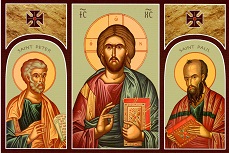
While it’s the occasion of the Apostles Simon and Jude that brings us together this evening, we’ll use their day as an opportunity to focus, not on them, but on some beautiful words of Jesus that the two of them were there to hear with their own ears.

Simon and Jude (or Judas Thaddeus) were among the eleven apostles who were there with Jesus on the night in which He was betrayed, after Judas Iscariot, the betrayer, had left. They were there with Him in the upper room. They had their feet washed by Jesus. They celebrated the Passover meal with Him. They participated in the New Supper that was instituted that night, the New Testament in Jesus’ blood. And then they were there to hear Jesus’ departing sermon, recorded for us only by the Apostle John, Jesus’ final instructions to His disciples before they arrived at the Garden of Gethsemane, where He would be arrested and hauled off to be tried, tortured, and crucified. In His departing words to His faithful apostles, Jesus leaves them with one final command: Love one another.

Love. Not necessarily like. You aren’t commanded to like anyone’s personality or to like how they look or how they talk. Love. To be devoted to someone, devoted to seeking their best interest, devoted to helping and serving and caring for someone. To turn away from yourself and your needs toward someone else, to be willing and even glad to give from what is yours in service to another.

Jesus’ apostles already knew God’s commandment through Moses, You shall love the Lord your God with all your heart, soul, mind, and strength. And, You shall love your neighbor as yourself. That was the summary of the whole Law, to love God wholly and to love one’s neighbor perfectly, every neighbor equally, from family member to fellow Israelite to stranger and foreigner. They were to love in obedience to the Law, which, in turn, was to show them their sin, to show them how loveless they really were at heart.

But this commandment in John’s Gospel is different. In chapter 13, Jesus issued the same command to “love one another” and called it a “new commandment.” New, because it wasn’t a command to shame them or to accuse them; it wasn’t a command to “do this or fall under God’s wrath and curse!” It was a command, from the Lord to His brothers, to His friends, to follow Him, their dear Lord, who was about to walk the ultimate path of love for them. Follow Me!, He says. Love one another as I have loved you, committing all I have, even My own life, to your eternal good.

Love one another. That was the other thing that made this command “new.” This is not like Moses’ command to love anyone and everyone as yourself. It’s a command to love your fellow Christians, to be devoted to your brothers and sisters in Christ as your close friends and allies in the Church Militant, in the battle against the enemies of the devil, the world, and your sinful flesh, as your beloved family members in Christ. How can you tell that “one another” doesn’t refer to all your fellow human beings? Because of what follows. He contrasts His disciples on the one hand with the world on the other, that is, with those who are worldly-minded, who don’t believe in Him who have not been chosen out of the world by Him. You, Jesus reminds them, have been brought to Me by the Father through the Spirit. You have been given, as Peter said in the First Lesson, new birth into a living hope through the resurrection of Jesus Christ from the dead, to an inheritance that is incorruptible, and undefiled, and unfading, reserved in heaven for you who are kept by God’s power, through faith, for the salvation that is ready to be revealed in the last time. You have been made children of God and brothers and sisters of Christ and in Christ. You have been brought together into one body, My body. If I, the Head of the body, have loved you and all My Father’s children in this way, you must love one another as I do, as I have, as I will.

And even more, you must love one another because no one else will. If the world hates you, you know that it hated me before it hated you. If you were of the world, the world would love you as its own. But because you are not of the world, but I have chosen you out of the world, therefore the world hates you.

Why would the world hate them so much? Because they were no longer of the world. They no longer belonged to the world or belonged in the world. They had been chosen out of the world, as all baptized Christians have been, baptized out of the world, made citizens of the heavenly City, and so they were now foreigners and aliens among the sons of the serpent. The citizens of heaven belong to Christ and we get our understanding of right and wrong and good and evil from God. The citizens of the world, the unbelievers, get their understanding of morality from themselves, from their darkened, deadened consciences, or worse yet, from their father, the devil. What God calls good, the world calls evil, and what the world calls evil, God calls good. So the world is left hating those who expose its darkness, eager to rid itself of those who just don’t belong here or fit in here.

That was certainly true of Jesus. As a man who had both a human nature and a divine nature, united inseparably in one Person, He truly didn’t belong in this world, and Good Friday fully revealed the extent of the world’s hatred of Jesus. The three centuries that followed fully revealed how much the world also hated His apostles and those who followed in the footsteps of the apostles. Ridicule was the least of their problems. They were attacked with vicious hatred, lied about, stolen from, beaten, and mercilessly tortured while crowds of people cheered and gnashed their teeth at those horrible, horrible Christians. That was how the world treated them.

The last thing Jesus wanted was for His Christians to turn on one another, to add to the world’s persecution by having Christians persecute one another or mistreat one another or burden one another with more hatred or grief. Instead, He wanted them to have a “safe place” on earth, if you will, not perfectly safe, obviously, but He wanted them to have a group of people they could rely on to care for them, to be there for them, to love them in the midst of the world’s hatred, a group of God’s people on earth for God’s people on earth, with whom God’s people will spend eternity after this world finally comes to an end.

In another place, Jesus tells His disciples to “Love your enemies and pray for those who persecute you.” He doesn’t want us to return the world’s hatred with more hatred. He wants us to treat even our enemies with love, and to seek to help them out to leave the world and to become children of God, as we have.

If we are to love our enemies, how much more does He command us to love our allies! To love one another from the heart, to love those with whom you will spend eternity.

This is why it’s such a serious problem when churches experience strife and discord and contentions in their midst, when that which was intended to be a safe haven and harbor turns into a source of grief and pain. Given Christ’s commandment that we love one another, there’s only one thing that rises to the level of rightfully disrupting the bond of love and mutual support among Christians, and that’s the doctrine of Christ itself. Some would place even that underneath the bond of so-called “love,” preferring to preserve unity at the expense of the Word of Christ. But you know that the Word of Christ has to come first, and that the love of Christians must be subordinate to His Word, must flow from His Word, must be built upon His Word as the foundation. To tolerate doctrinal errors in a Christian congregation is one of the most unloving things we could do.

But what a great gift and blessing it is when Christians, united in their confession of the doctrine of Christ, love and support one another, when Christians truly care for one another and, in love, overlook the human and sometimes sinful shortcomings of their brothers and sisters—as Peter writes, Love will cover a multitude of sins—when Christians remember and are careful to keep Christ’s commandment to love one another. As the Psalm says, Behold, how good and how pleasant it is for brothers to dwell together in unity!

So love one another. Make it your goal to give all your fellow Christians all the help and support they need to live in the midst of this hate-filled world. Be the safe haven God intended you to be for one another in this world, until this little while of being grieved by various trials, including being on the receiving end of the world’s hatred, is finally over and you enter into that incorruptible, undefiled, and unfading inheritance that is reserved in heaven for you. Until then, rejoice that you have been made children of God, and that you have been given fellow children of God around you, whether few or many, whom you have the privilege and the commandment to love with the love of Christ. Amen.

Posted in Sermons | Tagged , , | Comments Off on A command to love in the midst of hate

Fear God and give Him glory

Sermon (audio)
Download Sermon

Service(video)
[vimeo https://vimeo.com/471958087 w=540&h=360]
Download Service Download Bulletin

Sermon for the Festival of the Reformation

Revelation 14:6-7  +  Matthew 11:12-15

The Reformation of the Church, which we celebrate today, was just that: a reformation. Not the beginning of something new, but the preservation of something old, of the Church that was built on the Rock of Jesus Christ, the Son of the living God, the Church that Christ had been building for some 1,500 years, or, if you will, for some 5,500 years, since the first promise was made to Adam and Eve of the coming of a Savior who would crush the head of the ancient serpent. It was the Church that remained faithful through centuries of unimaginable persecution, the Church that had fought and won one battle after another against heresies of all kinds, by the grace of God, the Church that had established some wonderful, edifying traditions. But by the sixteenth century after Christ, the time of Martin Luther, any number of serious, deep-seated corruptions had infiltrated the Church’s doctrine and practice, obscuring the eternal gospel.

But as St. John saw in his vision, in the Revelation he was given, the eternal gospel would not be silenced. I saw another angel flying in the midst of heaven, having the eternal gospel to preach to those who dwell on the earth, and to every nation, and tribe, and language, and people. Now that “angel” John saw was the same kind of “angel” to whom the seven letters to the seven churches in Revelation 1-2 were written. In other words, it wasn’t one of the angelic spirits; they don’t preach to the world. It was a human messenger, a human minister, or more likely, it was symbolic of the office of the holy ministry in general, the duty Christ gave to His apostles and their successors to go into all the world and preach the gospel to every creature.

Martin Luther was one of those angels, those ministers who preached the gospel boldly and clearly, and his dealings with the corrupted Church of his day can be summarized well with the angel’s words in Revelation 14, Fear God and give him glory! Because all of the abuses that were going on in the Church of his day were teaching people to do just the opposite.

What were the issues Luther confronted in 1517 and beyond?

Well, his famous 95 Theses focused primarily on the sale of indulgences, documents issued by the pope and sold to Christians throughout Europe that promised the full forgiveness of sins to the buyer, for themselves or even for a person who had died and whose soul was thought to be suffering in torment in a place called purgatory, paying for the sins that Christ had supposedly not paid for. Luther’s response was, Fear God and give him glory! Christ is the One who paid for all the sins of the world with His innocent death on the cross. He is the One who purchased salvation for us and who never sells it to anyone or hands it out piecemeal, but gives it away freely to the one who believes in Him. Stop trusting in your money or in the pope to save you. Fear God! Trust in Christ!

Related to that was Rome’s distorted teaching about grace and good works. The Roman Church had begun to teach that sinners are justified, not by faith alone, but by the good works or the works of love God’s “grace” enabled them to do. Now, Luther knew that love and good works are important, are even necessary for Christians, but not for justification. Scripture clearly teaches that sinners are justified—acceptable to God—only by faith in Christ Jesus, and that good works follow faith, not as a cause or reason for God to justify us, but as the necessary fruits of a living faith, the fruits produced by believing, forgiven children of God. And so his response was, Fear God and give him glory! Stop trusting in yourselves and your works! Stop preaching man and man’s works! Preach Christ and Him crucified! Preach justification by faith alone! Fear God!

Related to that was the issue of the role of the blessed virgin Mary and the saints. Rome had been directing people to pray to Mary and the saints for help in the day of trouble and to trust in Mary and the saints to share their excess good works with sinners. But Luther, who loved and honored the saints and taught Christians to remember them and to imitate their faith and life, warned Christians not to pray to them or to trust in them for help, because there is one God and one Mediator between God and men, the Man Christ Jesus. Stop turning to the saints for help. Stop pointing men to the saints! Fear God and give Him glory!

Another issue Luther addressed was the Mass, specifically, the canon of the Mass, which included prayers for the intercession of the saints and the re-presenting of the sacrifice of Christ, so that the Sacrament of the Altar became man’s sacrifice to God, another good work on man’s part for which faith wasn’t even required, rather than the life-giving gift of God to us in which He gives us the body and blood of His Son, once for all sacrificed on Calvary’s cross, truly present under bread and wine for the forgiveness of our sins. Luther said, Fear God and give him glory! Stop trusting in human works, and worship God by receiving from Him the gifts of forgiveness, life, and salvation. Fear God!

Those are the main issues Luther brought up with the Church, together with the unscriptural authority that the pope was claiming for himself as head over all Christians. Where did all these abuses come from? They all came from men, who either trusted in their own wisdom more than in God, or who sought glory for themselves and not for God. They came from the insidious notion that popes and councils and manmade traditions in the Church were somehow on equal footing with Holy Scripture, so that the pope claimed authority for himself that God had never given to him or to any man. And so Luther preached, Fear God and give him glory! Stop trusting in popes and in princes and in the authority of man. Stand on Holy Scripture! Fear God!

In every case, the Roman Church had transferred the glory that belonged to God to man, and the Lutheran answer was always, Fear God and give him glory! Why? Because, as the angel proclaimed, the hour of his judgment has come. Not the judgment of human courts. Luther answered before several human courts, before bishops and cardinals and popes and princes. And the Lutherans after him did the same and were judged by the world as dissenters and troublemakers and sectarians. They may have been afraid of those judgments; they certainly suffered because of them. But they didn’t give in to fear, because they knew that “His judgment,” God’s judgment, was coming, and that only faith in the true God who created all things, who sent His Son, who sends His Spirit, would help on that day. So they stood on the eternal gospel and made the good confession. This is what they wrote at the end of the Book of Concord: In the sight of God and of the entire Church of Christ, we want to testify to those now living and those who will come after us. This declaration presented here about all the controverted articles mentioned and explained above—and no other—is our faith, doctrine, and confession. By God’s grace, with intrepid hearts, we are willing to appear before the judgment seat of Christ with this Confession and give an account of it.

That’s the intrepid spirit that needs to dwell in us still today, the faith to fear God and give him glory, and the boldness, courage, and zeal to continue proclaiming that message to every nation, tribe, language, and people. Fear God and give him glory! Because things have not gotten better for the Church or for the world over these last 500 years. They’ve only gotten worse.

It’s easy to point out the errors of the Roman Church, which have only grown since the days of Luther. But listen to what Barna has found in his polling of “Protestant” Christians: “American Christians are undergoing a ‘post-Christian Reformation.’ Unlike the Protestant Reformation, whose goal was to return to the foundational teachings of the Bible, this modern movement is one where Americans are redefining biblical beliefs according to secular values.”

Secular values like what? Well, what was it the angel cried out? Worship him who made heaven, and earth, and the sea, and the springs of water. How many churches truly believe and teach that anymore, that God made heaven and earth? Instead, the churches join the world in denying the Creator and His Word through the teaching of evolution, and they join the world in focusing on climate change instead of preaching repentance and the forgiveness of sins in Christ. But I tell you, fear God and give him glory! Believe His Word and stand on it against all the pseudo-science of man.

As “Christians” have joined the world in denying the Creator and His creation, they also join the world in denying the most basic truths of the creation, about man, woman, marriage, children, and family. Speak the truth about “gender,” speak the truth about how God has reserved sexual relations for marriage, speak the truth, in love, about abortion as murder and homosexuality as a grievous sin, and any number of churches will join the world in calling you hateful and calling for your “cancelation” from society. But I tell you, fear God and give Him glory! Believe His Word and stand on it against all the perversions of man.

If we, with the flying angel, call upon men to “worship Him who made heaven and earth,” proclaiming that there is only one true God who is to be worshiped, the God of the Bible who is Father, Son, and Holy Spirit, and that every other god worshiped by men is an idol, including the god of the human heart, the world rages in anger. Even Christian churches are hesitant to say such a thing for fear of man. But I tell you, fear God and give Him glory! Believe His Word and stand on it against all the idolatries of man.

And speaking of idolatries, health can become an idol. Over seven months into COVID, and again the Archdiocese of Santa Fe has ordered all its churches to suspend Mass after today, until further notice. You can be sure other churches will follow suit, and the government may again make it illegal for us to gather around Word and Sacrament, even as they have already made it illegal to sing or to worship God and encourage one another with uncovered faces. But I tell you, don’t fear COVID. Fear God! Don’t give glory to man’s safety protocols and human wisdom. Give glory to God. Don’t fear the government or the persecutions it may bring against you. For that matter, don’t fear your family, or your possessions, or your honor, or your life. Fear God and give Him glory!

This is what it means to stand in the spirit of the Reformation, to remain faithful to God’s Word, to hold fast to its teaching, to believe what it says, to trust in the Lord Christ, to be diligent in prayer and in using the Sacraments, to keep yourself clean from the hatred that surrounds you and to live a life of love in the midst of a loveless world—in short, to fear God and give Him glory. Celebrate the flight of the angel today: the ministry of Martin Luther and of all who have faithfully proclaimed, believed, and stood upon the eternal gospel, even in these latter days. Fear God and give him glory! Amen.

Posted in Sermons | Tagged , , | Comments Off on Fear God and give Him glory

A Christian’s dying comfort: Only Luke is with me

Sermon (audio)
Download Sermon

Service(video)
[vimeo https://vimeo.com/469519210 w=540&h=360]
Download Service Download Bulletin

Sermon for the Festival of St. Luke

2 Timothy 4:5-15  +  Luke 10:1-9

St. Paul was sitting in prison in Rome when he wrote his second letter to Pastor Timothy. It wasn’t the first time he had been imprisoned. It was at least the fourth time. He had been flogged and briefly imprisoned in the city of Philippi. He had been arrested in Jerusalem and imprisoned for about two years in Caesarea. From there he was taken prisoner on a perilous journey across the Mediterranean Sea to Rome, where he was under house arrest for another two years before being released. Then, a few years later, Paul was imprisoned for the fourth and final time in Rome as Emperor Nero’s persecution against the Christians there broke out in full force as he had many of them arrested, beaten, tortured, and killed. This imprisonment would end in Paul’s beheading, and it was coming soon, as Paul wrote in today’s Epistle: For I am already being poured out as a drink-offering, and the time of my departure is at hand.

Only one man was with St. Paul during all four of those imprisonments. He’s the man whose festival we commemorate today: St. Luke.

Luke, like Mark, was not one of the twelve apostles. He was a Greek—a Gentile—whom Paul refers to as “the beloved physician.” He wrote the Gospel according to St. Luke and the Acts of the Apostles, the only two books in the Bible written by a Gentile, like you and I. He tells his own story in the book of Acts, but he’s very humble about it. We only know where he met St. Paul and where he traveled with him from his use of the first person pronoun: “we went here” or “we went there.” Those “we” sections begin in the city of Troas on Paul’s Second Missionary Journey, just as he was about to cross into Macedonia and Greece for the first time. It’s likely that Luke was converted to Christianity right there in Troas when he heard Paul preach, and he was so convinced that Jesus was the Christ—crucified for our sins, raised to life for our justification, reigning at God’s right hand, and coming again to bring His believers with Him to Paradise—that he left his life there in Troas and became Paul’s faithful travel companion. Sure enough, the first city they visited together was Philippi, where Paul was imprisoned for the first time, together with Silas. There was Luke, the beloved physician, ready to tend to Paul’s wounds after he was flogged and mistreated. There he was for the other three imprisonments, too. In fact, as you heard in today’s Epistle, in Paul’s final letter to Timothy, he wrote, “Only Luke is with me.”

“Only Luke is with me.” But what great comfort that gave to St. Paul as he was waiting to die! With the Lord’s help, and specifically with the help the Lord provided through Luke, Paul faced death, not with fear, not with anger, or bitterness, or hatred, but bravely, calmly, even expectantly, as we heard in today’s Epistle. He faced death as a man who was ready. He faced it as a man whose conscience was clear. He faced it as a man who was convinced that, as soon as his head fell from his shoulders, his soul would be with the Lord in glory.

Before he died, St. Paul shared some important last words with Pastor Timothy. First, he leaves behind an encouragement for those who would continue the ministry of Christ after he left. Second, he looks back on his ministry and his life as a Christian. And third, he looks forward to what awaits him and all who have “loved the Lord’s appearing.”

So first, Paul’s encouragement to Timothy and to all who would follow in Timothy’s steps in the office of the holy ministry. But as for you, be self-controlled in all things. Endure hardship. Do the work of a Gospel preacher. Fulfill your ministry.

“But as for you,” Paul writes. He’s contrasting what Timothy should be with what will happen to many people in times to come: For the time will come when men will not put up with sound doctrine, but according to their own desires, because they have itching ears, they will heap up teachers for themselves; and they will turn their ears away from the truth, and be turned aside to fables. We’re certainly living in those times, aren’t we? “Sound doctrine? Right teaching? Why focus on such things? And who can know what the right doctrine is anyway? Just believe in Jesus however it seems best to you. It’s the relationship that matters, not the facts or the dogmas.”

St. Luke disagrees. Listen to how he began his Gospel: Since many have taken in hand to set in order a narrative of those things which have been fulfilled among us, just as those who from the beginning were eyewitnesses and ministers of the word delivered them to us, it seemed good to me also, having had perfect understanding of all things from the very first, to write to you an orderly account, most excellent Theophilus, that you may know the certainty of those things in which you were instructed. According to Luke, certainty of the facts, certainty of the eyewitness account, certainty of the instruction of the original ministers of Christ is an essential part of Christianity. So Paul rightly urges Timothy not to be like those who believe whatever they want and then gather together teachers to say what they want to hear. Instead, be “self-controlled in all things,” Paul says. Have your wits about you. Don’t be gullible, but know the truth and hold onto it.

Of course, Luke’s own Gospel and the book of Acts would ground Timothy and all future Christians in that truth. From Luke’s Gospel, we learn so many things we wouldn’t otherwise know. The origins of John the Baptist and the glorious Song of Zacharias. The events surrounding the birth of Christ in Bethlehem, including the angel Gabriel’s annunciation to Mary, Mary’s Magnificat, the Gloria in Excelsis, and the Song of Simeon. More than any other Evangelist, we hear of Jesus’ saving interactions with Gentiles, how Christ had come to seek and to save what was lost. We learn of God’s love for sinners and of His fervent desire to bring them all to repentance and faith, as in the parables of the lost sheep, the lost coin, and the lost son. From Luke’s Gospel, we learn the details of what happened on the road to Emmaus after Christ’s resurrection as those two disciples listened to the risen Christ explain how His death and resurrection fulfilled all the Old Testament prophecies.

Paul also tells Timothy and all ministers to “endure hardship,” just as Paul had done so often in his ministry, most of which was recorded by Luke in the Book of Acts, how often Paul was rejected, ridiculed, beaten, stoned, shipwrecked, imprisoned, and plotted against, and how he endured it patiently, trusting in the Lord Christ to work out His good plan through these sufferings. For that matter, we learn from Luke’s Gospel how the Lord Jesus Himself endured hardship and suffering, with details unique to his Gospel, like how, when Jesus was praying earnestly in the Garden of Gethsemane, He was in agony and He prayed more earnestly. Then His sweat became like great drops of blood falling down to the ground, who then prayed, Father, if it is Your will, take this cup away from Me; nevertheless not My will, but Yours, be done. If that’s what our Lord willingly endured for us, why would we shrink back from enduring it for Him?

Do the work of a Gospel preacher. Again, it was Luke who identified Christ as the prophesied preacher of the Gospel from the Old Testament when Jesus preached in the Nazareth synagogue, The Spirit of the LORD is upon Me, because He has anointed Me to preach the gospel to the poor. And it was Luke who watched the Apostle Paul go from town to town, preaching, not his own wisdom, nor about worldly ideas or earthly goals or helping people with their earthly problems, but preaching the gospel from city to city, the same gospel that Luke summarized at the end of his Gospel: Thus it is written, and thus it was necessary for the Christ to suffer and to rise from the dead the third day, and that repentance and remission of sins should be preached in His name to all nations, beginning at Jerusalem.

Fulfill your ministry, Paul writes to Timothy. And what better example of a faithful ministry was there than the ministry of Christ that Luke described in his Gospel, or the ministry of the seventy whom Christ sent out ahead of Him “as lambs among wolves,” which only Luke records, or the ministry of all the Apostles from the Day of Pentecost onward, the ministry of St. Peter and of the seven deacons, of Stephen, the first martyr, and of Paul’s own ministry, as Luke relates it all in the book of Acts. Christ’s visible, earthly ministry had come to an end, as had the ministry of the seventy. Paul’s ministry was about to come to an end, but Timothy’s would continue, and so would the ministry of all ministers after him, until the end of the world.

After encouraging Timothy in his ongoing ministry, Paul took a brief look back at his own: I have fought the good fight; I have finished the race; I have kept the faith. Now, normally, when a Christian is nearing death, I don’t recommend looking back at your life too much. Neither at the bad, since it has been covered up by Christ’s blood and washed away through Baptism and faith; nor at the good, lest you be led astray to cling to it in your heart or to trust in your own good works as any reason at all why God should accept you or give you a place in heaven. But it’s OK to look back as Paul did on the fight you’ve fought to remain faithful to Christ, on the race you’ve finished, on the faith you’ve kept. Because the focus isn’t really on you, but on God the Father and His grace, how He provided for you along the way; on Christ, who died for you and purchased you with His blood; and on the Holy Spirit who has sustained you in the faith, through all sorts of temptations, and strengthened and preserved you to keep trusting in Christ and to keep living for Christ.

Finally, as St. Paul faces death, he looks forward, beyond the moment of his death to what awaits him afterward: Now there is reserved for me the crown of righteousness, which the Lord, the righteous judge, will give me on that day, and not to me only, but also to all who love his appearing. A crown awaits. A crown of righteousness to be award by the righteous judge. Luke records what Paul had preached in Athens about that Judge: Truly, these times of ignorance God overlooked, but now commands all men everywhere to repent, because He has appointed a day on which He will judge the world in righteousness by the Man whom He has ordained. He has given assurance of this to all by raising Him from the dead. Yes, God will judge everyone, and for those who don’t know Christ, that should make death a frightening thing, as it was for the rich man in Jesus’ parable whose soul was in torment in the flames of hell. But for those who know Christ as our Lord and Savior, the judgment is nothing to fear, but something to look forward to, as poor Lazarus found when he died, or as the thief on the cross found, who prayed, Lord Jesus, remember me when You come into Your kingdom. And Jesus replied, Today you will be with Me in Paradise. Today you will be with Me, on the very day you die, because God counted you righteous through faith in Christ.

But that’s not all there is to look forward to. Paul looks past even that, to “that day,” the day of the Lord’s appearing, which Luke also described in Acts chapter 1 as the angels told the disciples: Men of Galilee, why do you stand gazing up into heaven? This same Jesus, who was taken up from you into heaven, will so come in like manner as you saw Him go into heaven. In like manner, with one exception, as Luke writes in His Gospel: They will see the Son of Man coming in a cloud with power and great glory. At that time, Luke writes, Look up and lift up your heads, because your redemption draws near.

No wonder the Apostle Paul could face death with such courage! Only Luke was with him in person, but he also had the certainty of the Word of Christ there with him. Why should he be afraid?

Why should you? There are tough times ahead for this world, and for Christians in particular. And whether death is coming for you soon or whether it’s coming in a few decades, it will come. But you have Luke with you, not in person, but in Holy Scripture, where you have learned the story of Christ, from His birth in Bethlehem, to His saving ministry, to His suffering and death, to His resurrection and ascension, to His promise on the Day of Pentecost of the remission of sins to all who repent and are baptized in His name. If you only had Luke with you, it would be more than enough. But you don’t have only Luke with you. You also have Matthew and Mark and John, and Peter and Paul and James and Jude. And Moses and all the Prophets. And behind them, the Holy Spirit who inspired their words, and the Father and the Son from whom the Spirit proceeds. We must through many tribulations enter the kingdom of God. But enter it we will, through faith in Christ Jesus, who says, through St. Luke, Do not fear, little flock, for it is your Father’s good pleasure to give you the kingdom. Amen.

Posted in Sermons | Tagged , , | Comments Off on A Christian’s dying comfort: Only Luke is with me

There is no Christianity without the Gospel

Sermon (audio)
Download Sermon

Service(video)
[vimeo https://vimeo.com/467123347 w=540&h=360]
Download Service Download Bulletin

Sermon for Trinity 18

1 Corinthians 1:4-9  +  Matthew 22:34-46

You’ll often hear the phrase, “Judeo-Christian values or principles,” how our country was founded on them, or how our country has largely abandoned them. What do people mean by Judeo-Christian values? They usually mean the basic principles of what’s right and what’s wrong, based on the Old Testament Law, based on the Ten Commandments, which Jews and Christians tend to agree on, for the most part. And, in a way, we do see the Jews who rejected Christ in our Gospel today agreeing with Christ on those principles. But I would urge you never to use that phrase, “Judeo-Christian values.” Why? Because, as we see in today’s Gospel, it’s only half the picture of what makes up “Christian values” or “Christian principles.” Yes, we Christians uphold the Law. In fact, we uphold it even more strongly than the Jews did. But without the Gospel, the principles of the Law are helpless to save anyone. Without the Gospel, there is nothing “Christian” about the Law.

Today’s Gospel is clearly divided into two parts: a discussion of the Law in the first part, and a discussion of the Christ, that is, the Gospel in the second part. It’s a stark contrast between Law and Gospel, between a focus on man’s works vs. a focus on Christ. The Law makes demands of us. The Gospel offers us grace, God’s undeserved favor, through Christ.

It was, once again, the Pharisees who wanted to discuss the Law with Jesus. They always wanted to discuss the Law, what man is supposed to do to please God, to obey God, to be accepted by God and acceptable to God. That shouldn’t surprise us. For one thing, the Law was sort of the defining characteristic of the people of Israel. It’s what set them apart from the surrounding nations, made them special, made them different. But it also shouldn’t surprise us that the Pharisees were focused on the Law, because it has always been the devil’s strategy to turn mankind inward, to ourselves and our works, and so to turn away from God and His grace and His works. What was the devil’s temptation to Eve in the Garden? “Look what you can do! Look what you can have! Eat! Take knowledge for yourself! Work to become like God! Whatever you do, don’t focus on God’s grace to you in giving you life and all you need for it! Whatever you do, don’t think about God’s love and goodness. Think about yourself!”

So the Pharisee, thinking about himself, about the Law, pressed Jesus to summarize the Law, to point to the first and greatest commandment. And Jesus replies here, using the same reply given to Him by another lawyer earlier in His ministry: ’You shall love the Lord your God with all your heart, and with all your soul, and with all your mind.’ This is the first and greatest commandment. And the second is like it, ‘You shall love your neighbor as yourself.’ The whole Law depends on these two commandments, as do the Prophets. The Law of God demands obedience, obedience in the form of perfect, selfless, whole-hearted love, first for God, then for our neighbor.

First for God. Not just for a god, for the true God, the one God who is Father, Son, and Holy Spirit, the God who has revealed Himself in the Bible. How many people in the world think they’re “good people,” even as they criticize God’s teachings or actions in Scripture, even as they reject Him as God and either follow after other gods or after no god at all, even as they fail to trust Him, even as they find better things to do than to hear and ponder His Word. The Law demands obedience, loving the Lord your God with all your heart, soul, and mind. So everyone who fails to do that, at any time, is a lawbreaker.

And second, the Law demands obedience in the form of selfless love for your neighbor: love that honors father and mother; love that does not murder, and that includes children in the womb; love that honors marriage, and that includes avoiding every form of sex outside of marriage, adultery, lust, unscriptural divorce, and homosexuality. (That brings up something I saw on TV the other day. A woman was calling the practice of homosexuality “dirty.” And someone asked, “Can love be dirty?” But that kind of relationship isn’t love, not according to God’s Law.) Love for the neighbor does not steal, and that includes every form of communism or socialism that seeks to grab one person’s property and redistribute it to someone else; love does not slander, and that includes branding people as racists or spreading lies about them; love does not covet what your neighbor has. Instead, Love is patient. It is kind. Love does not envy. Love does not boast. It is not conceited. It does not behave indecently. It does not seek its own. It does not become angry. It does not dwell on evil. It does not rejoice in iniquity, but rejoices in the truth. It bears all things, believes all things, hopes all things, endures all things. That is the love for the neighbor that the Law demands. So everyone who fails to do that, at any time, is a lawbreaker.

In addition to demanding obedience, the Law also demands something else. The Law demands punishment for disobedience—not just a slap on the wrist, but, as Moses says, Cursed is everyone who does not continue in all things which are written in the book of the law, to do them, and as the Prophets declare, “The soul who sins shall die.” Suffering and death are what the Law demands for sinners, for lawbreakers. So all the world’s complaints about how unjust God is, about how unfair human suffering is—it may be unfair with regard to man’s laws, but none of us has anything to complain about when it comes to God’s Law. According to His Law, all that we deserve, as lawbreakers, is temporal and eternal punishment.

If the Pharisees had truly understood that, had truly understood the Law, how strict its requirements are, how universal its accusations are, how deadly its condemnation is, they wouldn’t have loved the Law so much or focused on it so much. Instead, they would have been much more afraid of it, and they would have been glad to hear that God has another teaching, another doctrine, revealed in both the Old and the New Testaments, to save all those who stand condemned by the Law. That teaching is known as the Gospel.

Since the Pharisees were content to leave off their discussion with Jesus after He so nicely summarized the Law for them, He takes it to them with His own question, to turn the discussion in a different direction. What do you think about the Christ? Whose Son is he? The Christ… The “Anointed One” whose coming was foretold in the Old Testament, who was supposed to come and “save” the people of Israel, and the Gentiles too, who would be the ultimate Prophet, Priest, and King. Where would He come from? The Pharisees knew the answer. Every good Jew knew the answer. They said to him, “The Son of David.” The Christ would be a descendant of great King David. Jesus knew they would get that answer right. It prepared the way perfectly for His follow-up question: How then does David, by the Spirit, call him Lord, saying, ‘The Lord said to my Lord, “Sit at my right hand, until I make your enemies a footstool for your feet?”’ Now, if David calls him Lord, how is he David’s son?And no one was able to answer him a word, nor did anyone from that day on dare to question him further.

The Pharisees knew the Christ was coming, and they knew whose Son He would be. But they were so focused on the Law, they never gave enough thought to why the Christ was coming. They imagined He was coming simply to reward all those who did such a great job keeping the Law, to set up a glorious earthly kingdom for such people and to make their life on earth better. But for that, any great earthly leader would do. What they didn’t get was that the Christ had to be both man, David’s Son, and God, David’s Lord. He had to be both God and man so that He might satisfy the demands of the Law as the Substitute for mankind.

As we saw, the Law demands obedience—perfect love for God and man. And the Law demands punishment for the sinner. That’s exactly what Jesus the Christ provided: perfect love, perfect obedience, including the obedience of suffering and dying for the sins of the world. And because He is both God and man, His obedience and His death are worth all the lives of all the men of all the world. Every demand the Law ever made of anyone, Christ has satisfied for everyone.

So the Law rightly calls on all men to repent, to recognize and to grieve over their sins, and to fear the wrath of God that is being revealed against all the sins of men, because judgment is coming on the world, and no one will be safe from it if they’re judged by the Law. But now the Gospel cries out to all who repent, “Believe in the Lord Jesus Christ! He has satisfied the Law for you, with His obedient love and with His innocent suffering and death. No one who trusts in Him will ever be put to shame. So flee from the Law! Don’t despair because of your sins, and don’t rely on your good works! Instead, flee in faith to Christ and you will be safe!”

All of this is illustrated for us in that picture on the front of your service folder today. The left side depicts the Law, the right side, the Gospel. See Adam and Eve eating the forbidden fruit and plunging our race into sin. Notice where Moses stands holding the two stone tablets of the Ten Commandments. He’s on the left of that tree in the middle, pointing to the Commandments, which declare all men to be sinners. And there goes the sinner, being pursued by death and chased into hell. Because, without the Gospel, that’s all the Law can accomplish. But on the right, you see Christ crucified, the Lamb of God who takes away the sin of the world. You also see Christ risen from the dead and victorious over death and hell. You see John the Baptist, the preacher of the Gospel pointing the poor sinner to Christ. And through the dove, the Holy Spirit, the poor sinner is brought to faith in Christ and is sprinkled with the blood of Christ for the forgiveness of sins.

Two doctrines, two main teachings of Scripture: the Law and the Gospel. Both doctrines are divinely given. Both are good. Both are necessary. But only the Gospel can save. Without the Gospel of Christ, there is nothing “Christian” about the Law. Without the Gospel, Christianity devolves into nothing but moralism, life lessons, a cult of Pharisaical, self-righteous people who stick their noses in the air and do nothing but wag their finger at other people, even as they crucify Christ, though they bear His name.

Watch out for that. Watch out for a “Christianity” that’s devoid of the Gospel—or of the Law, for that matter, as if God no longer cared about right and wrong. But in the end, lots of religions come close to getting the Law right. But none has the Gospel of life. Only Christianity does. So give thanks to God for revealing it to you. Cling to Christ and stay close to Him, and even more so now as His coming is getting closer and closer. And trust in God’s promise that you heard in the Epistle: He will also confirm you until the end, so that you may be blameless on the day of our Lord Jesus Christ. Amen.

Posted in Sermons | Tagged , , , | Comments Off on There is no Christianity without the Gospel

God’s instruments, the guardian angels

Sermon (audio)
Download Sermon

Service(video)
[vimeo https://vimeo.com/466011544 w=540&h=360]
Download Service Download Bulletin

Sermon for St. Michael & All Angels

Revelation 12:7-12  +  Matthew 18:1-11

When God was all that existed, He spoke and the universe was created out of nothing. The only instrument He used was His powerful Word. He acted directly, immediately, upon the creation, and the creation did His bidding.

But in most things, God doesn’t act immediately. He uses instruments of His own creation. For the first three days of the creation’s existence, His word provided light for the earth. But from day four onward, God has been using the instruments of sun, moon, stars, fire, and electricity to provide light. Instead of holding up the earth by His word alone, He uses instruments like gravity and the laws of physics. Instead of dropping food down to us from the sky, He uses sun and rain and dirt and seeds and human hands to grow and prepare food. In almost all things, God uses instruments, created things, to run the universe.

Even in matters of our eternal salvation, God uses means and instruments. We often speak of the Means of Grace—the preaching of the Gospel and the administration of the Sacraments—as God’s instruments for creating and preserving faith, to the point that ministers of the Gospel are called God’s “angels” in the book of Revelation, God’s special messengers, workers, tools, or instruments for gathering and for guiding His Church.

So, too, in His running of the universe, God has chosen to use angels as His instruments, those powerful spirit-creatures that inhabit the invisible spirit realm, created sometime during the six days of creation.

Now there’s much we don’t know about angels, but there are some things we do know from Scripture. Angels don’t have flesh and blood as we do, but they can appear as men when they wish, like the two angels who accompanied the Lord in His visit to Abraham. We often picture angels with wings. That’s because Scripture describes them that way in several places, including how God Himself commanded Moses to depict them on the ark of the covenant and in the temple. They’re often called “cherubim,” sometimes “seraphim,” having either two wings, as in the temple, or four wings, as in Ezekiel, or six wings, as in Isaiah.

What do the angels do? Well, first and foremost, they worship God, their Creator, their Father, and their Lord. The seraphim are pictured doing that in Isaiah’s vision as they flew around God’s throne, calling out, Holy, holy, holy is the LORD of hosts; the whole earth is full of His glory! Or in Revelation, the angels join their voices with all creatures, singing, Worthy is the Lamb who was slain to receive power and riches and wisdom, and strength and honor and glory and blessing! The writer to the Hebrews tells us that when God brought His firstborn into the world, He says: Let all the angels of God worship Him. And they did. Remember when they appeared to the shepherds of Bethlehem, and a great multitude of the heavenly host appeared and sang, Glory to God in the highest! Peace on earth, goodwill to men!

Not only do the angels worship God, but they teach us to worship God together with them. There was a reason why God told Moses to place two cherubim on the mercy seat, the lid of the ark of the covenant, with their wings spread over the mercy seat, and with their faces staring down at it in reverence, just as there was a reason Solomon had two statues made to stand guard in the most holy place in the temple, and had carved figures of angels placed in the walls of the Temple. God was teaching Israel to worship Him as the angels do. God was teaching them to imitate the worship of the angels, and that, when we worship God, the angels are present there, too, which is why, whenever we sing the Sanctus before Communion, we pray, “Therefore, with angels and archangels and with all the company of heaven, we laud and magnify Thy glorious name!”

Now, if the angels worshiped God there at the mercy seat where He appeared, and in the temple, how much more shouldn’t we worship Him? The angels worship Him as their Creator and Father. We worship Him, not only as our Creator and Father, but as our Redeemer and Savior. The sinless angels have never needed God’s mercy. We poor sinners need it at all times. God didn’t send His Son into angels’ flesh, but into ours. God didn’t give His Son into death for the angels, but for us men. God has not had to forgive the angels any sins, but He forgives ours constantly. God has not brought the angels into the body of Christ, but He has made us members of Christ’s body. So let our worship not just imitate, but surpass that of the angels. We have far greater reasons to worship than they.

But the main purpose of the angels, the primary work they were created to do, at least as far as we’re told in Scripture, is to serve the people of God. As it says in Hebrews about the angels, Are they not all ministering spirits sent forth to minister for those who will inherit salvation?

There have been two main ways in which angels have served the Church. First, they were often God’s messengers to certain men, bringing the Word of God to people here and there, to Jacob, to Moses, to Joshua, to the judge Gideon, to the prophets Isaiah, Daniel, Ezekiel, and Zechariah. You all remember the angel Gabriel, who brought messages to Zacharias, to Mary, and to Joseph. Angels brought word to the shepherds that a Savior, Christ, the Lord had been born. They warned the wise men to stay away from Herod. They announced the resurrection of Christ to the believing women, and they announced to the disciples that the ascended Christ would return from heaven one day, just as they had seen Him go into heaven. It was an angel who told Peter to go see Cornelius, an angel who told Paul he would survive his shipwreck and arrive safely in Rome. And it was an angel who revealed the Revelation to St. John.

Messages delivered by angels were important, but they were rare. The ongoing work of the angels is something that we never get to see, and that is, to guard and protect the people of God from dangers both seen and unseen, from attacks both spiritual and physical. The angels are God’s instruments to keep us safe from harm.

Now we finally come to the angel after whom today’s celebration is named: Michael. His name means, “Who is like God?” He’s mentioned a few times in the Bible: three times in Daniel, once in Jude, and once in Revelation. In Daniel, he’s called “one of the chief princes,” and “your prince,” that is, the prince of Daniel and the people of Israel, and “the great prince who stands watch over the sons of your people.” In Jude, he’s called an “archangel,” that is, a chief angel, similar to the phrase used in Daniel. He’s pictured as a warrior, fighting battles for the people of God, as in tonight’s Epistle from Revelation 12.

This special angelic protection for God’s people is seen throughout Scripture. The two angels brought Lot and his family out of Sodom before they went to destroy the wicked cities. Jacob was protected by angels from his brother Esau. The people of Israel were led and defended by angels as they journeyed through the wilderness. Elisha was surrounded by angels when men came to kill him, when he famously said to his servant, Do not fear, for those who are with us are more than those who are with them. Daniel was protected by angels in the lion’s den. Peter was rescued by an angel from his prison cell. And, as you heard in the Gospel this evening, Jesus warns any who would look down on the little children who believe in Him or cause them to stumble, See that you do not despise one of these little ones! For I tell you that their angels in heaven always see the face of my Father who is in heaven.

All of this fits perfectly with what David wrote in Psalm 34, The angel of the LORD encamps all around those who fear Him and delivers them; and with what the Psalmist wrote in Psalm 91, Because you have made the LORD, who is my refuge, even the Most High, your dwelling place, no evil shall befall you, nor shall any plague come near your dwelling; for He shall give His angels charge over you, to keep you in all your ways. In their hands they shall bear you up, lest you dash your foot against a stone.

It’s a good thing God has provided these guardian angels all around us, because the dangers around us are very real—danger from other people, danger from accidents, and danger from things that may look like accidents but are actually demons, the devil’s angels, seeking to bring us harm or to lead us into temptation. If we could only see the spiritual battles being fought all around us, we would never stop giving thanks for the protection God gives us through the angels as His instruments.

So take comfort in the angels’ presence and protection, whether you’re on land or on sea, in your home or in the hospital, knowing that the angels are faithful servants of God, and mighty warriors against all that might bring us harm. And if any bad thing does happen to a child of God, we can know for certain that it was not a failure of the angels to protect us or a failure of God to see to our protection. As St. Paul wrote, “We must enter the kingdom of God through many tribulations.” This is not yet Paradise, where we will be truly safe from all harm. We’re still on the battlefield here, still living in the realm of the prince of this world, still living in enemy territory, as it were. But if any bad thing happens, we have God’s promise that He allowed it to happen for a good purpose, for our eternal good, and for the good of His holy Church, even as it finally worked out well for poor Lazarus, who suffered much in this life, but whose soul was finally carried by the angels up to Paradise.

There will come a day when the troubles of this life are finally removed forever, and the angels will be there on that day, too. Jesus says, The Son of Man will come in His glory, and all His holy angels with Him. And, As the tares are gathered and burned in the fire, so it will be at the end of this age. The Son of Man will send out His angels, and they will gather out of His kingdom all things that offend, and those who practice lawlessness, and will cast them into the furnace of fire. At the same time, Jesus says, He will send His angels with a great sound of a trumpet, and they will gather together His elect from the four winds, from one end of heaven to the other.

So give thanks to God today for how He runs the universe to work all things together for good to those who love Him, including His use of these holy instruments of His, the mighty angels, our fellow servants of the God who is Father, Son, and Holy Spirit, who worship Him together with us and lend us their ministry and protection. We don’t see them now, but we will see them when Christ comes again. Until then, we will continue to pray in Luther’s Morning and Evening Prayers, “Let Your holy angel be with me, that the evil foe may have no power over me.” Amen.

Posted in Sermons | Tagged , , | Comments Off on God’s instruments, the guardian angels