The end and the beginning of an age

Sermon (audio)
Download Sermon

Service(video)
[vimeo https://vimeo.com/421356582 w=540&h=360]
Download Service Download Bulletin

Sermon for the Feast of the Ascension

Acts 1:1-11  +  Mark 16:14-20

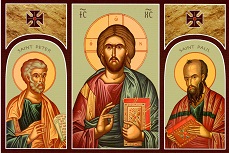
It’s impossible to overemphasize the importance of Christ’s Ascension. It was the end and the beginning of an age. All of history can be divided into just three ages: The first age was before Christ came into the world. The second age was the time when Christ was physically present in the world, when the Word became flesh and made His dwelling among us, when Christ was made our Brother, when Christ our Brother died for us, when Christ our Brother was raised from the dead and commissioned His apostles and instituted the ministry of Word and Sacrament. That age came to an end when Jesus ascended, ushering in the third and final age of the world, when Christ reigns over the world from the right hand of God. He is the man who went away on a journey in so many of Jesus’ parables, but who will eventually return from His journey at the end of the age, as the angels promised the disciples: This same Jesus, who has been taken up from you into heaven, will come in the same way you have seen him go into heaven.

Let’s consider, first, how the second age of the world wrapped up. As Luke tells us in Acts, Jesus showed Himself alive to His disciples after His suffering with many infallible proofs. He ate with them several times. He appeared to them and walked and talked with them several times during the 40 days between Easter Sunday and Ascension Thursday. And He gave them some final instructions.

The first instruction had to do with the coming of the Holy Spirit. He told them to wait in Jerusalem for “the promise of the Father” which He had told them about. We’ve spent a couple of Sundays now hearing Jesus talk about the Holy Spirit in John 14-16, and we’ll hear it again this Sunday and the following. John baptized with water; but you will be baptized with the Holy Spirit not many days from now. We’ll talk about that more in ten days, on the Day of Pentecost, when the promise was fulfilled and that special baptism with the Holy Spirit was fulfilled.

The second instruction had to do with the disciples’ witness throughout the world during the third age of the world. We’ll also talk more about that this Sunday and on the Day of Pentecost. But there are some things we should mention yet this evening.

First, Jesus told His disciples where they were to be His witnesses: in Jerusalem, and in all Judea and Samaria, and to the ends of the earth. Or as Mark records in his Gospel, Go into all the world. Or as Matthew records in his Gospel, Go and make disciples of all nations. No longer would the message of the true God be concentrated in Israel. It was to go out to every place and to every people on earth. No one is excluded from hearing the witnesses.

Then Jesus revealed the content of their witness: preach the gospel to every creature. What is the gospel? A fine summary is given in Mark 16: Whoever believes and is baptized will be saved; but whoever does not believe will be condemned. What a beautiful summary of the gospel. Whoever believes—that is, whoever believes in Me—in Jesus—as their crucified and risen Savior from sin, death, and eternal condemnation. Whoever believes in Me as the one Mediator between God and man, as the one Reconciler of God and man. Whoever believes in Me in order to be forgiven and justified before God. Whoever believes and is baptized. See how Christ holds up baptism as a tool and instrument of salvation, as His Sacrament of bringing a sinner into Himself, into His body, into His righteousness. Whoever believes and is baptized will be saved.

But whoever does not believe will be condemned. That’s part of the gospel, too, part of the message that’s to be preached in the world. God wants all men to be saved—to be saved by believing in Christ and being baptized. That’s His invitation to everyone. But those who don’t believe also have to hear what the result will be: condemnation. The fact is, as Jesus says in John 3, those who don’t believe in Jesus are “condemned already,” because all are born in sin and born under God’s wrath. But Christ has provided the atoning sacrifice that every sinner is now authorized to use before God as an answer for his or her sins. “Yes, Father, I know I deserve only punishment from You. But here is Jesus, who made atonement for all sins. By the gracious working of Your Holy Spirit, I now believe in Him and have been baptized into Him! Accept me for His sake!” And He does.

The third instruction Jesus gave His disciples at the end of the second age had to do with the signs that would follow the apostles’ preaching. And these signs will follow those who believe: In my name they will cast out demons; they will speak with new tongues; they will pick up serpents; and if they drink any deadly thing, it will not hurt them; they will lay hands on the sick, and the sick will recover. We see almost all of those miraculous signs mentioned in the book of Acts, from the speaking in tongues on Pentecost to the healing of the sick that took place here and there, not as a permanent gift given to all believers, but as signs, given by the Holy Spirit where and when it pleased Him, for the purpose of confirming the apostles’ testimony.

And so, after 40 days of appearing to His disciples and instructing His disciples, Jesus had them gather one last time on the Mount of Olives, and with His hands raised in blessing, He visibly rose up into the sky until a cloud took Him from their sight. So ended the second age of the earth, the time of Christ’s physical presence on earth. It ended with this final, visual lesson that from that moment on, no one should look for Jesus anywhere on earth anymore, or expect that He will make random appearances on earth ever again, until the very end of the third age.

Let’s take a moment yet and consider how this third age began—the age in which we all were born and still live.

Mark writes that Jesus was taken up into heaven and sat down at the right hand of God. What does that mean?

First, as Paul writes in Eph. 4. He who descended is also the One who ascended far above all the heavens, that He might fill all things. In the second age of the earth, Jesus restricted Himself to flesh and bones, in one place at one time, according to His human nature. In this third age, He fills all things. He is present everywhere, but in a different way, so that we can’t see Him, touch Him, or interact with Him as His disciples could. But He could still truly promise at the end of Matthew’s Gospel, Behold, I am with you always, until the end of the age.

Second, as Mark writes at the end of today’s Gospel, the eleven apostles went forth and preached everywhere, and the Lord worked with them, confirming the word with the accompanying signs. So sitting at the right hand of God means that Jesus is working with the preachers whom He has sent out into the world. In fact, it says in Ephesians 4 that Christ is still the one actually sending out pastors and ministers from the right hand of God. He already confirmed the apostles’ testimony with all the promised signs during the first century. But He still continues to work with all preachers, sending His Spirit through their words, working on hearts to convince people that He is real, that He is good, that He is trustworthy.

Third, as Paul writes to the Romans in chapter 8, Christ is at the right hand of God, and He makes intercession for us. When the devil hurls his accusations against us, there is Christ pleading for us, praying for us, our Mediator and Advocate before the Father at all times, making us pleasing in God’s sight.

Finally, as Paul writes to the Ephesians in chapter 1, God seated Him at His right hand in the heavenly places, far above all principality and power and might and dominion, and every name that is named, not only in this age but also in that which is to come. And He put all things under His feet, and gave Him to be head over all things to the church, which is His body, the fullness of Him who fills all in all. Since the beginning of this age, Christ our Brother has been reigning as King, ruling over all things as the Head of the Church, which is His body.

Now, you look at history, and at any given time or place, you may say, “It doesn’t look like Christ was ruling there. Look at how Christians were treated! It doesn’t look like Christ was ruling there. Look at that tragedy that that Christian family experienced!” Not to mention the catastrophes and wars and, dare I say, pandemics that have wreaked havoc on believers and unbelievers alike.

Of course, the same Jesus told His followers ahead of time that all these things would happen, that they were part of His plan all along. He hasn’t lost control of the universe. People just don’t like the way He runs it.

At the same time, look back through history. Was the Church ever crushed out of existence? On the contrary, it now gathers and confesses Christ’s name in every nation. Look back at your own history. Were you ever really abandoned by God and left to perish? Look back at our own congregation’s history. Even when divisions arose, even though not many remain, was the Gospel ever silenced here? Did the mortgage payments ever not get made? Did the pastor’s family go hungry? No, we can see signs throughout history and in our own experience that Christ was still ruling from the right hand of God.

He rules now, too, even in the midst of the pandemic, even in the midst of death. Science doesn’t sit at the right hand of God. Jesus does. Science doesn’t determine how the virus spreads. Jesus does. Science may be able to identify how things happen according to the natural order that God has established, but science doesn’t control how things happen and it has nothing at all to say about how Christ works supernaturally to carry out His purposes from the right hand of God, to govern the spread of disease so that unbelievers are called to repentance while His people are called to flee to Him for refuge and to yearn for the end of this age, for the return of our Brother, the Man who went away on a journey, but who won’t stay away forever.

So let us worship Christ, our Brother, who reigns as King throughout this age. Let us trust in Him, serve and obey Him, and pray for all the help He has promised, until He returns to put an end to this age and to begin the blessed age that never ends. Amen.

Posted in Sermons | Tagged , , | Comments Off on The end and the beginning of an age

Christians gather to pray

Sermon (audio)
Download Sermon

Service(video)
[vimeo https://vimeo.com/419646261 w=540&h=360]
Download Service Download Bulletin

Sermon for Rogate

James 1:22-27  +  John 16:23-30

There is no longer any law, divine or human, that prohibits us from gathering for worship. For that we give thanks to God. No one on earth has the authority to keep Christians from gathering together around the ministry of Word and Sacrament. It’s not just about hearing. It’s not just about receiving the Lord’s body and blood. It’s not just about the essential encouragement we offer one another by confessing the name of Christ together. As you know, one of the main purposes for our Divine Service is to approach God’s throne together, as children of God, as brothers and sisters in Christ, as members of the one body of Christ, to pray. Why? Because the Lord Jesus taught us to pray. Yes, you can pray on your own, in a closet, by yourself, just as you can eat alone, sitting at a table by yourself. But it’s good, if possible, to eat as a family, and it’s also good, if possible, to pray as a family of believers, which we are. You know the familiar words from Matthew 18, Where two or three are gathered together in My name, I am there in the midst of them. The words right before that also apply here: Again I say to you that if two of you agree on earth concerning anything that they ask, it will be done for them by My Father in heaven.

And so we’ve gathered again today to approach our God, Father, Son, and Holy Spirit, to ask for His help, based on today’s Gospel from John 16.

As we look at the Gospel, the first verse seems strange to our ears. Jesus says, In that day, you will not ask me anything. Well, we use the word “ask” in English in two different ways. We use it to ask a question, in order to let someone else know that we don’t know or understand something so that, hopefully, they can give us the answer we seek. Or, we use the word “ask” to “ask for” something. It’s the first kind of asking Jesus is talking about. He’s telling His disciples, in that day, that is, after His resurrection from the dead and even after His ascension into heaven, they won’t ask Him any more questions. Why? Because we’ll understand everything? Hardly! First, we won’t ask Him questions, because He won’t be here with us as He was with His disciples prior to His ascension. Instead, we have the Holy Spirit dwelling with us, to guide us into all truth. Second, we won’t have to ask Jesus questions, because, as His disciples finally figured out by the end of today’s Gospel, Jesus already knows all things; He doesn’t need anyone to ask Him, because He knows our questions before we ask.

So as we focus today on prayer, it’s clear right from the beginning that we don’t ask God for things because He doesn’t know what we need or what we want. He already knows. He wants us to ask anyway.

Truly, truly I tell you, whatever you ask of the Father in my name, he will give you. Until now you have not asked for anything in my name. Ask, and you will receive, that your joy may be full.

We’ll talk about “asking in Jesus’ name” in a moment. First we ask the question, why pray for things? Why ask? We ask for three reasons: because of God’s command, because of our great need, and because of God’s promise to give us what we ask.

The command is clear: Ask! It’s the proper use of the Second Commandment. Instead of taking God’s name in vain or misusing it, we are to call upon God’s name in every trouble, pray, praise, and give thanks. Now, it’s a friendly command, from Father to children. Ask Me for My help, God says. Ask Me to guide you and strengthen you and forgive you and provide for you. Ask Me to help you fight against your sinful flesh, and to resist the devil and the world, and to avoid temptation. Ask Me to help you bear up under affliction and oppression and unjust laws. Ask Me for My name to be hallowed in your midst, and for My kingdom to come.

The command to pray is there because God already knows our great need (the second reason to pray). He wants us to recognize just how needy we are and to look to Him to help us in our need. Food and clothing, house and shelter, family and friends, fellow Christians and fellow citizens, good health, safety, peace of mind—these are all important things, things we need, and things we don’t really provide for ourselves. They come from God. To some extent, He uses our choices and the things we do to accomplish His purposes. But ultimately, it’s God who provides health or allows sickness. It’s God who allows a virus to spread or stops it in its tracks, for His own reasons, to fulfill His own purposes, which are always just and always good, whether we understand them or not. That’s a matter of faith, of course, and the world doesn’t have faith, so they either blame God as unjust or try to erase Him from the picture entirely. But we who know the love of Christ, we have faith in Him. And so, because of our great need, we ask for His help.

Finally, we pray because of God’s promise to hear and help. Call upon Me in the day of trouble, He says. I will deliver you, and you will glorify Me. Or as Jesus says, whatever you ask of the Father in my name, he will give you. Again, this is the very reason why we have continued to gather together to pray, even as the world gnashes its teeth at us for doing it, because God has promised that when we ask Him for His mercy on our society, when we ask Him for wisdom and health and courage to be given to our secular authorities, He will give it. People may refuse His gracious help; they may not take it from Him. But He gives it, nonetheless, because His beloved people have asked Him for it in Jesus’ name.

Let’s talk about that for a moment. What does it mean to pray “in Jesus’ name”?

First, Jesus tells us what it doesn’t mean. It doesn’t mean, He says, “that I will ask the Father for you.” Now, you can pray to Jesus. But you shouldn’t pray to Jesus as if you couldn’t pray to the Father, as if you want Jesus to take your requests to the Father for you, because the Father is too busy to listen or to care about a nobody like you. No, Jesus says, the Father himself loves you, because you have loved me and have believed that I came forth from God.

So, to pray in Jesus’ name means to ask the Father directly, as one who loves and believes in Jesus. That is the basis of a Christian prayer, a prayer in Jesus’ name. That you bring your requests before God the Father, not relying on anything you’ve done, but instead, with the name of Jesus on your lips, as one who has been baptized into the name of Christ. “Hear me, Father, for the sake of Jesus, Your dear Son, and for His sake alone.” Whether you say those words, or whether you simply believe those words, God knows.

I recently saw a quote being passed around from an Evangelical pastor named Rick Warren, a rather famous Evangelical preacher. It said, “I don’t believe Jesus came for Christians. I believe He came for everybody. That’s the message the world needs to hear.” Do you see the problem? Here, let me say it correctly: “Jesus came for everybody, so that all people might become Christians.” It’s true, Jesus gave His life on the cross, not so that He could save these people over here but damn those people over there. No, He gave His life so that all people might believe in Him, might believe that He literally came forth from God—in eternity, according to His divine nature, and in the womb of the Virgin Mary, according to His human nature—and might believe that He is our only Savior and our only Refuge from eternal condemnation. Those who don’t believe, those who won’t believe, don’t have God for a Father, and so any prayers they offer to their god are worthless.

But where God the Father sees faith in Jesus, Jesus tells you, the Father loves you. He loves you because you have loved Jesus and believed in Him, that He came from God, that He has made satisfaction for your sins, that He is your Savior.  He loves you in a special way, a fatherly way. You have a direct Father/son, Father/daughter relationship with God the Father through faith in Christ. And so, with all boldness and confidence, let’s ask Him, as dear children ask their dear father, knowing that He loves to hear our prayers, because He loves us, because we love Jesus, because He has drawn us to love and trust in Jesus by His Spirit, through His word.

Jesus gave these final instructions about prayer to His disciples as they were walking to the Garden of Gethsemane on Maundy Thursday night, just before Jesus Himself would go off by Himself to pray to His Father: O My Father, if it is possible, let this cup pass from Me; nevertheless, not as I will, but as You will. The Father loved Jesus and granted His request: His request that the cup of suffering be taken from Jesus “if it is possible, according to Your will.” It wasn’t possible according to the Father’s will, because your salvation couldn’t be accomplished in any other way. Remember that when you pray. If you always bring your petitions before God with the understanding that you’re leaving it in His hands to do what’s best, then you can be absolutely sure that you will receive exactly what you ask for.

And now, there is Jesus, sitting at the right hand of the Father, your Savior and Redeemer. We’ll celebrate His Ascension and sitting at the right hand of God this Thursday evening, 40 days after Easter. For now, remember that you have both a Father in heaven who loves you and a Brother at His right hand, who intercedes for you and rules over the world for your benefit. What more incentive could you possibly need to gather together, in the name of Jesus, to bring your prayers and requests before God? Amen.


Posted in Sermons | Tagged , , , | Comments Off on Christians gather to pray

The Comforter will be with you

Sermon (audio)
Download Sermon

Service(video)
[vimeo https://vimeo.com/417310810 w=540&h=360]
Download Service Download Bulletin

Sermon for Cantate

James 1:16-21  +  John 16:5-15

(sermon preached in Silver City)

Things have changed since we last met here in this place five years ago this October. Some of you were here, others weren’t. Some members were here who are no longer with us for various reasons. Jan was here back then. New members are with us now. The kids have gotten older and bigger. Thankfully, none of the rest of us have. Last time we met here, there was no coronavirus, no businesses shut down for months, no mandate against churches gathering for worship. People have been dying for thousands of years, and tyrannical and demonic agendas have been driven for that long, too. But fear, hatred, and division have certainly increased over the last five years, and the agenda to silence the Gospel, the agenda to turn people inward for salvation, away from our God, away from His Word, has been thriving.

I, for one, would like to have Jesus here, confronting the hateful world for me. I would like to stand back, as the apostles always did in Jesus’ presence, and let Him speak and act. I’d like for Him to speak a word and remove the virus from our society (and all suffering, for that matter). I would like for Him to stand before the governors and governments of this world and put them in their place with His divine power. I would like for Him to expose the lies and the arrogance of the scientists who deny Him as the Creator and who call His Word nonsense. I would like for Jesus to reveal to the world His victory over sin, death, and the devil and make them see the truth and make them confess it.

His disciples wanted the same thing. So when He told them on that Maundy Thursday night before He died that He was leaving and going to the Father—meaning, not just going away to the cross, but to the right hand of God, for good—they were sorrowful. They thought they were losing out because Jesus was going away.

So in the words of our Gospel, Jesus comforts them and corrects that misunderstanding. Because I have said these things to you, sorrow has filled your heart. Nevertheless I tell you the truth: It is to your advantage that I go away. For if I do not go away, the Comforter will not come to you. But if I go, I will send him to you.

The Comforter, of course, is the Holy Spirit. So understand what Jesus is saying. For as much as we would like, I would like, for Jesus to be here in person, doing the work of preaching and teaching and healing and confronting and conquering, while I get to stand back in His shadow and watch, He says it’s better for us that He should be right where He is, at the Father’s right hand, and that we should have with us instead, the Holy Spirit, the Comforter.

Now, I know we’ve talked about this title “Comforter” before. It’s a big word. It includes comforting, encouraging, imploring, counseling, and in general, helping. The Holy Spirit is the one who has been called to the side of believers by Jesus to do all those things within us, when we need comforting, encouraging, imploring, and counseling.

But the work of the Holy Spirit that Jesus focuses on here has to do with the world: When he comes, he will convict the world concerning sin, and concerning righteousness, and concerning judgment. Concerning sin, because they do not believe in me; concerning righteousness, because I go to my Father and you see me no more; concerning judgment, because the prince of this world is judged.

He will convict the world concerning sin. That is, He will prove the world to be guilty concerning sin. Why? Because they do not believe in Jesus. Sin is something we’re all familiar with, from Original Sin that has corrupted our very nature to be selfish and godless, to the actual sins we have committed against God and man, some of which we can count, others of which we’re not even aware of. The Holy Spirit could prove every man, woman, and child guilty concerning sin, and if you stand guilty before the judgment seat of God, then condemnation is the only possible verdict.

But the Holy Spirit will convict the world concerning sin, not the Church, not believers in Christ Jesus. Because He has taken the world’s sin on Himself and suffered for it, to redeem us from sin. And it is by believing in Him and being baptized into Him that His death is counted for us and our guilt is washed away. All who are in Christ by faith are safe from condemnation, safe from being convicted or proven guilty before the judgment seat of God. But those who are outside of Christ, that is, the unbelieving world, will be proven guilty by the Holy Spirit.

He will convict the world concerning righteousness. Why? Because I go to my Father and you see me no more. How do you prove someone guilty concerning righteousness because Jesus is ascending into heaven, out of our sight? It’s because of where the world looks for righteousness. Unbelievers look for righteousness in themselves. They think their own deeds and actions are right. Just ask someone who supports and advocates for abortion rights or LGBT rights. They think they’re righteous for supporting the things they do. Ask someone who is responsible for closing down businesses and churches if they think they’re doing what’s right and good. Of course they do! And their self-righteous indignation shows itself if anyone challenges them on such decisions. The sinful nature always thinks it’s right, and shame on God for daring to disagree. Most people find plenty of righteousness inside themselves, and think of themselves as being righteous, good people.

But in God’s sight, righteousness is wrapped up in Christ. He is the righteous One. He determines what’s right and wrong and reveals it in His word. Apart from Him, there is no righteousness, no goodness, no approval from God. But He has now gone to His Father and is out of sight. If you look for righteous anywhere on this earth—the righteousness that God approves, that will stand before God—you won’t find it. So the world remains guilty as it searches for righteousness in its own actions and attitudes, while Christians, who seek God’s approval only in Christ and His righteousness, are safe.

He will convict the world concerning judgment. Why? Because the prince of this world is judged. The world’s judgment is flawed. Unbelievers pretend to judge God. Unbelievers pretend to judge Christians. And they expect to be judged by no one. They expect to get away with any lie they tell or any evil deed they do. But the Holy Spirit will prove them guilty of such bad judgment, because the devil, who is the true prince of this world, is already judged by the true Judge and Ruler over all things. Christians, on the other hand, are safe from the judgment that’s coming on this world, because we have been delivered from the kingdom of this world’s prince and transferred to the kingdom of Christ.

The question is, how will the Holy Spirit do all this convicting? That’s the secret of Pentecost, which we’ll celebrate at the end of this month. He’s going to do it through His Word, spoken and preached by God’s people. For as much as we might like to have Jesus standing in front of us, speaking for us, that is not and has never been God’s plan for the world. His plan has always been to have His people sent out into the world with His Word, with His Law and Gospel, not in just one place at a time, as Jesus conducted His ministry, but throughout the world at every time. And He has not left us on our own. He hasn’t even left us with the job of convicting or of bringing to faith those who have been convicted. He has given His Spirit to us and has put the entire task on His Spirit’s “shoulders,” as it were.

I still have many things to say to you, but you cannot bear them now. But when he, the Spirit of truth, comes, he will guide you into all truth, for he will not speak of himself; but whatever he hears, that he will speak, and he will reveal to you the things that are to come. He will glorify me, for he will take of what is mine and proclaim it to you. All that the Father has is mine. That is why I said that he will take of what is mine and proclaim it to you.

You see, before the Spirit works in the world to convict the world, He works in us, in Christians. He guides us into knowing and believing the truth. All truth. You think you believe in the God of the Bible and in His only-begotten Son Jesus Christ, crucified and risen from the dead, because you were reasoned into it? Because it makes sense? Because you’re so smart? You know better. We speak the Spirit-inspired words of God, and the Spirit takes over the convincing and the teaching and the guiding through those words. Words that come from the Father Himself, and, therefore, words that also belong to Jesus and are about Jesus. As Jesus says, “He will glorify Me.” Because the things the Spirit says are always from Jesus and about Jesus. That’s why the Christian message is never simply a message of the six-day creation, or about what is or isn’t good moral behavior. It isn’t only about sin and fire and brimstone, either. The Christian message includes those things, because they’re part of the story. But the heart of the story is God’s love for the world in sending His Son to save the world, even though most of the world won’t believe in Him and won’t be saved.

Never let the Gospel of Christ take backseat to any other doctrine of Scripture, or to anything else for that matter. I have to fight back my own sinful or maybe sometimes justified frustrations with what the world is doing around us and with the effects people’s bad and sometimes wicked decisions have on us. Because we still have the Gospel. We still have Christ. And so we also still have His Spirit in us and working in us. We still have His Spirit with us and working through us. We have the comfort of the Comforter, no matter how insane the world around us becomes.

Is that better than having Jesus here with us in Person? It is, because He says it is. It is, for now. It is, until His plans for us and for His Church and for this world are accomplished. Then the time of the Holy Spirit will be fulfilled. Then we will enter the blessed time—the blessed eternity—of living in the presence of Father, Son, and Holy Spirit. May the Spirit preserve us all until that day! Amen.


Posted in Sermons | Tagged , , , | Comments Off on The Comforter will be with you

A little while of not seeing Jesus

Sermon (audio)
Download Sermon

Service(video)
[vimeo https://vimeo.com/414518895 w=540&h=360]
Download Service Download Bulletin

Sermon for Jubilate – Easter 3

1 Peter 2:11-20  +  John 16:16-23

A little while, and you will not see me. And again, a little while, and you will see me, because I am going to the Father.” That saying of Jesus confused His disciples greatly at the time, but it would all make sense within just a few days. He spoke those words on Maundy Thursday as He was walking with them from the upper room to the Garden of Gethsemane, and sure, enough, in a little while, in just a couple of hours, He would be arrested and they would flee from Him. Within less than 24 hours, they would see Him crucified, dead, and buried, and then they wouldn’t see Him at all until the evening of Easter Sunday. They were sorrowful and sad for that little while, and the world rejoiced that they didn’t have to see Jesus anymore. But then all the disciples’ sorrow was washed away in a moment when they saw Jesus again, alive.

That’s fine for the disciples. But what about us? Do these words have any meaning for us who have never seen Jesus, even for a little while, and who won’t see Him until our earthly life comes to an end? They do have meaning for us, but the meaning is more spiritual than literal. Let’s think about that for a moment this morning.

It was literally a little while before the disciples didn’t see Jesus, then literally a little while before they saw Him again. It would be nice if it were literally just a little while before we could see Jesus. But then, think about the reason why the disciples didn’t see Jesus. They didn’t see Him, because He was literally dead. Dead and buried. Crucified, dead, and buried. Be thankful you’ve never known a time, not even a little while, when Jesus was literally dead. Since the moment you were born, the One who gave His life for you on the cross has been alive. Alive and well. Alive and ruling over all things. There has never been even a little while in your life when the Lord of life was lying dead in a tomb.

You never had to experience that little while of not seeing Jesus, the little while when He was literally dead. But you may have experienced a little while in your life when you thought He was dead, when you didn’t believe in the living Lord Jesus. Even on that first Easter, between the morning when Jesus rose from the dead and the evening when He appeared to His disciples, He wasn’t dead any longer, but they were still sorrowful, because they still thought He was dead.

If you had to deal with your own sins and bad behavior and self-absorption, you would be sorrowful, too. You’ve messed up, in God’s sight. You’ve been messing up on the inside since the moment you were born, and it quickly moved to the outside. You know that your flesh, your old man, still doubts God, still doesn’t want to be under His rule, still focuses on serving himself. To live with the holy God, you have to be holy like God, not just a “good person” or a “decent person,” but a holy person. And you aren’t that. Without an advocate, with a mediator to make your case before God, you have no hope, only sorrow.

There was a time in your life, even if you were too little to remember it, when you were in that position, without an advocate before God, without a mediator. But then you learned that God has, in fact, provided a mediator for every sinner. You learned that the Mediator was crucified for your sins, and you learned that He was raised from the dead, that you can rely on Him to make your case before God, based on His own record of goodness and holiness. And so you began to use the living Christ as your Mediator before God. You began to trust in Him as your Redeemer from sin. And the sorrow that came with guilt, the sorrow that came with despair was replaced with joy. You didn’t see Jesus for a little while, before you heard and believed the Gospel. But when you heard it and believed it, every time you hear it and believe it, sorrow gives way to joy in the living Christ.

There is another little while of not seeing Jesus that we need to talk about, and that’s the “little while” before Jesus returns visibly to the earth, a time which often includes suffering for us who don’t see Him now. St. Peter refers to a “little while” when, if need be, you have been grieved by various trials. Right now, we don’t see Jesus. What we see is a world that hates Him and that hates Christians, and that hatred is becoming more and more open. And I suppose one reason for that is that, during a time of crisis or uncertainty, people tend to move closer to their G/god.

For unbelievers, that means moving closer to the devil, the father of lies and the first hater to ever exist. He rules by deception, fear, chaos, mockery, timidity, anger, selfishness, and lawlessness. He is the ultimate tyrant. All the tyranny in the world owes its origins to him and all the tyrants in the world take their direction from him as they draw closer and closer to him. As Jesus told His disciples, Truly, truly, I tell you, you will weep and lament, but the world will rejoice. That’s happening now. The world, even in its panic and uncertainty, rejoices that Jesus is gone; rejoices that churches are closed; rejoices that Christians are being silenced and marginalized. The world rejoices, because people think they are finally going to get complete control over this world, and they will rule with an iron fist, just like their father, the devil.

But for Christians, during a time of crisis or uncertainty, we take refuge more and more in the risen Lord Jesus and find joy and peace in knowing that, even though we can’t see Him now, we will see Him soon, in a little while, when He comes to rescue us from this evil world. And even the reason we don’t see Him now gives us comfort: we don’t see Him now because he’s ruling as King at the right hand of God. He rules by truth, boldness, peace, kindness, courage, wisdom, justice, and love. And even though we don’t see those things flourishing in the world, we pray that they may flourish in us and among us, even as we believe in the One who rules by those things. And when we trust in Him and when we strive to live like Him, we win. We overcome the world and its devil-tyrant, through faith in the Lord whom we don’t see now, but will see in a little while.

Peter has some advice for Christians while we wait to see Jesus. As the world pursues fleshly lusts more and more, Peter says, abstain from fleshly lusts. As the world behaves badly, Peter says, behave well among the Gentiles, so that, when they speak against you as evildoers, they may see your good works and glorify God on the day of visitation. Notice, Peter doesn’t expect unbelievers to praise God for the good works of Christians during this life. Now they will speak against you as evildoers. But on the day of visitation, when Jesus returns, they will have to begrudgingly acknowledge before God that His people did good, not evil.

Of course, that means, as Peter also points out, that we need to be especially careful not to do evil, but to do good, which includes submitting to the authorities, unless their commands conflict with God’s commands, as when they try to keep us from gathering for worship. It’s hard to “honor the king” when the king is dishonorable, and you can judge for yourselves, with the wisdom God has given you, which “kings” are honorable or dishonorable. But God has granted a certain amount of honor to all governors and rulers, so I urge you to keep that in mind even when you disagree with them and may have to take a stand against some of the things they’re doing. Even if they stoke the fires of persecution, don’t behave as the devil’s children do, with rage and anger and gnashing of teeth, but as God’s children who know that it is commendable if a person, for the sake of conscience toward God, endures grief when suffering wrongfully.

In any case, none of this will last more than a little while (relatively speaking). Then we will see Jesus again, and the world’s dreams of total control will vanish in an instant, and we will have all eternity to live in total peace and safety. You have sorrow now, Jesus says. But I will see you again, and your heart will rejoice, and no one will take your joy away from you. Remember that Jesus rose from the dead. Remember that He reigns. Remember that He’s coming again. And when you remember, rejoice! Amen.

Posted in Sermons | Tagged , , , | Comments Off on A little while of not seeing Jesus

The Good Shepherd and His Elect

Sermon (audio)
Download Sermon

Service(video)
[vimeo https://vimeo.com/412066648 w=540&h=360]
Download Service Download Bulletin

Sermon for Misericordias Domini – Easter 2

1 Peter 2:21-25  +  John 10:11-16

There are two Sundays in the Church Year that, I think, really illustrate the doctrine of election: the 20th Sunday after Trinity, with the Parable of the Wedding Banquet, and today, the 2nd Sunday after Easter. And neither one is a dry, doctrinal discourse. They’re both full of real imagery and practical application. I mean, what could be clearer or more personal than the image of the shepherd tending his sheep?

Now, there are many good images of Jesus as Shepherd. There’s a famous picture of a rugged, short-haired Jesus smiling and carrying a sheep on His shoulders. That’s a good picture. There’s another famous picture of Jesus standing in the middle of a sheepfold, holding His shepherd’s staff—another good picture. There’s the picture in the back of the sanctuary here with Jesus sitting down with a pair of sheep, or maybe lambs in his lap. A great picture. They all illustrate an aspect of what Jesus does for His sheep.

But the best image I can think of is simply the crucifix itself, the image of Jesus hanging from a cross, the image of the dead Shepherd. That’s the image that the Apostle Paul used as a summary of the whole Christian doctrine: We preach Christ crucified. It’s also the aspect of His shepherding that Jesus highlights in today’s Gospel. I am the good shepherd. The good shepherd lays down his life for the sheep. Notice, He doesn’t say that the shepherd is “willing to” lay down his life for the sheep. He actually does it. Not long after He spoke these words, He actually did it.

He did it “for the sheep.” Who are the sheep? The sheep are the elect, the ones whom God chose in eternity to live with Him for eternity. Whom did He choose? Well, He chose sinners. No one but sinners, and none of them more worthy of salvation than the rest. He chose sinners who were all dead in sins and trespasses, who lived for themselves, who didn’t know God rightly or believe in God rightly. In fact, not just the sheep, but all of humanity is born in that state, and in a real sense, Christ died for all. He paid for the sins of all and wants all men to be saved, He calls out to all men to repent and believe in Him and His sacrifice on the cross and His resurrection from the dead, to believe and be baptized for the forgiveness of sins.

But in a special sense, Christ, the good Shepherd, laid down His life in particular for the sheep, because He didn’t choose all. He chose those for whom He would die, AND whom He would call through the Gospel to repent of their sins and believe in the good Shepherd, AND who would actually believe the Gospel by the powerful working of His Holy Spirit, AND whom He would sanctify in love, AND who would diligently use the Means of Grace that He provides, AND who would wrestle with the flesh and pray for God’s help, AND who would by God’s help persevere in the faith until the end. Those are the ones whom He elected or chose to spend eternity with Him. Those are His sheep. The Gospel invitation goes out to many. But the sheep are the “few” who actually believe it and, at some point in their lives, hear the Gospel and enter into Jesus’ sheepfold, who call Him their shepherd, who call Him Lord, who love Him who first loved us, who will live with Him for all eternity. So it’s with good reason that Jesus says, “I lay down My life for the sheep.”

Then He goes on to contrast the good Shepherd’s determination to lay down his life for the sheep with the hireling’s cowardice and lack of care. The hireling, who is not the shepherd and to whom the sheep do not belong, sees the wolf coming and abandons the sheep and flees. And the wolf catches the sheep and scatters them. The hireling flees, because he is a hireling and does not care about the sheep.

There’s an application here to pastors, of course, who are supposed to shepherd the sheep of the good shepherd in the way of the good shepherd, but who are sometimes found to be no better than hirelings. When their life or livelihood or reputation is in danger, they run away. This applies to those who only preach what people like to hear, so they don’t get accused of being mean or of not being nice. It applies to some who have abandoned all Word & Sacrament ministry to their flocks in the midst of this pandemic. So there is a warning in this Gospel for pastors, and for all Christians to watch out for pastors who show themselves to be hirelings.

But primarily this text isn’t a warning. It’s a contrast. A contrast between the hireling who abandons the flock because he doesn’t care about them, and Jesus the good shepherd, who cares with His very life, with His whole life, with His whole heart, with every drop of His blood, because He knows that His death will not be in vain. He knows the ones who, throughout time, will believe in Him and remain in Him.

I know My sheep, Jesus says. That takes us back to eternity again and to God’s election of those sheep in eternity. He didn’t get to know you after spending some time with you. He didn’t even get to know you after you were born. He’s known His sheep from eternity. He has always known which ones would be brought to faith in Him and which ones would stubbornly resist the Gospel.

And just as He knows who His sheep are, He knows also what each one of them needs in order to be brought safely through this life. He knows what kind of family you need, whether you need a spouse and when. He knows what opportunities you need and what crosses you need to bear. He knows what personality traits you need in yourself and in those around you. He knows, and He provides, like the shepherd who makes his sheep to lie down in green pastures, and leads them beside the still waters.

And I am known by My own, Jesus says. The elect, the sheep, are the ones who know Him, who trust in Him, who hear His word and don’t think it sounds crazy, or even if it sounds crazy, they still believe it. You know the one who laid down His life for you, and you know Him who rose from the dead. You know Him who sits at the right hand of God, and so, even though you may be troubled by the things happening around you, you know you don’t have to fear as the world fears or despair as the world despairs, because you know Jesus.

And I have other sheep that are not of this fold. I must bring them also, and they will hear my voice; and there will be one flock and one shepherd.

Here we step one last time into eternity. The Lord Jesus looked out in time and saw His sheep in the world, wherever and whenever they were, almost exclusively in Israel for a while, and then far beyond the sheepfold of Israel to the Gentiles throughout the world who would believe in Him, and He said, “The Gospel must be preached here, so My sheep can hear! And over here! And over here! I need a pastor here to baptize. I need a pastor here to preach. I need a pastor here to warn and to correct and to comfort and to forgive and to teach. I need a pastor here to feed My sheep with My body and blood. And I need a gathering of My sheep here to support one another and to support the work of the ministry. And here. And here. And here.”

Preaching seems so futile much of the time. Faithful churches are shrinking to a handful here, a handful there. Our country has become increasingly godless and faithless, and I think we’re seeing just how faithless now, as panic and fear have spilled over into our daily life, as hatred of those who are not afraid has blossomed, and as even Christians have turned away from God toward science, toward their precautions, toward their “staying at home” as the solution to the pandemic. And very few are dealing with the root cause of viruses and illnesses and death, which is their own sin and this world’s curse, which will never be lifted, and this world’s destruction, which will not be delayed. Only faith in Christ saves. Only God truly rules over the world. And only in the Christian Church is there safety from the curse and from the destruction that’s coming. No one, it seems, wants to hear about that anymore. Hardly anyone seems to know Jesus or want to know Him anymore. The world’s tolerance of the preaching of Christ is waning.

So if, because of the world’s hatred of Jesus and therefore of Christians, we have to suffer here on earth for a while and feel the world’s hatred and experience the world’s rejection, so be it, For to this you were called, Peter writes, because Christ also suffered for us, leaving us an example, that you should follow in his steps. But the Church doesn’t exist by the world’s authority or because of the world’s tolerance. The Church exists, in spite of the world’s hatred and rarely with the world’s tolerance. The Church exists, because our good Shepherd laid down His life for us and rose from the dead and sent out His Gospel to be preached, in order to gather His sheep, just a few here, just a few there. And if death itself couldn’t stop Jesus from shepherding His flock, then nothing will be able to stop Him from gathering His flock until the very last day, when He will guide His sheep, His elect, whom He has known and chosen from eternity, into the house of the Lord, where they will dwell with Him forever. Amen.


Posted in Sermons | Tagged , , , | Comments Off on The Good Shepherd and His Elect