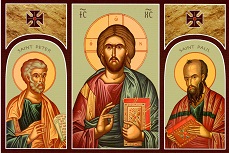
Born again in the name of the Triune God

right-click to save, or push Play

Sermon for the Festival of the Holy Trinity

Ezekiel 18:30-32  +  Romans 11:33-36  +  John 3:1-15

Dear Christians: “In the name of the Father, and of the Son, and of the Holy Spirit. Amen.” With those words we began our service. With those words you were baptized and the name of the Triune God was placed upon you. The doctrine of the Trinity is an important doctrine, to say the least. “Whosoever will be saved, before all things it is necessary that he hold the catholic faith…And the catholic faith is this, that we worship one God in Trinity and Trinity in Unity, neither confounding the Persons nor dividing the Substance.” One God in Trinity, in “three-ness.” And the Three-ness in Unity, in One-ness. Neither confounding, that is, confusing or mixing together the three Persons, nor dividing the Substance, that is, turning Father, Son, and Holy Spirit into three separate “Gods.” It sounds mysterious. It sounds incomprehensible. And, indeed, our God is beyond our understanding, and we rightly echo the words of St. Paul in today’s Epistle: Oh, the depth of the riches both of the wisdom and knowledge of God! How unsearchable are His judgments and His ways past finding out!

But thankfully, it isn’t necessary that whosoever will be saved must “comprehend” one God in Trinity and Trinity in Unity. Whosoever will be saved must worship one God in Trinity and Trinity in Unity. And so we do. We simply worship one God: the Father who loved us and gave His Son for us, the Son who loved us and gave Himself for us as the atoning sacrifice for our sins, and the Holy Spirit who loved us and has brought and continues to bring the Son to us by means of Word and Sacrament, thus bringing us into fellowship with the Father. Not one Person, but three Persons. Not three gods, but one God. That’s it. We don’t claim to comprehend our God. We simply worship Him as He has revealed Himself to us for our salvation.

It’s this simple understanding of our God—Father, Son, and Holy Spirit—that Jesus presents to us in today’s Gospel. To the unbeliever, as Nicodemus was at the time he spoke with Jesus, it’s still nonsensical. But to the one who has come to know the love of God—Father, Son, and Holy Spirit—, specifically in the Person of Jesus Christ, who revealed God to us in the flesh, it’s beautiful.

Nicodemus recognized that Jesus had come from God. For no one can do these signs that You do unless God is with him. Now, what Nicodemus meant by that was that Jesus had come from God like other prophets had come from God, that is, they were called directly by God sometime during their earthly life, called to be a prophet and to teach God’s Word. Nicodemus did not yet know or believe the real truth, that Jesus was unique, that He was no ordinary prophet, but that He was a Person of the Holy Trinity, who came from God like no one else has ever come from God, as the only-begotten Son of God, begotten of the Father before all worlds—the Son who, as Jesus says, “came down from heaven,” as He was conceived by the Holy Spirit and born of the Virgin Mary.

But, you notice, Jesus doesn’t spend any time explaining or describing that mystery of the Trinity to Nicodemus. He goes right to the matter of life and death, of salvation and condemnation. Most assuredly, I say to you, unless one is born again, he cannot see the kingdom of God. Jesus takes Nicodemus right to the pressing issue of his own salvation, of his own entering the kingdom of heaven, which, Jesus says, can only happen if a person is born again.

Why? What’s wrong with our first birth, our natural birth from our mother’s womb? “Behold, I was brought forth in iniquity, And in sin my mother conceived me,” says the Psalmist. Adam’s children are fallen from birth, spiritually dead and doomed from the start. And what’s wrong with the things we’ve done in this life? What about our good deeds? Our sacrifices? Our works of love and obedience? “There is none who does good,” says the Psalmist, “no, not one.” As you heard Ezekiel say in the First Lesson, you have to “get a new heart.” So Jesus drives home the point to Nicodemus: your natural birth is useless for getting you into the kingdom of heaven. And all your works are useless, too. Nothing will get you in, nothing will help you, except for a complete change, a second birth—a second birth that comes with a new heart.

And the thing about that is, your birth is not something that you do, is it? It’s something that’s done to you. Jesus explains the manner of this urgent rebirth: Unless one is born of water and the Spirit, he cannot enter the kingdom of God. Water and the Spirit. Holy Baptism, the Holy Spirit’s means of rebirthing people, saving people and bringing them into the kingdom of God. St. Paul says the same thing to Titus: Not by works of righteousness which we have done, but according to His mercy God saved us, through the washing of regeneration (rebirth) and renewing of the Holy Spirit, whom He poured out on us abundantly through Jesus Christ our Savior. There it is again, a reference to the Holy Trinity: God (the Father) who saved us, through the Spirit’s washing of rebirth, through Jesus Christ our Savior.

Now, it’s true, Baptism is not the Spirit’s only means of causing people to be born again. He also does it through the Word alone, through the Gospel, as Peter says, You have been born again, not of corruptible seed but incorruptible, through the word of God which lives and abides forever. Or as James writes, Of His own will God brought us forth by the word of truth, that we might be a kind of firstfruits of His creatures. It’s the Word of God that the Spirit uses to change us, to convert us, to bring us to faith in Christ and to give us new birth. Baptism is simply the Word of God attached to water, an external rite, instituted by Christ, that is tied to the promise of God. As we say in the Small Catechism, Certainly water does not do it, but the word of God that is with and in the water, and faith that trusts this word of God in the water. For without God’s word the water is plain water and no Baptism. But with the word of God it is a Baptism, that is, a water of life, rich in grace, and a washing of the new birth in the Holy Spirit.

In our Gospel, Jesus is astounded that Nicodemus doesn’t grasp any of this. Not that Baptism had been around for very long, but God had always taught in the Old Testament that no one could be saved by natural birth or by works, but only by a Spirit-wrought change in a person, through repentance and faith, faith in the promise of a Savior from sin and death. One of the key images of that in the Old Testament was the bronze serpent. The Israelites had rebelled against God and Moses again and were being fatally bitten by poisonous snakes out in the desert. But God gave them a means by which to be saved: a bronze serpent lifted up on a pole, combined with the promise that whoever looked to it would be saved from the serpent bite.

Jesus applies all this to Himself: all men are dying from the serpent bite of sin. But the Father, in His mercy, gave His Son to be lifted up on the cross, with the promise that whoever looks to Him in faith will not die, but live. And that faith, to look to Christ for spiritual healing, for forgiveness, is created by the Holy Spirit through preaching, through water and Word, through the Means of Grace. That’s the Holy Trinity, the God of our salvation.

Dear confirmands: You have been baptized in the name of the Triune God, born again of water and the Spirit and brought into the kingdom of God. You have been brought by God’s Holy Spirit to trust in Jesus Christ and Him crucified, and so to know a loving Father in heaven who will never forsake you, never betray you. I’m so thankful for that. I myself was Christ’s ambassador in baptizing three of you, not that it matters who the pastor was who baptized you. But it has given me another reason to give thanks as I have watched you continue to grow and learn about the Triune God and continue to confess and to worship one God in Trinity and the Trinity in Unity. Your parents and grandparents have been instrumental in making sure you have continued in the Word of Christ. That will, no doubt, continue for a while longer while you still live with them or close to them. But today, today you are here to tell us that you do not wish to rely only on your parents or grandparents, but that you yourselves believe what we believe and confess what we confess and that you intend to make this confession and to hold to this faith for the rest of your lives, even to the point of giving up your life and facing death rather than fall away from the faith of the Triune God.

Now, after three years of extra study of God’s Word and of the Small Catechism, we are about to recognize your confirmation. See, it’s not that you’re confirming anything yourselves, or that we, the Church, are confirming you. By the profession of faith you will make here today, you are simply giving evidence of the fact that you have been confirmed by God—Father, Son, and Holy Spirit—and will continue to be confirmed by Him, if you cling to His Word, pray diligently, abide in God’s goodness, and faithfully use the gifts you have received. As you do that, I am fully confident that God will sanctify you in love; that He will protect you in your great weakness against the devil, the world, and the flesh; that He will rule and lead you in His ways; raise you up again when you stumble, comfort you under the cross and in temptation; and preserve you for life eternal. This is the work of God the Holy Trinity, Father, Son, and Holy Spirit. He who calls you is faithful, and He will do it. Amen.

Posted in Sermons | Tagged , , , | Comments Off on Born again in the name of the Triune God

The Spirit of God sets the world on fire

right-click to save, or push Play

Sermon for the Festival of Pentecost

Joel 2:28-32  +  Acts 2:1-13  +  John 14:23-31

Toward the beginning of Holy Week, Jesus said: I came to send fire on the earth, and how I wish it were already kindled! But I have a baptism to be baptized with, and how distressed I am till it is finished! Dear Christian friends, it is finished! The Lord Christ was referring to His baptism in blood, His own blood which He would shed as the payment for the sins of the world, so that all sinners, any sinner from the beginning of the world till its end can plead the blood of Christ before the throne of God and he will be saved. As of Good Friday, it is finished. As of the third day, Easter Sunday, Christ rose from the dead. And as of the day of Pentecost, 50 days after the resurrection, the sending of fire on the earth began.

It was a different kind of fire, of course, not the kind that burns up forests, but the kind that burns through the human heart, convicting of sin and kindling faith in Jesus Christ and Him crucified, where and when it pleases the Spirit of God. That fire has now been sent and kindled in every corner of the planet, even here in America, so many years after that special day of Pentecost. The Spirit of God has, indeed, set the world on fire.

The Day of Pentecost that we Christians commemorate wasn’t the first Pentecost. Pentecost means “fiftieth,” the fiftieth day, or seven weeks + 1 day after the beginning of Passover. Since the days of Moses, the people of Israel were required by God to come to God’s temple three times a year: for Passover, for the Feast of Weeks, and for the Feast of Tabernacles. Just as the sacrifice of Christ, the Lamb of God, changed the significance of the Passover forever, so the coming of the Holy Spirit changed the significance of Pentecost. It used to be celebrated as a harvest festival, and in celebration of the giving of the Law to Moses on Mt. Sinai. Now it is celebrated for the harvest of souls that began 50 days after Jesus’ resurrection, and in celebration of the giving of Gospel of Christ, who has fulfilled the Law of Moses for us.

Let’s consider first the three miraculous signs that occurred on the Day of Pentecost. The disciples of Jesus were all together in one place, in Jerusalem, where Jesus had commanded them ten days earlier to remain until they received the promised gift of the Holy Spirit.

Sign #1: And suddenly there came a sound from heaven, as of a rushing mighty wind, and it filled the whole house where they were sitting.

Remember, the word for “spirit” in Greek and Hebrew is related to the word for “wind.” Jesus had promised to send His Holy Spirit from heaven. And now there comes this sound from heaven of a rushing mighty wind. The sign for the disciples was clear: this is it, what Jesus promised, the sending of the Spirit.

But there was no destruction involved with this rushing mighty wind, no visible movement at all, just the sound of the wind. So the Spirit, too, would blow through the world mightily, not visibly, but audibly, through the preaching of the Gospel.

Sign #2: Then there appeared to them divided tongues, as of fire, and one sat upon each of them.

Here is the fire Jesus promised to send. And it’s just like Jesus to send it in this way. He speaks of fire, and immediately men imagine some spectacular wildfire burning through the earth, or fireballs raining down from heaven. And there will be that kind of fire destroying the world on the Day of Judgment. But on the Day of Pentecost, the fire was only visible for a moment, not a raging fire, not a fire to destroy Jerusalem for having crucified the Christ who was sent to them, but a fire that looked like tongues, hovering over the heads of Jesus’ disciples. This was a sign that the Spirit of God would fill the speech of Jesus’ disciples and would work mightily through the Word they would proclaim. Like a fire spreads through the earth, so the Holy Spirit would go through the earth in connection with the preaching of the Word of God.  As God once said through the prophet Jeremiah, “Is not My Word like fire?” Always working through the Word, the Spirit would convict the world of sin, and would kindle faith throughout the earth.

Sign #3: And they were all filled with the Holy Spirit and began to speak with other tongues, as the Spirit gave them utterance.

The disciples were suddenly able to speak in tongues, in foreign languages they had never learned before. In fact, they probably weren’t even able to understand what they were saying. But the crowds of Jerusalem did! The crowds of Jerusalem were attracted by all the commotion in the house where the disciples were, and the crowds who were visiting Jerusalem for the Feast of Weeks from all the foreign countries in that part of the world heard the wonderful works of God being proclaimed in their own native tongues.

And so God’s Spirit confirmed the word Jesus had already spoken to His disciples: “Go into all the world and preach the Gospel to every creature.” “Go and make disciples of all nations.” “But you shall receive power when the Holy Spirit has come upon you; and you shall be witnesses to Me in Jerusalem, and in all Judea and Samaria, and to the end of the earth.

We’ve talked about the signs of Pentecost and their meaning. Now let’s consider the ongoing meaning of the Holy Spirit’s coming.

The Word of Christ has gone out from Jerusalem, just as the Old Testament prophets had prophesied that it would. No longer are people directed to seek God in His temple in Jerusalem. Now God the Holy Spirit has gone out from Jerusalem seeking to build God’s temple—God’s Church—in every place, even turning human hearts into temples of God, as the apostle Paul says to the Church in Corinth, “Do you not know that your body is the temple of the Holy Spirit who is in you, whom you have from God?”

See what the Holy Spirit has done! You don’t see the Spirit of God, just as you don’t see the wind. But you see the effects of the wind. So also with the Spirit. You see His works, His effects on the world. We call the Spirit’s work “sanctification,” that is, the act of setting people apart for God as holy people, as saints. And there are two parts to sanctification: regeneration and renewal.

Regeneration means causing a person to be born again. It’s what the Spirit does through preaching and through Baptism as He convicts people of sin and brings them to faith in Christ. Regeneration is how the Holy Spirit brings people into the Holy Catholic, Christian, Apostolic Church. Some 3,000 people were regenerated on the Day of Pentecost, and that work has been continuing ever since. See how the Church has spread to every corner of the globe, how the Word of God is being proclaimed in every place, how sinners, one by one, are still being converted from unbelief to faith, still being baptized, still coming into the Church, still being changed from hating Christ to loving Christ. Here, too, in this place, the wonderful works of God are now being proclaimed in English, in our own tongue, because the Spirit’s fire has spread to us, too, and has caused us to be born again. The Spirit’s work of regeneration is also called “justification,” or “the forgiveness of sins.” And it’s something He will continue to do until Christ returns, bringing more people into the Church by giving them a new, spiritual birth. This is the fire that the Holy Spirit spreads.

The other part of sanctification is called renewal. As Jesus said in the Gospel, If anyone loves Me, he will keep My word; and My Father will love him, and We will come to him and make Our home with him. First the Spirit regenerates a person and brings him to love and trust in Jesus. Then the Spirit continually works on the reborn so that we keep the Word of Jesus. He sustains us in faith. He increases our love for God and for our neighbor. He sets us apart from the sinful world, brings us the body and blood of Christ in the Sacrament for the forgiveness of sins, strengthens, guides, and molds us into the image of Christ. And He does all this work of renewal, as the signs of Pentecost teach us, through tongues, through the preaching of the Word of God.

Do you wonder what makes Christians ready to be burned alive or have their heads cut off rather than deny Christ? Or more locally, do you wonder what makes Christians ready and willing to accept heavy fines or other life-changing penalties rather than renounce Christ and His truth? Do you wonder what makes Christians willing to show love to their enemies and to their friends alike, or what makes Christians willing to sacrifice their earthly comfort for the sake of the truth? It’s all the work of God’s Holy Spirit in us, sanctifying us, renewing us and keeping us with Jesus Christ in the one true faith. This, too, is the fire that the Holy Spirit spreads.

And so on this Festival of Pentecost we give thanks to God for the invaluable, fire-spreading, life-giving work of His Holy Spirit. And we pray that the Spirit of God would make us wise to understand the Word of Christ, bold to confess the name of Christ, and eager to walk in the commandments of Christ, until He comes again. In the name of Jesus Christ. Amen.

Posted in Sermons | Tagged , , , | Comments Off on The Spirit of God sets the world on fire

Luther Sermon for Pentecost – Acts 2:1-13

Sermon by Martin Luther

Text: Acts 2:1-13 (KJV)

THE GIFT OF THE HOLY SPIRIT.

1. The historical facts of this day, as well as the beautiful sermon the Holy Spirit delivered through the apostle Peter, which might appropriately be fully treated at this time, we shall leave for the special sermons on the various festivals of the year. For the present we will but briefly speak of the occasion of this festival, and of the office of the Holy Spirit.

2. The festival we call “Pentecost” had origin as follows: When God was about to lead the children of Israel out of Egypt, he permitted them to celebrate the Feast of the Passover on the night of their departure; and commanded them on every annual recurrence of the season to observe the same feast in commemoration of their liberation from bondage and their departure from Egypt. Fifty days later, in their journey through the wilderness, they arrived at Mount Sinai. There God gave them the Law, through Moses; and there they were commanded to observe annually, in commemoration of that giving of the Law, the fiftieth day after the Feast of the Passover. Hence the name “Feast of Pentecost,” the word “Pentecost” coming from the Greek “Pentecoste,” or “fiftieth day.” Our Saxons, rather more in conformity to the Greek, use the word “Pfingsten.” So we have it here of Luke: “When the day of Pentecost was now come,” or “fully come” — when the Jews had properly commemorated the giving of the Law of God on Mount Sinai — the Holy Spirit came, in accordance with Christ’s promise, and gave them a new law. We now celebrate this feast, not because of the old historical event, but because of the new one — the sending of the Holy Spirit. It is in order, then, to give a little instruction concerning the difference between our Pentecost and that of the Jews.

LITERAL LAW AND SPIRITUAL LAW.

3. The occasion of the Jews’ observance was the giving of the literal law; but it is ours to celebrate the giving of the spiritual law. To present the point more clearly, we cite Paul’s distinction of the two covenants. 2 Cor. 3:6. And these two covenants respectively relate to two kinds of people.

4. First, there is the written law commanded of God and composed of written words. It is styled “written” or “literal” because it goes no farther and does not enter the heart, nor are there any resulting works other than hypocritical and extorted ones. Consisting only of letters — a written law — it is wholly dead. Its province being to kill, it ruled a dead people. With dead hearts men could not sincerely observe the commandments of God.

Were every individual left to do as he pleased, being uninfluenced by fear, not one would be found choosing to be controlled by the Law.

Unquestionably, human nature is conscious of the fact that while it prefers to follow its own inclinations it is impelled to do otherwise; for it reasons: “If I observe not God’s commandments, he will punish me, casting me into hell.” Thus our nature is conscious of obeying unwillingly and contrary to desire. Because of the punishment men fear, they soon become enemies to God; they feel themselves sinners, unable to stand before God, and consequently not acceptable to him. Indeed, they would rather there were no God. Such enmity to God remains persistently in the heart, however beautifully nature may adorn itself outwardly. We see, therefore, how the Law, so long as it consists merely of written words, can make no one righteous, can enter no heart. Upon this topic we have elsewhere preached and written at length.

5. The other law is spiritual; not written with ink and pen, nor uttered by lips as Moses read from the tables of stone. We learn from the historical record of the event that the Holy Spirit descended from heaven and filled all the assembled multitude, and they appeared with parting, fiery tongues and preached so unlike they were wont to do that all men were filled with amazement. The Spirit came pouring into their hearts, making them different beings, making them creatures who loved and willingly obeyed God. This change was simply the manifestation of the Spirit himself, his work in the heart. He wrote in those hearts his pure and fiery flame restoring them to life and causing them to respond with fiery tongues and efficient hands. They became new creatures, aware of possessing altogether different minds and different tendencies. Then all was life and light; understanding, will and heart burned and delighted in whatever was acceptable to God. Such is the true distinction between the written law of God and the spiritual. Herein we perceive what is the work of the Holy Spirit.

THE OFFICE OF THE HOLY SPIRIT.

6. From this we should learn what is the office of the Holy Spirit in the Church, and how or by what means he is received in the heart and works there. In time past it was preached that he merely endorses what the councils conclude and the Pope establishes in the Spiritless papal Church.

The fact is, however, the doings of Pope and councils are mere outward matters; they relate to external commands and government. The above theory is, therefore, wholly inconsistent and perverse. Of the work of the Holy Spirit, the Papists make a dead, written law, when it is really a living, spiritual law. Thus they render the Holy Spirit a Moses, and his words mere human prattle. It is all due to ignorance of the character of the Holy Spirit, of the purpose of his coming and the nature of his office. Therefore, let us learn and firmly grasp those things and be able rightly to distinguish the Spirit’s office.

7. Observe here, the Holy Spirit descends and fills the hearts of the disciples sitting in fear and sorrow. He renders their tongues fiery and cloven, and inflames them with love unto boldness in preaching Christ — unto free and fearless utterance. Plainly, then, it is not the office of the Spirit to write books or to institute laws. He writes in the hearts of men, creating a new heart, so that man may rejoice before God, filled with love for him and ready, in consequence, to serve his fellows gladly.

8. What are the means and process the Spirit employs to change and renew the heart? It is through preaching Jesus Christ the Lord, as Christ himself says ( John 15:26): “When the Comforter is come, whom I will send unto you from the Father, even the Spirit of truth, which proceedeth from the Father, he shall bear witness of me.” As we have often heard, the Gospel is the message God would have preached world-wide, declaring to every individual that since no man can through the Law be made righteous, but must rather become more unrighteous, God sent his own beloved Son to shed his blood and die for our sins, from which sins we could not be released by our own effort.

9. It is not enough simply that Christ be preached; the Word must be believed. Therefore, God sends the Holy Spirit to impress the preaching upon the heart — to make it inhere and live therein. Unquestionably, Christ accomplished all — took away our sins and overcame every obstacle, enabling us to become, through him, lords over all things. But the treasure lies in a heap; it is not everywhere distributed and applied. Before we can enjoy it, the Holy Spirit come and communicate it to the heart, enabling us to believe and say, “I too, am one who shall have the blessing.” To everyone who hears is grace offered through the Gospel; to grace is he called, as Christ says ( Matthew 11:28), “Come unto me, all ye that labor and are heavy laden,” etc.

10. Now, with the belief that God has come to our rescue and given us this priceless blessing, inevitably the human heart must be filled with joy and with gratitude to God, and must exultingly cry: “Dear Father, since it is thy will to manifest toward me inexpressible love and fidelity, I will love thee sincerely, and willingly do what is pleasing to thee.”

The believing heart never sees God with jealous eye. It does not fear being cast into hell as it did before the Holy Spirit came, when it was conscious of no love, no goodness, no faithfulness, on God’s part, but only wrath and displeasure. But once let the Holy Spirit impress the heart with the fact of God’s good will and graciousness towards it, and the resulting joy and confidence will impel it to do and suffer for God’s sake whatever necessity demands.

11. Let us, then, learn to recognize the Holy Spirit — to know that his mission is to present to us the priceless Christ and all his blessings; to reveal them to us through the Gospel and apply them to the heart, making them ours. When our hearts are sensible of this work of the Spirit, naturally we are compelled to say: “If our works avail naught, and the Holy Spirit alone must accomplish our salvation, then why burden ourselves with works and laws?”

By the doctrine of the Spirit, all human works and laws are excluded, even the laws of Moses. The Holy Spirit’s instruction is superior to that of all books. The Spirit-taught individual understands the Scriptures better than does he who is occupied solely with the Law.

12. Hence, our only use for books is to strengthen our faith and to show others written testimony to the Spirit’s teaching. For we may not keep our faith to ourselves, but must let it shine out; and to establish it the Scriptures are necessary. Be careful, therefore, not to regard the Holy Spirit as a Law-maker, but as proclaiming to your heart the Gospel of Christ and setting you so free from the literal law that not a letter of it remains, except as a medium for preaching the Gospel.

BELIEVERS MUST YET RESIST SIN.

13. Here we should be intelligent and know that in one sense all is not accomplished when the Holy Spirit is received. The possessor of the Spirit is not at once entirely perfect, pure in all respects, no more sensible of the Law and of sin. We do not preach the doctrine that the Spirit’s office is one of complete accomplishment, but rather that it is progressive; he operates continuously and increasingly. Hence, there is not to be found an individual perfect in righteousness and happiness, devoid of sin and sorrow, ever serving all men with pleasure.

The Scriptures make plain the Holy Spirit’s office — to liberate from sin and terror. But the work is not then complete. The Christian must, in some measure, still feel sin in his heart and experience the terrors of death; he is affected by whatever disturbs other sinners. While unbelievers are so deep in their sins as to be indifferent, believers are keenly conscious of theirs; but Christians are supported by the Holy Spirit, who consoles and strengthens till his work is fully accomplished. It is terminated when they no longer feel their sins.

14. So I say we must be prudent; we must take heed we do not arrogantly and presumptuously boast possession of the Holy Spirit, as do certain proud fanatics. The danger is in becoming too secure, in imagining ourselves perfect in all respects. The pious Christian is still flesh and blood like other men; he but strives to resist evil lusts and other sins, and is unwillingly sensible of evil desires. But he who is not a Christian is carelessly secure, wholly unconcerned about his sins.

15. It is of no significance that we feel evil lusts, provided we endeavor to resist them. One must not go by his feelings and consider himself lost if he have sinful desires. At the same time he must, so long as life lasts, contend with the sins he perceives in himself. He must unceasingly groan to be relieved of them, and must permit the Holy Spirit to operate in him. There is in believers continual groaning after holiness — groaning too deep for expression, as Paul says in Romans 8:26. But Christians have a blessed listener — the Holy Spirit himself. He readily perceives sincere longing after purity, and sends the conscience divine comfort.

There will ever be in us mingled purity and imperfection; we must be conscious both of the Holy Spirit’s presence and of our own sins — our imperfections. We are like the sick man in the hands of the physician who is to restore him to health. Let no one think: “Here is a man who possesses the Holy Spirit; consequently he must be perfectly strong, having no imperfections and performing only worthy works.” No, think not so; for so long as we live in the flesh here on earth, we cannot attain such a degree of perfection as to be wholly free from weakness and faults. The holy apostles themselves often lamented their temptations and sorrows. Their feelings concealed from them the Holy Spirit’s presence, though they were aware of his strengthening and sustaining power in their temptations, a power conveyed through the Word and through faith.

16. The Holy Spirit is given only to the anxious and distressed heart. Only therein can the Gospel profit us and produce fruit. The gift is too sublime and noble for God to cast it before dogs and swine, who, when by chance they hear the preached message, devour it without knowing to what they do violence. The heart must recognize and feel its wretchedness and its inability to extricate itself. Before the Holy Spirit can come to the rescue, there must be a struggle in the heart. Let no one imagine he will receive the Spirit in any other way.

17. We see this truth illustrated in the narrative here. The beloved disciples were filled with fear and terror. They were disconsolate and discouraged, and sunk in unbelief and despair. Only with great difficulty and effort did Christ raise them again. Yet their only failing was their faint-heartedness; they feared the heavens would fall upon them. Even the Lord himself could scarce comfort them until he said: “The Holy Spirit shall descend upon you from heaven, impressing myself upon your hearts until you shall know me and, through me, the Father. Then will your hearts be comforted, strengthened and filled with joy. And so was the promise fulfilled to them on this day of Pentecost.

Posted in Sermons | Tagged , , , | Comments Off on Luther Sermon for Pentecost – Acts 2:1-13

A Helper to face a hostile world

right-click to save, or push Play

Sermon for Exaudi

Ezekiel 36:25-27  +  1 Peter 4:7-11  +  John 15:26-16:4

On Thursday we celebrated Christ’s ascension and His sitting down at the right hand of God the Father Almighty. The Lord Jesus has been highly exalted, and now He reigns over this world for the good of His body, the Church: to support and sustain those whom He has called out of darkness into His marvelous light, and to build His Church through the preaching of the Gospel. Christ was hated by the world when He came, and the world treated Him as it wanted. But now Christ is done with suffering. Now He has entered into glory.

But we are still in the world. The time of our glory hasn’t come yet. First we have work to do in this world—in this world that hates those who belong to Christ just as they hated Christ. Earlier in John chapter 15 Jesus told His disciples: If the world hates you, you know that it hated Me before it hated you. If you were of the world, the world would love its own. Yet because you are not of the world, but I chose you out of the world, therefore the world hates you. You see, it’s not that Christ ever hated the world. It’s that the world hated Christ. In the same way, it’s not that Christians hate the world. It’s that world hates Christians. Sometimes you can feel that hatred. Sometimes not. Sometimes Christians run away from that hatred by abandoning the doctrines that the world finds most offensive, and sometimes Christians become more worldly by adopting the customs, practices, and beliefs of the world. But those who would be true to Christ, true to His whole doctrine, those who put His doctrine into practice in the world will have many enemies here. It’s a hostile world toward Christians, and it always will be.

Our ascended Lord has not abandoned us here behind enemy lines. He went away, He ascended into heaven precisely in order to send us the help we need so much, as we’ve been discussing over these past few weeks. Christ promises to send us a Helper to face a hostile world.

When the Helper comes, whom I shall send to you from the Father, the Spirit of truth who proceeds from the Father, He will testify of Me. And you also will bear witness, because you have been with Me from the beginning. Christ kept this promise. Ten days after He ascended into heaven, He poured out His Holy Spirit on His believers in Jerusalem. We’ll celebrate the coming of the Helper next Sunday on the Festival of Pentecost.

How did the Spirit of truth who proceeds from the Father and the Son testify of Christ? He confirmed the believers in their faith. And He taught them what they needed to know and understand about Christ so that they understood the Scriptures that were written about Him and how He had fulfilled the Scriptures in every way, especially by His suffering for sin, His crucifixion and His resurrection from the dead. And the apostles did bear witness, from the Day of Pentecost until the day of their final testimony, their martyrdom. They bore witness to Christ and have left behind for us the whole New Testament as the inspired testimony of the Holy Spirit.

But these words also apply to us who have been brought to faith by the testimony of the apostles that has come down to us through the ages. The Holy Spirit is promised as a gift to all the baptized, as Peter said on the day of Pentecost, “Repent and be baptized in the name of Jesus Christ for the remission of sins; and you shall receive the gift of the Holy Spirit.” The same Spirit of truth speaks to us and, as St. Paul writes to the Romans, “bears witness with our spirit that we are children of God.” By this testimony, He enables us to remain steadfast in faith and love in the face of the world’s hatred. He guides us to know the truth and renews us so that we become more and more like Jesus Christ. We’ll say more about the Spirit’s work next week.

As for our testimony, it’s different than that of the apostles. Jesus says His apostles would bear witness “because you have been with Me from the beginning.” We don’t bear witness about the things we’ve seen and heard from Jesus; we weren’t with Him from the beginning. We bear witness about the things we’ve been taught by the apostles (and prophets).

That’s not what most people when they think of “Christians giving their testimony.” Most people think of a person standing up in the middle of a church service and telling everyone about their own personal conversion experience or their own personal belief in Jesus. But that’s not what Jesus is talking about. He’s talking about the testimony we have received from the Holy Spirit, confirmed in the apostolic writings, that Jesus is the Christ, the Son of the living God, who died for the world’s sins and who rose again from the dead, who calls all men to repent of their sins and to trust in Him and be baptized for the forgiveness of sins. That is the Holy Spirit’s testimony, and it is the testimony that all true Christians will give.

That testimony, all by itself, will bring some people to faith in Jesus. That testimony of the Holy Spirit will frighten some people because of their sins and will give them a new heart to trust in Christ, who is a good and merciful Savior. But that testimony of the Holy Spirit will also enrage the world against Christians, as Jesus says: These things I have spoken to you, that you should not be made to stumble. They will put you out of the synagogues; yes, the time is coming that whoever kills you will think that he offers God service. And these things they will do to you because they have not known the Father nor Me.

In other words, Jesus is being very upfront with His apostles, and with all of us who come after them. He isn’t painting His Church on earth as a smiley, happy, prosperous group of people who will be treated well in the world. On the contrary, He tells His Christians that they will be persecuted, and not only by the atheists, but by those who call themselves the Church, by those who think of themselves as religious people. Those are the people who will excommunicate you and even put you to death, all the while thinking they are serving God.

But those who persecute people for their confession of the truth are not truly God’s people at all. These things they will do to you because they have not known the Father nor Me. People can pretend to be Christians all they want, but if they persecute other Christians for holding to the truth of Christ, they are hypocrites, pretenders, not fellow citizens of heaven.

It’s important for us to get this. Why will the world do these things to Christians—to apostles, pastors, or laymen? Because you’re so mean? Because you’re not eloquent? Because you don’t have the right people skills? Because you aren’t sensitive enough to their musical tastes? No. Because they have not known the Father nor Me.

When the world mistreats us for being Christians, we mustn’t whine about it. Lots of Christians are tempted to whine about the world’s injustice toward Christians. “That’s not fair!” Well, it isn’t fair. But let God take care of justice. As for us, Christ calls on us to bear the cross, as He bore it, without complaining. He calls on us to continue to trust in Him, and to love our neighbor as Christ continued to do even when He was being tortured, and to speak the truth fearlessly even as Christ continued to speak it before Pontius Pilate. We are not to become hostile toward the world. We are to simply keep testifying to the truth.

What shall be your comfort and strength at that time when the world hates you and the outward church persecutes you? Jesus tells us: But these things I have told you, that when the time comes, you may remember that I told you of them. I told you. I told you, Jesus says. None of this is a crisis. None of this is out of My control. It is part of my reign at God’s right hand until I return, to allow the world to hate you even as I allowed the world to hate Me, to show that you are My servants, My people; to show that the world truly deserves the wrath that will soon be poured out on them. And also to glorify My Gospel and My Spirit, who has such power to bring people to faith and to sustain you in the faith, and even to sustain your love, even in the midst of so much cruelty and injustice.

We couldn’t keep going, we could never face this hostile world without divine help. But we don’t have to face it without help. We have a Helper who is stronger than we are and stronger than the whole world’s strength combined. Cry out to Him for help in every time of need. He is a very present help in trouble. Amen.

Posted in Sermons | Tagged , , | Comments Off on A Helper to face a hostile world

Luther Sermon for the First Sunday after Trinity

Sermon by Martin Luther

EIGHT PAMPHLET EDITIONS OF THIS SERMON APPEARED IN 1523-24.

FIRST SUNDAY AFTER TRINITY.

Text. Luke 16:19-31 (KJV)

SUMMARY OF THIS GOSPEL:

1. Here we have a parable and the connected parts of hypocritical righteousness which nowadays thoroughly knows and possesses almost everything, besides it is also highly esteemed by the world, as if it were the nearest heaven; and the Christian Cross or persecution is despised by every one.

2. The hypocritical righteousness seeks its own, rejoices in its own affairs and helps no one; but the Christian Cross must suffer everything, it lies at our door, no one shows it any mercy, has no consolation except that all who suffer oppression, anxiety and persecution have peace in God. A hypocrite is considered pious; while a Christian must be considered a heretic and a blasphemer of God.

3. Aside from this parable in this Gospel, we have nothing in the whole Scriptures as to how the dead sleep after this life, until the day of Judgment. And since we must not and should not prefer a parable to the revealed, plain and clear written Word; although I do not esteem all as a pure parable, which resembles a history; so I agree here with the explanation of Dr. Martin Luther, as will follow, namely, that we will feel and experience all that is set forth in this parable when we die; especially when the foolish virgins see that the wise virgins have oil in their lamps, and they have none, Matthew 25:7.

1. We have hitherto heard in our Gospel lessons of various examples of faith and of love; for as they all teach faith and love, I hope you are abundantly and sufficiently informed that no human being can be pleasing to God unless he believes and loves. Now in this Gospel text the Lord presents to us at the same time an example of faith and of unbelief or of the state of the godless, in order that we also may abhor the contrary and the opposite of faith and love, and that we may cleave to faith and love more diligently.

For here we see the judgment of God upon the believers and the unbelievers, which is both dreadful and comforting. Dreadful to the faithless and comforting to the faithful. But in order that we may the better grasp the meaning of this text we must picture to ourselves both the rich man and poor Lazarus. In the rich man we see the nature of unbelief and in Lazarus the nature of belief.

PART I. THE RICH MAN.

2. We must not view the rich man according to his outward conduct; for he is in sheep’s clothing, his life glitters and shines beautifully, while he tactfully conceals the wolf. For this Gospel text does not accuse him of adultery, of murder, or robbery, of violence or of having done anything that the world or reason would censure. Yea, he has been as honorable and respectable in his life as that Pharisee who fasted twice a week and was not as other men, of whom Luke 18:11f. speaks. For had he committed such glaring sins the Gospel would have mentioned them since it examines him so particularly that it describes even the purple robe he wore and the food he ate, which are only external matters and God does not judge according to them. Therefore he must have led outwardly an exemplary, holy life; and according to his own opinion and that of others, he must have kept the whole law of Moses.

3. But we must look into his heart and judge his spirit. For the Gospel has penetrating eyes and sees deep into the secret recesses of the soul; reproves also the works which reason cannot reprove, and looks not at the sheep’s clothing, but at the true fruit of the tree to learn whether it is good or not, as the Lord teaches in Matthew 7:17. Hence if we judge this rich man according to the fruits of faith, we will find a heart and a tree of unbelief. For the Gospel chastises him that he fares sumptuously every day and clothes himself so richly, which reason never considers as especially great sins. Besides, the work-righteous people think it is right, and that they are worthy of it, and have merited it by virtue of their holy lives, and they do not see how they thus sin by their unbelief.

4. For this rich man is not punished because he indulged in sumptuous fare and fine clothes; since many saints, kings and queens in ancient times wore costly apparel, as Solomon, Esther, David, Daniel and others; but because his heart was attached to them, sought them, trusted in and chose them, and because he found in them all his joy, delight and pleasure; and made them in fact his idols. This Christ indicates by the words “every day,” that he lived thus sumptuously daily, continuously. From this is seen that he diligently’ sought and chose such a life, was not forced to it nor was he in it by accident, or because of his office or to serve his neighbor; but he only thereby gratified his own . lust, and lived to himself and served only himself.

5. Here one traces the secret sins of his heart as the evil fruit. For where faith is, there is no anxiety for fine clothing and sumptuous feasting, yea, there is no longing for riches, honor, pleasure, influence and all that is not God himself; but there is a seeking and a striving for and a cleaving to nothing except to God, the highest good alone; it is the same to him whether his food be dainty or plain, whether his clothing be fine or homespun. For although they even do wear costly clothes, possess great influence and honor, yet they esteem none of these things; but are forced to them, or come to them by accident, or they are compelled to use them in the service of others.

Thus queen Esther says, that she bore the royal crown against her will, and that she had to wear it for the sake of the King. David also would rather have lived a private life; but for the sake of God and of his people he had to become king. In like manner all the saints considered that they were constrained to fill their stations of influence, honor and glory; and their hearts were never entangled by them, and labored in these external things to be helpful to their neighbor, as Psalm 62:10 says: “Trust not in oppression and become not vain in robbery; if riches increase set not your heart thereon.”

6. But where unbelief reigns man is absorbed by these vanities, he cleaves to them, seeks them and has no rest until he has acquired them, and after he possesses them, he feeds and fattens himself with them as the swine wallow in the mire, and finds at the same time his happiness and felicity there. He never inquires how his heart stands with his God and what he possesses in God and may expect from him; but his belly is his God; and if he cannot get what he wants, he imagines things are going wrong. And lo, these dreadful and wicked fruits of unbelief the rich man does not see, he covers them over, and blinds his own eyes by the good works of his pharisaical life, and hardens himself until no teaching, exhortation, threatening nor promise can help him. Behold, this is the secret sin which to-day’s Gospel punishes and condemns.

7. From this now follows the other sin, that he forgets to exercise love toward his neighbor; for there he lets poor Lazarus lie at his door, and offers him not the least assistance. And if he had not wished to help him personally, he should have commanded his servants to take him in and care for him. It may have been, he knew nothing of God and had never experienced his goodness. For whoever feels the goodness of God, feels also for the misfortune of his neighbor; but whoever is not conscious of the goodness of God, sympathizes not in the misfortune of his neighbor.

Therefore as he has no pleasure in God, he has no heart for his neighbor.

8. For the nature of faith is that it expects all good from God, and relies only on God. For from this faith man knows God, how he is good and gracious, that by reason of such knowledge his heart becomes so tender and merciful, that he wishes cheerfully to do to every one, as he experiences God has done to him. Therefore he breaks forth with love and serves his neighbor out of his whole heart, with his body and life, with his means and honor, with his soul and spirit, and makes him partaker of all he has, just like God did to him. Therefore he does not look after the healthy, the high, the strong, the rich, the noble, the holy persons, who do not need his care; but he looks after the sick, the weak, the poor, the despised, the sinful people, to whom he can be of benefit, and among whom he can exercise his tender heart, and do to them as God has done to him.

9. But the nature of unbelief is that it does not expect any good from God By which unbelief the heart is blinded so that it neither feels nor knows how good and gracious God is; but as Psalm 14:2 says: he cares not for God, seeks not after him. Out of this blindness follows further that his heart becomes so hard, obdurate and unmerciful that he has no desire to do a kindness to his fellow man; yea, he would rather harm and offend everybody. For as he is insensible to the goodness of God, so he takes no pleasure in doing good to his neighbor. Consequently it follows that he does not look after the sick, poor and despised people, to whom he could and should be helpful and profitable; but he casts his eyes upward and sees only the high, rich and influential, from whom he himself may receive advantage, gain, pleasure and honor.

10. So we see now in the example of the rich man that it is impossible to love, where no faith exists, and impossible to believe, where there is no love; for both will and must be together, so that a believer loves everybody and serves everybody; but an unbeliever at heart is an enemy of everybody and wishes to be served by every person and yet he covers all such horrible, perverted sins with the little show of his hypocritical works as with a sheep’s skin; just as that large bird, the ostrich, which is so stupid that when it sticks its head into a bush, it thinks its entire body is concealed. Yea, here you see that there is nothing slinder and more unmerciful than unbelief. For here the dogs, the most irascible animals, are more merciful to poor Lazarus than this rich man, and they recognize the need of the poor man and lick his sores; while the obdurate, blinded hypocrite is so hard hearted that he does not wish him to have the crumbs that fell from his table.

11. Now all unbelieving people are like this rich hypocrite. Unbelief cannot do nor be different than this rich man is pictured and set forth by his life.

And especially is this the character of the clergy-, as we see before our eyes, who never do a truly good work, but only seek a good time, never serving nor profiting any one; but reversing the order they want everybody to serve them. Like harpies they only claw everything into their own pockets; and like the old adage runs they “rob the poor of his purse.” They are not moved in the least by the poverty of others. And although some have not expensive food and raiment, yet they do not lack will power and the spirit of action; for they imitate the rich, the princes and the lords, and do many hypocritically good works by founding institutions and building churches, with which they conceal the great rogue, the wolf of unbelief; so that they become obdurate and hardened and are of no use to anybody.

These are the rich man.

PART II. POOR LAZARUS.

12. Likewise we must not judge poor Lazarus in his sores, poverty and anxiety, according to his outward appearance. For many persons suffer from affliction and want, and yet they gain nothing by it; for example King Herod suffered a great affliction, as is related in Acts 12:23; but afterwards he did not have it better before God on account of it. Poverty and suffering make no one acceptable to God; but, whoever is first acceptable to God, his poverty and suffering are precious in the eyes of God, as <19B615> Psalm 116:15 says: “Precious in the sight of Jehovah is the death of his saints.”

13. Thus we must look into the heart of Lazarus also, and seek the treasure which made his sores so precious. That was surely his faith and love; for without faith it is impossible to please God, as the author of the Epistle to the Hebrews says, Hebrews 11:6. Therefore his heart also must have confessed that he even in the midst of such poverty and misery expected all good from God, and comfortably relied upon him; with whose blessings and grace he was so richly satisfied, and had such pleasure in them, that he would have heartily and willingly suffered even more misery, if the will of his gracious God had so determined. See, that is a true, living faith, which softened his heart by the knowledge of the divine goodness; so that nothing was too heavy or too much to suffer and to do. So clever and skillful does faith make the heart, when it experiences the grace of God.

14. From this faith follows now another virtue, namely, love to one’s neighbor, so that he is willing and ready to serve everybody; but since Lazarus is poor and in misery himself, he had nothing with which he could serve others; therefore his good will is taken for the deed.

15. But this lack of service in temporal things he abundantly makes good by his services in things spiritual. For even now, long after his death, he serves the whole world with his sores, hunger and misery. His bodily hunger feeds our spiritual hunger; his bodily nakedness clothes (or feeds, as some editions read) our spiritual nakedness; his bodily sores heal our spiritual sores; in this way he teaches and comforts by his example, how God is pleased with us, when we are not prosperous here upon the earth, if we believe; and warns us how God is angry with us, even if we are prosperous in our unbelief; just as God had pleasure in Lazarus in his misery, and was displeased with the rich man.

16. Tell me, what king could have rendered a service to the whole world with his possessions, like poor Lazarus has done with his sores, hunger and poverty? Oh, the wonderful works and judgments of God! In what a masterly manner he puts to shame the cunning goddess and fool of this world, namely, reason and worldly wisdom! She stalks abroad and fixes her eyes rather upon the beautiful purple of the rich man, than upon the wounds of poor Lazarus; she would rather center her eyes upon a healthy, handsome person, as this rich man was, than upon a revolting and naked person like Lazarus; yea, she holds her nose before the stench of his wounds and turns her eyes from his nakedness. Thus the great goddess and fool of this world overlooks God in the very presence of such a noble treasure, and always quietly passes her own judgment, and at the same time makes this poor person so precious and dear, that all the kings hence are not worthy to serve him or to dress his sores. For what king, do you think, would not now with his whole heart exchange his health, purple and crown for the sores, poverty and misery of poor Lazarus, if it were possible for him to do so? And what person is there who would now give a snuff for the purple and all the riches of this rich man?

17. Do you not think that this rich man himself, had he not been so blind and had known that such a treasure, a man so precious in the eyes of God, was dying at his gate, would have run out, and dressed and kissed his sores, and laid him in his best bed; and made all his purple and riches to serve him? But at the time God’s judgment went forth, he did not see that he could do it. Then God thought, truly, you are not worthy to serve him.

When later the judgment and work of God were accomplished, the wise fool begins to come to himself; and since he suffers now in hell he will gladly give his house and land, to whom before he would not give a crumb of bread; and wishes now that Lazarus might cool his tongue with the tips of his fingers, whom before he would not touch.

18. Behold, even at the present day God is filling the world with such judgments and works, but no one sees it; yea, everybody despises it. There are continually before our eyes poor and needy persons, whom God lays before us as the greatest treasures; but we close our eyes to them, and see not what God does there; later, when God has done his work, and we have neglected the treasure, then we hasten and wish to serve, but we waited too long. Then we begin and make sacred relics of their garments, shoes and furniture, and make pilgrimages to and erect. churches over their graves, are occupied with many like foolish deeds and thus ridicule ourselves in that we permit the living saints to be trodden under our feet and to perish, and we worship their garments, which is neither necessary nor of any use; so that indeed our Lord will let the judgment fall as he did in Matthew 23:29-33, and say: “Woe unto you, scribes and Pharisees, hypocrites! for ye build the sepulchres of the prophets, and garnish the tombs of the righteous, and say, If we had been in the days of our fathers, we should not have been partakers with them in the blood of the prophets.

Wherefore ye witness to yourselves, that ye are sons of them that slew the prophets. Fill ye up then the measure of your fathers. Ye serpents, ye offspring of vipers, how shall ye escape the judgment of hell?”

19. All believers are like poor Lazarus; and every believer is a true Lazarus, for he is of the same faith, mind and will, as Lazarus. And whoever will not be a Lazarus, will surely have his portion with the rich glutton in the flames of hell. For we all must like Lazarus trust in God, surrender ourselves to him to work in us according to his own good pleasure, and be ready to serve all men. And although we all do not suffer from such sores and poverty, yet the same mind and will must be in us, that were in Lazarus, cheerfully to bear such things, wherever God wills it.

20. For such poverty of spirit may exist in those who have very great possessions; as Job, David, Abraham were poor and rich. For David in Psalm 39:12 says: “I am a stranger with thee, a sojourner, as all my fathers were.” How could that be, since he was a king and possessed extensive lands and large cities? Thus it came about; although he indeed possessed these, yet his heart did not cleave to them, and they were as nothing compared with the riches he had with God. Likewise he had said of the health of his body that it was as nothing compared to the health of his soul before God, and he would indeed not have murmured, had God afflicted him with bodily sores and sickness. So Abraham also, although he had not the poverty and affliction of Lazarus, yet he had the mind and will to bear what Lazarus did, if God had visited him thus. For the saints should have one and the same inner mind and spirit, but they cannot have the same outward work and suffering. Therefore Abraham also recognized Lazarus as one of his own and received him into his bosom; which he would not have done, were he not of the same mind and had he not taken pleasure in the poverty and maladies of Lazarus. Thus is set forth the sum and meaning of the Gospel, that we may see, how faith everywhere saves and unbelief condemns.

PART III. QUESTIONS SUGGESTED AND ANSWERED.

21. This Gospel lesson suggests several questions. First, what is the bosom of Abraham, since it cannot be a natural bosom that is meant? To answer this, it is necessary to know that the soul or spirit of man has no rest or place where it may abide, except the Word of God, until he comes at the last day to the clear vision of God. Therefore we conclude that the bosom of Abraham signifies nothing else than the Word of God, where Christ was promised, Genesis 22:18, to Abraham, namely: “In thy seed shall all the nations of the earth be blessed.” In these words Christ is promised to him, as the one through whom every person shall be blessed, that is, shall be delivered from sin, death and hell, and through no one else and through no other work. All who have believed this passage, have believed on Christ, and have become good Christians, and have also through faith in this Word been released from sin, death and hell.

22. Thus were all the fathers before the birth of Christ carried into Abraham’s bosom; that is, at their death they were established in this saying of God, and they fell asleep in the same, they were embraced and guarded as in a bosom, and sleep there until the day of judgment; excepting those,. who have already risen with Christ, as Matthew 27:52 teaches, where they also remained. In like manner we, when we face death, must lay hold of and trust in the Word of Christ with strong faith, as John 11:26 says: “Whosoever believeth on me shall never die,” or like passages; and thus die in this faith, fall asleep, be embraced and guarded in the bosom of Abraham until the day of judgment. For the word spoken to Abraham and the word spoken to us is the very same word; both speak of Christ, that we must be saved through him. But the former is more particularly called Abraham’s bosom, because it was spoken first to Abraham and began with him.

23. Likewise on the other hand the hell here mentioned cannot be the true hell that will begin on the day of judgment. For the corpse of the rich man is without doubt not in hell, but buried in the earth; it must however be a place where the soul can be and has no peace, and it cannot be corporal.

Therefore it seems to me, this hell is the conscience, which is without faith and without the Word of God, in which the soul is buried and held until the day of judgment, when they are cast down body and soul into the true and real hell. For just as Abraham’s bosom is God’s Word, in which believers rest through faith, and fall asleep and are guarded there until the day of judgment; so must that on the contrary ever be hell, where God’s Word is not, into which the unbelievers are cast until the day of judgment. That can be nothing else than an empty, unbelieving, sinful, and evil conscience.

24. The second question is: How then did Abraham and the rich man converse with one another? Answer: It could not have been a conversation with the natural voice, since the bodies of both were lying in their graves; likewise as little was it the natural tongue that complained of being tormented; nor was it natural fingers and natural water that were desired from Lazarus. Therefore this all must be in the conscience thus: When the conscience is awakened by death or by the agonies of death, then it will have a testimony of its unbelief and will see then for the first time the bosom of Abraham, and those embraced by it, that is, the Word of God, in which it should have believed and did not; from which it has the very greatest pain and anxiety as in hell, and finds neither help nor consolation.

25. Then thoughts arise in the conscience, which held such a conversation, if they could speak, as this rich man did with Abraham, and seeks then whether the Word of God, and all who have believed in it, would help; and with so much anxiety that it would receive the least comfort from the very meanest of men, but even that cannot be granted to him. Then Abraham answered him, that is, his conscience took such a view of the Word of God, that it cannot be; but he had his portion of good things in his life, and he must now suffer; while the others are comforted, whom he despised.

26. At last he feels, that it is declared unto him: There is a great gulf fixed between him and the believers, that they will never be able to come together. These are the thoughts of despair, when the conscience feels that the Word of God is withdrawn forever from him; accordingly the thoughts of his conscience rage and would gladly have the living to know that such are the agonies of death, and he craves that someone would tell it to them.

But it is to no purpose; for he feels an answer in his own conscience, that Moses and the prophets are sufficient, whom they ought to believe, as he himself should have done. All such thoughts pass between the condemned conscience and the Word of God, in the hour of death or in the agonies of death; and no one can perceive what it is, except the one who experiences it; and he who experienced it wished that others should know it, but all is in vain.

27. The third question is: When did that take place, and if the rich man still daily without ceasing suffers thus until the day of judgment? That is a subtle question and not easily answered to the inexperienced. For here one must banish the idea of time from the mind and know that in the other world there is neither time nor hours, but all is an eternal moment or wink of the eye; as 2 Peter 3:8 says: “A day is with the Lord as a thousand years and a thousand years as one day,” Psalm 90:4. Therefore it seems to me that in this rich man we have an example of the future of all unbelievers, when their eyes are opened by death and its agonies; which can endure but for a moment and then cease until the day of judgment, as it may please God; for here no definite rule can be established. Therefore I dare not say that the rich man suffers still at present as he suffered at that time; and I dare not deny that he still suffers thus; for both depend upon the will of God. It is sufficient for us to know that his example and the beginning of the suffering of all unbelievers are here clearly set before us.

28. The fourth question is: Shall we pray for the dead; since here in the Gospel there is no intermediate state between Abraham’s bosom and hell, and those in Abraham’s bosom do not need it, and it does not help those in perdition. We have no command from God to pray for the dead; therefore no one sins by not praying for them; for what God does not bid or forbid us to do, in that no one can sin. Yet, on the other hand, since God has not permitted us to know, how it is with the souls of the departed and we must continue uninformed, as to how he deals with them, we will not and cannot restrain them, nor count it as sin, if they pray for the dead. For we are ever certain from the Gospel, that many have been raised from the dead, who, we must confess, did not receive nor did they have their final sentence; and likewise we are not assured of any other, that he has his final sentence.

29. Now since it is uncertain and no one knows, whether final judgment has been passed upon these souls, it is not sin if you pray for them; but in this way, that you let it rest in uncertainty and speak thus: Dear God, if the departed souls be in a state that they may yet be helped, then I pray that thou wouldst be gracious. And when you have thus prayed once or twice, then let it be sufficient and commend them unto God. For God has promised that when we pray to him for anything he would hear us.

Therefore when you have prayed once or twice, you should believe that your prayer is answered, and there let it rest, lest you tempt God and mistrust him.

30. But that we should institute masses, vigils and prayers to be repeated forever for the dead every year, as if God had not heard us the year before, is the work of Satan and is death itself, where God is mocked by unbelief, and such prayers are nothing but blasphemy of God. Therefore take warning and turn from these practices. God is not moved by these anniversary ceremonies, but by the prayer of the heart, of devotion and of faith; that will help the departed souls if anything will. Vigils, masses, indeed help the bellies of the priests, monks and nuns, but departed souls are not helped by them and God is thus mocked.

31. However, if you have in your house a spook or ghost, who pretends that the departed can be helped by saying masses, you should be fully persuaded that it is the work of Satan. No soul has yet since the beginning of the world reappeared on the earth, and it is not God’s will that it should be so. For here in this Gospel you see that Abraham declares that no one can be sent from the dead to teach the living; but he points them to the Word of God in the Scriptures, Deuteronomy 31: “They have Moses and the Prophets; let them hear them.” By these words Abraham turns to the command of God in Deuteronomy 18:11, where God says: “Thou shalt not be a consulter with a familiar spirit.” Isaiah 8:19. Therefore it is surely nothing but the contrivance of Satan that any spirits should let themselves be entreated and that they should require so and so many masses, such and such pilgrimages or other works, and appear afterwards in the clear light and pretend that certain persons are saved. In this way Satan has introduced error so that the people have fallen from faith into works, and think their deeds may accomplish such great things. And thus is fulfilled what St. Paul declared in 2 Thessalonians 2:10-11, that God would send upon them powerful error, and temptation to unrighteousness, because they have not received the love of the truth that they might be saved.

32. Therefore be prudent and know that God will not let us know how it is with the dead, so that faith may retain its place in the Word of God, which believes that God will save the believers after this life and condemn the unbelievers. If now a familiar spirit present itself before you, take no notice of it; but be assured that it is the devil, and conquer him with this saying of Abraham, “They have Moses and the prophets,” and likewise with the command in Moses, “Thou shalt not be a consulter with a familiar spirit;” then he will soon be gone. If he leave you not, then let him make a noise until he is tired, and in firm faith suffer his wantonness. as. And if it were possible that it were indeed a departed soul or a good spirit even, then you should neither learn nor inquire anything of him, since God has forbidden you to do so; because he has sent his Son himself to teach us all that is necessary for us to know. What he has not taught us, that we should gladly not wish to know, and be satisfied with the teachings of the holy Apostles, in which he is preached to us. However, I have further written on this subject in the Postils on the Gospel for Epiphany and in my booklet on the Misuse of the Mass; where you may read more along this line.

34. Likewise, to give an example, we read in the Historia Tripartita (A History in Three Parts) of a bishop, who came to Corinth where he had come to attend a Council, and as he could not find a suitable lodging for himself and his attendants, he saw a house unoccupied and condemned as uninhabitable, and he asked if he might not be allowed to occupy it. Then they told him in reply that it was infested with nightly ghosts, that no one could live in it, and often people were found dead in it in the morning.

Then the bishop said but little and immediately entered and lodged there the same right, for he very well saw that the devil was the author of all these ghost stories, and as he had firm faith that Christ was Lord over satan, therefore he was not moved by his stratagems and he entered to lodge with him. And thus that house was made free by the prayers and presence of a holy man from infesting ghosts and horrifying spectres.

Behold, you see that the ghosts are satan, and there is little use to dispute with them; but one should despise them with a cheerful spirit as nothing.

35. A similar story we read about Gregory, the Bishop of Cappadocia, that he crossed the Alps and lodged with a heathen sexton or clerk of the church, who had an idol, that answered him the questions he asked; and he made his living by telling the people secret things. Now the bishop knew nothing of this, and proceeded the next day as soon as it was morning on his journey. But Satan or the evil spirit could not endure the prayers and presence of the holy man, and at once he betook himself out of the house, so that the heathen sexton could no longer receive answers as before. As soon as he felt his great loss, he set up a great howl to call back his idol, which appeared to him while he was asleep, and said, it was his own fault because he had lodged the bishop, with whom he (the evil spirit) could not remain. The sexton hastened to overtake the bishop and complained to him that he had taken his god and livelihood, and returned evil for the kindness extended to him. Then the bishop took paper out of his pocket and wrote these few words: “Gregory sendeth greetings to Apollinius. Be thou at liberty, O, Apollinius, to do as thou hast done before. Farewell.” The sexton took the letter and laid it by the side of his idol; then the devil came again, and did as before. Finally the sexton began to think, what a poor god is he, who allows himself to be driven away and lead by my guest who was only a man. And at once he started to the bishop, was instructed and baptized, and grew in his faith, so that he became the eminent bishop of Caesarea, a city in Cappadocia, upon the death of the bishop that baptized him. Behold, how simply faith proceeds, and acts joyfully, securely and effectively. Treat all your troublesome evil spirits in the same way’

Posted in Sermons | Tagged , , | Comments Off on Luther Sermon for the First Sunday after Trinity