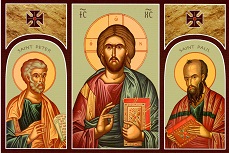
The Shepherd warns His sheep to watch out for wolves

Sermon

Service

To download this video, press here to go to the download page. You may need to scroll down to see the download button.

Download Service Folder Download Bulletin

Sermon for Trinity 8

Romans 8:12-17 + Matthew 7:15-23

You know that the title “pastor” means “shepherd,” and that every pastor is charged with imitating the shepherding of Jesus, the Good Shepherd. That includes feeding the sheep and the lambs, tending to wounds, guiding the way through the desert, seeking the lost and bringing them into the sheepfold. All that is done simply through preaching, teaching, and applying the Word of God. As the apostle Paul commanded Pastor Timothy, I give you this charge: Preach the Word; be prepared in season and out of season; correct, rebuke and encourage—with great patience and careful instruction.

The shepherd has another task, though, and it’s just as important. The shepherd protects the sheep from the wolves that prowl around and seek to capture and devour them. Jesus, the Good Shepherd, did that in a very direct way by confronting the devil and laying down His life for the sheep as the sacrifice for their sins. That, no pastor can imitate. But we also see the Good Shepherd guarding His sheep against the wolves in today’s Gospel in another way, preparing His sheep for the ongoing attacks they’ll face in this life, equipping them with the skills they need to steer clear of danger. It’s one of the God-given tasks that pastors are to keep carrying out. But that means there is also a God-given task for the sheep to carry out. The pastor, for his part, is to warn his flock about false prophets. And the sheep, for their part, are to take those warnings to heart, so that they can do as Jesus commands them: Watch out for false prophets.

What is a prophet? A prophet is, or claims to be, a spokesman for God, one who interprets Scripture for other people. The Scriptures are full of warnings about the teachers, the pastors, the ministers who claim to be speaking for God but who, in reality, teach things that lead the sheep away from the Good Shepherd, away from the truth, whether intentionally or unintentionally.

Now, there is a difference between a teacher and the taught, between the deceiver and the deceived. The deceiver receives a harsher judgment, though neither is entirely safe. Eve allowed Satan to become her teacher in the Garden of Eden and was deceived by the great Deceiver. And although it went worse for Satan, it still went poorly for her. Why? Because she had all the things she needed not to allow herself to be deceived. But she didn’t use the resources at her disposal—the word of God, the rational mind she was given, the husband by her side. Likewise, there are many Christians who have ready access to the Bible and who are able to read and study it in order to shield themselves against the wolves, if they cared to take the time. But many don’t, and so they end up being among the deceived. Because they don’t take Jesus’ command seriously. Watch out for false prophets.

It’s not that these false prophets are easy to spot. It does take effort. It does take time and a willingness to examine them. Because, as Jesus says, they come to you in sheep’s clothing, but inwardly they are ravenous wolves. They claim to come in the name of Christ, as good Christians. They claim to be correct interpreters of the Scriptures, and will quote the Scriptures. They are often popular and successful, having large followings. They may have charisma and charm, and be genuinely sincere. They may even perform miracles. But you can’t use any of those things to identify the wolves underneath. Why? Because those aren’t the marks of a true prophet, of a true interpreter and preacher of God’s Word.

Jesus says that plainly at the end of today’s Gospel. Not everyone who says to me, ‘Lord, Lord,’ will enter the kingdom of heaven; but the one who does the will of my Father in heaven. Many will say to me on that day, ‘Lord, Lord, in your name did we not prophesy? And in your name did we not cast out demons? And in your name did we not perform many miracles?’ And then I will confess to them, ‘I never knew you. Depart from me, you who practice lawlessness!’” You see, many who prophesy in Jesus’ name will be damned. Many who perform miracles and even cast out demons will be damned. As for quoting the Scriptures, Satan himself can do that, as he did with Jesus in the wilderness, twisting their true meaning in order to deceive. And false prophets are often depicted in Scripture as having large followings and great popularity, and wealth, and are usually dripping with charm and charisma. Whereas the true prophets of God often lack all those things.

No, not by their charm, or popularity, or wealth, or fame, not by their quoting of Scripture, or by their nice-sounding words, or by their miracles, will you know them. By their fruits you will know them. Do people gather grapes from thorn bushes, or figs from thistles? Even so every good tree bears good fruit; but a bad tree bears bad fruit. A good tree cannot bear bad fruit, nor can a bad tree bear good fruit. Every tree that does not bear good fruit is cut down and cast into the fire. Therefore by their fruits you will know them.

The fruits of a preacher, the things that people seek to pick from the tree and consume from preachers, is their teaching. Of course, we teach both with our words and with our actions. If a prophet speaks the truth but sets a poor example for the flock with his life, he ends up leading them astray by the false teaching of his life. Likewise, if a prophet speaks lies but lives uprightly, he still ends up leading the flock astray by the false teaching of his mouth.

So, how do you go about analyzing the fruits of a prophet? First and foremost, you seek out a grapevine, not a thorn bush. You seek out a fig tree, not a patch of thistles. Why would you go looking for God’s saving truth from a random person on Facebook, or on a podcast? Why would you look for God’s truth from any woman who claims to be a pastor, knowing that, just by calling herself a pastor, she has twisted God’s Word? Why would you go looking for God’s truth from a denomination or synod that has already shown itself to embrace or tolerate false teaching? No, if you’re looking for good spiritual fruit to eat, begin with a man who has a legitimate call from God, through the Church, to interpret the Scriptures for others, to preach and teach and administer the Sacraments, and who isn’t already teaching against the truth by his communion with false teachers.

And then, you test the prophet’s teaching. Test the spirits, says the apostle John, whether they are of God; because many false prophets have gone out into the world. By this you know the Spirit of God: Every spirit that confesses that Jesus Christ has come in the flesh is of God, and every spirit that does not confess that Jesus Christ has come in the flesh is not of God. And this is the spirit of the Antichrist, which you have heard was coming, and is now already in the world. You see, the false teaching that was beginning to spread in the Church in John’s time, at the end of the first century, was the teaching that Jesus only appeared to be a man, but that He was not true man, that He had no real flesh and blood, because everything material is evil, they said. And so John directs his readers to test the prophets, whether they preached a Christ who was true God and true man, or not. Because a Christ who is not true man could not truly die in man’s place, could not be the Offspring of Eve, or of Abraham, or of David, the promised Savior of mankind.

In our time, the number of false teachings has multiplied beyond measure—teachings that attack the authority and the dependability of the Bible; the Person of Christ; the work of Christ; justification by faith alone; the work of the Holy Spirit; the regenerative, saving power of Baptism; the real presence of Jesus’ body and blood in the Sacrament of the Altar; the office of the ministry; the roles of men and women; sexuality and marriage; the proper role of government; and on and on and on. How! How can the present-day followers of Jesus possibly discern who is speaking the whole truth, and who is spreading falsehoods in Jesus’ name?

The Lord Jesus would not and has not left you helpless. The Helper, the Holy Spirit, remains in and with every believer. The Word of God is at your fingertips, all the time, and so is the reliable testimony of the Holy Christian Church in its Creeds and Confessions, which you here have come to acknowledge as faithful and true. I can’t emphasize strongly enough how vital it is for every Christian who is able to read, who is able to listen, and who still has a mind with which to think and reason, to use the resources at your disposal to guard against the wolf.

So read your Bible. Let me say it again. Read your Bible, regularly. Come to Bible class. Use the ministry by which Christ seeks to guard His precious flock. Read and learn the Small Catechism. Read the Confessions of the Church in the Book of Concord. Pray for the Spirit’s enlightenment. Ask your pastor questions—and test his answers by the Scriptures and the Lutheran Confessions. And along with all of that, you must have a willingness to do as Jesus says, to actually apply it to your life, to keep on watching out for false prophets, and to use the tools at your disposal to criticize and analyze everything you hear. And the Lord will be with you, even to the end of the age, to help you sort out the good from the bad, so that you aren’t tossed back and forth by every wind of doctrine, but are fully equipped and ready to escape from the wolves and to cling only the word of your Good Shepherd, the Lord Jesus Christ. Amen.

Posted in Sermons | Tagged , | Comments Off on The Shepherd warns His sheep to watch out for wolves

God’s care triumphs over man’s abuse

Sermon

Service

To download this video, press here to go to the download page. You may need to scroll down to see the download button.

Download Service Booklet

Sermon for the week of Trinity 7

Jeremiah 31:23-25 + Matthew 10:24-31

Jeremiah’s words in tonight’s First Lesson echo the truth revealed in Sunday’s Gospel of the feeding of the four thousand. For I have satiated the weary soul, and I have replenished every sorrowful soul. What beautiful words! What Jesus did physically for the crowds that day in providing freely for their bodies is a picture of how God promises to comfort and provide for His people., body and soul.

But Jeremiah’s words hardly seem to go together with Jesus’ first words in tonight’s Lesson from Matthew 10, where He warns His disciples about things to come as they carry out their mission in the world, about the hatred and mistreatment they would face at the hands of men. But both things are true, both God’s care and providence for His own, and the reality that the world will hate and mistreat God’s people, just for being God’s people. God will not step in to prevent it all, but, as we learn from Jesus, God’s care for His own does triumph over man’s abuse.

That shouldn’t surprise us at all. For whom did God the Father care more than for His beloved Son, in whom He was always perfectly well pleased? And yet, you know how men treated the Lord Jesus—and how God the Father exalted Him in the end. If you want to follow Jesus, if you want to be taught by Him as your Teacher, if you want to be like Him as your Master, then you should expect to be regarded as He was and treated as He was. As Jesus says, A disciple is not above his teacher, nor a servant above his master. It is enough for a disciple that he be like his teacher, and a servant like his master. If they have called the master of the house Beelzebub, how much more will they call those of his household!

Now, this is to be expected for those who are like Jesus in this world, who hold to His teachings, who reflect His demeanor, who live as He commands. Just be sure that your words and actions are actually like Jesus’ words and actions, that you are a student following in the footsteps of your Teacher. It’s a terrible tragedy when Christians get themselves in trouble with unbelievers for not speaking and acting like Jesus, for behaving sinfully, for teaching doctrines Jesus never taught. When the world mocks Christians for not speaking and acting like Jesus while claiming to be His disciples, we can take no comfort in that. So make every effort to be genuine disciples of your Teacher from day to day, which means you have to learn from Him from day to day, which means you have to know His Word better and better, because that’s where He teaches us about Himself, from Genesis through Revelation.

When you are like Jesus in the world, like students imitating their teacher, then the world will dismiss you like they dismissed Him, will think badly of you, like they thought badly of Him, will even put a target on your back, as they did with your Teacher.

But, Jesus says, do not fear them. Why? Because they won’t be able to do anything to you? No, often, they will. Don’t fear them, because there is nothing covered that will not be revealed, and hidden that will not be known. No matter what they do to you in this life or say about you in this life, you have a sure hope in the next, combined with the sure knowledge that God is watching and keeping track even now. Every insult you bear for Jesus’ sake, every betrayal, every secret slight will be revealed and made known in the end before the judgment seat of God. You may not receive justice in this life for the sins committed against you, but you will receive it in the end.

Whatever I tell you in the dark, Jesus says to the Twelve, speak in the light; and what you hear [whispered] in the ear, preach on the housetops. In other words, everything I’ve said to you in these private discussions, reveal it to the world. Don’t keep anything hidden or secret. Don’t be ashamed of any of My teachings. Even if the world doesn’t want to hear them, even if it would go better for you in the world if you kept quiet about certain things.

Today there are many who call themselves Christians who are ashamed of Jesus’ teachings, or who claim that the apostles taught differently than Jesus did. They’re ashamed of Jesus’ teaching that man is the head of woman, and that women shouldn’t be leaders in the Church. They’re ashamed of Jesus’ teaching about man and woman, marriage, fidelity, and the creation of the universe. Yes, they’re even ashamed of Jesus’ teaching that salvation is only through Him, and that every other religion is false and wicked. So they keep quiet about it and portray instead a Jesus who is a Leftist, Evolutionist, Socialist, Feminist, Universalist. But we will not be ashamed of or keep quiet about anything the Lord has revealed through His apostles. He wanted it all to be shouted from the rooftops, because man shall not live by bread alone but by *every* word that proceeds from the mouth of God.

And do not fear those who kill the body but cannot kill the soul. But rather fear Him who is able to destroy both soul and body in hell. The worst man can do is kill your body. He has no say over your soul, or where you spend eternity once your body is raised back to life. And yet, out of fear, in order to save their lives, many people will compromise their faith in order to make certain people happy. The Romans, for example, in the second century demanded that Christians offer just a little bit of incense to the gods of Rome. Just a little. Just once. Just to prove their loyalty. And, for fear of what the Romans could do to their bodies, some gave in, out of fear. The same kinds of demands are made on Christians today, not to burn incense, but to use certain pronouns, to affirm certain sinful behaviors, to go along with certain “scientific” claims, or certain religious teachings. But Jesus says, don’t fear the Romans! Don’t fear the pagans! Don’t fear the scholars, or the priests, or the synodical officials, or the Inquisition! Rather fear Him who is able to destroy both soul and body in hell. And who is that? It’s God. Fear God more than you fear the government, more than you fear your enemies, or your family, or your friends, more than you fear any man. Because if you fear man more than God, you put not only your body but the eternal state of your soul in jeopardy.

But at the same time as you have a healthy fear of defying God, you should also take great comfort in two things: (1) in your Father’s gracious governance over every aspect of your life, and (2) in your immense value to Him. Jesus says, Are not two sparrows sold for a copper coin? And not one of them falls to the ground apart from your Father’s will. But the very hairs of your head are all numbered. Do not fear therefore; you are of more value than many sparrows. Do not fear any man, because no man can touch you unless it fits into your Father’s will for you and for His Church. And His will for you is not sadistic, or disinterested. Every hair of every believer’s head is numbered by God. Everything about you is known to God, and everything that happens to you is within His fatherly care.

So, trust, and be bold. Be courageous in your profession and confession of the Christian faith. Because in spite of the hardships you will face from sinful men for being like Christ, for being a Christian, you have God’s own guarantee that He will work all of it together for good to those who love Him. God’s care for His own will surely triumph over man’s abuse. Amen.

Posted in Sermons | Tagged | Comments Off on God’s care triumphs over man’s abuse

Baptized means freed to serve righteousness

Sermon

Service

To download this video, press here to go to the download page. You may need to scroll down to see the download button.

Download Service Folder Download Bulletin

Sermon for Trinity 7

Romans 6:19-23 + Mark 8:1-9

Jesus’ miracle of the Feeding of the Four Thousand puts the grace and goodness of God on display—not just His grace toward sinful mankind in general, in that He wants to give away free salvation to everyone, and freely gave His Son into death so that all might be saved, but, in particular, this miracle account highlights God’s love and compassion toward those who acknowledge His grace, toward those who love Him, who follow Him because He is good and gracious, who care what He has to say. Those crowds in our Gospel had spent days away from their homes, had followed Jesus out into the wilderness, not to see spectacular signs and wonders, like the time when He fed the 5,000, but just to be near Him, and to be taught by Him. And, as a result, they witnessed how God, in His grace, takes care of His own and rewards their devotion. It’s a little illustration of what Jesus said to His disciples, Everyone who has left houses or brothers or sisters or father or mother or wife or children or lands, for My name’s sake, will receive a hundred times as much, and will inherit eternal life. Those of you who are members of this little church are members here precisely because you were willing to give up some earthly things for the sake of Jesus’ name. And you can count on God to take special care of you because of it, as long as you remain faithful to His Word above all things.

Today, let’s focus on the effects God’s grace is intended to have on the recipients of it, combined with the promise of what we will receive in the end. For that, we turn to the Epistle from the end of Romans 6.

Now, last week, we read the first part of Romans 6, about how Baptism tied us to Christ, to His death and burial. And there are two ways in which that’s true. First, by being tied to Christ’s death through Baptism, combined, of course, with faith, we get credit for having died the death we deserved because of our sins. It’s as if we ourselves had paid the price, because Christ paid the price for us, and we’re united to Him in Holy Baptism. But here’s the other way in which we’re united to His death. Just as Christ died to sin, so those who are tied to His death are to consider themselves dead to sin, as in, no longer wanting to have anything to do with it. We’re dead to it! And just as Christ was raised to a new and everlasting life, so we who are tied to His death are to live, every day, a new and holy life. That was the message in last week’s Epistle from the first verses of Romans 6. Baptism has freed you, not to go on sinning, but to serve God in righteousness.

Paul continues the thought into today’s reading from the end of Romans 6. God’s grace and goodness in sending His Son to die for our sins hasn’t only brought people to faith in Christ. God’s grace transforms believers into new people. St. Paul speaks to those new people in today’s Epistle and gives us some necessary guidance for our new life. He uses the analogy of slavery or servitude—a slavery to sin, on the one hand, and a slavery to righteousness on the other. And the apostle himself admits that it’s not a perfect analogy, although what it teaches is perfectly true. I am speaking in human terms, he says, because of the weakness of your flesh. In other words, I’m using the example of slavery because that’s all you’re familiar with; it is (or it certainly was, at Paul’s time) a common practice in the world. It doesn’t perfectly reflect what the new life in Christ is supposed to look like. But there is a comparison to be made. And so the apostle makes it.

As you presented your members (that is, the members of your body) as slaves to uncleanness and to lawlessness leading to more lawlessness (that is, before you were baptized into Christ, before you were called to repentance and faith), so now (now that you have tasted the grace of God and have been baptized into Christ and have been called to a new Christian life) present your members as “slaves” to righteousness leading to holiness. It’s a graphic image, presenting your members, your hands, your feet, and everything else, to serve uncleanness as a slave. “Here, sin! Here, lawlessness! Here, uncleanness! I present myself to you! I am in your service!” That’s a good description of the life of the unbeliever. Not that anyone consciously says such a thing. But if you’re not born again of water and the Spirit, you’re not living for God. You’re living for yourself, and, maybe, for your made-up gods. Worshiping a god that is not the true God is uncleanness. Not caring about hearing and learning the Word of God—that’s uncleanness. Cheating, lying, stealing, committing sexual immorality or violence, insulting others, putting other people down, those are acts of lawlessness. We see the most crass examples of it in the news every day, and in the churches where God’s name is blasphemed by their blatantly false teachings. But Paul isn’t only talking about the worst of the worst in the pagan world or among the false Christians. He’s talking about all the Christians in Rome before they became Christians.

Now that you’re Christians, he says, the opposite should be true. Present your members as slaves to righteousness, which leads to holiness as opposed to uncleanness. “Here, righteousness! Here, Lord! I now present myself to You! I am now in Your service! Here I am, to do what is right today, even if it’s hard, even if my sinful flesh rebels against it. Here I am, O righteousness, as your willing slave, to turn away from everything evil, everything ugly, everything disobedient, everything self-serving. Lead me, O God, in the ways of righteousness, and goodness, and love! I am Yours to command! Not my will, but Yours be done!” That’s presenting your members as slaves to righteousness.

For when you were slaves of sin, you were free from righteousness. Before your conversion, when you obeyed your sinful desires, when you gave into temptation easily, when you worked for sin, you were free, all right. Free to live in filth. Free to degrade your bodies. Free to carouse with the rest of the damned and with the detestable demons. The world thinks of those things as freedom, but in reality, it’s slavery to sin. The only thing you’re free from, as an unbeliever, is righteousness, free from what is good and right, free from being in communion with your Creator, who is goodness itself and who always does what is right.

What fruit did you have then in those things of which you are now ashamed? For the end of those things is death. What fruit, what benefit did you really have when you were living free from righteousness, when you were serving sin as its slave? It may have felt good for a moment. You may have gotten ahead in earthly ways. But now that you know God, now that you know Christ, now that, as Christians, you see sin for what it really is, now you’re ashamed of your sinful behavior, not proud of it. Now you know that living like that, living a life that’s separated from God, is not only useless. It ends in death. And here, Paul is obviously not just talking about physical death, which Christians also experience. He’s talking about eternal death and separation from God. He’s talking about a resurrection to condemnation and spending eternity with the devil, in a lake of burning fire. That’s what the slavery of sin leads to.

But now—now that you have been freed from sin and made slaves to God, you have your fruit leading to holiness, and the end is eternal life. For the wages of sin is death; but the gift of God is eternal life in Christ Jesus, our Lord.

Paul loves to use that little phrase, “but now,” marking a sharp contrast between the way things were before you came to know Christ, and after. Before, the Law condemned you as a lawbreaker, which you were. But now, you have been justified through faith in Christ Jesus. Before, you were unclean before God. But now, you have been washed clean in Holy Baptism. Before, you lived as slaves of sin, and were about to receive sin’s wages, which is death. But now, you have been set free from sin—both from its guilt and also from its control. Now, you are free from sin and free to live a life that truly pleases God, not because it’s perfectly righteous, but because you, dear Christians, have been made perfectly righteous in God’s sight through Christ, and He now gladly accepts the good things you do, as you seek to live for Him, not in order to save yourself, but in order to give thanks to God for the goodness and mercy He has showered down upon you in Christ Jesus, our Lord, who gave away food to the four thousand in the wilderness after they followed Him faithfully, and who will give away eternal life and glory to all who follow Him still. Amen.

Posted in Sermons | Tagged , | Comments Off on Baptized means freed to serve righteousness

You haven’t even kept the First Commandment

Sermon

Service

To download this video, press here to go to the download page. You may need to scroll down to see the download button.

Download Service Booklet

Sermon for the week of Trinity 6

Ephesians 2:4-10 + Matthew 19:16-30

The Gospel you heard a moment ago ties in perfectly with the Gospel from this past Sunday, where Jesus revealed just how much God’s commandments require. The Law requires, first and foremost, hearts that are truly and thoroughly good, aligned with God in everything, which then produce only good words and good works.

The rich young man who came to Jesus in the Lesson you heard this evening thought he had done everything the Law required. And yet, still, he suspected that he was not yet right with God. So he approached Jesus to seek, not salvation, but advice.

The man said to Jesus, “Good Teacher, what good thing shall I do that I may have eternal life?” Jesus gives him an almost shocking reply. Why do you call Me good? No one is good but One, that is, God. No one is good? No human being is good? Yes, that’s exactly what the Scriptures say. For example, Psalm 14 says it plainly: There is none who does good, no, not one. Because all have sinned. If the rich man had believed his own Scriptures, he wouldn’t have called Jesus “good,” unless he believed Jesus to be God, which he didn’t. He also would have sought a different way of gaining eternal life than by doing enough good things.

But the rich young man was determined to gain eternal life by doing something, and so Jesus plays along with him, to show him that he isn’t actually as devoted to God as he thinks he is. Jesus explains for the young man what “good thing” he should do. He tells him to “keep the commandments.” That is the good thing you should do. Keep them. But remember what James says: For whoever keeps the whole law but fails in one point has become guilty of all of it.

Which commandments shall I keep?, asked the young man. So Jesus lists a few of the Ten Commandments: 4, 5, 6, 7, 8, and then the summary of the Law: You shall love your neighbor as yourself. Notice, Jesus chose to list only commandments from what we call the Second Table of the Law, the commandments that focus on how you are to love your neighbor. There’s a reason for that: Those are the easy ones. Don’t even worry for the moment about the first and greatest commandment—loving God above all things. Here, just love your neighbor. That’s all. See if you can do that. Unselfishly, sacrificially, from the heart, all the time. Love your neighbor—including your neighbor who’s a jerk, including your neighbor whom you barely know. Live to serve your neighbor.

“I’ve done that!”, replied the young man. “I have kept all these, since my youth

Jesus doesn’t even argue with him or dig deeper into the man’s history. He doesn’t have to. He points out one glaring flaw in the man: If you want to be perfect, go, sell what you have and give to the poor, and you will have treasure in heaven; and come, follow Me. Here’s how you can become good, Jesus tells the man. Give up all your wealth and possessions for the sake of your neighbor, whom you claim to love as yourself. Give up your earthly comfort. Give up your livelihood, your home, your safety. Give up your life. In its place, take up the cross. And follow Me.

Theologians in the Roman Church have taken these words of Jesus as their justification for the monastic life. They call Jesus’ advice to this rich man an “evangelical counsel,” and those who follow this advice are said to be doing works that go above and beyond even what the Law requires of everyone. If you really want to have God’s favor and extra blessings, you have to not only keep the Ten Commandments, but also do extra works like selling all your possessions.

Is that what Jesus is saying here to the rich man? Yes, you’ve kept the Law. Agreed! Now here’s an extra good work for you to do so that you’ll have eternal life? Hardly! God’s favor and eternal life are not gained by keeping the Law, because no one actually keeps the Law! So why does Jesus give the man this extra work to do? He does it to expose the rich man’s biggest failure of all at keeping the Law: his idolatry. What matters most to you in your life? Is it your house? Your family? Your reputation? Your comfort? Your health? Your riches? The person you love? What won’t you give up, if the Son of God says to you, “Leave it behind and come follow Me”? Whatever that thing is is your idol. That thing is truly your god. And so you prove that you haven’t kept even the First Commandment. And if you haven’t kept the first, how can you claim to have kept the rest?

The more you have, the more you want, the more your heart becomes attached to it, and the harder it is to leave it all behind, to give it up, to give it away, if God calls on you to give it away. That’s usually how it is, isn’t it? That’s why Jesus said that it’s easier for a camel to go through the eye of a needle than for a rich man to enter the kingdom of God.

That, of course, sounds like an impossible thing, as if no rich person could ever be saved. And for man, it is impossible. But for God, nothing is impossible. Let’s remember Abraham for a moment. He was a rich man. God never called on him to sell all his possessions and give it to the poor. Instead, God called on him to give up something even dearer to him: his beloved son, Isaac. And not just to give him up, but to kill him with his own hand. And Abraham was prepared to do it. Not because he was so good. But because God had worked that faith in Abraham’s heart, which then produced in Abraham a love for God that was greater than his love for his own son.

Or consider Job. Another rich man. God never called on him to sell all his possessions. Instead, God allowed Satan to destroy all his possessions, and even to kill all his children. And what did Job say? Naked I came from my mother’s womb, And naked shall I return there. The LORD gave, and the LORD has taken away; Blessed be the name of the LORD. Again, Job’s faith in God was counted for righteousness in God’s sight, and it produced in Job a contentment with God that seems impossible. But with God nothing is impossible.

Or consider Jesus’ disciples. Most of them weren’t rich, but they had possessions. Some of them had fishing boats and a fishing business. When Jesus called them to “Come, follow Me,” what did they do? They left all and followed Him, even leaving their fishing boats and fishing nets and the large catch of fish they had taken. That willingness to follow Jesus, no matter the cost, comes only from Spirit-worked faith. Faith by which they were counted righteous before God, counted as “good,” even though, according to the Law, they weren’t, which then enabled them to start doing good.

Faith led Jesus’ disciples to give up everything, when Jesus called on them to do it, to leave behind an existence where getting ahead in this world is the first priority. So, “What about us, Jesus?” they asked. We have left all and followed You. Therefore what shall we have?” The answer? Assuredly I say to you, that in the regeneration, when the Son of Man sits on the throne of His glory, you who have followed Me will also sit on twelve thrones, judging the twelve tribes of Israel. And everyone who has left houses or brothers or sisters or father or mother or wife or children or lands, for My name’s sake, shall receive a hundredfold, and inherit eternal life. You aren’t welcomed into eternal life because you’re good. You’re welcomed in because Jesus is good, and you have been brought to trust in Him for your goodness before God. Trusting in Jesus does require being prepared to leave behind everything on earth. But then there is the promise and the sure hope of far greater rewards in heaven. Not many people are willing to give up what they have on earth in the hope of future glory. Most people are like the rich young man; they’re willing to follow Jesus up to a point, but they walk away sad when they realize that their earthly life matters more to them than Jesus. They walk away sad, because they don’t think Jesus is a Savior worth giving up everything for.

But we know better, don’t we? Because we know that what Paul wrote in tonight’s lesson from Ephesians 2 is true: God, who is rich in mercy, because of His great love with which He loved us, even when we were dead in trespasses, made us alive together with Christ (by grace you have been saved)…that in the ages to come He might show the exceeding riches of His grace in His kindness toward us in Christ Jesus. Amen.

Posted in Sermons | Tagged | Comments Off on You haven’t even kept the First Commandment

The only righteousness that goes beyond

Sermon

Service

To download this video, press here to go to the download page. You may need to scroll down to see the download button.

Download Service Folder Download Bulletin

Sermon for Trinity 6

Romans 6:3-11 + Matthew 5:20-26

There’s a verse in the book of Hebrews that says, Make every effort to live in peace with all men and to be holy; without holiness no one will see the Lord. How many people do you think actually believe that today, especially here in our country? Most people—and I’m talking about people who still believe in a god, or in the afterlife—most people are pretty sure they’ll “see the Lord” in the end, even though they know they’re far from holy. Most people believe they’ll “go to heaven” when they die, whatever that means to them. Because, as Alan Jackson sang long ago, they’re “workin’ hard to get to heaven where I come from,” and, as long as they work hard at it, they’re pretty sure that will be enough. Then, of course, there are those who don’t think they even have to do that much. God will let them into His eternal home, they suppose, simply because He owes it to them as His creatures.

Then along comes Jesus, who says, at the end of the Sermon on the Mount, “Wide is the gate and broad is the way that leads to destruction, and there are many who go in by it. But narrow is the gate and difficult is the way which leads to life, and there are few who find it.” According to Jesus, most people will not see the Lord in the end—at least, not in a pleasant way. Most people will perish. Because they lack the holiness, the righteousness that God requires for people to enter His kingdom.

Well, how does one acquire such holiness, such righteousness? The Methodists have a “method” for it, which is where they got their name from, a method to become holy. The Jews in Jesus’ day thought they knew. They had living examples of what they thought was righteousness all around them in the scribes and the Pharisees, the religious leaders who appeared, on the outside, to be holy men, leading holy lives, fully in line with God’s holy Law. They rested on the Day of Rest! They tithed, down to the individual cumin seed! They prayed lengthy and public prayers! They meticulously obeyed, not only the Ten Commandments, but all the others, too, in the Law of Moses. The average Jew could only aspire to be as holy and righteous as the scribes and Pharisees, because their place in heaven was practically assured.

Then along comes Jesus, who says, toward the beginning of the Sermon on the Mount, I say to you that unless your righteousness goes beyond the righteousness of the scribes and Pharisees, you will by no means enter the kingdom of heaven. Oh my. That must have come as a shock to them. It was meant to! The people had to be shaken out of their delusion that a person could work his way into heaven. And so Jesus opens up and unfolds the Law to them, to show them just how much is required for a person to be holy and righteous enough to enter the kingdom of heaven.

 “You have heard that it was said to the people of old, ‘You shall not murder,’ and, ‘Whoever murders will be subject to judgment.’ But I say to you that whoever is angry with his brother will be subject to judgment. And whoever says to his brother, ‘You idiot!’  will be subject to the council; but whoever says, ‘You fool!’ will be subject to hellfire.

God’s Law, that is, His moral Law, His standard of right and wrong, is absolute, and strict. It’s not enough to “not murder.” That’s only a small part of righteousness. God’s Law requires a heart that doesn’t hate or get unjustly angry, and a mouth that doesn’t insult, or berate, or spread rumors about your neighbor. Instead, God’s Law requires a heart that loves even one’s enemies, and is merciful and compassionate, and a mouth that builds up, helps, and defends at all times. And then, yes, it also requires hands that do not kill, or hurt, or harm, but that, on the contrary, do good to one’s neighbor. That’s the righteousness that the Law requires, according to what we number as the Fifth Commandment.

In the verses right after today’s Gospel, Jesus goes on to the Sixth commandment: You have heard that it was said to those of old, ‘You shall not commit adultery.’ But I say to you that whoever looks at a woman to lust for her has already committed adultery with her in his heart. If your right eye causes you to sin, pluck it out and cast it from you; for it is more profitable for you that one of your members perish, than for your whole body to be cast into hell. And if your right hand causes you to sin, cut it off and cast it from you; for it is more profitable for you that one of your members perish, than for your whole body to be cast into hell. Furthermore it has been said, ‘Whoever divorces his wife, let him give her a certificate of divorce.’ But I say to you that whoever divorces his wife for any reason except sexual immorality causes her to commit adultery; and whoever marries a woman who is divorced commits adultery.

You see, it’s not enough to avoid extramarital sex, although righteousness certainly demands that. God’s Law also requires eyes that don’t even linger on a woman, or a man, and hearts that don’t lust for them. It requires dressing yourself and behaving in a way that doesn’t tempt your neighbor to lust for you, either. It requires genuine love and fidelity and respect within a marriage, and it requires that marriage must truly be until “death do us part,” not the divorce-because-we-don’t-get-along-anymore practice of our society. That’s the righteousness that the Law requires.

Jesus goes on to give an example of what righteousness looks like. “Therefore if you bring your gift to the altar, and there remember that your brother has something against you, leave your gift there before the altar and go; first be reconciled to your brother, and then come and offer your gift. Agree with your adversary quickly, while you are on the way with him, lest your adversary deliver you to the judge, and the judge deliver you to the officer, and you be thrown into prison. Truly I say to you, you will by no means get out of there until you have paid the last penny.”

In other words, people like to think that they’re a-okay with God, even if they’re not a-okay with their fellow human beings, as if “it’s just me and the Lord, no one else matters.” But Jesus says, no. God’s own Law demands, not only that you render to God due reverence, fear, honor, and worship, but that you live in perfect peace and harmony with your neighbor, and that you atone for your sins against your brother, because if you’ve sinned against your neighbor and you haven’t made it right with him, he has something against you, you can’t even begin to deal with God. He doesn’t want your worship. He doesn’t want your “gift” or your offerings, if you refuse to be reconciled to your brother.

Jesus goes on in the same way, throughout the Sermon on the Mount, revealing just how strict God’s Law is, exposing the scribes and the Pharisees, and everyone else, as lawbreakers, as unrighteous people. Because no one, including the Pharisees, keeps the Law in this way. The scribes and Pharisees had, at best, relatively decent outward obedience. But their hearts were far from sinless, and their words were often dripping with poison. There’s a damning verse in the epistle of James that puts it this way: Whoever keeps the whole law but fails in one point has become guilty of all of it.

So, what lesson—or better, what was the first lesson Jesus’ disciples were to take away from these words He spoke to them? “I have to work harder than the Pharisees? I have to fix my heart and my words and my actions? And then, hopefully, I’ll have enough righteousness to enter the kingdom of heaven?” No!

Jesus, through His apostle Paul in Romans chapter 3, explains it this way: Now we know that whatever the law says it speaks to those who are under the law, so that every mouth may be stopped, and the whole world may be held accountable to God. For by works of the law no human being will be justified in his sight, since through the law comes knowledge of sin.

The Law is good. What it demands is good. But it wasn’t given in order for people to enter the kingdom of heaven by keeping it. It was given to show us what God judges to be righteousness, and then, to show us that we all fall short of that righteousness, because, ever since Adam and Eve’s fall into sin, mankind is unable to be the righteous people we need to be in order to enter God’s kingdom. The Law was given to show us what unrighteous people we are. The Law was given, as St. Paul writes, to lead us to Christ, who is the end of the Law for righteousness for all who believe.

This is how Paul goes on to describe it in Romans 3: But now the righteousness of God apart from the law is revealed, being witnessed by the Law and the Prophets, even the righteousness of God, through faith in Jesus Christ, to all and on all who believe. For there is no difference; for all have sinned and fall short of the glory of God, being made righteous freely by His grace through the redemption that is in Christ Jesus, whom God set forth as the atonement seat, through faith, in His blood…that God might be righteous and the one who makes the person who has faith in Jesus righteous.

You see what this means? The only way for sinners, like you and me, to have a righteousness that goes beyond the righteousness of the scribes and Pharisees is to have the righteousness of faith, the righteousness that doesn’t come from trying to keep the Law, but that is credited to us lawbreakers through faith in Christ Jesus, who paid for all our unrighteousness with His own blood, shed on the cross. We are “made righteous” or “declared righteous” or “justified” through faith in Christ crucified. That’s the righteousness that makes us worthy of and able to enter the kingdom of heaven.

And you were clothed with that righteousness in Holy Baptism. For as many of you as were baptized into Christ have put on Christ, who is called “the Righteous One,” because He truly was, and is. The baptized, who cling to Christ in faith, are sinners who are no longer counted as sinners, sinners who are no longer subject to hellfire.

But being baptized into Christ also has other implications, as Paul said in today’s Epistle. Do you not know that all of us who were baptized into Jesus Christ were baptized into his death? So, then, we were buried with him through baptism into death, in order that, just as Christ was raised from the dead through the glory of the Father, so we, too, should walk in a new life. You’re counted righteous by faith, through Baptism, but if you believe in Jesus, that means you’ve been born again. You’ve been given a new heart, a new life, with holy impulses, holy desires. You’ve been recreated for a new kind of obedience, to live no longer in unrighteousness and filth, but in righteousness that resembles the righteousness of God.

And so we turn back to Jesus’ words of Law, not to find out how to become worthy of the kingdom of heaven, but to find out how children of heaven are expected to behave in our Father’s house. So, yes, turn away from murdering, but also turn away from hatred and bitterness, and from hurtful or insulting words. Turn away from speaking ill of your brother, away from bitter anger, and toward love. Turn away from sexual immorality, toward sexual purity. Turn away from lustful and lingering looks, and away from filthy thoughts, toward love for and commitment to your own spouse, and toward kind and clean thoughts toward those of the opposite sex. And, thinking about how your actions may have an impact on others, dress modestly, and behave purely and chastely. And, yes, bring your offerings to God and worship Him, but first, if you’ve offended your brother, or even if he thinks you’ve offended him, care enough about him to try and work it out with him, because those are the righteous attitudes and behaviors that God expects from those whom He has made His children through faith in Christ Jesus.

So, you need a righteousness that goes beyond the righteousness of the scribes and Pharisees? They didn’t have the righteousness that you have, the righteousness that comes through faith in Christ Jesus, but you baptized believers have it! You are children of the kingdom of heaven, children of the righteous God! Now go forth, and live accordingly. Amen.

Posted in Sermons | Tagged , | Comments Off on The only righteousness that goes beyond