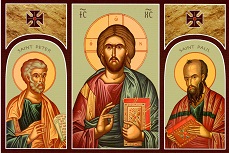
Each Day in the Word, Saturday, February 18th

Luke 5:12-39

12 And it happened when He was in a certain city, that behold, a man who was full of leprosy saw Jesus; and he fell on his face and implored Him, saying, “Lord, if You are willing, You can make me clean.”

13 Then He put out His hand and touched him, saying, “I am willing; be cleansed.” Immediately the leprosy left him. 14 And He charged him to tell no one, “But go and show yourself to the priest, and make an offering for your cleansing, as a testimony to them, just as Moses commanded.”

15 However, the report went around concerning Him all the more; and great multitudes came together to hear, and to be healed by Him of their infirmities. 16 So He Himself often withdrew into the wilderness and prayed.

17 Now it happened on a certain day, as He was teaching, that there were Pharisees and teachers of the law sitting by, who had come out of every town of Galilee, Judea, and Jerusalem. And the power of the Lord was present to heal them. 18 Then behold, men brought on a bed a man who was paralyzed, whom they sought to bring in and lay before Him. 19 And when they could not find how they might bring him in, because of the crowd, they went up on the housetop and let him down with his bed through the tiling into the midst before Jesus.

20 When He saw their faith, He said to him, “Man, your sins are forgiven you.”

21 And the scribes and the Pharisees began to reason, saying, “Who is this who speaks blasphemies? Who can forgive sins but God alone?”

22 But when Jesus perceived their thoughts, He answered and said to them, “Why are you reasoning in your hearts? 23 Which is easier, to say, ‘Your sins are forgiven you,’ or to say, ‘Rise up and walk’? 24 But that you may know that the Son of Man has power on earth to forgive sins”—He said to the man who was paralyzed, “I say to you, arise, take up your bed, and go to your house.”

25 Immediately he rose up before them, took up what he had been lying on, and departed to his own house, glorifying God. 26 And they were all amazed, and they glorified God and were filled with fear, saying, “We have seen strange things today!”

27 After these things He went out and saw a tax collector named Levi, sitting at the tax office. And He said to him, “Follow Me.” 28 So he left all, rose up, and followed Him.

29 Then Levi gave Him a great feast in his own house. And there were a great number of tax collectors and others who sat down with them. 30 And their scribes and the Pharisees complained against His disciples, saying, “Why do You eat and drink with tax collectors and sinners?”

31 Jesus answered and said to them, “Those who are well have no need of a physician, but those who are sick. 32 I have not come to call the righteous, but sinners, to repentance.”

33 Then they said to Him, “Why do the disciples of John fast often and make prayers, and likewise those of the Pharisees, but Yours eat and drink?”

34 And He said to them, “Can you make the friends of the bridegroom fast while the bridegroom is with them? 35 But the days will come when the bridegroom will be taken away from them; then they will fast in those days.”

36 Then He spoke a parable to them: “No one puts a piece from a new garment on an old one; otherwise the new makes a tear, and also the piece that was taken out of the new does not match the old. 37 And no one puts new wine into old wineskins; or else the new wine will burst the wineskins and be spilled, and the wineskins will be ruined. 38 But new wine must be put into new wineskins, and both are preserved. 39 And no one, having drunk old wine, immediately desires new; for he says, ‘The old is better.’ ”

Within this text God demonstrates His authority (as only He has) along with the power to heal (as only He can do)! There are different kinds of healing taking place. Some physical, some spiritual.

Some, effected by the fallenness of this world suffer from maladies in their bodies, and they need healing. God’s Word uses physical maladies to display man’s inner (inescapable) corruption of original sin. God’s Word is revealing that all of mankind is in need of spiritual healing!

Although God can pick choose who He would (or would not) heal physically (as His will is always best), God’s will was also best in that He secured full atonement for the sins of the entire world through the only-begotten Son, Christ Jesus! That salvation is there for man to receive by faith all the time!

The paralytic and his friends demonstrate what God-created faith does — just as it did with the leper and tax-collector. Faith desires Jesus and what Jesus has fully merited to offer out, namely, forgiveness of sins. So the paralytic and his friends, called by the Gospel, decide to go through the roof.

Jesus, being the Good-physician, heals the paralytic’s greatest need first, the need of his soul. His sins are forgiven because Jesus sees the paralytic’s faith. “Only God has the authority to forgive sins!” is grumbled. But since the Son of Man has that authority, He then reveals it by healing the paralytics body.

Rejoice that you have been, and continue to be, called by the Gospel; and that God-created faith continues to brings you to do what faith desires, namely, continually partake of Jesus and the forgiveness that He offers through His means of grace!

Let us pray: O God, the strength of all who put their trust in You, mercifully grant that by Your power we may be defended against all adversity; through Jesus Christ, Your Son, our Lord, who lives and reigns with You and the Holy Spirit, one God, now and forever.


Posted in Devotion | Comments Off on Each Day in the Word, Saturday, February 18th

Each Day in the Word, Friday, February 17th

Luke 4:14-44

14 Then Jesus returned in the power of the Spirit to Galilee, and news of Him went out through all the surrounding region. 15 And He taught in their synagogues, being glorified by all.

16 So He came to Nazareth, where He had been brought up. And as His custom was, He went into the synagogue on the Sabbath day, and stood up to read. 17 And He was handed the book of the prophet Isaiah. And when He had opened the book, He found the place where it was written:

18 “The Spirit of the Lord is upon Me,
Because He has anointed Me
To preach the gospel to the poor;
He has sent Me to heal the brokenhearted,
To proclaim liberty to the captives
And recovery of sight to the blind,
To set at liberty those who are oppressed;
19 To proclaim the acceptable year of the Lord.”

20 Then He closed the book, and gave it back to the attendant and sat down. And the eyes of all who were in the synagogue were fixed on Him. 21 And He began to say to them, “Today this Scripture is fulfilled in your hearing.” 22 So all bore witness to Him, and marveled at the gracious words which proceeded out of His mouth. And they said, “Is this not Joseph’s son?”

23 He said to them, “You will surely say this proverb to Me, ‘Physician, heal yourself! Whatever we have heard done in Capernaum, do also here in Your country.’ ” 24 Then He said, “Assuredly, I say to you, no prophet is accepted in his own country. 25 But I tell you truly, many widows were in Israel in the days of Elijah, when the heaven was shut up three years and six months, and there was a great famine throughout all the land; 26 but to none of them was Elijah sent except to Zarephath, in the region of Sidon, to a woman who was a widow. 27 And many lepers were in Israel in the time of Elisha the prophet, and none of them was cleansed except Naaman the Syrian.”

28 So all those in the synagogue, when they heard these things, were filled with wrath, 29 and rose up and thrust Him out of the city; and they led Him to the brow of the hill on which their city was built, that they might throw Him down over the cliff. 30 Then passing through the midst of them, He went His way.

31 Then He went down to Capernaum, a city of Galilee, and was teaching them on the Sabbaths. 32 And they were astonished at His teaching, for His word was with authority. 33 Now in the synagogue there was a man who had a spirit of an unclean demon. And he cried out with a loud voice, 34 saying, “Let us alone! What have we to do with You, Jesus of Nazareth? Did You come to destroy us? I know who You are—the Holy One of God!”

35 But Jesus rebuked him, saying, “Be quiet, and come out of him!” And when the demon had thrown him in their midst, it came out of him and did not hurt him. 36 Then they were all amazed and spoke among themselves, saying, “What a word this is! For with authority and power He commands the unclean spirits, and they come out.” 37 And the report about Him went out into every place in the surrounding region.

38 Now He arose from the synagogue and entered Simon’s house. But Simon’s wife’s mother was sick with a high fever, and they made request of Him concerning her. 39 So He stood over her and rebuked the fever, and it left her. And immediately she arose and served them.

40 When the sun was setting, all those who had any that were sick with various diseases brought them to Him; and He laid His hands on every one of them and healed them. 41 And demons also came out of many, crying out and saying, “You are the Christ, the Son of God!”

And He, rebuking them, did not allow them to speak, for they knew that He was the Christ.

42 Now when it was day, He departed and went into a deserted place. And the crowd sought Him and came to Him, and tried to keep Him from leaving them; 43 but He said to them, “I must preach the kingdom of God to the other cities also, because for this purpose I have been sent.” 44 And He was preaching in the synagogues of Galilee.

God in His infinite wisdom chose not supply any history about Jesus’ life after His questioning the teachers of the Law when He was twelve years old. He eventually appears before John the Baptist to be baptized (and consequently consecrate all waters of Holy Baptism to be holy through His blood). After having been tempted by the devil for forty days of fasting, the Lord Jesus returns to Galilee and then on to Nazareth where He grew up. God’s Word reveals that He went into the synagogue on the Sabbath day and stood up to read. This was Jesus’ custom.

So, what’s the first thing that the Lord reads after His Holy Baptism and temptation? Not coincidentally, He reads the passage from Isaiah which was quoted to the disciples of John the Baptist when they were sent to ascertain whether He was the One sent from God, or if they were to look for another. The very prophecy of Isaiah is fulfilled in the midst of those in Nazareth on this Sabbath, and what do they do? They reject Him. They think He cannot be the Messiah, for He is only Joseph’s son. Their reaction was a testament to the lowly upbringing of the Lord — who was born in a humble way and lived a humble life — with parents who were not people of high standing.

What, then, does the Lord do after His rejection? He continues to do the things that Isaiah said He would do — He casts out demons and heals the sick — destroying the kingdom and stronghold of the devil. He completed the defeat of the devil’s kingdom with His death on the cross — and He did it for you!

Let us pray: O God, the strength of all who put their trust in You, mercifully grant that by Your power we may be defended against all adversity; through Jesus Christ, Your Son, our Lord, who lives and reigns with You and the Holy Spirit, one God, now and forever.

Posted in Devotion | Comments Off on Each Day in the Word, Friday, February 17th

Each Day in the Word, Thursday, February 16th 

Mark 12:13-44

13 Then they sent to Him some of the Pharisees and the Herodians, to catch Him in His words. 14 When they had come, they said to Him, “Teacher, we know that You are true, and care about no one; for You do not regard the person of men, but teach the way of God in truth. Is it lawful to pay taxes to Caesar, or not? 15 Shall we pay, or shall we not pay?”

But He, knowing their hypocrisy, said to them, “Why do you test Me? Bring Me a denarius that I may see it. 16 So they brought it.

And He said to them, “Whose image and inscription is this?” They said to Him, “Caesar’s.”

17 And Jesus answered and said to them, “Render to Caesar the things that are Caesar’s, and to God the things that are God’s.”

And they marveled at Him.

18 Then some Sadducees, who say there is no resurrection, came to Him; and they asked Him, saying: 19 “Teacher, Moses wrote to us that if a man’s brother dies, and leaves his wife behind, and leaves no children, his brother should take his wife and raise up offspring for his brother. 20 Now there were seven brothers. The first took a wife; and dying, he left no offspring. 21 And the second took her, and he died; nor did he leave any offspring. And the third likewise. 22 So the seven had her and left no offspring. Last of all the woman died also. 23 Therefore, in the resurrection, when they rise, whose wife will she be? For all seven had her as wife.”

24 Jesus answered and said to them, “Are you not therefore mistaken, because you do not know the Scriptures nor the power of God? 25 For when they rise from the dead, they neither marry nor are given in marriage, but are like angels in heaven. 26 But concerning the dead, that they rise, have you not read in the book of Moses, in the burning bush passage, how God spoke to him, saying, ‘I am the God of Abraham, the God of Isaac, and the God of Jacob’? 27 He is not the God of the dead, but the God of the living. You are therefore greatly mistaken.”

28 Then one of the scribes came, and having heard them reasoning together, perceiving that He had answered them well, asked Him, “Which is the first commandment of all?”

29 Jesus answered him, “The first of all the commandments is: ‘Hear, O Israel, the Lord our God, the Lord is one. 30 And you shall love the Lord your God with all your heart, with all your soul, with all your mind, and with all your strength.’ This is the first commandment. 31 And the second, like it, is this: ‘You shall love your neighbor as yourself.’ There is no other commandment greater than these.”

32 So the scribe said to Him, “Well said, Teacher. You have spoken the truth, for there is one God, and there is no other but He. 33 And to love Him with all the heart, with all the understanding, with all the soul, and with all the strength, and to love one’s neighbor as oneself, is more than all the whole burnt offerings and sacrifices.”

34 Now when Jesus saw that he answered wisely, He said to him, “You are not far from the kingdom of God.”

But after that no one dared question Him.

35 Then Jesus answered and said, while He taught in the temple, “How is it that the scribes say that the Christ is the Son of David? 36 For David himself said by the Holy Spirit:

‘The Lord said to my Lord,
“Sit at My right hand,
Till I make Your enemies Your footstool.” ’

37 Therefore David himself calls Him ‘Lord’; how is He then his Son?”

And the common people heard Him gladly.

38 Then He said to them in His teaching, “Beware of the scribes, who desire to go around in long robes, love greetings in the marketplaces, 39 the best seats in the synagogues, and the best places at feasts, 40 who devour widows’ houses, and for a pretense make long prayers. These will receive greater condemnation.”

41 Now Jesus sat opposite the treasury and saw how the people put money into the treasury. And many who were rich put in much. 42 Then one poor widow came and threw in two mites, which make a quadrans. 43 So He called His disciples to Himself and said to them, “Assuredly, I say to you that this poor widow has put in more than all those who have given to the treasury; 44 for they all put in out of their abundance, but she out of her poverty put in all that she had, her whole livelihood.”

A question is posed to Jesus, by the Pharisees, about paying taxes to Caesar. They were scheming to get the Lord to admit to paying the tax, that way they could say He was not really the Messiah — because the Messiah would not hold allegiance with Caesar. The irony in this, however, comes later when, in order to get the Lord Jesus crucified, they themselves claim they have no king but Caesar.

The Sadducees similarly try a scheme of their own. They question Jesus about the resurrection — something they do not even believe in. They only read the Torah, the five books of Moses, and disregarded the rest of the Word of God. Just as He did with the devil in the wilderness when he was tempting Him, the Lord Jesus refutes the Sadducees with the proper use of God’s Word. He is the God of the living. Even after Abraham, Isaac, and Jacob were many years in the grave, they were still living in Heaven when the Lord spoke to Moses.

As Scripture reveals Scripture, this explains how the Son of David can be the Lord of David, because David was still living in Heaven. The Lord Jesus was Lord over David because He was both God and man. He was the Son who was the Lord. And by His sacrifice on the tree of the cross (which He made holy through His precious blood) He made sin, death, and the devil—His enemies— to serve as His footstool and give you freedom from their power over you. Thanks be to God, indeed!

Let us pray: O God, the strength of all who put their trust in You, mercifully grant that by Your power we may be defended against all adversity; through Jesus Christ, Your Son, our Lord, who lives and reigns with You and the Holy Spirit, one God, now and forever.


Posted in Devotion | Comments Off on Each Day in the Word, Thursday, February 16th 

Hold onto what you have

Sermon (audio)
Download Sermon

Service(video)
[vimeo https://vimeo.com/799346865 w=540&h=360]
Download Service Download Bulletin

Sermon for Midweek of Sexagesima

Revelation 2:18-29

Tonight we come to the fourth letter from Jesus to His seven churches in Asia Minor, to the angel of the church in Thyatira. The situation in Thyatira sounds more or less similar to that of the church in Pergamum, which we heard about last week. As we look at this evening’s letter, we’ll note this specific emphasis, that faithfulness to Christ includes watching out for false doctrine and guarding against sinful seduction.

The letter begins, as always, with a part of the vision of Jesus Himself that John saw in chapter 1. Here he highlights the fact that Jesus has eyes like a flame of fire, and whose feet are like bronze. He wants this pastor, and us, to remember that, as true God and true Man, He sees all things, knows all things. Nothing is hidden from His sight. He also wants this pastor, and us, to remember that His feet are like bronze, that is, His rule over all things, since “all things have been placed under His feet,” is absolute. He isn’t malleable. He doesn’t tread lightly on His enemies.

This Jesus has words of high praise for the pastor of the church in Thyatira. I know your works, and your love, and your service, and your faith, and your patience, and that your last works are more than your first. Unlike the pastor in Ephesus, who had abandoned his first love, this pastor retains it. He is no detached lecturer on pure doctrine. No, he loves the Lord and the Lord’s people and shows it with his works of love. He watches over the flock as one who serves, not as one who rules. He patiently endures trials. And, like a healthy branch growing on a vine, he is producing more and more fruit, more good works than at first.

But not all is well. I have a few things against you, because you allow that woman Jezebel, who calls herself a prophetess, to teach and to seduce my servants to commit fornication and to eat things sacrificed to idols. If you recall from last week, Pergamum’s pastor was allowing his members to be deceived by outsiders, to be dragged off and seduced to commit sexual immorality and to eat things sacrificed to idols. This pastor’s members are also being seduced to do the same things, but by a woman within the congregation.

Jesus names her Jezebel, almost certainly a figurative name, because she resembled the wicked queen Jezebel from the Old Testament, the wife of Ahab. She seduced countless people in the northern kingdom of Israel to join with her in her adultery and idolatry. She opposed the prophet Elijah and tried to kill him. She succeeded in killing many of the Lord’s less famous prophets. But in the end, she was thrown down from a window, and the dogs ate her flesh, as the Lord had prophesied about her.

The woman in Thyatira called herself a prophetess. Notice, Jesus doesn’t call her that. He never sent her. She claimed to have special, direct revelations from God, but Jesus later calls her supposed revelations “the deep things of Satan.” Those claims of direct access to God allowed her to teach whatever she wanted under the guise of “God’s Word,” which is what false teachers often do. Sure, the Bible says, “You shall not commit adultery,” but I’ve been told by God that certain forms of sexual activity are actually pleasing to God! She successfully led many of Jesus’ servants astray. And Jesus holds the pastor in Thyatira partially responsible, because he allowed her to spread these false teachings within his church without preaching against her and without disciplining her or excommunicating her. It’s the pastor’s job to do that. The pastor isn’t responsible for the sins that are committed outside his church or for the doctrine that’s preached outside his church and fellowship. But he has the divinely given responsibility to deal with false doctrine and sinful practices that are being spread among his flock.

Now, even a false prophetess like this who was committing such grievous sins and leading others to commit them wasn’t immediately punished by Jesus. He says, I gave her time to repent of her fornication, and she has not repented. So, Jesus informs her pastor of what He is about to do. I will cast her into a bed, that is, a sick bed, a bed of suffering. The very place where she practiced her sexual sins will become her place of suffering. And those who commit adultery with her I will cast into great tribulation, unless they repent of their deeds. And I will kill her children with death, and all the churches will know that I am he who searches the innermost thoughts and hearts.

Now, does this sound at all like the Jesus our world talks about today? Like the Jesus from the Super Bowl commercials, who “gets us”? Far from it! Today’s false prophets depict a Jesus who is just pure love and acceptance of everyone, who would never dare punish someone or threaten someone! In fact, the Jesus who is taught in most “Christian” churches around the world is happy to let people pursue whatever sexual desires make them happy, because all He really wants is for them to be “happy” and to be “themselves.” It actually sounds a lot like what Jezebel was teaching, doesn’t it?

But the real Jesus threatens severe consequences for those who live in these sins. I will give to each one of you according to your works. Now, no one’s works are good enough to save him from condemnation and hell. Outside of Christ, there is no one who does good. But when we are justified by faith in Christ, we are reborn and set free to do the things that please God, with the help of His Holy Spirit. When we do those things, God promises glory, honor, and peace. But those who insist on doing evil, without repentance, will be repaid with evil from God.

But I say to you, that is, to the rest of you in Thyatira, to all who do not have this teaching, who have not known the deep things of Satan, as they say: I will place no other burden on you. Only hold onto what you have until I come. Here Jesus specifically addresses the rest of the congregation in Thyatira, the innocent members of the church who were not engaged with Jezebel. He doesn’t hold the innocent responsible for the sins of the guilty. You’ll notice, He also doesn’t call upon them to change the world around them. He simply calls upon them to “hold onto what you have,” the Word and doctrine of God, the holy Sacraments, Spirit-wrought faith, and the love that flows from it. Hold onto it, He says. Don’t let anyone move you from it. It’ll be enough to sustain you until I come.

Then Jesus promises two gifts to the one who overcomes and perseveres until the end: As for the one who overcomes and keeps my works until the end, to him I will give authority over the nations. And he shall rule them with a rod of iron; like vessels of clay, they will be shattered, as I have received from my Father. The first gift is the authority to reign with Christ, to share in His authority. Right now, the nations seem to have far too much authority over God’s people, and they certainly abuse it. But in the end, when Christ comes, those who have remained faithful to Him will be the ones ruling.

The second promise: And I will give him the morning star. What does the morning star symbolize? At the end of Revelation, Jesus says, “I am the bright morning star.” He promises to give us Himself. What more could we ask?

He who has an ear, let him hear what the Spirit says to the churches.

So what is the Spirit saying to our church in particular in this letter that He would have us hear? His praise of the pastor in Thyatira certainly teaches us about the things He desires to see in the ministers of His Church: love, service, faith, patience, and growth in good works. Those are things that Christians should find in their pastors, and things that all godly pastors should strive for. Just notice, it’s Jesus who rightly critiques and criticizes the pastor. He never called on churches to form committees to evaluate and review their called servants’ performance, as many churches (not ours) regularly engage in.

What about the rebuke and warning in this letter? There’s the rebuke of the pastor for tolerating Jezebel’s false teaching and sinful seduction within the congregation. There’s the rebuke of Jezebel herself, and of all who followed her into false belief and into the sins of idolatry and adultery. Those are warnings for us to keep watching out for anyone who would spread false teaching among us, who would encourage us to participate with the world in its sexual sins and in its many forms of idolatry. In particular, Jezebel’s presumption in calling herself a prophetess, claiming direct revelation from God, is a serious problem in today’s churches, where people claim that the Holy Spirit is moving among them, that God is moving among them in some sort of “revival” or something. There’s some of that going on right now, in fact. But we need to hold onto what we have in the sure Word of God and watch out for those who would put obstacles in our way.

As for being seduced into sexual immorality, see how seriously God opposes it in His Word, both for the sins themselves, and because adultery and idolatry go hand in hand. People worship the creature instead of the Creator. Their passions and desires become their gods. We have to be continually on guard against such sins in this corrupt world and in these corrupt times, and Christians have to constantly remember that the culture around us not something to get wrapped up in or to go along with. We are called to be holy people in an unholy world, and also to be humble people in a prideful world. So even as you avoid sexual immorality and idolatry, also avoid boasting about how holy you are, and avoid ridiculing those who are unholy!

Remember, Jesus doesn’t command you to “change the world” or to “fix society” or to “create a slice of heaven on earth.” He doesn’t command you to transform the world. He commands you not to be conformed to it, but rather to be transformed by the renewing of your minds. So watch out for false doctrine and deal with it, if it enters our church in any form. And hold onto the deposit of pure doctrine, of true faith that is accompanied by love and the other virtues. When Jesus comes, you will have a reward, if He finds you still persevering in repentance and faith. May God grant it, for Jesus’ sake! Amen.


Posted in Sermons | Tagged , | Comments Off on Hold onto what you have

Each Day in the Word, Wednesday, February 15th  

Mark 11:1-33

11 Now when they drew near Jerusalem, to Bethphage and Bethany, at the Mount of Olives, He sent two of His disciples; and He said to them, “Go into the village opposite you; and as soon as you have entered it you will find a colt tied, on which no one has sat. Loose it and bring it. And if anyone says to you, ‘Why are you doing this?’ say, ‘The Lord has need of it,’ and immediately he will send it here.”

So they went their way, and found the colt tied by the door outside on the street, and they loosed it. But some of those who stood there said to them, “What are you doing, loosing the colt?”

And they spoke to them just as Jesus had commanded. So they let them go. Then they brought the colt to Jesus and threw their clothes on it, and He sat on it. And many spread their clothes on the road, and others cut down leafy branches from the trees and spread them on the road. Then those who went before and those who followed cried out, saying:

“Hosanna!
‘Blessed is He who comes in the name of the Lord!’
10 Blessed is the kingdom of our father David
That comes in the name of the Lord!
Hosanna in the highest!”

11 And Jesus went into Jerusalem and into the temple. So when He had looked around at all things, as the hour was already late, He went out to Bethany with the twelve.

12 Now the next day, when they had come out from Bethany, He was hungry. 13 And seeing from afar a fig tree having leaves, He went to see if perhaps He would find something on it. When He came to it, He found nothing but leaves, for it was not the season for figs. 14 In response Jesus said to it, “Let no one eat fruit from you ever again.”

And His disciples heard it.

15 So they came to Jerusalem. Then Jesus went into the temple and began to drive out those who bought and sold in the temple, and overturned the tables of the money changers and the seats of those who sold doves. 16 And He would not allow anyone to carry wares through the temple. 17 Then He taught, saying to them, “Is it not written, ‘My house shall be called a house of prayer for all nations’? But you have made it a ‘den of thieves.’

18 And the scribes and chief priests heard it and sought how they might destroy Him; for they feared Him, because all the people were astonished at His teaching. 19 When evening had come, He went out of the city.

20 Now in the morning, as they passed by, they saw the fig tree dried up from the roots. 21 And Peter, remembering, said to Him, “Rabbi, look! The fig tree which You cursed has withered away.”

22 So Jesus answered and said to them, “Have faith in God. 23 For assuredly, I say to you, whoever says to this mountain, ‘Be removed and be cast into the sea,’ and does not doubt in his heart, but believes that those things he says will be done, he will have whatever he says. 24 Therefore I say to you, whatever things you ask when you pray, believe that you receive them, and you will have them.

25 “And whenever you stand praying, if you have anything against anyone, forgive him, that your Father in heaven may also forgive you your trespasses. 26 But if you do not forgive, neither will your Father in heaven forgive your trespasses.”

27 Then they came again to Jerusalem. And as He was walking in the temple, the chief priests, the scribes, and the elders came to Him. 28 And they said to Him, “By what authority are You doing these things? And who gave You this authority to do these things?”

29 But Jesus answered and said to them, “I also will ask you one question; then answer Me, and I will tell you by what authority I do these things: 30 The baptism of John—was it from heaven or from men? Answer Me.”

31 And they reasoned among themselves, saying, “If we say, ‘From heaven,’ He will say, ‘Why then did you not believe him?’ 32 But if we say, ‘From men’ ”—they feared the people, for all counted John to have been a prophet indeed. 33 So they answered and said to Jesus, “We do not know.”

And Jesus answered and said to them, “Neither will I tell you by what authority I do these things.”

The Lord knows that it is not the season for figs, but the Lord is hungry and decides to use the opportunity to teach. He sees a fig tree with no figs on it and then He curses the tree. This would seem odd to any reader at first. However, there is something hidden in Jesus’ words.  The temple in Jerusalem is located at both ends of this text regarding the fig tree, for Jesus visits the temple before and after the scene. With this in mind, the curse spoken against the fig tree, “Let no one eat fruit from you ever again,” is really a curse against the temple in Jerusalem..

Upon His return to the temple the Lord drives out the money changers — the ones who were using the sins of mankind as a means to make a profit. They were profiting off of man’s misery, even though most people just considered them to be providing a service.

The Lord was preparing the way for the true Temple — the Temple of His Body — which will provide the one and only sacrifice needed for the full atonement of all sins. Salvation is revealed only in Christ’s sacrifice for you on the cross. Those who buy and sell forgiveness contradict God’s truth, cause confusion, take the focus off of Christ, and are frauds. They will be held accountable for such false teachings. Salvation is a free gift, given through Holy Baptism and the other means of grace, to all those who flee in faith to God’s Mercy Seat, promised through the One who is just that, Christ Jesus! He is the One who has made full payment for your sins. No other payment can be made (or purchased). Praised God who has supplied the way of refuge and peace through faith in His only begotten Son!

Let us pray: O God, the strength of all who put their trust in You, mercifully grant that by Your power we may be defended against all adversity; through Jesus Christ, Your Son, our Lord, who lives and reigns with You and the Holy Spirit, one God, now and forever.


Posted in Devotion | Comments Off on Each Day in the Word, Wednesday, February 15th