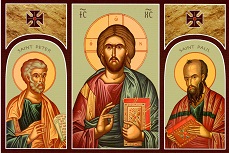
Each Day in the Word, Friday, February 10th

Mark 8:10-9:1

10 immediately got into the boat with His disciples, and came to the region of Dalmanutha.

11 Then the Pharisees came out and began to dispute with Him, seeking from Him a sign from heaven, testing Him. 12 But He sighed deeply in His spirit, and said, “Why does this generation seek a sign? Assuredly, I say to you, no sign shall be given to this generation.”

13 And He left them, and getting into the boat again, departed to the other side. 14 Now the disciples had forgotten to take bread, and they did not have more than one loaf with them in the boat. 15 Then He charged them, saying, “Take heed, beware of the leaven of the Pharisees and the leaven of Herod.”

16 And they reasoned among themselves, saying, “It is because we have no bread.”

17 But Jesus, being aware of it, said to them, “Why do you reason because you have no bread? Do you not yet perceive nor understand? Is your heart still hardened? 18 Having eyes, do you not see? And having ears, do you not hear? And do you not remember? 19 When I broke the five loaves for the five thousand, how many baskets full of fragments did you take up?”

They said to Him, “Twelve.”

20 “Also, when I broke the seven for the four thousand, how many large baskets full of fragments did you take up?”

And they said, “Seven.”

21 So He said to them, “How is it you do not understand?”

22 Then He came to Bethsaida; and they brought a blind man to Him, and begged Him to touch him. 23 So He took the blind man by the hand and led him out of the town. And when He had spit on his eyes and put His hands on him, He asked him if he saw anything.

24 And he looked up and said, “I see men like trees, walking.”

25 Then He put His hands on his eyes again and made him look up. And he was restored and saw everyone clearly. 26 Then He sent him away to his house, saying, “Neither go into the town, nor tell anyone in the town.”

27 Now Jesus and His disciples went out to the towns of Caesarea Philippi; and on the road He asked His disciples, saying to them, “Who do men say that I am?”

28 So they answered, “John the Baptist; but some say, Elijah; and others, one of the prophets.”

29 He said to them, “But who do you say that I am?”

Peter answered and said to Him, “You are the Christ.”

30 Then He strictly warned them that they should tell no one about Him.

31 And He began to teach them that the Son of Man must suffer many things, and be rejected by the elders and chief priests and scribes, and be killed, and after three days rise again. 32 He spoke this word openly. Then Peter took Him aside and began to rebuke Him. 33 But when He had turned around and looked at His disciples, He rebuked Peter, saying, “Get behind Me, Satan! For you are not mindful of the things of God, but the things of men.”

34 When He had called the people to Himself, with His disciples also, He said to them, “Whoever desires to come after Me, let him deny himself, and take up his cross, and follow Me. 35 For whoever desires to save his life will lose it, but whoever loses his life for My sake and the gospel’s will save it. 36 For what will it profit a man if he gains the whole world, and loses his own soul? 37 Or what will a man give in exchange for his soul? 38 For whoever is ashamed of Me and My words in this adulterous and sinful generation, of him the Son of Man also will be ashamed when He comes in the glory of His Father with the holy angels.”

And He said to them, “Assuredly, I say to you that there are some standing here who will not taste death till they see the kingdom of God present with power.”

Jesus warned His disciples to “beware of the leaven of the Pharisees and Herod.”  The Pharisees’ teachings functioned like leaven, or yeast, that spread throughout Jerusalem like a cancer and turned people away from the truth of Scripture.  Their teachings were nothing more than rules by which to live and their own erroneous interpretations and applications of the Scriptures over which they claimed to have authority. Although they were the religious leaders, they didn’t believe in Jesus as the fulfiller of Old Testament prophecies; they didn’t believe He was the Messiah, the Savior of the world.

Any preaching or teaching in the church by anyone claiming to be “religious” that does not point to Jesus as the only One who has fulfilled all the Old Testament prophecies and Who gave His life on the cross to pay for the sins of all mankind is leaven.  It is false and misleading.  It is a cancer that ultimately and eternally kills.

What saves and gives life is the confession and teaching that Peter gave: Jesus is “the Christ, the Son of the living God” (the fuller presentation from Mt. 19:16), a confession that, according to Matthew, was given from God the Father. That is the only truth that matters in this world. That is the only truth that gives not only the certainty of sins paid for and the promise of heaven, but also the sure and certain hope of the resurrection.

Forgiveness of sins is given to us through God-given faith in Christ’s work for us on the cross. In Holy Baptism we die to sin as Christ did and rise to life as Christ did. His death and resurrection become ours in those wonderful waters by the power of the Word of God. And through regular hearing of Christ’s Gospel and reception of Christ’s Sacramental gifts, we continue to proclaim Christ’s death until He comes and are strengthened in our various vocations as living confessions of Christ to those around us.

Let us pray: Lord Jesus, Your death and resurrection are solid truth. Keep us in that one true faith until You call us Home to be with You forever. Amen.

Posted in Devotion | Comments Off on Each Day in the Word, Friday, February 10th

Each Day in the Word, Thursday, February 9th  

Mark 7:1-30

Then the Pharisees and some of the scribes came together to Him, having come from Jerusalem. Now when they saw some of His disciples eat bread with defiled, that is, with unwashed hands, they found fault. For the Pharisees and all the Jews do not eat unless they wash their hands in a special way, holding the tradition of the elders. When they come from the marketplace, they do not eat unless they wash. And there are many other things which they have received and hold, like the washing of cups, pitchers, copper vessels, and couches.

Then the Pharisees and scribes asked Him, “Why do Your disciples not walk according to the tradition of the elders, but eat bread with unwashed hands?”

He answered and said to them, “Well did Isaiah prophesy of you hypocrites, as it is written:

‘This people honors Me with their lips,
But their heart is far from Me.
And in vain they worship Me,
Teaching as doctrines the commandments of men.’

For laying aside the commandment of God, you hold the tradition of men—the washing of pitchers and cups, and many other such things you do.”

He said to them, All too well you reject the commandment of God, that you may keep your tradition. 10 For Moses said, ‘Honor your father and your mother’; and, ‘He who curses father or mother, let him be put to death.’ 11 But you say, ‘If a man says to his father or mother, “Whatever profit you might have received from me is Corban”—’ (that is, a gift to God), 12 then you no longer let him do anything for his father or his mother, 13 making the word of God of no effect through your tradition which you have handed down. And many such things you do.”

14 When He had called all the multitude to Himself, He said to them, “Hear Me, everyone, and understand: 15 There is nothing that enters a man from outside which can defile him; but the things which come out of him, those are the things that defile a man. 16 If anyone has ears to hear, let him hear!”

17 When He had entered a house away from the crowd, His disciples asked Him concerning the parable. 18 So He said to them, “Are you thus without understanding also? Do you not perceive that whatever enters a man from outside cannot defile him, 19 because it does not enter his heart but his stomach, and is eliminated, thus purifying all foods?” 20 And He said, “What comes out of a man, that defiles a man. 21 For from within, out of the heart of men, proceed evil thoughts, adulteries, fornications, murders, 22 thefts, covetousness, wickedness, deceit, lewdness, an evil eye, blasphemy, pride, foolishness. 23 All these evil things come from within and defile a man.”

24 From there He arose and went to the region of Tyre and Sidon. And He entered a house and wanted no one to know it, but He could not be hidden. 25 For a woman whose young daughter had an unclean spirit heard about Him, and she came and fell at His feet. 26 The woman was a Greek, a Syro-Phoenician by birth, and she kept asking Him to cast the demon out of her daughter. 27 But Jesus said to her, “Let the children be filled first, for it is not good to take the children’s bread and throw it to the little dogs.”

28 And she answered and said to Him, “Yes, Lord, yet even the little dogs under the table eat from the children’s crumbs.”

29 Then He said to her, “For this saying go your way; the demon has gone out of your daughter.”

30 And when she had come to her house, she found the demon gone out, and her daughter lying on the bed.

Appearances are everything…to some people. That certainly was the case with the Pharisees who were all about keeping up appearances and making sure other people saw them acting pious and holy.  And because they were like that, they thought they had the right to chastise Jesus’ disciples for not following their – the Pharisees’ – rules.

But appearances are merely the veneer, the thin coating which covers up what’s underneath.  Like the thin veneer of a countertop or a cheap piece of furniture, what’s underneath isn’t natural wood; it isn’t worth much.  With the veneer, what you see is not what you get.

Jesus rebuked the Pharisees with the very Scriptures they thought they knew. He tore off their misleading veneer of self-righteousness and false piety by rubbing their noses in the Word of God.  He chastised them for keeping their own traditions instead of being obedient to God’s Word. He chided them for their evil words and actions.

But the Syro-Phoenician woman had no veneer; she wasn’t a fake Christian; she wasn’t superficial or pseudo-pious.  She clung to Jesus and was willing to receive anything, even a crumb, from Him because she had faith in Him. And she received more than crumbs, for Jesus healed her dear daughter of demon-possession.

We need to repent of being Pharisaic about our faith from time to time. Our sinful nature wants to hold up our own goodness and works as the reason God loves us. But God doesn’t save or forgive based on anything we do or are. He saves and forgives because it is His nature. He demonstrated His love for all mankind by sending His Son to pay for the sins of the world, and He grants salvation to all who believe in His work for them. And He continues to deliver His forgiveness and strength through the Holy BAGS – Baptism, Absolution, Gospel, and Supper. Those things have no veneer. Like Jesus, they’re solid, genuine, and sure.

Let us pray: Lord Jesus, thank You for Your genuine love, mercy, and forgiveness. Amen.


Posted in Devotion | Comments Off on Each Day in the Word, Thursday, February 9th  

Faithful to the Gospel, but also to the Law

Sermon (audio)
Download Sermon

Service(video)
[vimeo https://vimeo.com/797221530 w=540&h=360]
Download Service Download Bulletin

Sermon for Midweek of Septuagesima

Revelation 2:12-17

Three of the seven letters to the seven churches in the book of Revelation have a combination of praise and rebuke for the pastor, two have only rebuke, and two have only praise and comfort. This third letter, to the angel of the church in Pergamum, has both praise and rebuke for the pastor of the church, and there’s much we can learn from it.

First, Jesus points to Himself here as the One who has a sharp double-edged sword. And where is this sword? John saw it earlier in the vision of Jesus. It’s coming out of Jesus’ mouth. As the writer to the Hebrews says, The word of God is living and powerful, and sharper than any two-edged sword, piercing even to the division of soul and spirit, and of joints and marrow, discerning the thoughts and intentions of the heart. With that soul-penetrating sword, Jesus accomplishes two things: He both defends His people and slays His enemies.

He says to the pastor, I know your works and where you live, where Satan’s throne is. Satan’s throne is figurative. It means that the enemies and persecutors of the Word had a strong presence in Pergamum. It means that lies and deception were common there, as Satan is called the “father of lies.” It means that, through his lies and deception, Satan was influencing tyrants and inciting them to persecute the godly. Jesus even mentions a Christian named Antipas, His faithful martyr, who was put to death in Pergamum by the servants of Satan. Jesus isn’t ignorant of Satan’s influence there. He knows all about it and is using it in His own hidden ways to build His Church.

Jesus also knows that the pastor has been faithful in confessing the true faith and holds fast to the doctrine of Christ. You hold fast to my name and have not denied my faith, even in the face of persecution and as he watched others being put to death for confessing Christ before men. You continue to teach My Gospel! That’s good!

But it’s not all good. But I have a few things against you, because you have there people who hold to the teaching of Balaam, who taught Balak to set a stumbling block before the children of Israel, to eat things sacrificed to idols and to commit sexual immorality. In the same way, you also have people who hold to the teaching of the Nicolaitans, which I hate.

The story of Balaam and Balak is recorded in the book of Numbers. The children of Israel had spent their 40 years in the wilderness. They were just about ready to enter Canaan from the east, which meant they had to go through Midian and Moab, where Balak was king, and he had seen the incredible victories the Israelites had recently won against the surrounding kings. So Balak hired Balaam, a well-known prophet / sorcerer from the east, to curse Israel. It’s quite a story. Balaam was offered lots of money to curse Israel, but the Lord kept him from doing it. Instead, the Lord compelled Balaam to bless Israel. But that meant he didn’t get paid. So he came up with another solution for Balak: Send a bunch of beautiful young women over to the Israelite camp and have them seduce the Israelite men, both to have sex with them and to join them in their pagan rituals and festivals. It worked, though, in the end, it didn’t save Moab. Many Israelite men joined in the fornication and idolatry, resulting in a plague that killed 24,000 Israelites before Moses and Phinehas the priest put an end to it.

Apparently there were Christians there in Pergamum who were also engaged in sexual immorality and idolatry, even as they remained “practicing” Christians!

In a similar way, there were Christians in Pergamum who were being seduced by the Nicolaitans, a sect that promoted wife swapping and participating in pagan rituals and meals. These Christians were engaging in these obvious sins, and nothing was being done about it by the pastor. He was supposed to be using the Word of Christ not only to preach the sweet comfort of forgiveness of sins to the penitent, but to preach the Law to the impenitent, the Law that bites and kills on the inside, the Law that condemns sin, including the sin of adultery and of idolatry, in all their forms. Jesus Himself commanded His apostles to practice church discipline, and finally, if the sinner refused to repent, he was to be excommunicated. Instead, this pastor was tolerating it. And Jesus says, “I hate that.”

So He says to the pastor, Repent! Recognize your own sin in failing to preach and apply the Law! Realize that it’s not okay to tolerate sinful behavior among the members of your flock. You must use the sword of My mouth against it, and if the sinners refuse to repent, you must exclude them from the fellowship of My Church, both for love of Me, and for love of them, and for love of the rest of the flock, and even for love of outsiders, lest they should start to think that Christ Himself tolerates or even endorses adultery or idolatry.

If you don’t repent, Jesus says, I am coming to you soon, and I will fight against them with the sword of my mouth. It’s far better to have a preacher preach the Law in Jesus’ name now, even if it hurts, than to have Jesus Himself come and fight against you later.

He who has an ear, let him hear what the Spirit says to the churches. This warning, and the encouragement that follows, is not just for the pastor of the church in Pergamum. It’s for all who will listen, for all the churches, for all the hearers to pay attention and learn.

Jesus closes with an encouragement and a twofold promise: To him who overcomes I will give to eat of the hidden manna. The manna, the miraculous bread from heaven, came down to the Israelites in the wilderness every day for forty years, except for the Sabbath days. But a portion of it, a measure of it, was to be hidden away in a jar in the tabernacle, to be kept from generation to generation. That jar was eventually lost. But the true hidden-away manna is the joy and refreshment and sustenance of the heavenly good things that are reserved for the saints in heaven.

He adds, And I will give him a white stone, with a new name written on it which no one knows except the one who receives it. The most likely meaning of the white stone comes from Roman history. The Roman poet Ovid, who lived just before the time of Christ, writes of a white stone signifying an innocent verdict in court. So here, to the one who overcomes, to the one who perseveres in repentance and faith until the end, who continues to confess Christ and abide in His Word, He promises that the absolution that the sinner hears here in this life, from the minister, will most certainly be honored in heaven. He’ll be forever absolved from sin, from the curse of the law, and from eternal damnation.

Now, how does all this apply to us here? Well, Satan’s throne, his diabolical influence on society and on the government, seems to be everywhere at the moment. His hatred toward Christians, toward God, toward the Word of God, and toward the creation itself is taking over our country, as it has already begun to take over many countries in the world. Maybe you saw (at least in the news) reports of the Satanic show they put on as “entertainment” at the Grammy’s this week. Or maybe you’ve seen that the Satanic temple is literally sponsoring an abortion clinic right here in New Mexico. Satan is not even hiding anymore. He’s revealing himself openly in our culture and in the speeches and actions and policies of a whole political party here in this country. But we are encouraged by Jesus’ words in this letter that He both knows and ultimately controls how things are going in the world, and He also knows when His people continue to confess Him and His Word boldly and unapologetically, which should inspire us to keep doing it, because it’s only a matter of time before Satan’s throne is overthrown, because Christ is coming soon.

But the criticism revealed in this letter is especially relevant. There are any number of Christian churches that no longer preach the Law, no longer condemn the sins that God’s Word condemns, like sex outside of marriage, homosexuality, and unscriptural divorce. Or, if they condemn it on paper, they don’t say much about it from the pulpit. And even if their members are publicly and persistently promoting wickedness, whether it be sexual sins or sins like abortion, for example, their pastors refuse to excommunicate them for it. Their wickedness is tolerated. And Jesus still hates that.

Now, I know of no examples of public, unrepented sin that haven’t been addressed among us. But if it ever has to be addressed, or even if it’s just a matter of preaching against sin in general, I hope you understand, it’s what Christ commands us to do. When a pastor condemns sin, either in general or in the case of an individual, it isn’t to be mean. It’s to be faithful to the Word of Christ. It’s to call a sinner back from the edge of the cliff of eternal condemnation, or to warn God’s beloved people so that they don’t start heading in the direction of that cliff. And finally, it’s to give a clear witness of the Christian faith to outsiders. The fact is, the Christian faith has been horribly represented to the world in all sorts of ways, and that includes Christians who stubbornly refuse to live as Christians, and it includes churches that have stopped disciplining open sin. We can’t do anything about what other churches do. But we can see to it that we remain faithful here in preaching and applying both the Law and the Gospel.

So take that lesson from this evening’s letter from the book of Revelation. And also, take with you the comfort of Christ’s promise to the one who overcomes. An innocent verdict in God’s courtroom that lasts forever, and the revelation of the blessed election to salvation that took place before time began. Amen.


Posted in Sermons | Tagged | Comments Off on Faithful to the Gospel, but also to the Law

Each Day in the Word, Wednesday, February 8th

Mark 6:30-56

30 Then the apostles gathered to Jesus and told Him all things, both what they had done and what they had taught. 31 And He said to them, “Come aside by yourselves to a deserted place and rest a while.” For there were many coming and going, and they did not even have time to eat. 32 So they departed to a deserted place in the boat by themselves.

33 But the multitudes saw them departing, and many knew Him and ran there on foot from all the cities. They arrived before them and came together to Him. 34 And Jesus, when He came out, saw a great multitude and was moved with compassion for them, because they were like sheep not having a shepherd. So He began to teach them many things. 35 When the day was now far spent, His disciples came to Him and said, “This is a deserted place, and already the hour is late. 36 Send them away, that they may go into the surrounding country and villages and buy themselves bread; for they have nothing to eat.”

37 But He answered and said to them, “You give them something to eat.”

And they said to Him, “Shall we go and buy two hundred denarii worth of bread and give them something to eat?”

38 But He said to them, “How many loaves do you have? Go and see.”

And when they found out they said, “Five, and two fish.”

39 Then He commanded them to make them all sit down in groups on the green grass. 40 So they sat down in ranks, in hundreds and in fifties. 41 And when He had taken the five loaves and the two fish, He looked up to heaven, blessed and broke the loaves, and gave them to His disciples to set before them; and the two fish He divided among them all. 42 So they all ate and were filled. 43 And they took up twelve baskets full of fragments and of the fish. 44 Now those who had eaten the loaves were about five thousand men.

45 Immediately He made His disciples get into the boat and go before Him to the other side, to Bethsaida, while He sent the multitude away. 46 And when He had sent them away, He departed to the mountain to pray. 47 Now when evening came, the boat was in the middle of the sea; and He was alone on the land. 48 Then He saw them straining at rowing, for the wind was against them. Now about the fourth watch of the night He came to them, walking on the sea, and would have passed them by. 49 And when they saw Him walking on the sea, they supposed it was a ghost, and cried out; 50 for they all saw Him and were troubled. But immediately He talked with them and said to them, “Be of good cheer! It is I; do not be afraid.” 51 Then He went up into the boat to them, and the wind ceased. And they were greatly amazed in themselves beyond measure, and marveled. 52 For they had not understood about the loaves, because their heart was hardened.

53 When they had crossed over, they came to the land of Gennesaret and anchored there. 54 And when they came out of the boat, immediately the people recognized Him, 55 ran through that whole surrounding region, and began to carry about on beds those who were sick to wherever they heard He was. 56 Wherever He entered, into villages, cities, or the country, they laid the sick in the marketplaces, and begged Him that they might just touch the hem of His garment. And as many as touched Him were made well.

In today’s reading the disciples have returned from being sent by Jesus (see yesterday’s reading). After their adventures our Lord invites them to rest from their labors.  When Jesus sees the multitudes, Mark records that He “was moved with compassion for them because they were like sheep without a shepherd.”  Jesus then goes on to feed well over 5,000 people, multiplying bread and fish to satiate them all, and there are plenty of leftovers to boot! Then Jesus calms the disciples when they were caught in the midst of a storm and healed all who came to Him.

Jesus gives, multiplies, provides, calms, and heals. This is exactly what our good and gracious God does every time we participate in the Divine Service.  He Himself is our Good Shepherd who has given us His undershepherds, His pastors, to give, multiply, provide, calm, and heal us through their faithful delivery of Word and Sacrament – through their faithful delivery of Jesus for you.

No one should be without a shepherd. The “shepherds” in Jesus’ day were the religious leaders, the Pharisees and Sadducees, who knew nothing of Jesus as Messiah and fulfiller of all OT prophecies and Who came to bring forgiveness. Therefore, they could not comfort, feed, guide, or calm the people. The only message they had to deliver was Law and fear.

If you, by God-given faith, believe that Jesus died for your sins, rose from the dead, and will come again to take you to be with Him in heaven, you have forgiveness and the promise of eternal life. That comfort, healing, guidance, and calm is the “glue” that holds you together throughout this life. Jesus is your Savior. He is your Good Shepherd.  He has paid for your sins and continues to feed you with His forgiveness and strength through the Gospel rightly preached and His Sacraments rightly administered.

Let us pray: Lord Jesus, thank You for paying for my sins. Keep me in the one true faith until You call me Home. Amen.

Posted in Devotion | Comments Off on Each Day in the Word, Wednesday, February 8th

Each Day in the Word, Tuesday, February 7th

Mark 6:1-29

Then He went out from there and came to His own country, and His disciples followed Him. And when the Sabbath had come, He began to teach in the synagogue. And many hearing Him were astonished, saying, “Where did this Man get these things? And what wisdom is this which is given to Him, that such mighty works are performed by His hands! Is this not the carpenter, the Son of Mary, and brother of James, Joses, Judas, and Simon? And are not His sisters here with us?” So they were offended at Him.

But Jesus said to them, “A prophet is not without honor except in his own country, among his own relatives, and in his own house.” Now He could do no mighty work there, except that He laid His hands on a few sick people and healed them. And He marveled because of their unbelief. Then He went about the villages in a circuit, teaching.

And He called the twelve to Himself, and began to send them out two by two, and gave them power over unclean spirits. He commanded them to take nothing for the journey except a staff—no bag, no bread, no copper in their money belts— but to wear sandals, and not to put on two tunics.

10 Also He said to them, “In whatever place you enter a house, stay there till you depart from that place. 11 And whoever will not receive you nor hear you, when you depart from there, shake off the dust under your feet as a testimony against them. Assuredly, I say to you, it will be more tolerable for Sodom and Gomorrah in the day of judgment than for that city!”

12 So they went out and preached that people should repent. 13 And they cast out many demons, and anointed with oil many who were sick, and healed them.

14 Now King Herod heard of Him, for His name had become well known. And he said, “John the Baptist is risen from the dead, and therefore these powers are at work in him.”

15 Others said, “It is Elijah.”

And others said, “It is the Prophet, or like one of the prophets.”

16 But when Herod heard, he said, “This is John, whom I beheaded; he has been raised from the dead!” 17 For Herod himself had sent and laid hold of John, and bound him in prison for the sake of Herodias, his brother Philip’s wife; for he had married her. 18 Because John had said to Herod, “It is not lawful for you to have your brother’s wife.”

19 Therefore Herodias held it against him and wanted to kill him, but she could not; 20 for Herod feared John, knowing that he was a just and holy man, and he protected him. And when he heard him, he did many things, and heard him gladly.

21 Then an opportune day came when Herod on his birthday gave a feast for his nobles, the high officers, and the chief men of Galilee. 22 And when Herodias’ daughter herself came in and danced, and pleased Herod and those who sat with him, the king said to the girl, “Ask me whatever you want, and I will give it to you.” 23 He also swore to her, “Whatever you ask me, I will give you, up to half my kingdom.”

24 So she went out and said to her mother, “What shall I ask?”

And she said, “The head of John the Baptist!”

25 Immediately she came in with haste to the king and asked, saying, “I want you to give me at once the head of John the Baptist on a platter.”

26 And the king was exceedingly sorry; yet, because of the oaths and because of those who sat with him, he did not want to refuse her. 27 Immediately the king sent an executioner and commanded his head to be brought. And he went and beheaded him in prison, 28 brought his head on a platter, and gave it to the girl; and the girl gave it to her mother. 29 When his disciples heard of it, they came and took away his corpse and laid it in a tomb.

There’s a lot going on in today’s reading, and it sums up the world in which we live.

First, Jesus is relatively unknown and unbelieved in His own country. The people were astonished at His teaching in the synagogue but were unable to get past the fact that He was from their neighborhood. Therefore, Jesus could not be the Messiah, at least to their thinking; they didn’t know or just didn’t believe the prophecies which Jesus Himself was fulfilling.

Later, Jesus sends out His disciples to preach repentance, and gave them His power over unclean spirits. In some places they were received, in others not so much. We, too, will be both received and rejected in this life for telling others the truth about Jesus – that He paid for the sins of the world and that people must believe in Him for salvation. When the Holy Spirit gives saving faith, we rightly rejoice. But when the Gospel is rejected, remember that it is not we who are being rejected, but Christ. It is not any of our doing that anyone comes to faith, but like it was with us, people are called by the Gospel, enlightened with God’s gifts, and sanctified and kept in the true faith through the power of God’s Word alone.

Finally, we hear of John’s beheading at the hand of evil Herod. John’s “sin” was telling Herod that it was wrong for him to have his brother’s wife. It was a gutsy call on John’s part, but he spoke the truth in order to call Herod to repentance that he, too, might be saved. We, too, are encouraged always to “speak the truth in love” to others so that they will hear of Christ’s endless love for all mankind by His holy, innocent, suffering and death by which He paid for the sins of the world. It may even be, God forbid, that we lose our lives for that, but we will have given God the glory and possibly be used by Him for the salvation of another.  We count all things as loss for the excellence of knowing Jesus Christ and His eternally wonderful payment for all our sins.

Let us pray: Lord Jesus, use us for Your glory and the good of others. Amen.

Posted in Devotion | Comments Off on Each Day in the Word, Tuesday, February 7th