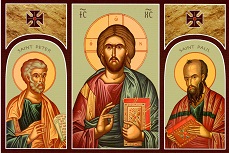
Each Day in the Word, Thursday, September 8th

1 Thessalonians 2:1–20 (NKJV)

1 For you yourselves know, brethren, that our coming to you was not in vain. 2 But even after we had suffered before and were spitefully treated at Philippi, as you know, we were bold in our God to speak to you the gospel of God in much conflict. 3 For our exhortation did not come from error or uncleanness, nor was it in deceit. 4 But as we have been approved by God to be entrusted with the gospel, even so we speak, not as pleasing men, but God who tests our hearts. 5 For neither at any time did we use flattering words, as you know, nor a cloak for covetousness—God is witness. 6 Nor did we seek glory from men, either from you or from others, when we might have made demands as apostles of Christ. 7 But we were gentle among you, just as a nursing mother cherishes her own children. 8 So, affectionately longing for you, we were well pleased to impart to you not only the gospel of God, but also our own lives, because you had become dear to us. 9 For you remember, brethren, our labor and toil; for laboring night and day, that we might not be a burden to any of you, we preached to you the gospel of God. 10 You are witnesses, and God also, how devoutly and justly and blamelessly we behaved ourselves among you who believe; 11 as you know how we exhorted, and comforted, and charged every one of you, as a father does his own children, 12 that you would walk worthy of God who calls you into His own kingdom and glory. 13 For this reason we also thank God without ceasing, because when you received the word of God which you heard from us, you welcomed it not as the word of men, but as it is in truth, the word of God, which also effectively works in you who believe. 14 For you, brethren, became imitators of the churches of God which are in Judea in Christ Jesus. For you also suffered the same things from your own countrymen, just as they did from the Judeans, 15 who killed both the Lord Jesus and their own prophets, and have persecuted us; and they do not please God and are contrary to all men, 16 forbidding us to speak to the Gentiles that they may be saved, so as always to fill up the measure of their sins; but wrath has come upon them to the uttermost. 17 But we, brethren, having been taken away from you for a short time in presence, not in heart, endeavored more eagerly to see your face with great desire. 18 Therefore we wanted to come to you—even I, Paul, time and again—but Satan hindered us. 19 For what is our hope, or joy, or crown of rejoicing? Is it not even you in the presence of our Lord Jesus Christ at His coming? 20 For you are our glory and joy.

Paul, speaking for himself and his coworkers, writes, “we speak, not as pleasing men, but God who tests our hearts.” These are very telling words, for they point us to a very important aspect which marks a faithful pastor: that he be not a man-pleaser, but a God-pleaser. Many a preacher, both today and throughout history, has given in to the ways of the world and delivered messages that tickle itching ears, soften the fangs of the Law, and speak an impotent Gospel that does little more than say nice things about God. These are not true preachers, but they are, as our Lord said, “false prophets, who come to you in sheep’s clothing, but inwardly they are ravenous wolves” (Mt. 7:15). They are pretenders, using Bible-y sounding words, but accomplishing only the devil’s work. They are to be avoided at all costs because the cost of listening to and following them is an eternally damning one. And the reason that is so is because, as Jesus once tersely said to Peter, they “do not have in mind the things of God but the things of men” (Mt. 16:23).

Paul says, “we were gentle among you, just as a nursing mother cherishes her own children.” Pastors and lay-folk alike are encouraged to be gentle but clear as they present the Gospel to others. Knowing that the Holy Spirit works through the Word, our happy task is to “speak the truth in love” (Eph 4:15), and then let the Holy Spirit do His thing, not depending on our delivery, style, or personality, but on the efficient power of God’s Word alone. Paul then thanked God on behalf of himself and his companions because the Thessalonians had received their message “not as the word of men, but as it is in truth, the Word of God.” The Thessalonians were modeling the Bereans of Acts 17 who heard Paul and Silas’ preaching and still “searched the Scriptures daily whether these things were so” (17:11). This is also our happy task as Christians, to make sure that what our pastor is preaching and teaching is soundly Scriptural, and not a message of men. In this way God is glorified and His church is built up in the saving truth of Christ.

Let us pray: Lord Jesus, make all pastors confident and bold to preach only Your Word and truth. Amen.

Posted in Devotion | Comments Off on Each Day in the Word, Thursday, September 8th

How you use your tongue matters

Sermon (audio)
Download Sermon

Service(video)
[vimeo https://vimeo.com/747499196 w=540&h=360]
Download Service Download Bulletin

Sermon for Midweek of Trinity 12

Isaiah 29:18-19  +  James 3:1-12  +  Matthew 12:31-42

Last week Wednesday, we heard those key words from Romans 10, “Faith comes by hearing! And hearing by the word of God.” God saves us—justifies us—through faith in Jesus Christ, and that faith doesn’t spring up naturally within us; God the Holy Spirit has to call us through Gospel. As we confess in the Third Article of the Apostles’ Creed: I believe that I cannot by my own reason or strength believe in Jesus Christ, my Lord, or come to Him; but the Holy Spirit has called me by the Gospel…And in that Gospel call, He moves us to believe. You heard Isaiah’s prophecy this evening, in which he prophesied the work of Christ (through His Spirit) to open the ears of the deaf and the eyes of the blind.

In Sunday’s Gospel of the healing of the deaf and mute man, we saw Isaiah’s prophecy being fulfilled in a literal way, just as it’s fulfilled in a spiritual way—again, emphasizing that it’s God the Holy Spirit—the “Finger of God”—who has to come to us in the Word and open our ears to the Gospel, converting us from unbelievers to believers, so that we can then confess with our tongues that Jesus is the Lord, who was delivered up for our sins and raised from the dead for our justification. And He does convert people and bring them to faith, when they don’t stubbornly resist Him as He works through preaching.

The stubborn resistance to the Spirit is a big problem, though. It’s a threat, not just to unbelievers, but also to Christians. We could—God forbid!—plug up the ears that God the Holy Spirit has opened for us, and we could fail to heed James’ warning to put a bridle on our tongue. Our tongues, as Christians, have been loosed to bless our God and Father, to praise and worship Him and to speak kind and helpful words to our neighbor. But with those same tongues we can so easily fall into cursing our neighbor, speaking maliciously about other people or speaking cruelly to other people. If we don’t watch out for that, or if we don’t repent of it when it happens, then we risk driving out the Holy Spirit and having our ears permanently stopped up and our tongues permanently bound again. That’s what happens when you stubbornly resist the Holy Spirit, who is constantly working on the tongues of Christians, to silence them from speaking evil and falsehood and to spur them on to speak what is good and healthy and edifying and true.

It’s that stubborn resistance to the Holy Spirit that we also encounter in the lesson this evening from Matthew’s Gospel. Jesus had been driving out demons by the Finger of God, by the Spirit of God. But the Pharisees used their tongues in a terrible way: This fellow does not cast out demons except by Beelzebub, the ruler of the demons. In other words, they were speaking of the Holy Spirit of God as if He were the devil himself. They literally “spoke against the Holy Spirit.” And that, Jesus says, cannot be forgiven.

Anyone who speaks a word against the Son of Man, it will be forgiven him; but whoever speaks against the Holy Spirit, it will not be forgiven him, either in this age or in the age to come. To speak against Jesus is a grave sin, obviously. Many of the people of Israel did that. St. Paul did that when he was still unconverted as Saul the Pharisee. But many in Israel were converted and forgiven, weren’t they? Saul was converted and forgiven. That is, they were brought to repentance and faith in that same Jesus against whom they had formerly spoken. How? By the working of the Holy Spirit through the preaching of the Gospel of Christ. But to “speak against” the Spirit, that is, to reject the Holy Spirit as He calls out and invites people to repent and to believe in Christ—that’s unforgivable, as long as a person continues in such a sin.

As I said a moment ago, even believers can fall into that sin, and when they do, it’s especially tragic. As the writer to the Hebrews puts it, if we sin willfully after we have received the knowledge of the truth, there no longer remains a sacrifice for sins, but a certain fearful expectation of judgment, and fiery indignation which will devour the adversaries. Anyone who has rejected Moses’ law dies without mercy on the testimony of two or three witnesses. Of how much worse punishment, do you suppose, will he be thought worthy who has trampled the Son of God underfoot, counted the blood of the covenant by which he was sanctified a common thing, and insulted the Spirit of grace? For we know Him who said, “Vengeance is Mine, I will repay,” says the Lord. And again, “The LORD will judge His people.” It is a fearful thing to fall into the hands of the living God.

I don’t understand how some false teachers can get away with teaching Christians that, once they’ve truly been brought to faith and rescued out of the devil’s kingdom, they can never fall away. They can never go back to being “unforgiven” or “unsaved.” No, that’s not at all what the Scriptures teach. Believers—those who have received the gift of the Holy Spirit and have been sanctified by Him and set apart from the perishing world—are constantly warned in Scripture not to resist the Holy Spirit, but to walk with Him always, which means striving to avoid sin, and, when we stumble, taking seriously the Holy Spirit’s warning to repent and return to Christ for forgiveness.

There’s one of those warnings in Matthew’s Gospel that you heard tonight: But I say to you that for every idle word men may speak, they will give account of it in the day of judgment. For by your words you will be justified, and by your words you will be condemned.”

What does that mean? It means that your words matter. How you use your God-given tongue matters for eternity. If you speak idle or “useless” words—and who can say that he hasn’t?—you’ll be judged for them and condemned. That should strike fear into all our hearts. But by your words you will be justified. By which words? By the words of faith. That is, when the Holy Spirit convicts you through the Gospel of misusing your tongue, then He calls you back to repent of it, and to trust in Christ for forgiveness, which always leads to confessing, again that Jesus Christ is the Lord, who was delivered up for our sins and raised from the dead for our justification. As we heard last Wednesday, if you confess with your mouth the Lord Jesus and believe in your heart that God has raised Him from the dead, you will be saved. For with the heart one believes unto righteousness, and with the mouth confession is made unto salvation. And then, with ears and tongues again renewed and sanctified by the Holy Spirit, you’ll devote yourself again to speaking good words, helpful words, words of praise for God, and words of building up for your neighbor. Amen.

Posted in Sermons | Tagged , | Comments Off on How you use your tongue matters

Each Day in the Word, Wednesday, September 7th

1 Thessalonians 1:1–10 (NKJV)

1 Paul, Silvanus, and Timothy, To the church of the Thessalonians in God the Father and the Lord Jesus Christ: Grace to you and peace from God our Father and the Lord Jesus Christ. 2 We give thanks to God always for you all, making mention of you in our prayers, 3 remembering without ceasing your work of faith, labor of love, and patience of hope in our Lord Jesus Christ in the sight of our God and Father, 4 knowing, beloved brethren, your election by God. 5 For our gospel did not come to you in word only, but also in power, and in the Holy Spirit and in much assurance, as you know what kind of men we were among you for your sake. 6 And you became followers of us and of the Lord, having received the word in much affliction, with joy of the Holy Spirit, 7 so that you became examples to all in Macedonia and Achaia who believe. 8 For from you the word of the Lord has sounded forth, not only in Macedonia and Achaia, but also in every place. Your faith toward God has gone out, so that we do not need to say anything. 9 For they themselves declare concerning us what manner of entry we had to you, and how you turned to God from idols to serve the living and true God, 10 and to wait for His Son from heaven, whom He raised from the dead, even Jesus who delivers us from the wrath to come.

“Grace to you and peace from God our Father and the Lord Jesus Christ.” Many a faithful pastor begins his sermons with these or similar words as he expounds the Holy Scriptures to the people he is called and ordained to serve. As he preaches, he delivers God’s grace, His love for all, shown in Christ’s death for all, and God’s peace, which is the peace Christ won for them. As this faithful preaching continues and bears fruit, the congregation grows stronger in Christ and becomes an effective witness to those in the community and other places.

In this letter, Paul, speaking not only on behalf of himself but also for his coworkers, thanks God as he recalls the Thessalonians’ “work of faith, labor of love, and patience of hope” in the Lord Jesus. Yes, he’s bragging on them, and for good reason. He commends these Christians for their respect and appreciation for those who spoke the Gospel to them and for believing the right things. The Thessalonians “received the word in much affliction, with joy of the Holy Spirit.” They were experiencing challenges for their faith in Christ and for their having “turned to God from idols to serve the living and true God.” It could not have been easy for them to make a spiritual 180, leaving behind their former false beliefs and trusting the preaching and teaching of Paul and his companions about Christ crucified for sinners. But with the help of the Holy Spirit working through the preached Word, they were on the right track. This resulted in Paul praising God for their strong, clear witness to the surrounding areas.

May God grant your pastor and your congregation to be faithful always to God’s holy Word and not to bow to any false teachings that can and will lead God’s people astray. And may God make them a strong witness to His grace and peace in Christ.

Let us pray: O Holy Spirit, grant us grace that we our Lord and Savior in faith and fervent love embrace and truly serve Him ever. Amen. (TLH 293:1a)

Posted in Devotion | Comments Off on Each Day in the Word, Wednesday, September 7th

Each Day in the Word, Tuesday, September 6th

Colossians 3:18–4:18 (NKJV)

18 Wives, submit to your own husbands, as is fitting in the Lord. 19 Husbands, love your wives and do not be bitter toward them. 20 Children, obey your parents in all things, for this is well pleasing to the Lord. 21 Fathers, do not provoke your children, lest they become discouraged. 22 Bondservants, obey in all things your masters according to the flesh, not with eyeservice, as men-pleasers, but in sincerity of heart, fearing God. 23 And whatever you do, do it heartily, as to the Lord and not to men, 24 knowing that from the Lord you will receive the reward of the inheritance; for you serve the Lord Christ. 25 But he who does wrong will be repaid for what he has done, and there is no partiality. 1 Masters, give your bondservants what is just and fair, knowing that you also have a Master in heaven. 2 Continue earnestly in prayer, being vigilant in it with thanksgiving; 3 meanwhile praying also for us, that God would open to us a door for the word, to speak the mystery of Christ, for which I am also in chains, 4 that I may make it manifest, as I ought to speak. 5 Walk in wisdom toward those who are outside, redeeming the time. 6 Let your speech always be with grace, seasoned with salt, that you may know how you ought to answer each one. 7 Tychicus, a beloved brother, faithful minister, and fellow servant in the Lord, will tell you all the news about me. 8 I am sending him to you for this very purpose, that he may know your circumstances and comfort your hearts, 9 with Onesimus, a faithful and beloved brother, who is one of you. They will make known to you all things which are happening here. 10 Aristarchus my fellow prisoner greets you, with Mark the cousin of Barnabas (about whom you received instructions: if he comes to you, welcome him), 11 and Jesus who is called Justus. These are my only fellow workers for the kingdom of God who are of the circumcision; they have proved to be a comfort to me. 12 Epaphras, who is one of you, a bondservant of Christ, greets you, always laboring fervently for you in prayers, that you may stand perfect and complete in all the will of God. 13 For I bear him witness that he has a great zeal for you, and those who are in Laodicea, and those in Hierapolis. 14 Luke the beloved physician and Demas greet you. 15 Greet the brethren who are in Laodicea, and Nymphas and the church that is in his house. 16 Now when this epistle is read among you, see that it is read also in the church of the Laodiceans, and that you likewise read the epistle from Laodicea. 17 And say to Archippus, “Take heed to the ministry which you have received in the Lord, that you may fulfill it.” 18 This salutation by my own hand—Paul. Remember my chains. Grace be with you. Amen.

In the first part of the reading, we hear echoes not only of the Fourth Commandment but also what Paul wrote in Ephesians 5 regarding husbands and wives. It is wonderful and godly for wives (brides) to submit to their husbands (bridegrooms) as the head of the Christian home, for this points to Christ the Bridegroom as the Head of His Church, His holy bride. Christ’s sacrifice, His suffering, death, and resurrection in man’s place, demonstrated the ultimate expression of love and commitment, thereby making it easier for us to trust in the Lord for salvation and protection and continue gladly to obey Him. The end result of this is our “inheritance” of ultimately being with the Lord Jesus in heaven for eternity, free from the ravages and effects of our sinful nature and enjoying His perfect presence forever.

In Christ-like fashion a husband is to see and treat his wife as the gift she is to him from God and to sacrifice himself for her, thus making it easier for the wife to respond in love and place herself in godly submission to her husband, trusting him to care for and protect her. The end result of this obedience and service is an “inheritance” of a happy and strong marriage which, Lord willing, also produces godly children and proclaims a strong Christian witness to God’s promises and faithfulness.

Fathers are to guide and teach their children, and children are to obey their parents “in all things” out of reverence for Christ. And those who work for others (bondservants) are to obey their godly masters in the fear of God and do their work not for men but as serving the Lord.      Paul teaches us to look for opportunities “to speak the mystery of Christ” gracefully to those outside the faith.

As Paul wrote to Archippus that he should “take heed to the ministry” which he had received, so he urges us, too, to serve the Lord in our various vocations, giving Him glory as we do.

Let us pray: Lord Jesus, strengthen our faith that we may serve You faithfully through love and service to our neighbors. Amen.

Posted in Devotion | Comments Off on Each Day in the Word, Tuesday, September 6th

Each Day in the Word, Monday, September 5th

Colossians 2:1–23 (NKJV)

1 For I want you to know what a great conflict I have for you and those in Laodicea, and for as many as have not seen my face in the flesh, 2 that their hearts may be encouraged, being knit together in love, and attaining to all riches of the full assurance of understanding, to the knowledge of the mystery of God, both of the Father and of Christ, 3 in whom are hidden all the treasures of wisdom and knowledge. 4 Now this I say lest anyone should deceive you with persuasive words. 5 For though I am absent in the flesh, yet I am with you in spirit, rejoicing to see your good order and the steadfastness of your faith in Christ. 6 As you therefore have received Christ Jesus the Lord, so walk in Him, 7 rooted and built up in Him and established in the faith, as you have been taught, abounding in it with thanksgiving. 8 Beware lest anyone cheat you through philosophy and empty deceit, according to the tradition of men, according to the basic principles of the world, and not according to Christ. 9 For in Him dwells all the fullness of the Godhead bodily; 10 and you are complete in Him, who is the head of all principality and power. 11 In Him you were also circumcised with the circumcision made without hands, by putting off the body of the sins of the flesh, by the circumcision of Christ, 12 buried with Him in baptism, in which you also were raised with Him through faith in the working of God, who raised Him from the dead. 13 And you, being dead in your trespasses and the uncircumcision of your flesh, He has made alive together with Him, having forgiven you all trespasses, 14 having wiped out the handwriting of requirements that was against us, which was contrary to us. And He has taken it out of the way, having nailed it to the cross. 15 Having disarmed principalities and powers, He made a public spectacle of them, triumphing over them in it. 16 So let no one judge you in food or in drink, or regarding a festival or a new moon or sabbaths, 17 which are a shadow of things to come, but the substance is of Christ. 18 Let no one cheat you of your reward, taking delight in false humility and worship of angels, intruding into those things which he has not seen, vainly puffed up by his fleshly mind, 19 and not holding fast to the Head, from whom all the body, nourished and knit together by joints and ligaments, grows with the increase that is from God. 20 Therefore, if you died with Christ from the basic principles of the world, why, as though living in the world, do you subject yourselves to regulations—21 “Do not touch, do not taste, do not handle,” 22 which all concern things which perish with the using—according to the commandments and doctrines of men? 23 These things indeed have an appearance of wisdom in self-imposed religion, false humility, and neglect of the body, but are of no value against the indulgence of the flesh.

In this chapter St. Paul expresses great care, concern, and love for the Christians in Colossae. He encourages them that, even though he is not physically with them, he most definitely is in spirit; and his greatest concern is that they are not led astray by worldly philosophies and traditions which are not rooted in Christ and His Word. He bolsters the Colossians’ faith with the solid truth of Christ’s deity—that He is fully God in the flesh, that He is the Head of the Church, and that all believers are complete in Him. When one has Christ, he has the most needed thing.

Paul also teaches the comfort and certainty of Holy Baptism—that it connects us with Christ’s death and burial, things by which He has paid for the sins of the world by giving up His body on the tree of the cross. He has given us the comfort of our own victory over death and the grave through His victory over them. Christ Himself has suffered and died for the sins of the world, thereby “wiping out the handwriting of requirements that was against us.” Those charges or requirements were laid against Him in our place, and He bore them fully and faithfully. Further, Paul encourages the Colossians to see Christ as the fulfillment of all of the Old Testament festivals, for they all point forward to Him. Finally, Paul challenges the Colossians to look to Christ and not to subject themselves to works and ceremonies that hold only the “appearance of wisdom.”

St. Paul writes to us, the Church of Christ. Baptized into Christ’s death to sin and His resurrection to life, we have His faith and forgiveness. As we continue to avail ourselves of faithful preaching and the right reception of the Sacraments, that faith is sustained. And by that same gift of faith, we are encouraged and strengthened to live our lives to God’s glory and the good of our neighbor.

Let us pray: Lord Jesus, keep us in the one true faith and teach us to live by Your Word alone. Amen.

Posted in Devotion | Comments Off on Each Day in the Word, Monday, September 5th