Each Day in the Word, Monday, September 5th

Colossians 2:1–23 (NKJV)

1 For I want you to know what a great conflict I have for you and those in Laodicea, and for as many as have not seen my face in the flesh, 2 that their hearts may be encouraged, being knit together in love, and attaining to all riches of the full assurance of understanding, to the knowledge of the mystery of God, both of the Father and of Christ, 3 in whom are hidden all the treasures of wisdom and knowledge. 4 Now this I say lest anyone should deceive you with persuasive words. 5 For though I am absent in the flesh, yet I am with you in spirit, rejoicing to see your good order and the steadfastness of your faith in Christ. 6 As you therefore have received Christ Jesus the Lord, so walk in Him, 7 rooted and built up in Him and established in the faith, as you have been taught, abounding in it with thanksgiving. 8 Beware lest anyone cheat you through philosophy and empty deceit, according to the tradition of men, according to the basic principles of the world, and not according to Christ. 9 For in Him dwells all the fullness of the Godhead bodily; 10 and you are complete in Him, who is the head of all principality and power. 11 In Him you were also circumcised with the circumcision made without hands, by putting off the body of the sins of the flesh, by the circumcision of Christ, 12 buried with Him in baptism, in which you also were raised with Him through faith in the working of God, who raised Him from the dead. 13 And you, being dead in your trespasses and the uncircumcision of your flesh, He has made alive together with Him, having forgiven you all trespasses, 14 having wiped out the handwriting of requirements that was against us, which was contrary to us. And He has taken it out of the way, having nailed it to the cross. 15 Having disarmed principalities and powers, He made a public spectacle of them, triumphing over them in it. 16 So let no one judge you in food or in drink, or regarding a festival or a new moon or sabbaths, 17 which are a shadow of things to come, but the substance is of Christ. 18 Let no one cheat you of your reward, taking delight in false humility and worship of angels, intruding into those things which he has not seen, vainly puffed up by his fleshly mind, 19 and not holding fast to the Head, from whom all the body, nourished and knit together by joints and ligaments, grows with the increase that is from God. 20 Therefore, if you died with Christ from the basic principles of the world, why, as though living in the world, do you subject yourselves to regulations—21 “Do not touch, do not taste, do not handle,” 22 which all concern things which perish with the using—according to the commandments and doctrines of men? 23 These things indeed have an appearance of wisdom in self-imposed religion, false humility, and neglect of the body, but are of no value against the indulgence of the flesh.

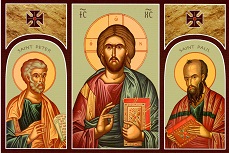
In this chapter St. Paul expresses great care, concern, and love for the Christians in Colossae. He encourages them that, even though he is not physically with them, he most definitely is in spirit; and his greatest concern is that they are not led astray by worldly philosophies and traditions which are not rooted in Christ and His Word. He bolsters the Colossians’ faith with the solid truth of Christ’s deity—that He is fully God in the flesh, that He is the Head of the Church, and that all believers are complete in Him. When one has Christ, he has the most needed thing.

Paul also teaches the comfort and certainty of Holy Baptism—that it connects us with Christ’s death and burial, things by which He has paid for the sins of the world by giving up His body on the tree of the cross. He has given us the comfort of our own victory over death and the grave through His victory over them. Christ Himself has suffered and died for the sins of the world, thereby “wiping out the handwriting of requirements that was against us.” Those charges or requirements were laid against Him in our place, and He bore them fully and faithfully. Further, Paul encourages the Colossians to see Christ as the fulfillment of all of the Old Testament festivals, for they all point forward to Him. Finally, Paul challenges the Colossians to look to Christ and not to subject themselves to works and ceremonies that hold only the “appearance of wisdom.”

St. Paul writes to us, the Church of Christ. Baptized into Christ’s death to sin and His resurrection to life, we have His faith and forgiveness. As we continue to avail ourselves of faithful preaching and the right reception of the Sacraments, that faith is sustained. And by that same gift of faith, we are encouraged and strengthened to live our lives to God’s glory and the good of our neighbor.

Let us pray: Lord Jesus, keep us in the one true faith and teach us to live by Your Word alone. Amen.

Posted in Devotion | Comments Off on Each Day in the Word, Monday, September 5th

The Spirit converts those who don’t push Him away

Sermon (audio)
Download Sermon

Service(video)
[vimeo https://vimeo.com/746339806 w=540&h=360]
Download Service Download Bulletin

Sermon for Trinity 12

2 Corinthians 3:4-11  +  Mark 7:31-37

Tying together the Epistle and the Gospel that you heard this morning, I’d like you to think for a moment about the Old Testament ministry of the priests, referred to in the Epistle as the “ministry of the letter.” They ministered under the “covenant” or the “testament” of the Law, which was engraved with letters in stone at the time of Moses. The “terms” of that covenant were simple, though they weren’t easy to carry out. God, for His part, would keep Israel as His people, bless them, prosper them, defend them from enemies and from disease, and give them the land of Canaan forever, and they, for their part, would keep His Law, which included the moral laws of right and wrong, summarized in the Ten Commandments, and also the Civil law governing their society, as well as the Ceremonial Law, which outlined the ministry of the priests, the sacrifices, the design of the tabernacle with its furnishings, the rites and rituals they were to carry out, and the rules and restrictions surrounding clean and unclean. That covenant was given glory by God, glory in the shining face of Moses after he would talk with God at Mt. Sinai, but also glory in the priestly vestments, and the beautiful sanctuary, and the reverence with which the ministry was to be treated.

But, as Paul points out in the Epistle, it was a ministry of death, or a ministry characterized by death. Constant sacrifices, thousands and thousands of them every year. A constant outpouring of animal blood. But more than that, it was a ministry of death, because it couldn’t save anyone from death. It made wonderful promises for obedience, but terrible threats of punishment and death for disobedience. No one had the ability to keep the terms of the covenant. The terms of the covenant were, as St. Peter later once called them, “a yoke on our necks which neither our fathers nor we were able to bear.”

But embedded in the Old Testament—embedded in all the death, in all the blood, in the need for the priests to keep sacrificing over and over and over, embedded in the design of the tabernacle with its inner veil separating the people from the ark of the covenant (that is, the presence of God), embedded in the special ministry of the High Priest who alone could enter God’s presence and make atonement year after year—was a message that the first Testament was, by nature, inferior, that it was temporary, that it was only a shadow of what was to come. It carried within itself a picture of its own eventual replacement by something better, by something more glorious, by something that could give life. Embedded in the Old Testament was the prophecy of the New Testament and the ministry of the New Testament, which is referred to as the “ministry of the Spirit” in today’s Epistle.

The New Testament ministry was not about letters engraved in stone. And the terms of the covenant were much different. It was a ministry of the Spirit! Of the Word! Of promise! Of faith! Christ is the High Priest who performs this ministry, the service to God, in mankind’s place, and who then sends ministers to preach the terms of the covenant and to bring people into it. And in this new covenant or Testament, our part is not obeying the Law in order to be God’s people. Our part is repentance and faith, while God’s part is forgiving sins to all who believe.

But! We can’t come up with faith by our own reason or strength. It isn’t in our power to believe God’s promise or to come to Christ. No, by nature, we are like deaf people who can’t hear God’s promises, like people who can’t speak straight, who can’t call out to God for salvation or speak His praises.

What ever shall we do, then? How shall we “do our part” in the new covenant when we are, by nature, unable to do our part? Well, God has seen to that, too, and we learn a lesson about it in today’s Gospel, where we see Jesus carrying out His glorious New Testament ministry, when a man is brought to Him who can’t hear and who can’t speak and who can’t do anything to change his situation. But Jesus can! Today we learn about the glorious ministry of the New Testament through which God Himself converts those who don’t push Him away.

We’re told that the deaf man was brought by some people to Jesus for healing. That’s how it works in spiritual matters, too. Those who are dead in sins and trespasses don’t go seeking out Jesus, seeking out salvation from the true God. So the Christian invites. The Christian encourages. The Christian tells the unbeliever, “You have a serious problem, you know? Judgment is coming, and you’re not right with God. But come along with me! I know Someone who can help!” Many don’t accept that invitation, but sometimes God works in the lives of people to humble them, to frighten them, to make them aware that they aren’t all right as they are, and the invitation is accepted.

We see Jesus’ kindness and compassion toward this stranger who is brought to Him with ears and tongue that don’t work right. Those infirmities, like all infirmities, should scream loudly in our ears, “This world is not right. I’m not right. I’m not as I should be.” Where we see physical ailments, whether in others or in ourselves, we should learn the lesson that we all suffer from a serious spiritual ailment called sin. We all need saving. We all need God’s help.

Jesus’ method of healing this deaf man is like a little sermon in itself, with a very simple message that even a deaf man could comprehend, and with a deeper meaning for all of us to learn from.

Jesus took him aside from the crowd: He doesn’t see the man as an inconvenience, but as a person who has individual value before God.

He put His fingers in the man’s ears: I know your problem, but I’m here to help you with it. And since the Holy Spirit is called in Scripture the “Finger of God,” we should understand something deeper here. The only way for a person with non-working spiritual ears to be converted is by the work of the Holy Spirit. As Paul writes to the Corinthians, “No one can say, ‘Jesus is Lord’ except by the Holy Spirit.” The Spirit comes and works on hardened, deadened hearts through the Word about Christ that is preached. We can’t soften our own hearts or come to Jesus on our own. But the Spirit comes in the preaching of the Gospel and persuades us that, yes, we have a problem, but that Jesus is who He says He is, true God and true Man who came into the world to save sinners.

Jesus spit and touched the man’s tongue: Man does not live by bread alone, but by every word that proceeds from the mouth of God. The deaf man couldn’t hear a word Jesus spoke. But he could see well enough. He could see that spittle coming from Jesus’ mouth and understand that his salvation was coming from there. Your healing comes only from the mouth of Jesus, from the Word of Jesus, from the body of Jesus, who took on human flesh that He might bear the sins of mankind on the cross. He is the one who loosens your tongue so that you’re able to confess your sins, confess your faith in Him, and to praise God for His goodness and kindness.

Jesus looked up to heaven: A sign of prayer, because every good and perfect gift comes from above. Jesus looks to His Father for all things. The deaf man should know that his healing comes from God, not from himself. So we, too, should look to God for salvation through the God-Man, Jesus Christ.

Then Jesus sighed: a visible sign of compassion. And a sign of prayers answered. A sign of peace.

And then He spoke the word that’s so easy to lipread: Ephphatha, Be opened! Then at once the man was able to hear, understand, and speak a language he had never heard.

Now, what was the deaf man’s activity in all of this? There was no activity, no cooperation. He didn’t ask the Lord Jesus to come to his aid. He didn’t work along with Jesus. He was purely passive in this healing. The only way he wouldn’t have been healed…is if he had resisted the Lord’s work, if he had pushed Jesus away as He was trying to heal him, which he didn’t do.

So the Lord Jesus works on all people through His Holy Spirit. The Spirit is always working through the Word of God when it’s preached, working to convert unbelievers into believers, working to open man’s ears and heart to hear and believe the Word of God, to believe that the God of the Bible is the one true God, to believe that they are condemned sinners, to repent, and to believe in Christ crucified for the forgiveness of sins. And the heart that believes then confesses that Jesus is Lord and worships his good and merciful God, proclaiming the praises of Him who called you out of darkness into His marvelous light.

In this work of conversion, turning an unbeliever into a believer, man is purely passive. God does the work. But if a person stubbornly resists His Holy Spirit and pushes Him away, then he will not be converted.

So hear the Word of God and take care how you hear, that you don’t stubbornly resist the Holy Spirit or push Him away. But receive His work. Repent and believe! And once you’ve been converted, then you are given new powers and new strength to work together with the Holy Spirit, still in the weakness of the flesh, but still able to do good and to want to do good things.

This is what makes the New Testament so much more glorious than the Old. The Old led to death, because no one could keep it, and there was no power in the Old Testament to enable people to keep it. But the New Testament, which was embedded in the Old, leads to life. Because it focuses not on man’s work, which is always imperfect, but on God’s work, which is always perfect. It points people to Christ Jesus for refuge, and He gives it. And it has the power to enable people to do what they couldn’t do on their own, to believe in the Lord Jesus, to receive the Holy Spirit, and then to walk in the new life that the Holy Spirit enables and empowers. Praise God for this glorious ministry of the New Testament! And as the Holy Spirit works on you through the Gospel to sanctify you in love, don’t resist Him by turning back to sin, by joining together with the godless world in depravity, by living in impenitence. But let Him do His powerful work in you. Hear and believe! Speak! And pursue the will of God in things! Amen.


Posted in Sermons | Tagged , , | Comments Off on The Spirit converts those who don’t push Him away

Each Day in the Word, Sunday, September 4th

Matthew 9:27–31 (NKJV)

27 When Jesus departed from there, two blind men followed Him, crying out and saying, “Son of David, have mercy on us!” 28 And when He had come into the house, the blind men came to Him. And Jesus said to them, “Do you believe that I am able to do this?” They said to Him, “Yes, Lord.” 29 Then He touched their eyes, saying, “According to your faith let it be to you.” 30 And their eyes were opened. And Jesus sternly warned them, saying, “See that no one knows it.31 But when they had departed, they spread the news about Him in all that country.

In the beginning of Matthew’s 9th chapter Jesus healed a paralytic man and forgave his sins—all with simply a word. Jesus’ Word always does what it says. Later in the chapter Jesus raised from the dead a ruler’s daughter and healed a woman with a twelve-year flow of blood—all with simply a word. Jesus’ Word always does what it says.

Leaving that scene, two blind men follow Jesus. It is quite possible that they had heard of the Lord’s miraculous deeds. They seem to know at least this much: that He can do something about their situation. They cry out to Jesus. They don’t ask Him to heal them; they ask simply that He have mercy on them. They express their belief in His ability, and they put themselves in the Lord’s hands.

Mercy and compassion go hand in hand with Jesus, for He is the very embodiment of both; He is mercy in the flesh. And He bids us do as the two blind men did—to place our God-given faith in His ability to deal with whatever beleaguers us. Like the blind men, we do not even have to ask our Lord or inform Him of our need because, in His omniscience, He knows this in advance. However, it is always good to ask the Lord to address our needs for our sake, in order that we continue to learn to come to Him for all things—to praise Him when things go well and to cry out when they don’t.

“Have mercy on us!” That’s the cry of faith. That’s the cry of the Christian. We sing this prayer in the Divine Liturgy. We pray that God not give us what we deserve for our sins, but that He bless us for the sake of His Son who took our sins into His body and paid for them on the tree of the cross.

“Kyrie eleison; Lord have mercy.” And He has done so.

Let us pray: Lord Jesus, strengthen our faith so that we never fail to cry out to You in all things. Amen.

Posted in Devotion | Comments Off on Each Day in the Word, Sunday, September 4th

Each Day in the Word, Saturday, September 3rd, 2022

Philippians 4:8–23 (NKJV)

8 Finally, brethren, whatever things are true, whatever things are noble, whatever things are just, whatever things are pure, whatever things are lovely, whatever things are of good report, if there is any virtue and if there is anything praiseworthy—meditate on these things. 9 The things which you learned and received and heard and saw in me, these do, and the God of peace will be with you. 10 But I rejoiced in the Lord greatly that now at last your care for me has flourished again; though you surely did care, but you lacked opportunity. 11 Not that I speak in regard to need, for I have learned in whatever state I am, to be content: 12 I know how to be abased, and I know how to abound. Everywhere and in all things I have learned both to be full and to be hungry, both to abound and to suffer need. 13 I can do all things through Christ who strengthens me. 14 Nevertheless you have done well that you shared in my distress. 15 Now you Philippians know also that in the beginning of the gospel, when I departed from Macedonia, no church shared with me concerning giving and receiving but you only. 16 For even in Thessalonica you sent aid once and again for my necessities. 17 Not that I seek the gift, but I seek the fruit that abounds to your account. 18 Indeed I have all and abound. I am full, having received from Epaphroditus the things sent from you, a sweet-smelling aroma, an acceptable sacrifice, well pleasing to God. 19 And my God shall supply all your need according to His riches in glory by Christ Jesus. 20 Now to our God and Father be glory forever and ever. Amen. 21 Greet every saint in Christ Jesus. The brethren who are with me greet you. 22 All the saints greet you, but especially those who are of Caesar’s household. 23 The grace of our Lord Jesus Christ be with you all. Amen.

Paul teaches the saints of the Church to meditate on good and positive things, and to see what contentment looks like. But his message is different from the world’s ideas about positive thinking and contentment. When the world talks about “the power of positive thinking” or being content its focus is self-centered. People are taught to be positive or content for the sake of insulating themselves from the sin and evil that are always around. But bliss is not found by being willfully ignorant—as the saying goes: “Ignorance is bliss, but once it’s willful, it’s denial.”

St. Paul’s inspired message, not so shockingly, is different from the world’s. He is revealing to Christians that we are to meditate on the things above. His words to the Christians in Collosae were similar: “Set your mind on things above, not on things on the earth. (Col. 3:2). Or, as our Lord says, “Seek first the kingdom of God and His righteousness…” (Matt. 6:33). That which is true, noble, just, pure, lovely, of good report, virtuous, or praiseworthy is not always considered to be “joyful” according to the world and our sinful hearts. Sometimes the true and praiseworthy Word of God proclaims “Woe to you, hypocrites…,” and “Repent!”—and rightly so! Again, simply ignoring and avoiding such just and virtuous admonitions does not bring peace and contentment. Rather, Christ is our peace and our contentment! Meditating on Him and His fully atoning merits for the forgiveness of sins is how He strengthens us!

Let us pray: Almighty and Everlasting God, who is always more ready to hear than we to pray and to give more than we either desire or deserve, pour down upon us the abundance of Your mercy, forgiving those things of which our conscience is afraid and giving us those good things that we are not worthy to ask, except through the merits and mediation of Christ, our Lord, who lives and reigns with You and the Holy Spirit, one God, now and forever. Amen.

Posted in Devotion | Comments Off on Each Day in the Word, Saturday, September 3rd, 2022

Each Day in the Word, Friday, September 2nd, 2022

Philippians 4:1–3 (NKJV)

1 Therefore, my beloved and longed-for brethren, my joy and crown, so stand fast in the Lord, beloved. 2 I implore Euodia and I implore Syntyche to be of the same mind in the Lord. 3 And I urge you also, true companion, help these women who labored with me in the gospel, with Clement also, and the rest of my fellow workers, whose names are in the Book of Life.

Seeing our brothers and sisters as beloved friends and family is part of belonging to the catholic (universal) Church. We should be of the same mind in the Lord—and we should see ourselves as fellow workers in serving the Gospel of Christ crucified. This is why it saddens us to see how other denominations of Christendom misinterpret God’s Word to the point that it maligns God’s Gospel and needs to be called a false teaching. God’s Holy Scripture is most important, and we all should work together in loving service to that shared focus.

One false teaching focuses individuals on their own sense of accomplishing heaven (in other words, being “good enough”). They promote “self esteem” and ‘superficial’ piety over godly repentance and humility. St. Paul could have done this, as he revealed in yesterday’s text, but he didn’t. His new nature brought him to forfeit those merits—to sacrifice himself—to put off the old man, and put on the new man—to lose ones life, in order to gain it—to die (crucify the flesh), in order to live (in Christ Jesus) all through God-created faith.

Repentance and belief in Christ’s merits alone for salvation are, surprisingly, not popular in a majority of the teachings of today. Christ Jesus, however, teaches His followers to humbly repent and to observe all that He has commanded to His Church. We are to be of the same mind in His Word and His will. Being in Christ is how we confidently stand fast!

Let us pray: Almighty and Everlasting God, who is always more ready to hear than we to pray and to give more than we either desire or deserve, pour down upon us the abundance of Your mercy, forgiving those things of which our conscience is afraid and giving us those good things that we are not worthy to ask, except through the merits and mediation of Christ, our Lord, who lives and reigns with You and the Holy Spirit, one God, now and forever. Amen.

Posted in Devotion | Comments Off on Each Day in the Word, Friday, September 2nd, 2022