The righteous do not trust in their own righteousness

Sermon (audio)
Download Sermon

Service(video)
[vimeo https://vimeo.com/743984925 w=540&h=360]
Download Service Download Bulletin

Sermon for Trinity 11

1 Corinthians 15:1-10  +  Luke 18:9-14

What does it mean to be righteous? It means to be the kind of person who has a moral character and a record of behavior that’s right, that’s good, that’s correct. The more important question is, who’s counting? Who’s judging? Who’s the one measuring a person, whether he or she is righteous or not? I’ll tell you who usually measures you. You do. You evaluate yourself. You measure your character, and your words and actions, and your motives and your reasons for doing this or that. You measure yourself by the measuring stick you have made for yourself, and, if you’re like most people, you conclude that, yes, you are righteous. And then—again, if you’re like most people—you take that measuring stick that was (amazingly) just your height and you hold it up before God, and you say, “See Lord? I measure up, don’t I? I’m so glad You will let me into heaven when I die. I’m so glad you will count me among the righteous!” And then—once more, if you’re like most people—you’ll take that very same stick and hold it up to others. How do your family members measure up to your measuring stick? What about your neighbors? Your classmates? Your teachers? The drug addicts and drunks meandering down the road? The people driving in front of you? The grocery clerk? Politicians? The people you see on TV? Invariably you will find that there are a lot of people out there who don’t measure up, who are not at all righteous according to your measuring stick. Thank God you’re not like them, right?

Dear brothers and sisters in Christ Jesus, I hope you’re not like most people. Or at least, I hope there’s a New Man in you who makes better judgments. What’s the problem with the above scenario? The problem is, it’s not your judgment about yourself or others that matters in the end. God is the one who sets the standard, who makes the measuring stick and who holds people up to it. The people to whom Jesus was speaking in today’s Gospel trusted in themselves, that they were righteous. In other words, they made a measuring stick for themselves and, sure enough, they measured up, and they found lots of people who didn’t, and, as Luke puts it, “they despised others”—those who didn’t measure up. So Jesus tells the parable of the Pharisee and the tax collector to people like these, to show them how differently God judges than they do. A sure sign that you are not actually righteous before God is if you find yourself trusting in your own righteousness. Because the righteous—those whom God considers righteous—don’t do that.

A Pharisee and a tax collector went up to the temple to pray. Remember who the Pharisees were. They were an elite association of men who were extremely knowledgeable in the Scriptures and who were so dedicated to following the Law of Moses that they made extra laws to serve as hedges around the actual Law, so that they would never even come close to disobedience. But they were also notoriously sure of themselves, sure of their goodness and decency, sure of their own righteousness, which made most of them proud, arrogant, haughty, and, worst of all, merciless toward others.

And this is how the Pharisee prayed: O God, I thank you that I am not like other men—extortioners, unrighteous, adulterers, or even like this tax collector. I fast twice a week, I give tithes of all that I possess.’ You see how he holds up his measuring stick before God? He doesn’t ask for God to examine him. He’s already examined himself and found himself righteous, and so he wants to show God how he measures up, too. He’s a decent, law-abiding citizen who also takes his religion seriously, by the way. Oh, how excited God must be to have a man like this in His kingdom!

Then we come to the tax collector. Remember who the tax collectors were in first century Israel. They were Jews who were employed by the Roman government to collect taxes for them. And they were allowed a lot of “flexibility,” as it were, to charge above and beyond what a person actually owed, and most of them did. So they were seen as traitors of their nation who engaged in legalized theft.

This is how the tax collector prayed. He stood at a distance, would not so much as lift up his eyes toward heaven, but beat his breast, saying, ‘God be merciful to me a sinner.’ You see, the tax collector didn’t create a measuring stick for himself. He measured himself by God’s measuring stick and knew that he fell far short of what God calls “righteous.” Not only that, but he was obviously sorry for his unrighteousness. It pained him. He knew he should measure up to the righteous standard of God’s holy Law, because it’s a good Law, a righteous Law. His commandments are commandments of love, and every unrighteous deed is a failure to love. So he threw himself at the mercy of God and dared to ask for grace, for the favor of God that he knew he didn’t deserve.

Why would he even ask for such a thing, knowing he didn’t deserve it, knowing he didn’t measure up and that it was his own fault? Because God Himself had promised such mercy for the penitent, and He had promised to show it right there in the Temple of Jerusalem, on the basis of the sacrifices made there day in and day out, the sacrifices that foreshadowed the one true sacrifice of the Son of God, who came to save sinners, who gave His life on the cross for sinners, who came to call, not the righteous, but sinners to repentance. The tax collector did not trust in himself, that he was righteous. Instead, as he grieved over his own unrighteousness, he fled in faith to the Throne of Grace. He put all his eggs in the basket of God’s mercy.

And what was the result? I tell you, this man—the tax collector—went down to his house justified rather than the other—rather than the Pharisee. For everyone who exalts himself will be humbled, but whoever humbles himself will be exalted. The Pharisee who trusted in his own righteousness was judged by God as unrighteous, while the tax collector who didn’t trust in his righteousness, but in God’s mercy toward the unrighteous, was judged by God to be righteous, not because he had never committed any sins, but because God Himself would make atonement for those sins, and He applied that atonement to the tax collector through faith.

It’s such a short little parable, isn’t it? But what an important lesson Jesus teaches here! No one should dare trust in himself, that he is righteous, because no one is, not according to God’s measuring stick, His holy Law, as He intended it and as He interprets it. No one measures up. All have sinned and fall short of the glory of God. So it’s foolish to make your own measuring stick, and even more foolish to hold that stick up to others to measure them by it. The righteous—those whom God considers righteous—don’t do that.

Instead, God considers righteous the one who doesn’t measure up, but who mourns over his sins and at the same time believes God’s promise to justify, that is, to consider righteous, the one who trusts in His promise of mercy for the sake of Jesus Christ, who truly is the Righteous One.

You see, it’s not just about recognizing your sins. There are many people in the world who are neither like the Pharisee nor like the tax collector in Jesus’ parable. They know they’re unrighteous, and they’re content to be unrighteous. Or, there are those who know they’re unrighteous but think they can make up for it on their own if they just try harder. Or, there are those who know they’re unrighteous and refuse to believe that God is merciful and that He gave His Son to bring the unrighteous to God. All of these people’s souls are in jeopardy, just as much as the Pharisee was.

But the sinner, the unrighteous one, who knows his sin, mourns over his sin, and looks to God for mercy for Jesus’ sake—that one is justified by God, counted as a righteous man or woman or child.

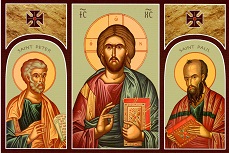
To summarize, the righteous in God’s kingdom are not sinless. They are sinners. They aren’t content to be sinners, though. They despise their sins and know they should be condemned eternally for them. They don’t despise others for being “less righteous” than they are, because they know that no one is righteous before God on the basis of his works. The righteous in God’s kingdom trust in Jesus Christ for mercy and forgiveness, and they always find mercy for His sake. And then the righteous seek to amend their sinful lives, to live a life of love, according to God’s commandments. But the righteous never take pride in those righteous deeds and never hold them up to God to be judged by them. No, the righteous give credit to God for the righteous things they do, just as St. Paul did in today’s Epistle: But by the grace of God I am what I am, and his grace toward me was not in vain; but I toiled more than all of them, yet not I, but the grace of God which was with me. That very same St. Paul, you recall, used to be a self-righteous Pharisee who was righteous in the sight of men, but not in the sight of God. But by the grace of God, he was humbled by God and then converted to become just like the tax collector in Jesus’ parable, after which he was justified and exalted again.

So be on your guard against the Pharisaical trust in your own righteousness, and follow instead the example of the tax collector and of St. Paul and of all the righteous who have gone before you, who have repented of their sins, turned away from their own righteousness, and trusted instead in the righteousness of God that He graciously applies to all who trust in the Lord Jesus Christ. Amen.

Posted in Sermons | Tagged , , | Comments Off on The righteous do not trust in their own righteousness

Each Day in the Word, Sunday, August 28th, 2022

Matthew 23:1–12 (NKJV)

1 Then Jesus spoke to the multitudes and to His disciples, 2 saying: “The scribes and the Pharisees sit in Moses’ seat. 3 Therefore whatever they tell you to observe, that observe and do, but do not do according to their works; for they say, and do not do. 4 For they bind heavy burdens, hard to bear, and lay them on men’s shoulders; but they themselves will not move them with one of their fingers. 5 But all their works they do to be seen by men. They make their phylacteries broad and enlarge the borders of their garments. 6 They love the best places at feasts, the best seats in the synagogues, 7 greetings in the marketplaces, and to be called by men, ‘Rabbi, Rabbi.’ 8 But you, do not be called ‘Rabbi’; for One is your Teacher, the Christ, and you are all brethren. 9 Do not call anyone on earth your father; for One is your Father, He who is in heaven. 10 And do not be called teachers; for One is your Teacher, the Christ. 11 But he who is greatest among you shall be your servant. 12 And whoever exalts himself will be humbled, and he who humbles himself will be exalted.

After shutting down the Pharisees, Sadducees and Scribes for the final time (Matthew 22:46), Jesus turns to His apostles and other followers to offer more of God’s truth. He instructs them to keep listening to Moses (which is God’s proper Law, the purpose of which being to drive them to need the Gospel that comes through Christ), but abandon all manner of their added, man-created, works (which they weren’t even doing themselves). They were all about themselves and making themselves look, and feel, good before men, that’s it.

The same thing, sadly, happens within Christendom today. There are false teachings in certain church bodies that turn listeners away from the Gospel to focus people on themselves. It’s really a sad pretending that’s taking place. They may give the appearance that all is well with them, but everything is about works to get into heaven. Even their own ‘appearance’ before men is a work. It’s all a charade, though, and because they exalted themselves they will be humbled straight into eternal condemnation.

We Christians, have been brought to repentance and belief in the merits of the Christ (the One). This means that, through God-created faith, God accounts our flesh as being humbled (that is, drowned and killed). And through that same God-created faith, the New Man arises to live before God as holy and righteous—again, because of God’s accounting Christ’s fully atoning meets to us through faith alone. Rejoice that God’s means of grace focus us on the One!

Let us pray: Almighty and Everlasting God, who is always more ready to hear than we to pray and to give more than we either desire or deserve, pour down upon us the abundance of Your mercy, forgiving those things of which our conscience is afraid and giving us those good things that we are not worthy to ask, except through the merits and mediation of Christ, our Lord, who lives and reigns with You and the Holy Spirit, one God, now and forever. Amen.

Posted in Devotion | Comments Off on Each Day in the Word, Sunday, August 28th, 2022

Each Day in the Word, Saturday, August 27th, 2022

Ephesians 6:1–9 (NKJV)

1 Children, obey your parents in the Lord, for this is right. 2 “Honor your father and mother,” which is the first commandment with promise: 3 “that it may be well with you and you may live long on the earth.” 4 And you, fathers, do not provoke your children to wrath, but bring them up in the training and admonition of the Lord. 5 Bondservants, be obedient to those who are your masters according to the flesh, with fear and trembling, in sincerity of heart, as to Christ; 6 not with eyeservice, as men-pleasers, but as bondservants of Christ, doing the will of God from the heart, 7 with goodwill doing service, as to the Lord, and not to men, 8 knowing that whatever good anyone does, he will receive the same from the Lord, whether he is a slave or free. 9 And you, masters, do the same things to them, giving up threatening, knowing that your own Master also is in heaven, and there is no partiality with Him.

These verses function as part of Paul’s “Table of Duties” and Luther uses them in the Small Catechism’s “Table of Duties” for parents, children, workers, and employers. Here we see a helpful corrective to what our anti-authority culture sees as that ugly, “four-letter” word: ‘obey’. However, as Christians, rather than recoil from it, we embrace it as the Word of God, and a much-needed word at that, considering the times in which we now live.

‘Bondservants’ would also seem to be “an ugly word,” but Luther applies this term and verses 5-8 “To Workers of All Kinds.” In fact, Paul often uses the term “bondservant of Christ” to refer to himself. Also note that in the Small Catechism’s Table of Duties, these verses on “employees and employers” are not applied to pastors because in God’s Word pastors are not to be ‘hirelings’ or employees.

Instead, the verses applied to pastors are a different set of verses—a unique set of verses—which includes one with that same “ugly word,” …obey. Heb 13:17 “Obey those who rule over you, and be submissive, for they watch out for your souls, as those who must give account. Let them do so with joy and not with grief, for that would be unprofitable for you.” This sounds very much like “the commandment with a promise,” as Paul calls it, addressed to children. In fact, Luther includes pastors as fathers by extension in the Large Catechism’s explanation to the Fourth Commandment. This is something that the churches of our day need to hear, and “Confessional Lutheran” churches especially need to take this seriously. Namely, our congregations are to be taught from proper biblical models rather than worldly models that their pastors lead without lording over and serve without pandering.

We Pray: O God, you reveal your almighty power chiefly by showing mercy and compassion. Pour out your grace on us that we pursue your promises and enjoy your heavenly blessings, through Jesus Christ our Lord. Amen.

Posted in Devotion | Comments Off on Each Day in the Word, Saturday, August 27th, 2022

Each Day in the Word, Friday, August 26th, 2022

Galatians 6:11–18 (NKJV)

11 See with what large letters I have written to you with my own hand! 12 As many as desire to make a good showing in the flesh, these would compel you to be circumcised, only that they may not suffer persecution for the cross of Christ. 13 For not even those who are circumcised keep the law, but they desire to have you circumcised that they may boast in your flesh. 14 But God forbid that I should boast except in the cross of our Lord Jesus Christ, by whom the world has been crucified to me, and I to the world. 15 For in Christ Jesus neither circumcision nor uncircumcision avails anything, but a new creation. 16 And as many as walk according to this rule, peace and mercy be upon them, and upon the Israel of God. 17 From now on let no one trouble me, for I bear in my body the marks of the Lord Jesus. 18 Brethren, the grace of our Lord Jesus Christ be with your spirit. Amen.

“But God forbid that I should boast except in the cross of our Lord Jesus Christ, by whom the world has been crucified to me, and I to the world. For in Christ Jesus neither circumcision nor uncircumcision avails anything, but a new creation.” (14-15)

Paul points out the hypocrisy of the Judaizers in that while they tell others to keep the law, they themselves do not even keep the law. Then Paul says that the demands of the world are meaningless to him. This was obviously true of Christ, here Paul says it of himself, and he asks his hearers to follow his example—his example of following Christ’s example. After all that’s what it means to be His disciples: We follow His teachings, and we follow His example. To do otherwise, quite simply is not the way of Christ, nor the way of His disciples. Thus, claiming to be Christian while behaving in worldly manners sets us up for the charge of hypocrisy as well.

Instead of all the nonsense about Jewish ceremonial law, Paul directs our attention to the thing that really matters: a new creation. This is the new reality for us in Christ that began in our baptism when we were marked with the cross of Christ.

Rather than the mark of circumcision on the body, Paul directs our attention to the marks on his body that are the result of being persecuted for Christ. In view of those marks, let all opposition now be silent! Finally, Paul concludes by pronouncing blessing and by drawing their attention away from the body (the flesh) and toward the seat of our faith in Christ, the spirit.

We Pray: Holy Father, in baptism You united me with Christ, putting my old nature to death and bringing forth the new nature to walk according to Your Word and Spirit. By the same Word and Spirit, guide us so to walk in the newness of our life in Christ, which is now our new creation. In Jesus’ name we pray, Amen.

Posted in Devotion | Comments Off on Each Day in the Word, Friday, August 26th, 2022

Each Day in the Word, Thursday, August 25th, 2022

Galatians 5:1–15 (NKJV)

1 Stand fast therefore in the liberty by which Christ has made us free, and do not be entangled again with a yoke of bondage. 2 Indeed I, Paul, say to you that if you become circumcised, Christ will profit you nothing. 3 And I testify again to every man who becomes circumcised that he is a debtor to keep the whole law. 4 You have become estranged from Christ, you who attempt to be justified by law; you have fallen from grace. 5 For we through the Spirit eagerly wait for the hope of righteousness by faith. 6 For in Christ Jesus neither circumcision nor uncircumcision avails anything, but faith working through love. 7 You ran well. Who hindered you from obeying the truth? 8 This persuasion does not come from Him who calls you. 9 A little leaven leavens the whole lump. 10 I have confidence in you, in the Lord, that you will have no other mind; but he who troubles you shall bear his judgment, whoever he is. 11 And I, brethren, if I still preach circumcision, why do I still suffer persecution? Then the offense of the cross has ceased. 12 I could wish that those who trouble you would even cut themselves off! 13 For you, brethren, have been called to liberty; only do not use liberty as an opportunity for the flesh, but through love serve one another. 14 For all the law is fulfilled in one word, even in this: “You shall love your neighbor as yourself.” 15 But if you bite and devour one another, beware lest you be consumed by one another!

“For you, brethren, have been called to liberty; only do not use liberty as an opportunity for the flesh, but through love serve one another.” (13)

Freedom is never absolute. The only freedom that is worthwhile is freedom from the things that harm us. No mature and sane person seeks freedom from the things that do us good. Those are things we keep, maintain, preserve, and conserve. Thus, with respect to the bad things in life we are “liberal”—but only in the sense that we want to be “liberated” from them (not liberated and free to indulge in them); and with respect to the good things in life we are “conservative”—but only in the sense that we want to “conserve” them for our benefit (not be imprisoned or enslaved by them).

Not everyone understands or lives in this kind of Christian maturity, so we constantly hear contrary voices—not just from the world but also from other people who call themselves Christians. To our dogged dedication to “obeying the truth” (7), they insist instead on “tolerance and love.” Dr. Martin Luther, in his own great Galatians commentary on verse 9 (“A little yeast leavens the whole lump”) offers this corrective: “A curse on a love that is observed at the expense of the doctrine of faith, to which everything must yield—love, an apostle, an angel from heaven, etc.!” (AE 27:35-39). God’s love, as described in the Bible, is very different from what the world calls love. The world’s version of love is simply tolerance and indulgence, while God’s kind of love is lifting us out of ourselves to be in proper relationships with others and living in loving service to them and God.

Let all others go their way; we will stick with Christ and His Word!

We Pray: “Lord, keep us steadfast in Thy Word; Curb those who fain by craft or sword Would wrest the Kingdom from Thy Son And set at naught all He hath done.” (TLH 261:1)

Posted in Devotion | Comments Off on Each Day in the Word, Thursday, August 25th, 2022