Mine is a ministry of service

Sermon (audio)
Download Sermon

Service(video)
[vimeo https://vimeo.com/742906461 w=540&h=360]
Download Service Download Bulletin

Sermon for the Festival of St. Bartholomew

2 Corinthians 4:7-10  +  Luke 22:24-30

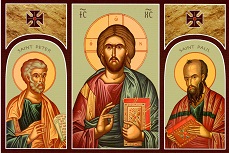
On this Feast of St. Bartholomew, also known as the apostle Nathanael, we turn to the Gospel of St. Luke, who relates a dispute in which Bartholomew was involved, together with the other eleven apostles, on Maundy Thursday evening, as Jesus was preparing to perform the lowliest service anyone can possibly perform, to suffer and die—the Master humbling Himself for His servants.

And there was also a disagreement among them about which of them should be recognized as the greatest.

It’s almost unbelievable that the men who were closest to humble Jesus, the men who had spent the most time with humble Jesus, the men who had been hand-selected by humble Jesus to be the foundation on which His Church would be built, could still harbor such lofty notions of grandeur, could still be so self-seeking, pining for glory and power and a name for themselves.

But you know this sin, too, don’t you—you who, in every case, have been Christians even longer than the apostles knew Jesus? You think—at least, according to the flesh, you think—that you should be recognized above someone else; that you should receive higher praise and greater rewards than someone else.

Now, it seems likely that each one of the apostles was trying to make the case for himself as the greatest, although it’s possible that some of them were making the case for certain of their brothers over others. For example, “I think Peter is the greatest!” “No, I think it’s John!” “No, clearly James is the greatest among us!” In either case, they were viewing themselves and the office of the holy ministry wrongly. So Jesus had to correct them.

He said to them, “The kings of the Gentiles exercise dominion over them; and those who exercise authority over them are called benefactors.”

Now, that’s fine for secular rulers. They have rank and degrees of authority, some higher, some lower. In the secular realm there are lords and masters who give orders and servants who take them. Those who rule well and give orders well and govern well in the secular realm are called benefactors—doers of good—and they’re generally rewarded in this life with glory and fame and respect. But it isn’t to be that way in the Church of Christ or among the ministers of Christ.

But you shall not behave this way. Instead, let him who is greatest among you be like the youngest; and let the one who leads be like the one who serves. For who is greater, the one who sits at the table or the one who serves? Is it not the one who sits at the table? But I am among you as the one who serves.

Christ has a kingdom that’s separate from the State, where things are to be done differently than among the pagans. In Christ’s kingdom, He alone reigns as King, and He has, through His Church, set certain men into offices of authority in His kingdom. Like Bartholomew. Like the other apostles. Like their successors—all who hold the office of the holy ministry. But unlike the secular realm, those who hold office in the holy ministry don’t have a higher rank than laymen. They just have a different job to do, and they are to do it as servants, not as rulers. Also unlike the secular realm, all who hold office in the holy ministry are equal with one another, having the same authority to preach and teach and administer the Sacraments. We’ve had to take a stand on that recently as one who was called bishop tried to exercise dominion over our congregation, contrary to Christ’s command.

What’s more, those who hold office in the holy ministry are not given the sword with which to punish, are not given the right to use force or physical threats to get people to do things, as secular rulers do. Instead, they are given only the Word of God, to preach, teach, correct, rebuke, encourage, to threaten sinners with God’s wrath, and to comfort the penitent with God’s forgiveness. Unlike in the secular realm, the greatness of the office-holders in the Church is not in exercising authority from above, but in serving from beneath, as Christ served.

How did Christ serve? He didn’t go around in fancy clothes, wearing expensive rings, expecting anyone to pamper Him or call Him “Your Grace.” Instead, He devoted His life to serving mankind. Serving, not by taking orders from people and doing whatever they wanted Him to do, but by giving His life to the people and for the people, by showing compassion, by saying what they needed to hear, even when it hurt their feelings, even when it hurt His own popularity or caused Him to be hated. He served, not by the power of the sword, but by the power of the Word. He identified sin, and rebuked and condemned it. He showed the people the Father’s grace and love in sending His Son into the world to be a sacrifice for sin. He walked into the hands of those who hated Him and gave His life to make atonement for our sins. He did it all in service to mankind, which includes you and me.

Now, Christ says to His dear disciples: “Mine is a ministry of service. All those who hold office in My kingdom must serve, as I served; and they must suffer, as I suffered. If you’re looking for earthly splendor, for a comfortable life, for the praise of men, then seek it somewhere else. You can’t have that in My kingdom, and certainly not in the ministry, for your ministry must resemble My ministry.” Yes, of course, there have been countless priests and pastors in the world who have not been faithful to Christ’s Word, who have told lies in Christ’s name, who have sought earthly greatness, who have ruled from above instead of serving from beneath. To them, Christ will say on the Last Day, “Depart from Me. I never knew you.” But those who serve and carry out their ministry well in Christ’s kingdom will have trouble, toil, and often ingratitude in this life. So be it. That’s the ministry that Christ instituted.

St. Paul’s life as an office-holder in the Church was a striking illustration of Jesus’ words. You heard in the Epistle of the service and the sufferings of Paul, together with his fellow ministers. The weakness of Christ’s ministers, who are all just like jars of clay, only serves to highlight the treasure of the cross of Christ and the power of God in gathering a kingdom to Himself, not by force or compulsion, but only by the power of His Word.

But, who would submit to such a life—to hold the office of Christ, to shun earthly glory and comfort, to live a life of humble service and to suffer in this ministry? Hear again the promise Jesus attached to this ministry: You are the ones who have continued with me in my trials. And I confer upon you a kingdom, as my Father has conferred it upon me, that you may eat and drink at my table in my kingdom and sit on thrones, judging the twelve tribes of Israel. For all your trouble, toil, and earthly misfortune, you get a kingdom, the authority to reign—not separately from Me, Christ says, but together with Me. But not in this world. Not here. Not now. Here you serve. Here you do not rule and reign and sit at the table. But there, in the next life, you will. You will sit with Me at My table. You will have thrones there, to judge the twelve tribes of Israel.

It was this promise that sustained Bartholomew and all the apostles in all their future hardships, and finally, in their martyrdom. It’s this promise that sustains all faithful pastors and preachers. And actually, it’s this promise that sustains the hearers of the Word, as well. Because, while not all Christians are office-holders in the Church, all Christians are clothed with Christ and called by the name of Christ. All Christians are called to serve one another in love. All Christians are children of God, and coheirs with Christ, and fellow sharers in the sufferings of Christ. As Paul said, not to the pastors in Rome, but to all the Christians in Rome, The Spirit Himself bears witness with our spirit that we are children of God, and if children, then heirs—heirs of God and joint heirs with Christ, if indeed we suffer with Him, that we may also be glorified together.

So the promise to sit with Christ at His table is for all believers in Christ. The promise of an end to earthly shame and suffering and of an eternal banquet of glory and peace is for all who walk by the Spirit, who persevere in faith until the end.

Until the end, Christ continues to serve His whole Church through the mouths and hands of weak, sinful men. That’s what this office of the ministry is for in the first place, not to exalt the minister, but to step into the role of Jesus, to serve Christ’s holy people and to hold out to them the Word of life, the water of life, and the New Testament in the body and blood of the Lord Jesus. This office of Christ is the way He has chosen to serve you here on this earth, to teach you, to correct you, to forgive, comfort, and strengthen you. Don’t take this ministry for granted or allow the other items on your long to-do list bump Christ’s ministry down out of first place, where it belongs. Instead, rejoice that Christ wants to serve you and guide you through this life and feed your soul for eternal life.

Mine is a ministry of service. That was true for Christ, and it’s true for every minister who follows in His steps. So let’s give thanks to God today, first for the service and the sufferings of Christ, our Savior, and then also for the service and sufferings of Bartholomew, and of all Christ’s chosen ministers throughout the ages who have borne the office of Christ faithfully. The best way to thank God for these gifts is to make use of these gifts, to the glory of Christ Jesus, and to the building up of His holy Church. Amen.

Posted in Sermons | Tagged , , | Comments Off on Mine is a ministry of service

Each Day in the Word, Wednesday, August 24th, 2022

Galatians 4:8–20 (NKJV)

8 But then, indeed, when you did not know God, you served those which by nature are not gods. 9 But now after you have known God, or rather are known by God, how is it that you turn again to the weak and beggarly elements, to which you desire again to be in bondage? 10 You observe days and months and seasons and years. 11 I am afraid for you, lest I have labored for you in vain. 12 Brethren, I urge you to become like me, for I became like you. You have not injured me at all. 13 You know that because of physical infirmity I preached the gospel to you at the first. 14 And my trial which was in my flesh you did not despise or reject, but you received me as an angel of God, even as Christ Jesus. 15 What then was the blessing you enjoyed? For I bear you witness that, if possible, you would have plucked out your own eyes and given them to me. 16 Have I therefore become your enemy because I tell you the truth? 17 They zealously court you, but for no good; yes, they want to exclude you, that you may be zealous for them. 18 But it is good to be zealous in a good thing always, and not only when I am present with you. 19 My little children, for whom I labor in birth again until Christ is formed in you, 20 I would like to be present with you now and to change my tone; for I have doubts about you.

“My little children, for whom I labor in birth again until Christ is formed in you…” (19). All pastors and parents can identify with Paul here. That’s why 1 Cor. 15:58 is so comforting: “Therefore, my beloved brothers, be steadfast, immovable, always abounding in the work of the Lord, knowing that in the Lord your labor is not in vain.” Amen! So often the work of parents and pastors can feel very much in vain, but we take comfort in God’s Word here that our work in the Lord is not in vain.

Paul wants the people to be as he is… in Christ. For example, true pastors do not allow hero-worship or make direct followers of themselves per se. Instead, they lead by example by demonstrating how to be followers of Christ. This also means that since God uses our weaknesses for His purposes, faithful congregations must look beyond physical limitations of their pastors and receive the message of Christ through weak, human servants.

The real issue is the truth of the Gospel, but we see all over America today something else. Namely, while truth is still at a premium for us, it is not so for the world and worldly ‘churches’. Instead, like the Judaizers of Paul’s day, who added to God’s Word and tried to create their own criteria for association, false leaders in many compromised churches today, have basically created their own stained-glass country clubs, wherein hero-worship and party-spirit are rampant.

Instead, Paul emphasizes for us the true Gospel, true pastors, true fellowship in Christ, and the true church—these all go together and are centered in Christ. Truth matters—God’s truth, in Christ.

We Pray: Holy Father, keep us faithful to Your Son, His true Gospel, His true pastors, and His true Church. Help us to reach out with Your true Gospel to all who are victims of various falsehoods that they might hear Christ Himself inviting them to return to You through forgiveness in Him alone. In Jesus’ name we pray, Amen.

Posted in Devotion | Comments Off on Each Day in the Word, Wednesday, August 24th, 2022

Each Day in the Word, Tuesday, August 23rd, 2022

Galatians 3:1–14 (NKJV)

1 O foolish Galatians! Who has bewitched you that you should not obey the truth, before whose eyes Jesus Christ was clearly portrayed among you as crucified? 2 This only I want to learn from you: Did you receive the Spirit by the works of the law, or by the hearing of faith?—3 Are you so foolish? Having begun in the Spirit, are you now being made perfect by the flesh? 4 Have you suffered so many things in vain—if indeed it was in vain? 5 Therefore He who supplies the Spirit to you and works miracles among you, does He do it by the works of the law, or by the hearing of faith? 6 just as Abraham “believed God, and it was accounted to him for righteousness.” 7 Therefore know that only those who are of faith are sons of Abraham. 8 And the Scripture, foreseeing that God would justify the Gentiles by faith, preached the gospel to Abraham beforehand, saying, “In you all the nations shall be blessed.” 9 So then those who are of faith are blessed with believing Abraham. 10 For as many as are of the works of the law are under the curse; for it is written, “Cursed is everyone who does not continue in all things which are written in the book of the law, to do them.” 11 But that no one is justified by the law in the sight of God is evident, for “the just shall live by faith.” 12 Yet the law is not of faith, but “the man who does them shall live by them.” 13 Christ has redeemed us from the curse of the law, having become a curse for us (for it is written, “Cursed is everyone who hangs on a tree”), 14 that the blessing of Abraham might come upon the Gentiles in Christ Jesus, that we might receive the promise of the Spirit through faith.

“O foolish Galatians! Who has bewitched you that you should not obey the truth, before whose eyes Jesus Christ was clearly portrayed among you as crucified?” (1)

There is a play on words in the Greek text that does not come across in the English. Paul asks who has “bewitched” the Galatians—a term that speaks of deception through the eyes, like a slight-of-hand magician. Then Paul continues the visual imagery by reminding them of the surpassing sight that was “portrayed” before their eyes: Christ crucified for their sins. This is their true reality, and the former things are a false substitute.

The issue here is how salvation in Christ is appropriated or received. The true means of receiving is “by hearing with faith” and “by the Spirit”; but the false substitute is “by works of the law” and “by the flesh.” The problem is that Paul has to argue against the Judaizing influence on Gentile Christianity that says salvation starts by grace in Christ but then it is completed by following Jewish ceremonial laws like circumcision and table fellowship (12). Paul speaks against the necessity of these ceremonial laws, while the moral laws are still binding upon the Christian. These moral laws, like the Ten Commandments, are still binding for us because they are God’s eternal will for His people. Paul also says that all of the Law does not justify in any sense, before conversion or after. Christ alone justifies us by His perfect life and His death in our place on the cross, and we receive this by faith alone. There is no bewitching magic here, just God graciously at work through His Word, and received by faith. God gives and faith receives.

We Pray: Holy Father, we are thankful that You saved us purely out of grace and brought us to faith through the power of Your Word and Spirit. Guide us by Your Spirit to fully trust in You and Your sustaining power, which is ours by faith alone in Christ alone. In His name we pray, Amen.

Posted in Devotion | Comments Off on Each Day in the Word, Tuesday, August 23rd, 2022

Each Day in the Word, Monday, August 22nd, 2022

Galatians 2:1–21 (NKJV)

1 Then after fourteen years I went up again to Jerusalem with Barnabas, and also took Titus with me. 2 And I went up by revelation, and communicated to them that gospel which I preach among the Gentiles, but privately to those who were of reputation, lest by any means I might run, or had run, in vain. 3 Yet not even Titus who was with me, being a Greek, was compelled to be circumcised. 4 And this occurred because of false brethren secretly brought in (who came in by stealth to spy out our liberty which we have in Christ Jesus, that they might bring us into bondage), 5 to whom we did not yield submission even for an hour, that the truth of the gospel might continue with you. 6 But from those who seemed to be something—whatever they were, it makes no difference to me; God shows personal favoritism to no man—for those who seemed to be something added nothing to me. 7 But on the contrary, when they saw that the gospel for the uncircumcised had been committed to me, as the gospel for the circumcised was to Peter 8 (for He who worked effectively in Peter for the apostleship to the circumcised also worked effectively in me toward the Gentiles), 9 and when James, Cephas, and John, who seemed to be pillars, perceived the grace that had been given to me, they gave me and Barnabas the right hand of fellowship, that we should go to the Gentiles and they to the circumcised. 10 They desired only that we should remember the poor, the very thing which I also was eager to do. 11 Now when Peter had come to Antioch, I withstood him to his face, because he was to be blamed; 12 for before certain men came from James, he would eat with the Gentiles; but when they came, he withdrew and separated himself, fearing those who were of the circumcision. 13 And the rest of the Jews also played the hypocrite with him, so that even Barnabas was carried away with their hypocrisy. 14 But when I saw that they were not straightforward about the truth of the gospel, I said to Peter before them all, “If you, being a Jew, live in the manner of Gentiles and not as the Jews, why do you compel Gentiles to live as Jews? 15 We who are Jews by nature, and not sinners of the Gentiles, 16 knowing that a man is not justified by the works of the law but by faith in Jesus Christ, even we have believed in Christ Jesus, that we might be justified by faith in Christ and not by the works of the law; for by the works of the law no flesh shall be justified. 17 “But if, while we seek to be justified by Christ, we ourselves also are found sinners, is Christ therefore a minister of sin? Certainly not! 18 For if I build again those things which I destroyed, I make myself a transgressor. 19 For I through the law died to the law that I might live to God. 20 I have been crucified with Christ; it is no longer I who live, but Christ lives in me; and the life which I now live in the flesh I live by faith in the Son of God, who loved me and gave Himself for me. 21 I do not set aside the grace of God; for if righteousness comes through the law, then Christ died in vain.”

“We did not yield submission even for an hour, that the truth of the gospel might continue with you.” (5)

In Galatians, Paul must deal with a distortion of the Gospel. However, we must keep in mind that the Gospel can be distorted in more than one way. For example, in the Gospels, we see that the Pharisees erred on the right by promoting work-righteousness, while the Sadducees erred on the left by promoting secular tolerance. Early in the Reformation, Luther fought the errors on the right of work-righteousness in Roman Catholicism, while later he also fought the errors on the left of licentiousness in the antinomians, etc.

Here in Galatians, Paul must fight the distortion of the Gospel on the right side that imposes legalism (work-righteousness) onto the Gospel. In Corinth, however, Paul had to fight the distortion on the left side that imposes licentiousness (lawless tolerance) onto the Gospel, which is prominent in our culture and compromised churches today.

Thus, Paul says to the Galatians that through the law he died to the law (19), but this certainly does not mean absolute freedom from God’s moral law. This is why it is vitally important, when reading Galatians, to understand what Paul means by the law, and what does and does not apply to the Christian. Namely, these three things: 1) the law, as a total body of all of God’s legal codes, no longer condemns us, in so far as we are Christians; and 2) that portion of God’s legal codes which are ceremonial laws no longer applies to us as Christians. However, 3) the moral law of God’s Word, while it has no saving or justifying power, still applies to the Christian as curb, mirror, and rule/guide.

We pray: Holy Father, sanctify us through Your Word and Spirit so that we are led only by the true Gospel of the forgiveness of sins in Christ our Lord, and not led away by any false ‘gospel’ that the world puts forth. Amen.

Posted in Devotion | Comments Off on Each Day in the Word, Monday, August 22nd, 2022

Jerusalem will fall, but the Lord still seeks to cleanse it

Sermon (audio)
Download Sermon

Service(video)
[vimeo https://vimeo.com/741662130 w=540&h=360]
Download Service Download Bulletin

Sermon for Trinity 10

1 Corinthians 12:1-11  +  Luke 19:41-48

We always think of Palm Sunday as a joyful day, don’t we? We march around the church with palm branches in remembrance of the crowds that followed Jesus down the Mount of Olives as He rode on that donkey toward the holy city of Jerusalem at the beginning of Holy Week, with palm branches as the royal carpet laid out before Him. That all took place as Jesus rode down the Mount of Olives, at the beginning of that famous ride. But the first part of today’s Gospel took place during that very same ride as it came to an end, as Jesus drew near to Jerusalem. There was nothing joyful about His approach to the city; quite the opposite. He wept over it and predicted its fall. But then He entered it and cleansed the temple. There’s much we can learn from this account from Luke’s Gospel, not only about the Jerusalem of Jesus’ day, but about the other Jerusalem, too—and not the one you can locate on a map. Very simply, Jerusalem will fall. But the Lord still seeks to cleanse it until then.

And as he drew near, he looked at the city and wept over it, saying, If you only knew, in this your day, the things that would bring you peace! But now they are hidden from your eyes.

This was supposed to be Jerusalem’s day, Jerusalem’s time to shine. Her King was coming to save His people from their sins, to make peace between God and man. God had been working on this city, for this city, for a thousand years, since the time of King David, who first conquered it for the people of Israel. God had chosen one nation, one people to be His. With this nation alone, out of all the nations of the earth that had all gone their own way and were all on their way to hell, God had made a covenant of salvation. He had chosen Jerusalem to be their capital city and to be the home of His Temple and His altar, the one place on earth where God promised to be found, to be gracious, to be merciful, where He promised to hear their prayers and act on their behalf. One place on earth: Jerusalem.

But Jerusalem was about to commit a sin before which all her former sins paled in comparison. She was about to crucify her King and her God. And worse than that, far worse—because she could be forgiven even for that—she was about to reject His Holy Spirit who would call them to repentance and to believe in Christ crucified for the forgiveness of sins. But she wouldn’t. Almost all the Jews would continue to reject the very foundation, the very stone on which Jerusalem was built: Christ, the Rock. He would have brought them peace. But they didn’t want to know His peace.

And so Jesus wept. He lamented. The word “wept” here is not a single tear streaming down the face. It’s an audible sobbing, God sobbing over the people to whom He had given every benefit, every advantage to know Him, to know His goodness and to trust in Him, but who were determined to reject Him. But His weeping isn’t for Himself as the rejected One. His weeping is for them. For the days will come upon you when your enemies will put up an embankment around you and will surround you and besiege you on every side. And they will raze you to the ground, you and your children within you; and they will not leave one stone upon another within you, because you did not recognize the time of your visitation.”

You know what this sounds like? It sounds a lot like the prophet Jeremiah who lived through the fall of Jerusalem and the destruction of its first Temple some 600 years earlier. In fact, when Jesus refers a few verses later to the “den of thieves” that the Temple had become, he was quoting from the prophet Jeremiah, chapter 7. I encourage you to read that chapter when you get home, where God foretold the destruction of the first Temple because of the Jews’ persistent disobedience to His covenant. God had the Babylonians come in the first time to destroy Jerusalem and its Temple and to carry the Jews away into captivity. But He brought them back from that captivity, because the Christ hadn’t yet come, and He had to come, from the tribe of Judah, to be born in Bethlehem, to minister among the Jews in the land of Israel, to suffer and die and to rise again from the dead, all while Israel remained a distinct nation, all while the Temple remained in place and the Law of Moses remained in force. The destruction of the first Temple was only temporary; it would be rebuilt and reconsecrated with God’s approval and blessing. But the destruction of the second by the Roman armies would be permanent. Jerusalem will fall, and it will not rise again—not as the capital city of God’s people, not as the home of righteousness.

What do we learn from Jesus’ weeping over Jerusalem? We see God’s heart for sinful man, especially those whom He has worked so hard to teach and to train, those for whom He has done so much above and beyond what He had done for any other people, those whom He had raised from infancy as His own children. They were sinners who deserved condemnation, but in spite of all their sins, God had given them the way of salvation. He had sent His Son to them, His greatest gift. But by rejecting the one way of salvation—repentance and faith in Christ Jesus—they sealed their own doom. And even then, God was not happy about their destruction but sobbed over it.

And so we also learn that, in spite of His great love and compassion, God does carry through with the judgment He threatens against those who transgress His commandments and who will not seek refuge in Christ. If a person or a people will not repent of their wickedness and turn to Christ for forgiveness, determined to mend their evil ways, then God’s patience will eventually run out, and judgment will eventually come.

But even though He knew what would happen, we don’t see Jesus turning the donkey around, do we? He pressed on toward Jerusalem and into Jerusalem so that He could offer His life as the atoning sacrifice for the sins of the world. He did it for the sake of the few who would believe among the Jews, and because, although Jerusalem itself would be destroyed, the Gospel would go out from there and spring up from there and fill the earth, spreading among all the nations. As Isaiah prophesied in chapter 2, For out of Zion shall go forth the law, and the word of the LORD from Jerusalem. Out of that doomed city of Jerusalem, a remnant would be saved and would bring the Gospel of salvation to all nations.

This is what the prophet Daniel saw in his interpretation of King Nebuchadnezzar’s dream during the Jews’ captivity in Babylon, right after the first temple was destroyed. A stone was cut out without hands, which struck the statue on its feet of iron and clay (during the days of the Roman empire) and broke them in pieces…And the stone that struck the image became a great mountain and filled the whole earth. Yes, no stone would be left upon another in Jerusalem, because they stumbled over Christ. But Christ, the chosen and precious Stone, would be the foundation of the Church that would spread throughout the whole world.

Knowing that, Jesus went ahead into the city, determined to save any and all who would put their faith in Him, by the power of the Holy Spirit, working through the Gospel. According to Mark, He went into the temple later that same day and inspected it, but it was late, so He left and came back the next day and found it as Luke records, full of the noises of commerce, people buying and selling inside the temple grounds.

So He drove them out. He overturned the tables and chairs of those who were buying and selling. This was not the intended purpose of God’s house. “It is written (in the prophet Isaiah), ‘My house will be a house of prayer.’ But you have made it a ‘den of thieves’ (as Jeremiah had lamented). Remember, under the Old Testament, that one building, that one temple in that one city was God’s promised dwelling place on earth. Not that it contained Him or restricted Him. But it’s where He chose to be merciful, to hear prayers, to accept sacrifices, to reconcile sinners to Himself. And it was at once a beacon for the nations, who all worshiped false gods and idols, the one place on earth where all people were invited to come and find the true God, to learn His commandments, to learn how He wanted to be worshiped, and to learn about His promise of salvation in the coming Christ. No other temple, no other building, no other altar was permitted, only this one. Talk about a special place!

But the chosen people were acting just like pagans and treating this special place with contempt, filling it with noise and commerce and shady practices, too. No, that couldn’t be allowed. Jerusalem would eventually be destroyed, but before that, Jerusalem and its temple still had an important role to fulfill in the world! He had just a few more days left during that Passover week to preach and teach and show Himself as the Lamb of God, who takes away the sin of the world, the Passover Lamb, innocent, and yet marked for slaughter. So with the temple cleansed of the noise and distractions, with the quiet and the reverence restored, Jesus taught there daily right up until the end. And the people were hanging on his words.

How does all this apply to us today? Well, Jerusalem fell, as prophesied by Jesus, and the Gospel grew from there to fill the world. On the rock of Peter’s confession, that Jesus is the Christ, the Son of the living God, Jesus has built His Church, as He promised. And that Christian Church is now the spiritual Jerusalem, where God dwells by His Spirit, where His Gospel is preached, where Christ is present, not in one place, but wherever His Gospel is preached and His Sacraments are administered.

But this Church—this outward Church throughout the world—will also fall one day, because it has turned away from Christ its Head and invented its own doctrines and followed its own false teachings. All Christians have access to God’s Word and to the Christian confessions that the Church has always confessed. But so many have walked away from the doctrine of Christ. So many have betrayed the name “Christian,” and often with false teaching so blatant that it destroys the very foundations of Christianity. Jesus weeps for the Christian Church, too, as He once wept for Jerusalem. because He knows it isn’t salvageable, that even most who call themselves Christians won’t be saved from the coming destruction of the world, which includes the destruction of the apostate church.

But He knows a remnant will be saved. The true Church, made up of true believers in Him, can never fall but must be victorious in the end, as Scripture promises and as we see fulfilled in picture-language in the book of Revelation. And so Christ, through His Word, still enters His Church and cleanses it. He teaches us that the Church is not to be turned into a house of merchants or a den of thieves, trying to sell itself to the world or filling itself with noise and distractions. Every church that bears Christ’s name must be a house of prayer for all nations. People must be able to pray when they come to church. People must learn reverence for God when they come to church, must learn how to worship Him in Spirit and in truth. They must be able to learn in church about the God who has revealed Himself in Holy Scripture. People must be able to come and see how Christians love one another, according to Christ’s commandment, and how we seek to build one another up in love and good works, and how we bear the cross with patience as we await the King’s return, when He will claim this Jerusalem as His own and bring us into the New Jerusalem in all its glory and perfection.

Yes, Jerusalem fell, but the Lord still entered to cleanse it before its fall. And this Jerusalem of the outward Christian Church will also fall, but the Lord still enters to cleanse it before its fall, so that the remnant may still be saved. Take the warning Christ gives in today’s Gospel and don’t allow yourselves to become complacent, as if it were enough to belong to a Christian church. Live each day in repentance. Live each day in faith. Live each day remembering that judgment is coming on the world and even on the Church. But also remember that you don’t have to be among the masses who will be judged. Christ loves His Jerusalem and has given her everything she needs to avoid that judgment. You have His Word. Treasure it. And keep it! And you will be found among the remnant that will enter the New Jerusalem. Amen.

Posted in Sermons | Tagged , , | Comments Off on Jerusalem will fall, but the Lord still seeks to cleanse it