
Elders/Shepherds/Bishops preaching repentance and faith

Sermon

Download Sermon

Service

To download this video, press here to go to the download page. You may need to scroll down to see the download button.

Download Bulletin

Sermon for Midweek of Trinity 8

Acts 20:17-38

Last week, we heard about some of the violence and persecution Paul suffered during his first missionary journey, all for the sake of the Gospel, and for the sake of the saints who believed the Gospel he proclaimed. In the lesson from Acts 20 that you heard this evening, it’s a few years later, on the tail end of Paul’s third missionary journey, and he has more violence and persecution waiting for him in Jerusalem. He knows that for a fact; the Holy Spirit has revealed it to him. But on his way to Jerusalem, he has an important stop to make. He has some final instructions for the ministers of the churches in Ephesus, instructions that apply to all ministers everywhere, and to the flocks that they serve.

Paul decides not to visit Ephesus, since he’s trying to hurry back to Jerusalem, and he knows that he’ll get sidetracked if he tries to meet with all the saints there. No, he goes to Miletus, “down the road” from Ephesus, and sends only for the “elders” of the church to come and meet with him.

Those of you who spent some time in the Lutheran synods surely grew up hearing about “elders” in your churches. They were not pastors. They were respected laymen who were put in charge of all sorts of functions within the church, both spiritual and mundane. But in the New Testament Scriptures, “elders” were not laymen. They were ordained clergymen, the ministers of the churches, as today’s reading makes clear. For that reason, I think it’s rather confusing to use the same term with a different meaning in our churches today, which is why we don’t use it here at all.

In Paul’s day the elders weren’t always “elderly,” but they were men who showed the wisdom that often comes with age, especially wisdom and maturity in spiritual things. Just as those who are older are supposed to teach and be models for those who are younger, so the elders in the Church were supposed to teach and be models for the saints entrusted to their care.

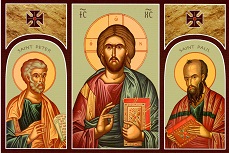
Paul says to these elders, Take heed to yourselves and to all the flock, among which the Holy Spirit has made you overseers, to shepherd the church of God which He purchased with His own blood. And there we see references to two other titles that also apply to ministers: shepherd, that is, “pastor,” and “overseer,” or “supervisor,” from the Greek episcopus, from which we get the words “episcopal” and also “bishop.” Elders, pastors, and bishops were all terms for the men whom the Holy Spirit had appointed (through the call of the Church) over the precious flock that God purchased with His own blood. (And, yes, this is one of those passages that refers to the Lord Jesus as “God.”)

“Elder” emphasizes the wisdom, maturity, and instruction given by the minister, “pastor” emphasizes the minister’s role as a shepherd who feeds, cares for, and protects his sheep, and “bishop” emphasizes the minister’s role as the overseer or supervisor of his congregation, who looks out over it and sees to it that the Word is being preached correctly, the Sacraments are being administered rightly, and the members of the congregation are leading lives that are consistent with the Christian faith they have confessed.

Paul himself is, in many ways, a role model for all ministers. He was thoroughly committed to preaching the Gospel. He was filled with joy as he preached, and thanksgiving to God, and love for the saints. He endured hardship patiently. His heart was set on the heavenly prize he would eventually receive, on “finishing his race with joy.” He also taught extensively. As he says here, he did not hesitate to proclaim to them the whole counsel of God. In fact, the last time he was in Ephesus, he taught the people well into the evening, until a man fell asleep and fell down from the upper-story window where he had been sitting. And then, if you recall, Paul raised him from the dead, and then kept right on teaching until morning.

But here in Acts 20, Paul summarizes everything he taught: Repentance toward God and faith toward the Lord Jesus Christ. And he refers to this “repentance and faith” as “the gospel of the grace of God.” Jesus had used practically those same words when He told His apostles that “repentance and the forgiveness of sins must be preached in His name to all nations.” Throughout Paul’s writings and his preaching recorded in the book of Acts, we see the clear teaching of both repentance and faith, repentance and the forgiveness of sins, earned by the Lord Jesus through His death on the cross, and given to us through faith alone in Christ Jesus.

Over the centuries, and already at Paul’s time, those two basic teachings—repentance and faith, Law and Gospel, sin and grace—have been distorted, often by overemphasizing and distorting the one, while underemphasizing the other. During the Middle Ages, leading up to the Reformation, repentance and sin were overemphasized and distorted, while faith and grace were almost absent from the ministers’ preaching. Luther and those with him restored the balance. Today, it’s mostly the opposite. The preaching of repentance is rare, and grace has been overemphasized and distorted, with most people thinking that everyone is already forgiven, already headed for heaven, regardless of what sins they still cling to, regardless of any repentance.

And that’s just the kind of thing Paul warned the Ephesian elders about. For I know this, that after my departure savage wolves will come in among you, not sparing the flock. Also from among yourselves men will rise up, speaking perverse things, to draw away the disciples after themselves. Therefore watch! It’s just like Jesus said in Sunday’s Gospel: Watch out for false prophets, who come to you in sheep’s clothing, but inwardly they are ravenous wolves. Jesus knew what He was talking about (of course). So did Paul. People always come along and try to distort the teaching of repentance and faith, along with the other teachings of God’s Word. So ministers, especially, need to be vigilant, and, as part of their preaching and teaching and shepherding, need to warn their flock about the wolves.

And the task is not in vain. Paul’s message to the Ephesian elders is his message to elders / pastors / bishops, and to all Christians still today: I commend you to God and to the word of His grace, which is able to build you up and give you an inheritance among all those who have been sanctified. The Ephesians didn’t need Paul to return to them in person, or any minister in particular. As long as they had God, and the word of God’s grace being preached to them, as Paul himself would later write to them the beautiful epistle to the Ephesians that we’re still reading and studying today, they had all they needed—you have all you need!—to be built up in faith, sanctified in your lives, warned against false teaching, strengthened under the cross, and comforted in every adversity, until you are given the inheritance among the saints that is already yours, as dearly loved children of God. Amen.

Posted in Sermons | Comments Off on Elders/Shepherds/Bishops preaching repentance and faith

Test the preachers who claim to speak for Christ

Sermon

Download Sermon

Service

To download this video, press here to go to the download page. You may need to scroll down to see the download button.

Download Bulletin

Sermon for Trinity 8

Romans 8:12-17 + Matthew 7:15-23

For the last several weeks, the Sunday Gospels have been showing us some of the tasks we are to be performing on a regular basis as forgiven children of God. In today’s Gospel, Jesus highlights a task that a lot of Christians have been shirking, neglecting, failing to do. It’s the task of testing the preachers who claim to speak for Christ.

As I said, many Christians fail to do this. If they grow up in a certain church, in a certain “tradition,” they never question it, never actually test their preachers, because they would never consider leaving their family church. Others celebrate the diversity of doctrines that their preachers embrace. Others look for a church that’s going to tell them what they want to hear, or that gives them the kind of worship “experience” they’re looking for. They don’t test the teaching. Instead, they test the format, the atmosphere, the music. But the most important factor, by far, in choosing a church is the doctrine that is taught and practiced in that church, regardless of any external trappings. Why is it so important? Because of whose doctrine it is. It’s Christ’s doctrine, Christ’s teaching. And if we love Him, then we must also love what He teaches—and that means everything He teaches.

Of course, if you’re hearing the Word of Christ directly from the mouth of Christ, then you don’t have to worry about testing the preacher, do you? But that’s not the situation we find ourselves in. Jesus never intended to stay on earth and preach and teach until the end of time. It was always His intention to call His sheep and to feed His sheep through the preaching and teaching of ministers whom He would send to preach and teach in His name until He comes again. But He also knew that many, many preachers would come along, claiming to speak for Christ, who would go out into the world spreading lies in His name. And so He issues this stern warning to His disciples, as one of the most basic tasks Christians are to be doing, regularly: Watch out for false prophets.

Why? Because they won’t come to you with a big sign on their chest saying, “False prophet.” On the contrary, they will claim that they’re speaking to you in Jesus’ name, that they’re telling you the truth about God, about Jesus, about what it means to be a Christian. That’s what it means to come in “sheep’s clothing”—innocent, harmless, likeable, believable, looking like a true follower of Jesus. But inwardly they are ravenous wolves. If they get you to believe lies about yourself, lies about God and His Word, lies about how anyone can be saved from death and from eternal condemnation, then they have devoured you. They have robbed you of salvation. They have led you to believe in a fake Jesus, and a fake Jesus can’t save anyone.

How do you watch out for them? You test them. You don’t test them based on how they look, or by how educated they are by worldly standards, or by their personality, their charisma, or their sense of humor. You don’t test them by the mere fact that they claim Jesus as Lord or wave a Bible around. You test them by examining their “fruits.” By their fruits you will know them, Jesus says. Now, two things are included in a preacher’s fruits: his doctrine, and his life. In other words, whether he does the will of my Father in heaven in what he teaches and in how he lives.

How do you test a preacher’s doctrine? How do you “test the spirits,” as St. John writes in chapter 4 of his first epistle, “whether they are of God”? Well, there’s only one way. You have to do as the Bereans did in Acts 17 when the apostle Paul came to them claiming to speak for God. What did they do? They “searched the Scriptures” to find out if what Paul was saying was true. They only had the Old Testament Scriptures at that time. You now also have the New Testament Scriptures. You have to use them in order to do what Jesus tells you here. You have to know your Bible, study your Bible. There’s no way around it. It’s the only infallible source of truth—unchanging, unwavering truth, the inspired Word of God that remains forever.

It’s a big book, but not overly big. It’s knowable. We’ve also broken down its teachings and summarized them in six chief parts, as you know if you’re familiar with Martin Luther’s Small Catechism, which is tremendously helpful for testing a Christian preacher’s doctrine.

For example, does his doctrine line up with the Ten Commandments? Does he point you to the Lord God alone as the only God and Savior, to worship Him alone, to fear, love, and trust in Him above all things? Does he teach you to honor God’s name and God’s Word? To honor your parents and those in authority over you? To guard your neighbor’s life, including the lives of the children waiting to be born? Does he teach you to honor marriage—the lifelong union between one man and one woman—to keep the marriage bed pure, and to avoid all sexual immorality, including homosexuality? Does he teach you not to steal, not to give false testimony against your neighbor, not to covet what your neighbor has, but to be content with what God has given you? If yes, good! If not, then that’s bad fruit to watch out for and to avoid.

Does his doctrine line up with the Apostles’ Creed? Does he teach that the one God, who is three Persons, created all things in six days by His almighty Word? Does he teach that Christ is true God from eternity, and true Man, born of the virgin Mary? Does he teach that Christ has redeemed mankind from sin, death, and the power of the devil with His holy, precious blood and with His innocent suffering and death? Does he teach that Christ rose bodily from the dead on the third day and lives and rules eternally at the right hand of God, and will return on the last day (and not before!) to raise all the dead and to give eternal life to all who have believed in Him? Does he teach that the Spirit of God is the one who, through the preaching of the Gospel, calls poor sinners from every race, tribe, language, and people, who brings people to faith through the message that is preached, and justifies them by faith alone in Christ and in no other way, that it is the Spirit who gathers His Church and preserves it through the means of grace—through preaching and the Sacraments? If yes, good! If not, then that’s bad fruit to watch out for and to avoid.

Does a preacher’s doctrine line up with the Lord’s Prayer, teaching you to pray to no one in heaven except for our Father in heaven, how to pray with dignity and with reverence, to seek the glory of God’s name and His kingdom, and to look to Him as the Provider of all you need, from daily bread, to the forgiveness of sins, to strength to resist temptation, to deliverance from all evil? If yes, good! If not, then that’s bad fruit to watch out for and to avoid.

Does a preacher’s doctrine line up with the Bible’s teaching of Holy Baptism, that it’s intended for “all nations,” including little children, that it is a water of life, rich in grace, and a washing of rebirth in the Holy Spirit, that it works forgiveness of sins, delivers from death and the devil, and gives eternal salvation to all who believe this? If yes, good! If not, then that’s bad fruit to watch out for and to avoid.

Does a preacher’s doctrine line up with the Bible’s teaching about the office of the holy ministry? Does he teach that Christ calls men (and not women), through the call of the Church, to be His ministers, to use the keys of the kingdom of heaven in His name, to forgive sins to the penitent in the stead of Christ and to deny forgiveness to the impenitent, to administer Baptism and the Lord’s Supper in Jesus’ name? If yes, good! If not, then that’s bad fruit to watch out for and to avoid.

Finally, does a preacher’s doctrine line up with the Bible’s teaching about the Sacrament of the Altar? Does he teach that the bread and wine of Holy Communion are the true body and blood of Christ, and that Christ’s body and blood are truly received by all communicants—for the forgiveness of sins to those who believe, and for judgment to those who disbelieve? If yes, good! If not, then that’s bad fruit to watch out for and to avoid.

If a preacher’s fruit—his doctrine—is good, if it lines up with, not just some, but all of these teachings of Scripture, then receive him and believe him. If it’s bad, then “avoid him,” as Paul writes to the Romans in chapter 16.

Then you also have the preacher’s life as part of his fruit, how he behaves, what he does. It’s important, but secondary, because it’s knowing Christ rightly and trusting in Him that will save you, not the preacher’s life. And we know that every preacher is sinful, so don’t waste your time looking for a one who never sins. You won’t find one. But do look for someone who practices what he preaches, which includes repenting when he sins. Test his life with mercy. Test him with love. But do test his life to see if he fulfills the requirements St. Paul set forth for preachers in 1 Timothy 3 and in Titus chapter 1. For example, if, while preaching against stealing, he helps himself to a portion of the offerings, that’s obviously bad fruit! If, while preaching against adultery, he becomes an adulterer, that’s bad fruit! If he preaches mercy but doesn’t know how to show mercy himself, that’s bad fruit! If he preaches that the doctrine of Christ is all-important, but is willing to compromise it by remaining in fellowship with false teachers, or by allowing people to commune together at the Lord’s altar without first making sure that their confession of faith lines up entirely with the truth of God’s Word, that’s bad fruit!

In the last part of today’s Gospel, Jesus makes it clear that none of this is a question of a preacher’s sincerity. These false prophets against whom Jesus warns think they’re serving the Lord Christ. They call Him, “Lord! Lord!” And they’re shocked and horrified on the last day when the Lord rejects them, saying, I never knew you. Depart from Me, you evildoers! They thought they knew Jesus, and they preached the Jesus they thought they knew. Some even did miracles, (supposedly) in Jesus’ name. But it turns out they didn’t know Him, and so the Jesus they preached was a false one. They allowed themselves to be led away and deceived by Satan and his doctrines of demons, which they then echoed in their preaching. It was Satan’s power behind their miracles, even as Scripture says that in the last days the coming of the lawless one is according to the working of Satan, with all power, signs, and lying wonders.

So don’t test a preacher based on his sincerity or even by miracles he performs. Test him by his fruit—by his doctrine and his life. It’s one of the most basic tasks given to Christians by Christ, and it’s why we often include it in our General Prayer. Because you don’t want to arrive at the day of your death or at judgment day and only then find out that you didn’t actually know the real Jesus. He doesn’t want that to happen, either! That’s why He has given you His dependable Word, and His warning, but also His Holy Spirit in the Word to “guide you into all truth,” as He promised His disciples, to guide you and to teach you, and to keep you from being deceived. And when you have tested and found that a Christian preacher is actually bringing you the Word of Christ, then use his ministry. Hear him, believe him, and put the Word of Christ that he preaches into practice. Then you will be, as Jesus says at the end of the Sermon on the Mount, like the wise man who built his house on the rock: and the rain came down, and the floods came, and the winds blew and beat on that house; and it did not fall, for it was founded on the rock. Amen.

Posted in Sermons | Tagged , | Comments Off on Test the preachers who claim to speak for Christ

Through many tribulations

Sermon

Download Sermon

Service

To download this video, press here to go to the download page. You may need to scroll down to see the download button.

Download Bulletin

Sermon for midweek of Trinity 7

Acts 14:8-23

Sunday’s Gospel about the feeding of the four thousand gave us a much-needed reminder that God’s compassion always extends to those who believe in Him, and that He will always provide for His people, and that, yes, He uses His ministers to do it. That reminder is much-needed, because God’s providence is often accompanied by a strong dose of pain. And if we focus too much on the pain, then we’ll miss the glorious providence that accompanies it.

No one knew this to be true more than the apostle Paul. The Lord provided so bountifully through his ministry! Through him, as a “jar of clay,” the treasure of the Gospel was handed out to entire continents, and through his epistles, that treasure has been handed out to the whole Christian Church on earth. But where the Gospel was preached, there pain inevitably followed, as we heard in tonight’s lesson from Acts 14. And yet, Paul never let himself be deterred by the pain. He always turned Jesus’ disciples away from the pain toward what God had provided for them in Christ.

Acts 14 recounts Paul’s First Missionary Journey, with Barnabas as his faithful companion and fellow apostle. (Yes, Barnabas is one of the few ministers outside of the Twelve and the apostle Paul who is also referred to occasionally as an apostle, partly because the Holy Spirit chose him directly to be Paul’s coworker on this journey). They set out from Antioch in Syria and sailed to Cyprus, then up to Asia Minor, where they visited the cities of Perga, Pisidian Antioch, and Iconium. In each of those cities, Paul and Barnabas went first to the Jewish synagogue and proclaimed to their fellow Jews how God had fulfilled His Old Testament promises to Israel in sending Jesus the Messiah. They preached that God’s forgiveness comes through this Man who was crucified but whom God raised from the dead. In practically every instance, a number of the Jews believed, but most didn’t, so the Christ-believing Jews would end up leaving the synagogue with the apostles, who would then take the Gospel to the Gentiles. Meanwhile, the Christ-hating Jews would insult the apostles, tell lies about them, and rile up the citizens in each city, not only to reject the apostles’ message, but often to attack them and try to imprison or kill them. The triumph of the Gospel in each place was accompanied by its share of pain.

After leaving Iconium, where the Jews had tried but failed to stone Paul to death, the apostles arrived in Lystra, and you heard a while ago how things went there. They may have gone first to the synagogue, but our text has them speaking primarily to the Gentiles. And one of them who was listening was crippled in his feet. But he believed Paul’s message, and as the hand of the Lord’s providence, Paul healed the man on the spot. But when the crowds saw the miracle, they didn’t give praise to God, the Father of the Lord Jesus. No, they had always been pagans and were still pagans, worshiping the Greek gods. They thought that Zeus and Hermes had come down to them in the form of these men named Barnabas and Paul, and their pagan priests hurried away to bring in some animals so that they could offer sacrifices to Paul and Barnabas.

Now, if Paul had been seeking fame and recognition for himself, he might have accepted those sacrifices. If he had been worried about offending the people, worried about driving them away, he might have just let them go through with it, figuring he would straighten out their false beliefs later on. But, no, he told them to stop it, to stop what they were doing, not to dare offer sacrifices to them. These are the very practices that the true God hates and that He will not tolerate any longer. Yes, he risked offending them. He risked having them walk away from the Gospel, because Paul was unwilling to let them blend their pagan practices with the truth of Christ.

And that’s exactly how it has to be. The truth of the Gospel is destroyed if it is mixed together with pagan ideas or practices. The truth of the Gospel, the truth of God’s Word is not just “a” truth, but “the” truth. Our world might tolerate Christianity if Christianity would admit that it’s just one good religious option among many. The truth is, most of modern Christianity does make that claim. But true Christianity is what St. Paul practiced in tonight’s reading. It claims to be “the” truth, and it rejects every other religion and religious practice.

That includes the religion of Christ-hating Judaism. And the Jews in Lystra understood that. They understood that the preaching of Jesus as the Christ would upend their religion. Christ claimed to have fulfilled the Old Testament that God had made with Israel through Moses. Christ claimed to have instituted a New Testament in His own blood. And the apostles insisted that the religion of the Old Testament, in order to continue as a valid religion, as a true religion, had to transition into a New Testament, Christian Church, or else become an abomination. The Christ-hating Jews understood that and fought with all their might to prevent the transitioning of their religion to Christianity.

The Jews who tried to have Paul stoned to death in Antioch and in Iconium followed him down to Lystra. They weren’t content to let him move on to another city. No, they had to stamp out his preaching and the Christian religion he was spreading. And in Lystra, they were successful (sort of)! They got the Gentiles to turn against Paul to the point that they picked up stones and stoned him to death for preaching Jesus as the Christ.

Or so they thought. They thought he was dead when they left him. But he wasn’t. He must have been horribly cut and bruised. But, after they left, he got up and went into the city with those who had become disciples of Jesus. And then went on to the next city, to repeat the cycle all over again. Preaching, accompanied by pain, but focusing still on God’s providence.

Bruised and battered as he was, Paul made many disciples in the next city, Derbe. They saw his battered body and must have heard how it happened, and must have been so astounded that Paul was not only willing to keep preaching about this Jesus, but even rejoiced as he did it. He, the bruised and battered one, comforted them. It says that he strengthened the souls of the disciples, encouraging them to continue in the faith, and saying, “We must through many tribulations enter the kingdom of God.”

That’s the reality. We must through many tribulations enter the kingdom of God. Entering the kingdom is worth all the tribulations we have to bear in this world. Suffering for the name of Christ, who suffered so much for us, is an honor. So we might as well suffer with patience. We might as well endure the world’s hatred and violence with rejoicing. We might as well go on doing what is good and speaking what is right, without complaining, and moaning, and groaning about it, and without clamoring for the government to swoop in and give us justice. God knows well how to preserve His people in this world, and how to allow us, sometimes, to endure shame and violence at the hands of evildoers. Pain inevitably accompanies God’s providence in this world. But God’s providence also accompanies the pain and is far greater than the pain will ever be, because His providence isn’t temporary, like the pain is. His providence stretches into eternity, into the true and perfect kingdom that awaits us above. So set your sights on that kingdom, and on the King who came down into this kingdom of toil and tribulations, to win for us that kingdom above that is free of all suffering and pain. Amen.

Posted in Sermons | Tagged | Comments Off on Through many tribulations

Ministers are the hands of the Lord’s providence

Sermon  
   
Download Sermon  


Service  

To download this video, press here to go to the download page. You may need to scroll down to see the download button.

Download Bulletin

Sermon for Trinity 7

Romans 6:19-23 + Mark 8:1-9

“In every sermon text, there are a hundred sermons.” So one of my seminary professors used to say. In other words, there are a hundred ways of fruitfully explaining a text, with a hundred details that can be explored and a hundred different applications that can be made from it. Well, I haven’t been preaching for a hundred years yet, only 25, 18 of which have been spent right here, among the saints at Emmanuel. And since the congregation has lovingly decided to celebrate those 25 years in the Office of the Ministry, I thought it would be fitting today to focus on something in this Gospel that I haven’t focused on before, in all these years of preaching on this text, although I’ve alluded to it on occasion: the ministry of Jesus’ apostles in the feeding of the four thousand.

You see, there are two important “groups” in this Gospel. On the one hand, you have the Lord Jesus. He’s the One who has compassion on the crowds and who wishes to provide food for them, bountifully and miraculously. On the other hand, you have the faithful people who have followed Jesus. Those are the two sides that really matter in today’s Gospel: Jesus on the one side, the people whom He wishes to serve on the other. In the relatively insignificant middle are the apostles, the Lord’s chosen ministers, whose role it is merely to serve as the hands of the Lord’s providence toward the people on whom He wishes to have compassion. And that is a most fitting description of the Office of the Ministry itself.

You probably recall that Jesus miraculously fed thousands of people with a few loaves of bread and a few small fish on two separate occasions. First was the feeding of the five thousand, followed by the feeding of the four thousand some months later. Even though the accounts are similar in many ways, the feeding of the four thousand has a different feel to it. It happened way out in the wilderness, far from any town or grocery store, unlike the feeding of the five thousand, which took place on the shores of the Sea of Galilee, close to town, where the people could have easily found food. The feeding of the 4,000 happened after the people had spent three whole days with Jesus, intently listening to Him teach, whereas the five thousand had spent less than a day with Jesus and were mostly interested in seeing the miracles He would perform. In fact, after that day, most of the Jesus’ followers began to walk away from Him. That means that the 4,000 were among those who remained, who stayed with Him even after so many others had departed. That says something about them. These were the committed ones, the ones who were following Him, not to see something spectacular or exciting, but to be fed by God’s Son with God’s Word.

After three days of nonstop teaching, Jesus looks out at this crowd with compassion. Now, remember, He’s the One who’s been doing all the work of preaching and teaching, counseling and caring—all the work of a true pastor, a true shepherd. And yet, here He is, not at all concerned about Himself. Only about them. Only about these people, who all have their own record of sins, but who have been drawn by His Father to look to Him for mercy, who have put their own earthly lives on hold for three whole days, just to be close to Him. Now Jesus wants to do one more favor for them, unrequested, unearned. He wants to feed them. He wants to provide a meal for them. He wants to show them that the Lord will provide for those who stay with Him—not always miraculously like this, but certainly, and dependably.

So He turns to the apostles and expresses His desire to feed the people. And their answer to Him seems strange at first, considering that He had just fed the five thousand, in their presence, a few months earlier. Where could anyone get bread to satisfy these people here in the wilderness? You see, the apostles, like all ministers, were just men, far from perfect. They weren’t filthy wretches by any stretch; they weren’t dumb, and they weren’t “underachievers” as some have foolishly branded them. But neither were they perfectly confident, always trusting, filled with superior understanding all the time. They had served as Jesus’ ministers for handing out bread and fish to 5,000 men, plus women and children, not that many months earlier. But when they saw the thousands before them on this day, needing to be fed, they saw the task as impossible, the obstacles as insurmountable.

You may find yourself in a similar predicament at times. For all His goodness to you, for all His past providence, even though God did not spare His own Son, but gave Him up for us all, the next crisis (or even mini-crisis) may hit, and you may find yourself saying, “How can I possibly handle this? How can we possibly provide for this great need?” Ministers are not immune to that kind of thinking, either. In fact, we may fall into it even more often than most. More than most, we know just how corrupt man’s heart is, how hopeless the world’s situation is, and, yes, what an absolute mess the outward Christian Church has also become. More than that, we see our own shortcomings, sins, and inadequacies. And we think, “How can I fix any of this? Why would anyone believe anything I have to say? How can I serve God’s precious people? How on earth can the Lord possibly use me to do any good?”

These questions are good, if they force us to dig back into God’s Word, where we find stories like the feeding of the four thousand. And we realize, the apostles didn’t fix any problem. Jesus took care of everything. His was the compassion. His was the care. His were the knowledge, and the wisdom, and the almighty power to multiply the bread and the fish, to such a degree that there were seven basketsful leftover. And His was the assigning of the duties to His apostles. All the apostles provided was the little bit of food they had on them—seven loaves and a few tiny fish which they placed into Jesus’ hands. And then, at Jesus’ direction, they provided the hands that would distribute what the Lord Himself would provide, taking the food from the Lord’s hands and passing it out to the people. The apostles played a good and necessary role in that interaction between Jesus and the people, and yet, at the same time, their role was relatively insignificant.

Such is the ministry of the Word. During this New Testament age, the Lord Jesus, seated at the right hand of the Father, has chosen not to deal directly with His people, but to provide for their souls through the hand of ministers. The ministers themselves provide nothing, or practically nothing—only a few talents (God-given in the first place), and a willingness to serve God by serving His people. We use our mouths to speak, but it’s God’s teaching that’s supposed to come out. We use our hands to baptize, but it’s Christ, by His Spirit, who does the washing. We use our hands to hand out the Sacrament of the Altar, but it’s Christ’s body and blood, given and shed on the cross, that bring the forgiveness of sins, life, and salvation to His people. It’s the Lord Jesus who calls ministers, through His Church, and sends them to tend to His precious sheep with His Word and with His Sacraments, pointing them back to Christ, taking the forgiveness and the strength, the comfort and the guidance, and, when necessary, the warnings that He Himself provides, and simply handing it all over to His sheep, according to the needs of each one. We don’t add anything to the gifts Jesus is handing out. We don’t improve upon them in even the tiniest possible way. At best, our “contribution” lies in not dragging Jesus’ gifts through the mud as we hand them out, keeping them pure and clean and salutary for God’s beloved people. Because the real story here is Jesus, and His people for whom He wishes to provide. The role of the minister is good and necessary, and yet also, at the same time, relatively insignificant.

Looking back, I have to say that my ministry today looks vastly different than it did 25 years ago, and far different from what I ever expected it to be. From Puerto Rico, to Mexico, to New Mexico; from the WELS, to the ELDoNA, to the CLM; from the expectation of serving large, established, wealthy, synodically-attached congregations to serving very small congregations, and holding services in hospital chapels, storefronts, garages, and dance studios, in addition to this beautiful sanctuary, now traveling across the country to serve the scattered saints who have been entrusted to my care, now unattached (all of us) to any synod, including the one that I and some of you grew up in. So different from what I expected! But so very, very blessed. The Lord has found a way to use even these hands to care for His people around the world, including you, dear saints of Emmanuel, who have supported this ministry so faithfully, including my wife, who has been with me on this journey from the beginning, including my sons who have become part of it along the way.

Looking forward, God only knows for how much longer He’ll find a use for this particular minister. But, as we’ve seen, that doesn’t matter all that much. Jesus will be here always, till the end of the age, seeing to it that His beloved people, for whom He always has compassion, for whom He always wishes to provide, will have the ministers they need to take from His hands and to place what He provides into the hands of His saints. What He provides is the treasure of the life-giving, life-sustaining Gospel of Christ crucified and risen from the dead, the Savior of the world, and especially of those who believe. But, as St. Paul writes, We have this treasure in jars of clay, to show that the surpassing power belongs to God and not to us. May the Lord continue to provide these jars of clay to His saints, that the name of Jesus may be glorified, and that His holy Church may be edified, until He comes in glory, when He will no longer choose to deal with His people through the hands of humble ministers, but will provide all things directly, from His own hands, into the hands of those who love Him, who have stayed with Him in the wilderness of this life. To Him alone be the glory, forever and ever. Amen.

Posted in Sermons | Tagged , | Comments Off on Ministers are the hands of the Lord’s providence

Saved without works, to do works

Sermon

Download Sermon

Service

To download this video, press here to go to the download page. You may need to scroll down to see the download button.

Download Bulletin

Sermon for Midweek of Trinity 6

Exodus 20:1-17 + Ephesians 2:4-10

God’s Law is good, if one uses it lawfully. That’s what the apostle Paul said, that’s what Jesus taught, and that’s what we explored on Sunday morning. The Law is good. I mean, which one of the Ten Commandments that you heard a few minutes ago could anyone call “bad”? The Law forbids evil thoughts, words, deeds, and desires, while demanding only good thoughts, words, deeds, and desires. It commands love—true, genuine, heartfelt love for God and for one’s neighbor. It commands a person to fear God above all things, to revere Him, to respect Him, and, above all, to trust in Him with an unwavering trust. Who can argue with that? I’ll tell you who tries. It’s the one who doesn’t want God to be God. It’s the one who wants to answer to no one, the one who wants to be God. Man in his arrogance, like the devil in his arrogance, doesn’t like to be told what to do, doesn’t like to be told he’s wrong about anything, that he shouldn’t have something he wants, that he shouldn’t desire something he desires. Man, at his worst, believes that God has no right to be God, and so he hates God’s commandments. Man, at his best, knows that he should keep God’s commandments. And yet, he doesn’t.

This is what it means to be “dead in sins and trespasses.” It’s the moral state, the twisted shape of the soul, that we’ve all inherited from fallen Adam and fallen Eve. The Law cannot help such people. It cannot improve them. It cannot make them acceptable to God. It cannot even serve as a useful guide for them. When the Law reveals the path of goodness and righteousness, the sinner who is dead in sins learns from the Law which way he doesn’t want to go. As Paul once wrote to the Romans, Is the law sin? Certainly not! On the contrary, I would not have known sin except through the law. For I would not have known covetousness unless the law had said, “You shall not covet.” But sin, taking opportunity by the commandment, produced in me all manner of evil desire. In other words, when Paul’s old, dead, sinful nature learned that coveting was wrong, it made him covet all the more! To the pure soul, forbidden fruit is detestable. But to the soul that is dead in sin, forbidden fruit is especially sweet. And so the natural state of man is dead in sins and trespasses, hostile to God, hostile to the Law. That was your state and my state by nature. We were, as Paul says, objects of wrath, just like the rest of mankind.

Then God’s grace came along and said, to those who had been crushed by the condemnation of the Law, “Don’t be afraid! I will rescue you. I will give you life. More than that, I will give my Son’s life into death to pay for your crimes against My Law. For His sake alone, I will forgive you. For His sake alone, I will accept you! Be reconciled to Me through Him!” And that simple promise, that good message, that “Gospel” brought dead sinners to faith, and to life.

It’s all grace. It’s all gift. By grace you have been saved. It is the gift of God. The forgiveness, life, and salvation that God has given to you who believe, and that He promises to give to all who believe, is not something you won for yourself by doing something right, by being a good person, by doing the works that the Law requires. No, God makes no demands on the dead. He doesn’t require that the sinner fix himself or his life first. There is no such thing as self-redemption in God’s sight. No, God is the Redeemer, and He offers the gift of forgiveness, life, and salvation to all who know their need of it, and who will seek it in Christ. In other words, He offers it to all who believe. He offers it by grace, through faith.

And that, too, is a gift, not something you or I can take credit for or boast about. The powerfully persuasive Spirit of God persuaded us to believe the promise and to seek refuge in the Lord Jesus. To God alone be the glory, if you do indeed rely on the Lord Christ.

But God is not done with the believer after bringing him to life. No, being brought to life is just the beginning, the beginning of a brand-new life. When God raises a person to life, He gives a second birth to that person. He sets the believer free from the slavery to sin. He creates a new man, with new attitudes, new thoughts, new goals, new purposes, new powers. For we are God’s workmanship, created, in Christ Jesus, for good works, which God prepared beforehand for us to walk in them. We were brought to life by God, without any good works on our part, without any merit, any worthiness, any incentive for God to act on our behalf. Now that we’ve been brought to life for free, we learn from Christ and His apostles that God did not bring us to life just to leave us in the gutter of depravity, in the ghetto of sin. No, before He brought us to faith and to life, He had already prepared a whole lifetime’s worth of good works for us to be doing as those who live no longer for ourselves but for Him who loved us and gave Himself for us.

How do we know what these good works are in which we are to walk? Again, the Law of God is good, and the believer uses it lawfully when we use it as the Holy Spirit’s inspired guide for goodness. The Ten Commandments are a summary, but so is Jesus’ Sermon on the Mount. So is the “Golden Rule” (which is part of the Sermon on the Mount), “Do to others what you would have them do to you.” So are practically all the Epistles of the New Testament as the Holy Spirit reveals to us which things are good and pleasing in His sight and which things are to be avoided, because they’re contrary to God’s will. If you’re looking for those good works that God prepared in advance for you to do, you never have to look far. Look at God’s commandments, and then look around you, wherever you are. Are there people there? You have instructions about how to treat them, or not treat them, according to their needs and your vocation. Is there a Bible handy? You have instructions about reading and studying God’s Word. Is there time to pray? Is there time to give thanks to God? Is there an opportunity to speak His praises to those around you and to let your light shine before men? The fact is, there are endless opportunities for the believer to do the things that are pleasing in the sight of our Father. So keep your eyes open, and pray for God to open up even more opportunities for service in His kingdom. Serve the Lord with gladness, and do it, not to earn a place in His kingdom, but because it is by His grace that you have already been saved, through faith, to do good works. Amen.

Posted in Sermons | Tagged | Comments Off on Saved without works, to do works
