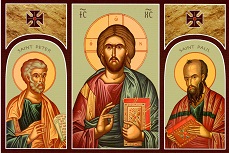
The tasks ahead for the Church and her Head

Sermon (audio)
Download Sermon

Service(video)
[vimeo https://vimeo.com/549123575 w=540&h=360]
Download Service Download Bulletin

Sermon for the Festival of the Ascension

Acts 1:1-11  +  Mark 16:14-20

Between Mark’s Gospel and Luke’s account in the book of Acts, we get a pretty well-rounded picture of the time Jesus spent on and off with His disciples after He rose from the dead. Mark condenses it all into a single account, as if it all happened at once. But Luke makes it clear that the various things happened over the course of 40 days, between Resurrection Sunday and Ascension Thursday, as Jesus instructed His disciples about the tasks that Christians would be carrying out after Jesus’ departure, during this time between His Ascension and His coming again, and about the tasks Jesus Himself would be doing during that time. If we pull together other sayings of Jesus and of St. Paul in his Epistles, we see an outline of the tasks ahead, for the Church and her Head.

After Jesus had convinced the eleven apostles on Easter Sunday that He had truly risen from the dead, He immediately began giving them instructions for the tasks that awaited them in the days ahead, following His Ascension. One of those instructions, which applied only to the apostles and believers at that time, was this: To not depart from Jerusalem, but to wait for the promise of the Father, “which,” he said, “you have heard from me. For John baptized with water; but you will be baptized with the Holy Spirit not many days from now.”

Now, this was, by far, the easiest task Christians would have to do: simply wait. Wait to be “baptized” with the Holy Spirit. Why did Jesus call it a baptism? Not to replace water baptism, since He Himself had instituted water Baptism and connected a promise of salvation to it: Whoever believes and is baptized will be saved; but whoever does not believe will be condemned. And it wasn’t to institute a “second baptism” that all Christians are to undergo. No, this would be a special gift, the gift of the Holy Spirit, given on the Day of Pentecost, ten days after the Ascension, a gift that would “bathe” them, be “poured out” on them, which is what the word “baptize” really means. But once the Spirit was poured out on the Church, from that time forward, water Baptism included the gift of the Holy Spirit, which is why St. Peter preached to the crowds on Pentecost, “Repent and be baptized…and you will receive the gift of the Holy Spirit,” even as Baptism is called the “washing of regeneration and renewal of the Holy Spirit,” and why the baptized are said to be “born of water and the Spirit.” We’ll say more about that two Sundays from now.

At that point, the apostles still didn’t understand the tasks Jesus was leaving to them, or the tasks He would be about. Lord, will you at this time restore the kingdom to Israel? Jesus’ answer is important. It is not for you to know the times or the seasons which the Father has established by his own authority. It’s not for you to know the timing of God’s plans, and that’s for the best. Imagine, if the apostles had known it would be some 2,000 years or more before the “restoration.” They couldn’t have imagined at that time how earthly Israel would never have the kingdom restored to it, how the nation of Israel was going to keep rejecting the Gospel of Christ, for the most part, and would therefore fade into irrelevance, how the kingdom of heaven was actually going to incorporate Jews and Gentiles into a new and spiritual Israel, which is the Holy Christian Church. They understood it later, with the Holy Spirit’s guidance, but not yet. They couldn’t have imagined how God would turn disasters into blessings, or persecutions into boons for the Church. That wasn’t their task. It’s not for us to know the timing, either, or to figure out the methods the Lord will use to direct the events of the earth for the building of His Church. That isn’t your task.

It was their task, as apostles, it is your task, as a Church, to go into all the world and preach the gospel to every creature, to be my witnesses, both in Jerusalem, and in all Judea and Samaria, and to the ends of the earth. It is your task to baptize in the name of the Father, and of the Son, and of the Holy Spirit, to teach all nations to observe everything Christ has commanded you, to “do this” consecrating of bread and wine and eating and drinking Christ’s body and blood “in remembrance” of Him. It is your task to “watch and pray,” to be “sanctified in love,” to “lead holy lives,” to be “imitators of God, as dearly loved children.” It is your task to “wait for His Son from heaven, whom He raised from the dead, even Jesus who delivers us from the wrath to come.”

All those tasks have been given by Christ to His Church to carry out during this time between His Ascension and His coming at the end of the age, all with the presence, strength, and guidance that His Holy Spirit will continue to provide. And it’s more than enough to keep us busy until Christ comes, whether it’s very, very soon, or whether it’s not during our earthly lifetime.

But He will come. He promised it, and so did the angel on the day of Christ’s Ascension. After Jesus was lifted up into the sky and hidden from the apostles’ sight, two men, two angels, in white clothing stood by them. And they said, “Men of Galilee, why are you standing here looking up into heaven? This same Jesus, who has been taken up from you into heaven, will come in the same way you have seen him go into heaven.”

What does it mean that Jesus was “lifted up” and “hidden from their sight”? It means that Christ, the Head of the Church, would no longer dwell visibly with His Church, which is His body. And yet, the Head hasn’t been severed from the body, as if the Church were now decapitated. He remains the Head, firmly attached to His body, only invisibly. He is by no means far away. On the contrary, St. Paul wrote to the Ephesians, He is the One who ascended far above all the heavens, that He might fill all things. And, God gave Him to be head over all things to the church, which is His body, the fullness of Him who fills all in all.

But what are some of the tasks ahead for Christ, our Head? Well, they’re all summarized by the phrase, “seated at the right hand of God.” As Mark writes, So, then, after the Lord had spoken to them, he was taken up into heaven and sat down at the right hand of God. As we just saw, that’s not a “place” or “location” where Christ is enclosed, far away from us. It’s a position of power and authority. Paul says in Ephesians, God raised Christ from the dead and seated Him at His right hand in the heavenly places, far above all principality and power and might and dominion, and every name that is named, not only in this age but also in that which is to come. And He put all things under His feet.

And what does He do with that power and authority?

His “first” task was to pour out the gift with which He had promised to “baptize” His apostles. As Peter said, Therefore being exalted to the right hand of God, and having received from the Father the promise of the Holy Spirit, He poured out this which you now see and hear.

What else does Scripture tell us about Christ’s tasks at God’s right hand? St. Paul comforts the Romans with this truth: It is Christ who died, and furthermore is also risen, who is even at the right hand of God, who also makes intercession for us. That means that all who repent of their sins and look to Christ for forgiveness and deliverance from God’s righteous judgment have an Advocate before the Father at all times and never need to fear, as long as they keep looking to Christ alone in faith.

Jesus Himself had told His disciples earlier about one of His tasks after His ascension: In My Father’s house are many mansions; if it were not so, I would have told you. I go to prepare a place for you. And if I go and prepare a place for you, I will come again and receive you to Myself; that where I am, there you may be also. Even now, Christ Jesus, seated at the right hand of the Father, is fulfilling this promise, seeing to it that you are guarded and guided through this life, seeing to it that you have everything you need to persevere in the faith, including access to the Means of Grace, to Word and Sacrament, so that you reach the mansions of heaven, as long as you use those means and don’t despise them.

In order to provide you with the Means of Grace so that you safely reach that place He’s preparing for you in heaven, the ascended Lord Christ also carries out another task. Paul writes, When He ascended on high, He led captivity captive, and gave gifts to menHe Himself gave some to be apostles, some prophets, some evangelists, and some pastors and teachers, for the equipping of the saints, for the work of ministry, for the edifying of the body of Christ. The existence of pastors is no accident, and no human design. The ministry exists in the Church because Christ gives it from the right hand of God as His tool and instrument for creating and strengthening faith. As Peter says, God has exalted Christ to His right hand to be Prince and Savior, to give repentance to Israel and forgiveness of sins, so that, even though the ministry is carried out by men and the Church is built and nourished and preserved through the ministry of men, Jesus could rightfully say, on this rock I will build My church, and the gates of Hades shall not prevail against it. He even confirmed the preaching of the original ministers He had sent by empowering them to perform miraculous signs, as you heard at the end of the Gospel: They went forth and preached everywhere, and the Lord worked with them, confirming the word with the accompanying signs.

Finally, the ascended Christ carries out another task in which we can take great comfort. Psalm 110 says, The LORD said to my Lord, “Sit at My right hand, till I make Your enemies Your footstool.” And Paul adds in 1 Cor., For He must reign till He has put all enemies under His feet. Do you see the enemies gathering against the Church of Christ? They’re everywhere. The devil rages. The world grows fiercer and fiercer. And one of the Church’s enemies even lives inside each of you, the sinful flesh that wars against the Spirit and would lead you to abandon the faith and perish. But at the right hand of God sits the ascended Lord Christ, who invisibly wages war against these enemies, reigning over the governments of the world and the plots of the devil, so that, although they devise evil and carry out wicked plans, it must all serve for the good of those who love Him, until He conquers them all at His glorious return.

So truly you have nothing to worry about. You have nothing to fear. Your Lord reigns over all things. His purpose is good. His plan is right. So instead of worrying or trying to figure everything out, be about your God-given tasks and wait just a little while longer. Meanwhile, the Head of the Church is constantly carrying out His vital tasks, too. When He’s done, He will come, and the reckoning will come, and those who are still found as living stones and faithful members will finally see the Head of the Church, to whom you’ve been united all this time by faith. Then you’ll know Him also by sight. And the Church and her Head will live together as Bride and Groom, happily ever after. It’s a true story. Believe it! And rejoice! Amen.

Posted in Sermons | Tagged , , | Comments Off on The tasks ahead for the Church and her Head

The only prayer God doesn’t hate: Prayer in Jesus’ name

Sermon (audio)
Download Sermon

Service(video)
[vimeo https://vimeo.com/547213302 w=540&h=360]
Download Service Download Bulletin

Sermon for Easter 5 – Rogate

James 1:22-27  +  John 16:23-30

You may be aware, our U.S. Congress has designated the first Thursday in May, which was this past Thursday, as a National Day of Prayer. But I’ll tell you something which will sound very strange to most people: a National Day of Prayer in our pluralistic society is as useless as a national day of Thanksgiving. In fact, worse than useless, it has become an abomination to God, a celebration of idolatry and falsehood, and I urge you never to come together with this or any nation to pray as a nation.

Let me read to you a portion of the White House’s proclamation for this past Thursday:

“Throughout our history, Americans of many religions and belief systems have turned to prayer for strength, hope, and guidance. Prayer has nourished countless souls and powered moral movements — including essential fights against racial injustice, child labor, and infringement on the rights of disabled Americans…Today, we remember and celebrate the role that the healing balm of prayer can play in our lives and in the life of our Nation.  As we continue to confront the crises and challenges of our time — from a deadly pandemic, to the loss of lives and livelihoods in its wake, to a reckoning on racial justice, to the existential threat of climate change — Americans of faith can call upon the power of prayer to provide hope and uplift us for the work ahead…On this National Day of Prayer, we unite with purpose and resolve, and recommit ourselves to the core freedoms that helped define and guide our Nation from its earliest days.  We celebrate our incredible good fortune that, as Americans, we can exercise our convictions freely — no matter our faith or beliefs.  Let us find in our prayers, however they are delivered, the determination to overcome adversity, rise above our differences, and come together as one Nation to meet this moment in history.”

I left out some of it, but nothing important. There’s a whole lot wrong with this proclamation, including some of the things for which the president would have us pray. But did you catch the most glaring omission? In the entire proclamation, including the parts I left out just now, you notice who’s not mentioned even once? God. God isn’t mentioned at all. God isn’t even implied. Instead, prayer itself is given all the credit here. The act of praying is what has the power to “nourish,” the power to give “strength, hope and guidance,” not any “God” to whom anyone might be praying. That alone is an abomination in God’s sight. But understand, even if “God” had been mentioned, it would still be an abomination, because it wouldn’t be the true God. It would be all the “gods” of the “many religions and belief systems” of America. The truth is, there is only one God, the God who is Father, Son, and Holy Spirit. A prayer to any other god is a prayer to an idol and a demon. You think the true God is pleased with such prayers? You think the true God is pleased when Christians “come together as one nation” to pray to the false gods whom so many of our fellow citizens worship? Not at all. In fact, He hates it.

But there is a form of prayer and a coming together to pray that He loves, and that He commands, where He promises to hear and answer, and that’s the kind of prayer Jesus speaks of in today’s Gospel, the only prayer that is pleasing in God’s sight, the only prayer He doesn’t hate: The prayer in Jesus’ name.

When will Jesus’ disciples be able to pray this way? In that day, Jesus says. He has just spoken of the “little while” when they wouldn’t see Him, and again the “little while” after which they would see Him and rejoice, and even the “little while” until He would go to the Father, when He would ascend into heaven. So “in that day” refers to the time after Jesus’ resurrection and ascension, the time in which the apostles would spend the rest of their lives, the time in which we still live.

In that day, Jesus says, you won’t ask Him anything. Ask, as in, ask Him any questions. First, because He won’t be here with us as He was with His disciples prior to His ascension. You can’t go up to Jesus and ask Him things. But that’s OK, first, because as we heard last week, Jesus would be sending His Holy Spirit back down to His Church after His ascension, who will dwell with the Church forever and guide us into all truth.

Second, it’s OK that we won’t ask Jesus things, because there is no need. As His disciples said at the end of today’s Gospel, Now we know that you know all things and that you do not need anyone to ask you. Jesus doesn’t need you to ask Him questions, because He knows our questions and our needs before we ask.

Besides, in that day, during this time after Jesus’ ascension, you will be able to go directly to God the Father in prayer and ask Him directly for whatever you need. Until now you have not asked for anything in my name. Ask, and you will receive, that your joy may be full.

What does it mean to ask for something in Jesus’ name?

First, what it doesn’t mean. It doesn’t mean you have to ask Jesus for things so that He can take your requests before God the Father. No, Jesus says. In that day you will ask in my name. I am not telling you that I will ask the Father for you. This is why Jesus teaches us to pray, “Our Father, who art in heaven.” The Romanist notion that you should go to Mary or to any number of saints, so that they can take your requests before God is pure deception. According to Jesus, His people have full access to God the Father without the need for anyone, even Jesus Himself, to stand between you and God.

What does it mean, then, to pray, to ask the Father for things in Jesus’ name?

First, it means to come before God with your requests only through faith in Christ Jesus. Paul says to the Romans, Having been justified by faith, we have peace with God through our Lord Jesus Christ, through whom also we have access by faith into this grace in which we stand. Or again in Ephesians 3, In Christ we have boldness and access with confidence through faith in Him. This is the meaning of the tearing of the curtain in the temple of Jerusalem when Jesus died on the cross, that now, through faith in Christ crucified, we have the forgiveness of our sins, which allows us to have direct access to God.

Now, faith in Christ implies also an acknowledging of our own sinfulness and unworthiness to stand before God. It means that we don’t claim to be worthy when we pray. “Lord, You know I’ve done many good things for You. Give me what I ask! You owe it to me!” It means that we don’t make bargains with God when we pray to Him. “Lord, if You do this for me, then I’ll do something special for You!” No, praying in the name of Jesus means asking for things with the full admission that you don’t deserve them and can’t deserve them. All you deserve is God’s wrath and punishment. But you have a Savior, Jesus Christ, who suffered for your sins, who earned God’s favor for you, and who has reconciled you to God through faith in Him. In other words, praying in Jesus’ name means daring to pray to God the Father only because you know you stand forgiven before Him of all your sins through faith in Christ Jesus.

This, by the way, is what also made the prayers of God’s Old Testament people acceptable in His sight. Because they prayed to Him as the God who had promised to send the Christ to make atonement for their sins. In that sense, Old Testament believers also prayed “in Jesus’ name.”

Secondly, praying in Jesus’ name means to come before God by the invitation, command, and promise of Jesus, the beloved Son of God. We can step before our heavenly Father in prayer, confident that He will hear us and help us, because we have been given this privilege and invitation by Jesus Himself. And He has also told us what to pray for—for all the things included in the seven petitions of the Lord’s Prayer. For our Father’s name to be hallowed or made holy among us, in our doctrine and in our lives. For our Father’s kingdom to come, to us and others. For our Father’s will to be done among us and for every other will to be put down. For our Father to give us our daily bread, everything we need for today. For our Father to forgive us our trespasses as we forgive those who trespass against us. For our Father not to lead us into temptation, but to deliver us from every evil. To pray at Jesus’ invitation, according to the pattern Jesus taught us, is to pray in Jesus’ name.

That pattern includes, by the way, the whole pattern of prayer taught throughout the Bible, in the Psalms, in the prophets, and in the rest of the New Testament, so take note of that in all your reading of Scripture. Take note in what you read of how and for whom it teaches you to pray. Pray for one another, James writes. So today, on Mother’s Day, we’ll say a special prayer for mothers. Paul writes to Timothy, Let prayers be made for all men, for kings and all who are in authority, that we may lead a quiet and peaceable life in all godliness and reverence. So, although we won’t “come together as a nation” to pray, we Christians will pray for our nation and for our leaders, as we always do. We’ll pray for all men in their various needs, for unbelievers, for Christians who are still our brothers and sisters in Christ, although they may still unknowingly be deceived by some false doctrine, and we’ll also pray for one another and for all the Christians who confess the faith together with us as one.

Finally, to pray in Jesus’ name is to expect your dear Father to hear and help you, because He loves you for loving Jesus. As the Lord says in the Gospel, the Father himself loves you, because you have loved me and have believed that I came forth from God. The word here for “love” is not the “God so loved the world” love, the love that covers everyone equally and seeks the best of the other, regardless of who he is or what she’s done. Rather, it’s the love of friendship, the love of liking something about someone else, the love of having something in common. In this case, the thing that we Christians and God the Father have in common is a love for Jesus, that we love Him for who He is and for what He has done. God the Father thinks very highly of people for that, even though it was God the Father Himself who drew us to Jesus through His Word and Spirit in the first place, who brought us to know and to love Jesus. And here Jesus is, telling us that the Father loves us because of that very love for which the Father, Son, and Holy Spirit are responsible. To pray in Jesus’ name is to love Jesus and to know that we’re loved and that our prayers are favorable to God the Father for it.

So, you see, Christians don’t need a proclamation from congress or from a president to turn us to prayer. Nor do we dare pretend that all those prayers that are not offered in Jesus’ name are anything but hateful to God. We have been given a great gift, to know the true God and to be invited to bring our prayers and requests before Him. Use that gift, and trust in the Giver always to be eager to hear and to help, in Jesus’ name. Amen.

Posted in Sermons | Tagged , , , | Comments Off on The only prayer God doesn’t hate: Prayer in Jesus’ name

The perfect gift from above

Sermon (audio)
Download Sermon

Service(video)
[vimeo https://vimeo.com/544321109 w=540&h=360]
Download Service Download Bulletin

Sermon for Easter 4 – Cantate

James 1:16-21  +  John 16:5-15

James reminded us in today’s Epistle: Every good giving and every perfect gift is from above. Do you remember what he said right before that? He said, Make no mistake, my dear brothers. Why does he add that warning? He adds it, because people often make this mistake. The devil, and the world, and our own sinful flesh would deceive us into thinking that God actually gives bad gifts. Into thinking that God sends harmful things to us, that God tempts us to do evil, that God is responsible for all the troubles and problems in the world. No, says James. That’s false. That’s the devil trying to deceive us. The truth is, God gives good gifts. Perfect gifts. All that we need to get through this cursed existence on earth to the safety and joy of eternal life. And maybe the most important of all those perfect gifts is mentioned in today’s Gospel, where Jesus promises to His holy Church the perfect gift from above: His own Holy Spirit.

His disciples were sad on Maundy Thursday evening, because Jesus had told them that He was “going to the Father,” that He was “going away.” They thought that was a terrible idea. They thought, in their ignorance, that Jesus was making a mistake, that it would be worse for them if Jesus left, that God would be abandoning them. On the contrary, Jesus assures them, It is to your advantage that I go away. For if I do not go away, the Comforter will not come to you. But if I go, I will send him to you. If the coming of this “Comforter” is better, is more advantageous than having Jesus Himself present among us in physical form, He must be a truly perfect gift from above.

What will He do, this “Comforter”? Jesus reveals a few verses later that it’s the Holy Spirit He’s referring to. The word “Comforter” is full of meaning. His proper work is to “comfort,” to bring the comfort of God’s grace and mercy and forgiveness in Christ and for the sake of Christ. But the word can also be translated simply Helper, or Advocate, or even Encourager, someone who has been called to your side to help you.

Jesus outlines here in our Gospel one of the chief ways in which the Comforter will help the Church Jesus has “left behind” here on earth. When he comes, he will convict the world concerning sin, and concerning righteousness, and concerning judgment.

So one of the Spirit’s chief tasks is to convict the world. Now, understand, the Holy Spirit does not float around in the air convicting anyone of anything. Nor does He enter the room when the music is blared just right. He convicts through the Word of God that is preached. That is how He works. Specifically here, he works through the preaching of the Law, which reveals sin and threatens God’s wrath, judgment, and punishment against sinners.

He will convict the world concerning sin, because they do not believe in me. Not believing in Jesus Christ, crucified and risen from the dead, is not the only sin people commit, obviously. The Spirit, through the Word of God, reveals a world full of sinners, with not a single exception. A world full of people who were all sinful from birth, from the moment we were conceived, with a sinful flesh that is automatically devoid of true fear of God, true love for God, true trust in God, and is even hostile toward God and full of selfish and wicked desires. And it doesn’t stop there, with our twisted, corrupt flesh. The Spirit exposes every sin of thought, word, and deed that proceeds form our twisted, corrupt flesh. Sins against God’s commandments. Sins that are directly against God, like failing to fear, love, and trust in Him above all things, failing to honor His name and His Word. And sins that are against our neighbor, like failing to honor our parents, murder, adultery, theft, laziness, mockery, and meanness. All of these sins, any of these sins would condemn us. The only escape from God’s wrath and condemnation is faith in Christ Jesus, who paid for all the world’s sins on the cross, faith that comes only by the working of the Holy Spirit. But the world stands convicted by the Holy Spirit, because they have not believed in Jesus, and so they will have to answer for each and every sin before the judgment of the all-seeing God.

He will convict the world concerning righteousness, because I go to my Father and you see me no more. The world—and again, in this context, “the world” refers to those who do not believe in Christ Jesus as true God, together with the Father and the Holy Spirit—the world believes in its own version of righteousness. Unbelievers have created their own version of what it means to be good. Ask anyone out there, especially here in the United States (because you’ll get a different answer in other parts of the world)—ask them if they’re a “good person,” and most will say, Yes, I am, or Yes, I think I am. They created their own standard of right and wrong, of what social justice is supposed to look like, and then they praise themselves for living up to their own standard (although they usually don’t even do that), and they look down on all the people who violate their own invented notion of righteousness. The news media are experts at this.

But the Spirit proclaims, There is no one righteous, no not one. Well, not one among ordinary men. Jesus Christ is called “the Righteous One” for good reason. He was the only sinless Man who ever lived or who ever will. Only His righteousness is valid before God, and He has promised to share it, to give it as a covering to all who believe in Him. But now He has gone to the Father, and we see Him no more. The only way to be righteous in God’s sight is through the ministry of the Spirit as He brings sinners to trust in Christ for righteousness. But the world as yet refuses, and so the world stands convicted, not by you, not by me, but by the same Holy Spirit as He works through the preaching of the Law.

He will convict the world concerning judgment, because the prince of this world is judged. In the world’s judgment, Christ is guilty. Guilty of getting in the way of their goals, guilty of ruining their fun, guilty of not going along with the world and its manmade religion. The world judged Christ as guilty and hung Him on a cross. In the world’s judgment, Christians, too, are guilty and must ultimately be punished for their crimes of worshiping God instead of man, of honoring God’s Word instead of man’s word. Christians are judged as guilty for not going along with the world’s sin, for speaking against the world’s sin, and for denying the power of any other god to save except for the God who sent His Son to be judged in our place, that we might escape God’s judgment.

Of course, it’s only God’s judgment that really counts, and in God’s judgment, Christ was vindicated, those who believe in Him are justified, and the prince of this world, the devil, is already judged. That means that the whole world of unbelievers will also be judged in the coming judgment, and not one of them will escape. That message of judgment—God’s judgment—is not something to run away from. It must be proclaimed. And when it is, the Spirit of God is working to convict the world. And finally, some of those who are convicted of sin, of righteousness, and of judgment will repent and seek forgiveness in Christ. And they’ll find it, and so will be removed from the number of the world and added to the number of the holy Church that has been called out of the world by God the Holy Spirit.

In addition to the Comforter’s work of convicting the world, He also has a very important task among those who are God’s people. Jesus says in the Gospel, I still have many things to say to you, but you cannot bear them now. But when he, the Spirit of truth, comes, he will guide you into all truth. He did that first with the apostles themselves. After the Day of Pentecost, it was the Spirit who enlightened the apostles to understand the Old Testament Scriptures, to understand the Gospel, and to explain it clearly and correctly in their New Testament writings. It was the Spirit who guided the Church into all truth, so that they were able to confess God rightly and put down every heresy that the devil sent.

Now it’s the same Spirit, given to all who believe in Christ, who still enlightens us with His gifts, who sanctifies us and preserves us with Jesus Christ in the one true faith. That doesn’t mean that Christians can’t sometimes get things wrong, that we can’t be deceived or led astray. Churches have often wandered away from the truth revealed in Holy Scripture. Nor does it mean that Christians always live the sanctified, saintly lives we’re called to live. What it means, is that the Spirit will always be calling us back to the truth that has been set down in the Holy Scriptures. The Spirit will always be preserving some remnant on earth of right-teaching churches. The Spirit will always be calling Christians to repentance and faith, and will always be powerfully working with Christians to guide and to strengthen us in love and in works of love. And in so doing, the Spirit glorifies Jesus, as He said, He will glorify me.

It often seems that the task Jesus has left behind for us in the world is monumental and more than we can handle. To constantly be at odds with the world, preaching things that the world finds repulsive. To know the truth of God, when there are so many falsehoods being taught all around us. To keep believing in Christ, to keep growing in Christ, and to keep loving one another and our neighbor in the process. Thank God, we have been given a Comforter, a Helper, sent by Jesus when He went away to stay by our side at all times, the Holy Spirit of God, the perfect gift from above. Amen.

Posted in Sermons | Tagged , , , | Comments Off on The perfect gift from above

Sorrow into joy

Sermon (audio)
Download Sermon

Service(video)
[vimeo https://vimeo.com/541341309 w=540&h=360]
Download Service Download Bulletin

Sermon for the Third Sunday after Easter – Jubilate

1 Peter 2:11-20  +  John 16:16-23

What does it mean if Jesus truly rose from the dead, and lives today, and will never die again? How does it affect things? How does it affect you? We’ve talked about some of the implications over the last few weeks. If Jesus rose from the dead, then death is truly conquered. Sin is truly atoned for. Fear itself has become unnecessary. Today our Scripture lessons point us to yet another implication of Easter, that sorrow is also tempered and temporary and will soon be replaced by endless joy.

The eleven disciples’ confusion was understandable on Maundy Thursday evening. Many astonishing things had happened already that night. Jesus had washed their feet. Judas’ betrayal had been foretold. A new Supper of the body and blood of Jesus had been instituted. Jesus had been cramming many teachings into this last time they would have together before the events of Good Friday. Some things He spoke clearly, other things cryptically. It was one of those cryptic sayings that left the disciples wondering. A little while, and you will not see me. And again, a little while, and you will see me, because I am going to the Father.

There was a very literal sense to those words. In a little while, less than 24 hours, Jesus would be dead and buried, out of sight and seemingly gone forever. In another little while, some 48 hours after He was buried, they would all see Him again, except for Thomas. And then, 40 days later, He would ascend into heaven and go to the Father, at whose right hand He would sit and rule over all things for the benefit of the Church until He returns again in glory to judge the living and the dead.

And the disciples did weep and mourn and were full of sorrow for a little while, while the world rejoiced to have Jesus out of the way. But then the disciples rejoiced when they saw the Lord. And the world lost some of its own joy, because, while the world still believed Jesus to be dead, it soon learned that it would have to keep dealing with these pesky Christians who believe He is alive and so refuse to bow before the world and its demands that we should be like them.

Now, you and I, we will never experience what the apostles did, getting to see the Lord risen from the dead. But then, we will also never experience what they experienced, a time, even a little while, when our Lord and our God is dead.

It’s true. We don’t see Jesus. He has risen and gone to the Father. He has removed His visible presence from us for a little while, for our relatively short lives on earth, for the “short” time between His ascension and His coming at the end of the age. The world rejoices not to see Him, because it allows people to do what they want, believe what they want, and rush into every form of perversion and wickedness, because they think Jesus is either dead or a fictional character who doesn’t exist. The only thing that gets in the world’s way are those nagging Christians, at least the ones who remain faithful to the Word of Christ, who keep claiming to have, not “a” truth or “our” truth, but THE truth, who keep preaching about sin and divine judgment and hell, and about God’s earnest desire that all men escape their just condemnation, through repentance and faith in Christ Jesus.

For our part, we Christians also have plenty of sorrow during this time of not seeing Jesus, because, in His visible absence, we’re forced to deal with our own doubts and uncertainties, to struggle against our own sin, and to put up with the world’s hatred and malice. We would all like to see Jesus now and have Him wipe all the bad stuff away, to have Him restore goodness and order to the world, to wipe away every tear from our eyes immediately. But that is not what’s best, either for the world or for us, and God knows it.

But now He does reveal Himself to us, in the Word, in the preaching of His Word, which is a living and active thing, filled with the working of His Holy Spirit. He shows Himself to us in the Gospel, crucified, dead, and buried, but then alive again, and He works in us by His Spirit so that we believe it and know that He lives. And if He lives, then the minister’s absolution has true authority behind it, and the Sacraments have real and living power. If He lives, then all our sorrow and grief is tempered, as the sorrow of a woman in labor is tempered by the knowledge that the pain will have an end, and in the end, it will all have been more than worth it, because a child will be born, and joy will truly begin.

Things may seem bad, but we can know that, in reality, they’re never as bad as they seem, never as bad as the devil tempts you to think they are, because there is this one truth behind everything: Jesus lives. And in a little while you will see Him. Meanwhile, the devil is an already-defeated enemy. The world is an already-defeated enemy. And sin itself is an already-defeated enemy. And nothing that happens to you in this world is beyond the loving control of the Savior who died for you and now lives.

Still, there is grief and sadness in the world for those who love Christ, because things are not yet as they should be in this world, not yet as they will be when He comes again to burn up this world and create it anew. Hatred reigns. Injustice reigns. Depravity reigns. And your own sinful flesh is still active and wishes and strives to reign over you, over your thoughts, over your attitudes, over your words and actions. You must not let it reign. As Peter said in the Epistle, Abstain from fleshly lusts, which war against the soul; behave well among the Gentiles. The Lord Jesus died to pay for our fleshly lusts and our indulgence of them. He died to atone for our bad behavior among the Gentiles, among unbelievers. So don’t resurrect the lusts and the behaviors for which Christ died. Instead, live in the new life that He gave you when He had you baptized into His death and into His resurrection.

As for the world, let it rejoice in its depravity. Let it revel in its corruption. Let it take pleasure in its lies. These are the birth pains we must put up with for now. And as the pain of childbirth gets worse as the baby is closer and closer to being born, so the pain of the world’s depravity gets worse and worse as Christ is about to return visibly. But just as the pain of childbirth is worth it, so, too, it will be worth all the pain and suffering Christians endure in this world to see Christ in person at the end of the age, or at the end of our earthly life, whichever comes first. And the days and months and even years of sorrow here will seem like just a little while. Then you will see Him. And your heart will rejoice, and no one will take your joy away from you. Amen.

Posted in Sermons | Tagged , , , | Comments Off on Sorrow into joy

The shepherding the good Shepherd did and does

Sermon (audio)
Download Sermon

Service(video)
[vimeo https://vimeo.com/538395894 w=540&h=360]
Download Service Download Bulletin

Sermon for Easter 2 – Misericordias Domini

1 Peter 2:21-25  +  John 10:11-16

St. John’s Gospel includes many pictures to help us to understand the Lord Jesus better. He is the Word of God, who was with God in the beginning and who was God. He is the Bread from heaven, the Light of the world, the Door of the sheep, the Resurrection and the Life, the Way, the Truth, and the Life. He is the Vine, and we the branches. It’s the Apostle John who also records the words of John the Baptist, identifying Jesus as the “Lamb of God” who takes away the sin of the world. But, how is He like a lamb? We learned that on Good Friday as He died on the cross and became the sacrificial lamb, the substitutionary sacrifice for the sins of the world.

But Jesus is not only pictured as a lamb or a sheep, because when a lamb is slaughtered, it has no say in the matter. A lamb doesn’t choose to be slaughtered. It doesn’t lay down its life for anyone. Its life is taken from it by others. It’s purely a victim. Not so with Jesus. In today’s Gospel, Jesus pictures us human beings as sheep and Himself as Shepherd. I am the good Shepherd, He famously says. He is the good shepherd who both laid down His life for the sheep, and who also took up His life again in order to keep shepherding His sheep for all eternity.

I am the good shepherd, says the Lord. The good shepherd lays down His life for the sheep. He calls Himself good in contrast with the bad. The bad shepherd, the “hireling” as he’s called in our Gospel, is not the owner of the sheep. He doesn’t care about the sheep. He’s a hired hand who’s only out there in the field tending the sheep because it’s a way to make money. He stays with the sheep as long as it’s convenient for him, as long as it’s not too much trouble. But if danger comes, he’s looking out for himself. He sees the wolf coming and abandons the sheep and flees. And the wolf catches the sheep and scatters them. The hireling flees, because he is a hireling and does not care about the sheep. Who is the wolf? He is the devil. And he has power over people because of sin, power to accuse them before God, power to hold their guilt over them, power to drag them to hell. And no one could be free from his power, because no one is without sin. No one is righteous, no, not one, the Psalm says. And as Isaiah wrote, we all like sheep have gone astray. We have turned, each one, to his own way.

When did we last hear those words? We heard them on Good Friday. Why? Because, as Isaiah’s prophecy continues, the LORD has laid on Him the iniquity of us all. Now tie those words to Jesus’ words: the good shepherd lays down His life for the sheep. Willingly. Intentionally. In fact, He came to earth in the first place for the very purpose of confronting the wolf and laying down His life so that the sheep might be saved. He laid down His life in every way, by living and dying, by His life and by His death. The Son of God took on our flesh and lived among us as both God and Man. He devoted His life to serving us by preaching the truth, the truth about us as sinners and about Him as the One who freely forgives sins to all who trust in Him. And, finally, He laid down His life as the atoning price for our sins, and not only for ours, but for the sins of the world. It’s the Good Shepherd you should envision bloody, dying, and dead on Good Friday. That’s what it meant to see the wolf coming and to stand His ground for the sake of the sheep, so that He might be attacked and killed in their place. He shepherded His people by living and dying.

Of course, it’s the same Good Shepherd whom you should envision risen from the dead, perfectly healed and alive again on Easter Sunday—healed, except for the marks of His suffering which He chose to retain in His hands and in His side, as He showed them to Thomas in last Sunday’s Gospel. Those are the scars of the Shepherd from His battle with the wolf, and even as He wants you always to remember His resurrection from the dead, so He wants you always to remember His crucifixion, so that you never look at sin lightly, but always remember the blessed cost of your redemption, the holy, precious blood of your Shepherd.

Jesus’ life on earth and His innocent death and His glorious resurrection are His great shepherding acts in the past. But He isn’t done shepherding His sheep. He has more shepherding to do, and yet, it was never Jesus’ plan to stay on earth in visible form and to shepherd His flock, from Jerusalem or from some other place. Imagine how sad that would be! A Shepherd who lived on the other side of the world from where you are, who had only so much time to spend with each one of His sheep. No, the Lord had a different plan for this New Testament era, with a different form of shepherding in mind.

Jesus says in our Gospel, I have other sheep that are not of this fold. I must bring them also, and they will hear my voice; and there will be one flock and one shepherd. But that “bringing” into the one flock didn’t happen, or at least, was far from being finished during Jesus’ life on earth. This is the bringing the Good Shepherd does through the shepherds whom He has been sending into the world since Easter Sunday and whom He will continue to send until all the sheep are found who are to be found, until the whole flock is gathered into the One Holy Catholic—that is, Christian—and Apostolic Church.

So it is Jesus who sends the shepherds, as Paul writes to the Ephesians, Christ Himself gave some to be apostles, some prophets, some evangelists, and some pastors and teachers, for the equipping of the saints, for the work of ministry. That means that every pastor of God’s Church is placed exactly where the Good Shepherd wants him, in every time and in every place, so that He might preach to men through the humble service of men, so that He might gather His sheep, minister to His sheep, forgive the sins of His sheep, and preserve them in His flock through that very same preaching and through the administration of the holy Sacraments.

So, too, it is Jesus who brings the sheep, who went looking for each and every one of you, who brought you to Baptism and to faith. I know My sheep, He says, and am known by My own. He knew you from before the foundations of the world were laid, and He knows you still. Even if no one else on earth truly knows you, He knows you—who you are, what you need, what you’ve done, and what you will do. And He also knows all who will believe in Him as His Spirit calls them through the Gospel, even if they don’t yet know Him. There is still time to know Him! The invitation still goes out!

And now, as St. Peter wrote in today’s Epistle, the Lord calls you to do good to others and for others, just as your Good Shepherd did, and to be willing to suffer for doing good, just as your Good Shepherd was. That means living as the light and salt of the earth. That means taking this Christian faith seriously, living a life that stands out in the world, that stands out in goodness, that shines with the truth, that honors God’s Word above all things. You will suffer in this world if you live like that. But then, you’ll just be walking in the footsteps of your Good Shepherd, following behind Him wherever He goes, first to shame and then to glory.

May the voice of the Good Shepherd ring in your ears today and every day. You know Him. Now follow Him. He will make you to lie down in green pastures. He will lead you beside still waters. He will restore your soul. He will be with you as you walk, even through the valley of the shadow of death. And He will follow you with His goodness and with His mercy all the days of your life, until you dwell safely in the house of the Lord forever. Amen.

Posted in Sermons | Tagged , , , | Comments Off on The shepherding the good Shepherd did and does