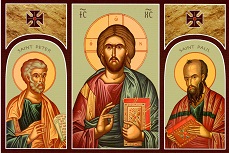
Invited to the supper as you are, to come in as someone else

NOTE: The audio in today’s service has audio problems for much of the service.

Sermon (audio)
Download Sermon


Service(video)
[vimeo https://vimeo.com/562510618 w=540&h=360]
Download Service Download Bulletin

Sermon for Trinity 2

1 John 3:13-18  +  Luke 14:16-24

Many people think they love God, think they want to be in the presence of God, think they want to spend eternity with Him. Until they meet Him in His Word. Until they get to know Him, and find out that He isn’t at all who they imagined Him to be. They thought He was a God who accepted people as they are. When they find out that He isn’t, they often walk away in sadness, or even disgust. Either that, or they continue to worship a god of their own delusions, one who will continue to accept them as they are. It’s why you can have “Pride month” celebrated even by people who call themselves Christians, because they’ve replaced the God of Christianity with a god who accepts homosexuals (and every other kind of impenitent sinner) just as they are.

But there’s an important difference here that we need to acknowledge. You see, the true God does call people just as they are. He doesn’t seek out the worthy or the deserving or the good. He calls everyone, He invites everyone to come into His presence and into His kingdom, no matter what sins they’ve been entangled in. He invites them to come in by grace, free of charge, without claiming any worthiness in themselves, without trying to atone for their own sins or buy their way in with their good works. He calls them as they are. But He calls them to come in as someone entirely different than they are, and that keeps many people away.

That was the great problem with the Pharisees in Jesus’ day. They thought they loved God, because they thought that God wanted them to come into His kingdom just as they were, as those who deserved a place at His supper table, as those who were clean and righteous and obedient, as those who were better than the dregs of society out there who hadn’t worked nearly as hard at keeping God’s commandments as the Pharisees had. But then they met Jesus, and Jesus revealed to them a different God altogether, one who didn’t invite the worthy, but the unworthy, one who defined “coming into the kingdom” as repentance and faith in Christ Jesus. That wasn’t a God they wanted anything to do with.

And so they invited Jesus to their house for a Sabbath-day supper, not because they loved Him or believed in Him, but to watch Him and to teach Him a lesson or two. In the verse before today’s Gospel begins, one of them stood up and proclaimed his love for the God he thought he knew. He thought he would impress Jesus with his piety: Blessed is he who will eat bread in the kingdom of God!

So Jesus, the invited Guest at the Pharisees’ supper and the King of the kingdom of God, tells a parable about a much greater supper, to show the delusional man and all the other Pharisees how they were the very ones who were refusing to eat bread in the kingdom of God by refusing to come in as different people, refusing to repent and to rely on grace alone for their entrance.

A certain man prepared a great supper and invited many people. God prepared eternal life in His kingdom, a banquet of the forgiveness of sins, life, and salvation, a place in His family, a home for eternity. And He wrapped up all those benefits within the Person of His Son, the promised Christ. He invited the Old Testament people of Israel, the Jews, to this supper. He told them ahead of time about the coming of the Christ, and the great sacrifice He would offer for sins, the sacrifice of His own body, and that He would rise from the dead, and that repentance and forgiveness of sins would be proclaimed in His name to all nations, beginning at Jerusalem.

Then, when the Christ finally came, the man sent his servant at supper time to say to those who were invited, ‘Come! All things are now ready!’ John the Baptist was the first to announce it, and Jesus and His disciples soon followed. God the Father has sent His Son down to earth to save poor sinners from their sins and to give eternal life to all who believe in Him!

“Poor sinners? We’re not so poor,” thought the Pharisees. “We thought God was coming to reward the righteous, to increase the wealth of the rich, to tell us what a good job we’ve been doing! As for believing in God’s Son, we are all sons of Abraham, and we have Moses and the Law. We already have all we need.” And so, tragically, they made excuses for why they couldn’t make it to this great supper, why they neither were willing to recognize their sins nor to trust in Jesus the Christ for forgiveness.

So the servant came and told his lord these things. Then the master of the house became angry and said to his servant, ‘Go out quickly into the streets and alleys of the city, and bring the poor, and the crippled, and the lame, and the blind in here.’ And the servant said, ‘Lord, what you have commanded has been done, and still there is room.’ Then the lord said to the servant, ‘Go out into the highways and hedges, and make them come in, so that my house may be filled. For I say to you that none of those men who were invited will taste my supper.’”

The master of the house, the Lord God, was angry with the excuse-makers, with the Jews who didn’t want to attend His supper through Christ Jesus. But the Lord wasn’t deterred by their refusal. His great zeal for sharing the supper of eternal life does not flow from the quality or the personality of the guests. This is vitally important. It wasn’t because the Jews were such close friends of God or such obedient children that He invited them. It was always grace, undeserved affection and love. So when they rejected His supper, He didn’t have to “settle” for others. It was His intention all along to bring the Gentiles, to bring all people into His house.

He turned to many others, to the poor, the crippled, the lame, and the blind, to people who were obviously weak, obviously unacceptable as they were, to the people who are generally marginalized and rejected by everyone else. In other words, God calls into His kingdom the very people who are despised by the rich and the wise and the outwardly religious of this age. And He doesn’t stop with a few. He keeps sending His ministers to call more people, from the highways and the hedges, anyone and everyone, no matter who they are or what they’re like or what they’ve done. The only qualification is, they have to be unacceptable as they are. They have to be sinners. That’s the definition of grace! He keeps calling out through His ministers, calling them just as they are, until His kingdom, His Church, is full. And, of course, since God alone can see the structure of His Church, only He knows when His house is full. The fact that Jesus hasn’t yet returned for judgment means that “still there is room.”

But He won’t let them come in “as they are.” He insists on “killing” them with the Law, exposing their sins with the light of His Word, and calling them to repent, not just of this or that sin, but of the natural corruption of their whole self. Then He calls them to the new birth of Holy Baptism, where their old self is buried with Christ into death, and a new person is born and arises, so that they become entirely different people, people who still carry around a sinful flesh, people who still sin, but now as people who hate their sin and wish to be rid of it, who strive and struggle to be rid of it, now with the Holy Spirit’s help; now as people who trust in Christ Jesus, the Savior of sinners, now as people who are accepted by God only because they trust in Jesus. To come in, to enter God’s kingdom, to feast at His supper, is to repent of our sins and to trust in His promise of acceptance by grace, free of charge, through faith in Christ.

This is why so many are unwilling to come. Because they don’t want grace, that is, acceptance for the sake of Christ. They want acceptance for who they are, as they are, whether “good” or “bad.” Coming to the supper means being remade, it means denying your old self. It means the destruction of your pride, of your personal beliefs, of your personal record of works which you may think of as good, but which, apart from Christ, were only evil all the time.

You, dear Christians, have been called as you are to come to the great supper as someone else, as someone whose identity is wholly wrapped up in Christ Jesus. And having come, you have tasted how good the Lord is, how vital His continual forgiveness is. You have tasted eternal life, but just a little bit of it in this life, and even that—isn’t it worth losing your earthly life for it? You have come to know just how much strength there is in God’s Word and in His holy Sacraments, how good and pleasant and necessary it is to gather together around Word and Sacrament. You have come to know grace. You have met the true God, and you have loved Him, and you do want to spend eternity with Him, don’t you?

Now make it your first priority to keep coming to this supper, to remain in the kingdom of God by daily contrition and repentance and by using the gifts He has given, prayer and the Means of Grace. And make it your second priority to live such godly lives in the world that others may come to know God’s grace through you. The Master of the House is not yet satisfied with the number of guests. Still there is room, room for any, room for all. So show grace to people. Call them, invite them as they are, without prejudice, without hatred, without condescension. Invite them to come to the One who gave His life on the cross so that they, like you, could become different people, penitent and forgiven people, recreated by grace in the image of the God of grace. Amen.

Posted in Sermons | Tagged , , | Comments Off on Invited to the supper as you are, to come in as someone else

Sometimes the wicked prosper

Sermon (audio)
Download Sermon

Service(video)
[vimeo https://vimeo.com/559686849 w=540&h=360]
Download Service Download Bulletin

Sermon for Trinity 1

1 John 4:16-21  +  Luke 16:19-31

The scene Jesus depicts in today’s Gospel is not uncommon: an ungodly rich person living right next to a godly poor person. In other words, a prosperous unbeliever next to a miserable believer. And contrary to the triumphalist teaching that is common in modern Christianity, their respective conditions never changed this side of eternity. The prosperous unbeliever was allowed to prosper right up until the day he died, and the miserable believer was allowed to suffer poverty, sickness, and loneliness right up until the day he died. Queue the question that so many people are prone to ask: How could a good or loving God allow such a thing?

This reminds me very much of Psalm 73, a Psalm that I turn to often, because this situation is so common, where unbelievers prosper in the world while believers suffer, where it seems like God rewards wickedness and punishes faithfulness. Let me read just a portion of it now:

Truly God is good to Israel, to the pure in heart. But as for me, my feet almost stumbled; my steps had almost slipped. For I was envious at the boastful; I saw the prosperity of the wicked. For there are no pains in their death; their bodies are fat. They are not in trouble as other people; nor are they plagued like others…These are the wicked, always at ease; they increase in riches. Surely I have kept my heart pure for nothing… For all the day long I am plagued, and chastened every morning…When I thought to understand this, it was troublesome in my eyes, until I went into the sanctuary of God; then I understood their end. Surely You have set them in slippery places; You have brought them down to ruin. How they come to desolation, as in a moment! They have come to an end, utterly consumed with terrors. As a dream when one awakes, so, O Lord, when You awake, You will despise their form.

You see, our perspective is so skewed. We see a person’s life from birth to death, and in our sinful pride, we assume that we know the whole story, and we would judge God’s goodness or love based on how comfortable or pleasant a person’s earthly life has been. That’s utter foolishness! This life is a single breath, a fleeting moment, when compared with the eternity that follows. We may see some signs of God’s justice here, some glimpses of God’s favor and love for His children. But we will never see true justice here or God’s perfect love for His children. But we will see it, in the end, in the next life, as today’s Gospel makes absolutely certain.

Jesus once asked, What good is it for a man to gain the whole world and forfeit his soul? The rich man’s response in today’s Gospel, right up until the day he died, was, “That’s fine! Please! Give me the whole world so that I can enjoy it! My soul matters nothing to me.” How many today would say the same thing?

Now, the rich man in today’s Gospel may not have literally gained the whole world, but he gained an awful lot in this life. That wasn’t wrong. It wasn’t wrong for him to dress well, or to feast lavishly every day. It wasn’t wrong for him to be rich. But Moses and the prophets warned the rich against abusing their wealth, about failing to help their neighbor in need, about trusting in their riches, and about showing contempt for God and His Word. Over and over again the rich are warned in the Old Testament (and the New).

But the rich man in the Gospel didn’t pay attention. He didn’t listen to Moses or the prophets. He simply went about his life, enjoying his wealth and comfort and ease. He didn’t harm anyone. He also didn’t help anyone. He broke no manmade laws. But he broke God’s commandments. And yet, even that could have been forgiven. But it wasn’t. It wasn’t forgiven, because he remained impenitent and unbelieving.

How can you tell? Well, he ended up in hell. Hell is reserved, not for sinners in general, but for impenitent and unbelieving sinners.

Here Jesus paints a terrifying picture of hell, the most descriptive picture in all of Scripture, though it resembles other descriptions, such as, the “outer darkness,” where “their worm does not die, nor is their fire quenched.” Where “there will be weeping and gnashing of teeth.” It’s referred to as “the eternal fire prepared for the devil and his angels” and “the lake of fire burning with brimstone.”

Here, it’s described as a place of torment, a place where the damned “live,” if you can call it “living,” surrounded by everlasting flames, where there is no relief whatsoever, where a drop of water would be a coveted kindness. Even his hope of relief from Lazarus, after seeing him in Abraham’s bosom, is quickly dashed by Abraham, who informs the rich man that there is no crossing back and forth. Those who end up in heaven are there forever, just as those who end up in hell are there forever.

His other hope is also dashed, that maybe there’s a way for a miracle to be done, for Lazarus to be brought back from the dead, in order to warn his five brothers who are still alive on earth, so that they can avoid the torments of hell. But Abraham slams the door shut on any such hope. They have Moses and the prophets. Let them hear them!… If they do not hear Moses and the prophets, then they will not be persuaded, even if someone were to rise from the dead.

Too late, the rich man learned that it would have been better to have less in this life than to have never-ending torment in hell. Too late, he realized that he had ignored the only thing that could have kept him out of the torment of hell, that is, the Word of God.

If only someone had warned him ahead of time! But, of course, they had, whenever God’s Word was read or preached in the synagogue or in the temple. If only someone would warn the rich now! And not just the rich, but rich and poor and all people, for all have sinned and fall short of the glory of God. All people are in need of repentance, and turning from the evil of our hands and of our hearts, recognizing both the evil we have done and the good we have failed to do.

And that, of course, is the purpose of this Gospel. Jesus, the One who did miraculously come back from the dead, the one who descended into hell and rose again, has sent His Evangelist Luke to record this saying and has sent pastors for the last 2,000 years to preach it. To frighten and to warn the godless, impenitent rich with the reality of hell. Yes, you may be comfortable here. You may get through your whole earthly life without any troubles. But even so, you will regret it if you failed to take God’s Word seriously, if you failed to repent urgently. Eternity is infinitely longer than your earthly life, and you will realize that 70 or 80 years of comfort and bliss on earth are like nothing when compared with the endless torment of hell.

But it isn’t all warning in this Gospel. There is some serious comfort, too, for believers whose earthly lives are full of torment and suffering. Look at poor Lazarus. He had nothing. He was poor. And not just poor. He was sickly, full of sores, unable to work. And not just sickly and unable to work. Alone. Alone, except for the street dogs who came and licked his sores. And not just alone. But within sight, within a few yards of a better life, the life of the rich man at whose gate he lay. Not that he coveted the rich man’s life or expected the rich man to switch places with him or something. He would have been satisfied with the crumbs that fell from the rich man’s table.

To hold onto faith in such circumstances, to keep from cursing the God who would allow such suffering for a beloved son of His, is no easy thing. In fact, it’s impossible for a person to do. But God can sustain the faith of a poor man or an otherwise suffering man and keep giving him the patience he needs to keep going, without cursing God or man, without growing bitter, without seeking to end his own life. To keep going, until he draws his very last breath and closes his eyes to the pain of this world.

Lazarus demonstrated his faith in the God of Israel by his patience and perseverance, which also demonstrates the power of God’s Holy Spirit to preserve faith and to give enough strength so that a person can keep going.

And then look what happened when he died. The angels finally came and carried him home to Abraham’s bosom. And there he was comforted. No more poverty. No more sores. No more loneliness. And not just for a while. But forever, in the embrace of Abraham, the father of the faith, with whom Lazarus will spend all eternity, feasting at the table, dressed in a white robe, together with all the saints, with all believers in Christ. He finally saw the truth, the reality, that he had been loved by God all along, not unlike Job in the Old Testament, and that, as Paul wrote to the Romans, the sufferings of this present time are not worthy to be compared with the glory which shall be revealed in us.

So if you’re living in repentance, if you’re trusting in Christ Jesus for forgiveness, and walking with the Holy Spirit in the new life of obedience and love, and you still find yourself plagued by all sorts of earthly trials and difficulties, don’t take it as a punishment from God or a sign of His disapproval, or worse, of His abandonment. Know that you’re in good company, that it has often gone this way for the saints in this life, but that it will all be well in the end.

Take with you today the closing words of Psalm 73, the Psalm we began the sermon with. Pray these words often, and mean them: Whom have I in heaven but You? And there is nothing on earth that I desire besides You. My flesh and my heart fails, but God is the strength of my heart and my portion forever. For those who are far from You will perish; You destroy everyone who is unfaithful to You. But it is good for me to draw near to God; I have taken my refuge in the Lord GOD, that I may declare all Your works. Amen.

Posted in Sermons | Tagged , , | Comments Off on Sometimes the wicked prosper

The basic truth of the Trinity

Sermon (audio)
Download Sermon

Service(video)
[vimeo https://vimeo.com/556919826 w=540&h=360]
Download Service Download Bulletin

Sermon for Holy Trinity

Romans 11:33-36  +  John 3:1-15

There are many “gods” in the world, that is, imaginary gods that exist only in people’s minds. The god of the Jews who reject Jesus; the god of the Muslims; the gods of the Hindus, and all the gods of the pagans. They aren’t real, and yet they are worshiped as if they were. There are also other kinds of “gods” in the world, that is, created persons or things that people have turned into their gods. But who is the true God, the real Creator of all things, the One who is separate from the creation itself? He is the God who has revealed Himself in the Bible: one God, who is three Persons: Father, Son, and Holy Spirit. And yet they are not three Gods, but one God. This God, our God, is both Trinity (“Threeness”) and Unity (“Oneness”).

The eternal Father eternally begets or brings forth the Son, who is true God from true God, a distinct Person from the Father, and yet one God, together with the Father. The Spirit of God proceeds from the Father, through the Son, to bring life to the creation. So don’t think of God as the Father over here, and the Son over here, and the Spirit over here. Think of God as the Father in the back, as the Son in front of the Father, begotten of Him, and as the Spirit in front of the Son, proceeding from the Father and the Son, so that every time you think of God or pray to God or worship God, you have in your “line of sight,” as it were, all three Persons at once.

The Pharisee Nicodemus, in today’s Gospel, actually stumbled upon the Trinity of God by accident when he spoke to Jesus: Rabbi, we know that you are a teacher who has come from God, for no one can do these signs that you are doing, unless God is with him. “Rabbi,” referring to Jesus. “Come from God,” referring to God the Father. And doing signs by the power of God, who was with Him, a reference to the Holy Spirit, who is credited with signs and miracles throughout the Old and New Testaments. Nicodemus didn’t understand the Trinity at that point, but he was right in what he noticed.

Jesus goes on to teach him more about this mystery, focusing on the work of the Holy Spirit, who is, in a sense, our contact-point with God as the one who brings us to Jesus and to the Father as He reaches us through the divine Word, whether it’s the Word as it’s preached with sound alone, or the Word as it’s combined with earthly elements, like the water of Holy Baptism, or the bread and wine of Holy Communion, so that it becomes a Sacrament. It’s the Spirit who comes in Word and Sacrament to enlighten our eyes to see Jesus as our Savior, and, seeing Jesus as our Savior, to see God as our Father. And when that happens, we are reborn.

That rebirth, that “being born again” is absolutely necessary for a person to be saved. As Jesus says, Truly, truly I tell you, unless a person is born again, he cannot see the kingdom of God. A person’s first birth is worth nothing when it comes to entering the kingdom of heaven. Just being born does not make a person a child of God. On the contrary, our first birth, our natural, fleshly birth lumps us in with the rest of fallen humanity. Flesh gives birth to flesh. Sinful human beings give natural birth to sinful human beings, so that, by nature, by birth, we were dead in sins and trespasses, children of wrath, just like the rest, as Paul writes to the Ephesians.

Unless a man is born of water and Spirit, he cannot enter the kingdom of GodSpirit gives birth to spirit. You can’t work your way into heaven. You can’t earn your way into heaven. You can’t even atone your way into heaven. You have to become an entirely new person, and that’s not something you can do to yourself, just as a baby can’t give birth to him or herself. You have to be born again spiritually, given birth to, not by your mother, not by yourself, but by the Holy Spirit, which He accomplishes through His instruments of Word alone, or Word plus an earthly element, in this case, water. Baptism is described, not only here, but throughout the New Testament as the Spirit’s means of giving new birth and the forgiveness of sins. As we heard last week in Acts 2, Repent, and let every one of you be baptized in the name of Jesus Christ for the remission of sins; and you shall receive the gift of the Holy Spirit. Gal. 3, For you are all sons of God through faith in Christ Jesus. For as many of you as were baptized into Christ have put on Christ. In Eph. 5, Baptism is called the washing of water by the word. In Titus 3, Paul says, He saved us, through the washing of regeneration and renewing of the Holy Spirit. And Peter says in 1 Pet. 3, baptism, which also saves us now.

Jesus goes on explaining to Nicodemus, The wind blows where it wills, and you hear the sound of it, but you do not know where it comes from and where it goes. Such is everyone who is born of the Spirit. You can’t see the wind (the word Jesus uses for “wind” here is the same word as “spirit,” by the way), but you can hear it. So you can’t see the Holy Spirit. But you can hear Him as He calls out to sinners through the Word, “Repent and believe! Repent and be baptized in the name of Jesus Christ! Whoever believes and is baptized will be saved!” And some who hear—those who don’t stubbornly resist the Spirit’s work—are brought by the Spirit to believe and so are born again.

Nicodemus answered him, “How can these things happen?” Jesus answered him, “You are the teacher of Israel, and you do not understand these things? These are the basics of the Jewish/Christian faith! First of all, the basic truth of the Trinity of the one God. From the creation account, where God, spoke the creative Word, and the Spirit of God hovered over the waters; or from God’s words, “Let us make man in our image, in our likeness;” or from the threefold benediction, “The Lord bless, the Lord make, the Lord lift;” or from the threefold word of praise from the angels in Isaiah’s vision: “Holy, holy, holy is the Lord God of hosts;” or from the words of Isaiah, “The Spirit, of the LORD, has anointed Me,” that is, the Christ; or from the words of the Psalm, where David says, “The LORD said to my Lord,” referring both to the Father and to the Son as Lord; or even from the very word for “God” in Hebrew, “Elohim,” a plural noun that’s always used with a singular verb when referring to the true God.

What’s more, Nicodemus, as the teacher of Israel, should have understood from the Old Testament man’s natural sinfulness and lostness and need for rebirth. He should have understood the work of God’s Spirit through preaching and through the Sacraments, which included circumcision in the Old Testament. He should have understood the most basic thing of all: how a sinner can enter the kingdom of God, only through faith in God’s promises, especially the Father’s promise, through the Spirit’s Scriptures, to send a Savior into the world who would be both God and Man and would become the once-for-all sacrifice for sin.

But even the basics are often beyond those who call themselves scholars and teachers. They become so wrapped up in their knowledge and position that they fail to listen to the words they know so well. How many teachers there are in Christian churches who deny man’s natural, sinful state, who ascribe some power to man to regenerate himself, to believe, to choose God, who deny God’s promises attached to Baptism and search long and hard for some other way for people to be born again. Likewise, how many teachers there are who go looking for the Holy Spirit in their feelings or in tongue-speaking, even as they ignore the work He does through Word and Sacrament.

Truly, truly I tell you, we speak what we know, and we testify to the things we have seen, and you people do not accept our testimony. Now, who is the “we”? Well, it’s Father, Son, and Holy Spirit. The Spirit testified through preaching and the accompanying signs that Jesus was doing. Jesus testified as the Preacher, the One who was sent. And Father testified by sending Jesus into the world, and by sending His Spirit to testify about Jesus. But here we learn another solemn truth: God does not compel people to be born again; He doesn’t force them to believe. The Spirit works on them through the Word, but He does not work by His omnipotence. He doesn’t force people to live. He allows Himself to be resisted as He works through the Means of Grace, a stern warning not to receive His grace in vain.

If I have told you earthly things and you do not believe, how will you believe if I tell you heavenly things? No one has ascended into heaven, except for the one who came down from heaven, namely, the Son of Man, who is in heaven. Another mystery of the Holy Trinity. Jesus, who has come down from heaven, speaks to Nicodemus as someone who has already ascended into heaven and who, even as He stood there speaking to Nicodemus, was in heaven. Now that’s a “heavenly thing” that no mortal can understand. Jesus, the eternally begotten Son of God, assumed human flesh in the womb of the virgin Mary, as we confessed today in the Creed. And so there are two natures, a divine and a human, but one Christ. According to His human nature, He confined Himself to time, so that He descended from heaven and was conceived, then born, then grew up, then ascended into heaven again. But according to His divine nature, Jesus is eternal, together with the Father and the Holy Spirit. He exists outside of time, in the past, in the present, and in the future, all at once. And yet He isn’t two separate Persons, the divine nature doing one thing while the human nature does something else. No, He is one undivided Person, one Christ.

Is that too difficult? Is that too lofty? That’s OK. Jesus leaves that saying to stand on its own and goes back to focus on something much more basic, something much simpler to understand: And as Moses lifted up the serpent in the wilderness, so must the Son of Man be lifted up, that whoever believes in him should not perish, but have eternal life. You remember the story from the Old Testament. The Israelites had complained again in the wilderness, so God sent venomous snakes to punish them—to bite them and to kill them. But when they cried out to Moses for help, Moses took their sad situation before God, and God gave him a remedy. Make a serpent out of bronze, put it on a pole and lift it up in the middle of the assembly, and whoever looks up at it will be saved. What clearer, more basic picture could there be? All men have sinned against God and are rightly punished for it and in danger of eternal death. But the Father gave Jesus, the Son of Man, to be lifted up on a cross, so that whoever looks to Him in faith is saved from eternal death. The whole purpose of the Holy Trinity, and the whole purpose of the Son of God taking on a human nature, is man’s salvation: through faith in the Son, who was sent by the Father, and who is revealed to our ears and hearts by the Holy Spirit in Word and Sacrament.

There are many “gods” in the world. But none of them can save. Salvation comes only from the one God who is Father, Son, and Holy Spirit. If you know Him rightly, then you have the Spirit of God to thank for it, who worked powerfully through Word and Sacrament so that you see the Son and the Father, even as the Father sent the Son, and the Father and the Son sent the Spirit so that you might be reborn as His precious child, so that you might spend eternity with the one God who is Father, Son, and Holy Spirit. Amen.

Posted in Sermons | Tagged , , | Comments Off on The basic truth of the Trinity

The miracles attest: Repent, be baptized, and remain devoted

Sermon (audio)
Download Sermon

Service(video)
[vimeo https://vimeo.com/554042673 w=540&h=360]
Download Service Download Bulletin

Sermon for Pentecost

Acts 2:1-13  +  John 14:23-31

On this great festival of Pentecost, we turn to the words that the Holy Spirit, whose coming we celebrate today, inspired St. Luke to write in the book of Acts, chapter 2. In fact, the inspiration of Scripture is one of the many works attributed to the Holy Spirit, as Peter writes, Prophecy never came by the will of man, but holy men of God spoke as they were moved by the Holy Spirit. So it is with good reason that we mention again the verbal inspiration of the New Testament Scriptures, because it’s connected with what Jesus promised in today’s Gospel: the Comforter, the Holy Spirit, whom the Father will send in my name, he will teach you all things and bring to your remembrance all the things I have said to you. Jesus’ promise, combined with the fulfillment of the promise on Pentecost, is the reason why we have absolute confidence in the words of the Bible.

As you know, the Jewish feast of Pentecost, or the Feast of Weeks, took place every year. But the one we celebrate today took place ten days after Jesus’ Ascension and 50 days after His resurrection. On that day, Jesus sent the Spirit from the right hand of the Father, as He promised He would. He poured the Spirit down upon His gathered disciples in Jerusalem, as a cloud pours rain down upon the earth. So the Spirit was poured out on the Church.

But a spirit, by definition, can’t be seen. A spirit has no physical form of its own. How was anyone to know for sure that the Holy Spirit had come? That was the purpose of the three miracles that occurred on that day, as we heard in today’s reading. It began with the sound of a mighty, rushing wind. Not a natural wind, because it wasn’t accompanied by the swaying of trees or the blowing of air. Just the sound of a mighty, rushing wind. And since the word “wind” is related to the word “spirit,” that was the first sign that this was the arrival of God’s Spirit. It was also a sign of how the Spirit would do His work in this New Testament period, invisibly, like wind or breath, working on the hearts of men through the preaching of the Gospel, preaching, which is made up of breath and sound formed into words.

Second, there were the tongues of fire resting above the heads of the disciples, another miracle indicating the Spirit’s presence. Tongues, because the Spirit would work through the tongues of men, again, through the preaching of the Word of God. Of fire, because the Word of God is compared to fire in Scripture. As God said through Jeremiah, “Is not My Word like a fire?” And what does fire do? It burns and it spreads. It sets other things on fire. In the same way, the Spirit would kindle the fire of faith and love through the preaching of the Gospel, faith and love that would spread throughout the world like wildfire, even as the preaching of the Gospel would spread throughout the world like wildfire.

And third, the actual tongues of the disciples were then turned into the Spirit’s instruments to proclaim the wonderful works of God in many languages, languages that were known to the hearers visiting Jerusalem that day, but unknown to those who spoke them. It was no accident that the Spirit was sent on a day when large crowds were gathered in Jerusalem from all the surrounding nations. It was God’s purpose to show that Jesus the Christ was the Savior of the whole world, to show that the Gospel was intended for every nation, tribe, language, and people, that there is no such thing anymore as a favored race or a favored language. It signified that the Gospel is truly to be preached in all the world, in all the languages of men, so that not just a few lucky people in Jerusalem, but all men everywhere might be brought to repentance and faith in Jesus Christ and so be saved from the wrath that will one day be poured out on the world for all mankind’s sins.

Our Epistle today ended with the miracles, but the day of Pentecost wasn’t really about the miracles. Again, the miracles were just there to get people’s attention and to confirm the word that the apostles would preach. So we would do well to listen to Peter’s sermon on that day. Let’s turn back to Acts 2 and pick up where our Epistle left off:

But Peter, standing up with the eleven, raised his voice and said to them, “Men of Judea and all who dwell in Jerusalem, let this be known to you, and heed my words. For these are not drunk, as you suppose, since it is only the third hour of the day. But this is what was spoken by the prophet Joel: ‘And it shall come to pass in the last days, says God, That I will pour out of My Spirit on all flesh; Your sons and your daughters shall prophesy, Your young men shall see visions, Your old men shall dream dreams. And on My menservants and on My maidservants I will pour out My Spirit in those days; And they shall prophesy. I will show wonders in heaven above And signs in the earth beneath: Blood and fire and vapor of smoke. The sun shall be turned into darkness, And the moon into blood, Before the coming of the great and awesome day of the LORD. And it shall come to pass That whoever calls on the name of the LORD Shall be saved.’ “Men of Israel, hear these words: Jesus of Nazareth, a Man attested by God to you by miracles, wonders, and signs which God did through Him in your midst, as you yourselves also know—Him, being delivered by the determined purpose and foreknowledge of God, you have taken by lawless hands, have crucified, and put to death; whom God raised up, having loosed the pains of death, because it was not possible that He should be held by it. For David says concerning Him: ‘I foresaw the LORD always before my face, For He is at my right hand, that I may not be shaken. Therefore my heart rejoiced, and my tongue was glad; Moreover my flesh also will rest in hope. For You will not leave my soul in Hades, Nor will You allow Your Holy One to see corruption. You have made known to me the ways of life; You will make me full of joy in Your presence.’ “Men and brethren, let me speak freely to you of the patriarch David, that he is both dead and buried, and his tomb is with us to this day. Therefore, being a prophet, and knowing that God had sworn with an oath to him that of the fruit of his body, according to the flesh, He would raise up the Christ to sit on his throne, he, foreseeing this, spoke concerning the resurrection of the Christ, that His soul was not left in Hades, nor did His flesh see corruption. This Jesus God has raised up, of which we are all witnesses. Therefore being exalted to the right hand of God, and having received from the Father the promise of the Holy Spirit, He poured out this which you now see and hear. “For David did not ascend into the heavens, but he says himself: ‘The LORD said to my Lord, “Sit at My right hand, Till I make Your enemies Your footstool.” ’ “Therefore let all the house of Israel know assuredly that God has made this Jesus, whom you crucified, both Lord and Christ.” Now when they heard this, they were cut to the heart, and said to Peter and the rest of the apostles, “Men and brethren, what shall we do?” Then Peter said to them, “Repent, and let every one of you be baptized in the name of Jesus Christ for the remission of sins; and you shall receive the gift of the Holy Spirit. For the promise is to you and to your children, and to all who are afar off, as many as the Lord our God will call.” And with many other words he testified and exhorted them, saying, “Be saved from this perverse generation.” Then those who gladly received his word were baptized; and that day about three thousand souls were added to them. And they remained devoted to the apostles’ doctrine, and to the fellowship, and to the breaking of bread, and to the prayers.

That sermon. That is what Pentecost is about. That is what the Holy Spirit does. He empowers Christians to preach the Gospel clearly and boldly, and He works through their preaching.

What a beautiful summary of the Gospel we have in Peter’s sermon! Jesus went around doing good. His words were attested and confirmed by God through all the many miracles He did. You should have listened to Him! But instead, you mistreated Him and crucified Him and killed Him. But God raised Him from the dead, just as He said through the prophets that He would. And now He has seated Him at His right hand to reign as Lord and Christ, to crush His enemies and all who oppose Him in due time.

Then, once the hearers were cut to the heart and realized just how much danger they were in for sinning against God and for disbelieving His Christ at first, the Holy Spirit adds the rest of the Gospel: Repent, and let every one of you be baptized in the name of Jesus Christ for the remission of sins. The answer to your sin, says the Holy Spirit, is not to keep sinning, but to repent of your sins, to grieve over them and to fear God’s wrath. But there is hope for those who repent! A sure hope that cannot fail. Believe in the Lord Jesus Christ and be baptized in His name for the remission of sins, for the forgiveness of sins. That’s the answer! Not pretending to be innocent. Not redeeming yourself. Not atoning for your sins. But faith in the Redeemer, Jesus Christ, and in the atonement price He paid with His blood. Where there is faith, where there is Baptism, there is forgiveness, life, and salvation.

The Holy Spirit worked in, with, and through that preaching on the day of Pentecost to call men to repentance and faith in Jesus Christ. He then brought the believing to Holy Baptism, where He washed away all their sins and gave them new birth and new life. And then He continued to work in the baptized believers so that they remained devoted to the apostles’ doctrine, and to the fellowship, and to the breaking of bread, and to the prayers. In other words, the Spirit didn’t just create faith in all those people and then leave them to go off on their own. No, He continued to drive them to the Word of God as the apostles preached it. He drove them to gather with one another and to love one another. He drove them toward the “breaking of bread” (clearly a reference to the Sacrament of the Lord’s Supper). And He drove them to the prayers by which they, as a Church, continued to seek God’s help.

The same Holy Spirit is still at work today whenever the Gospel is preached, whenever Christians are gathered in the name of Christ. We don’t have the same kinds of miracles to attest to the truth of the Gospel as they did in the early days of the Church, nor do we need them. How often does God need to prove Himself, after all? How often does He need to confirm the apostles’ doctrine with miraculous signs? Again and again, for each and every generation? Is the Spirit’s early testimony in the Church worth so little that we won’t believe it unless we see the signs for ourselves? Certainly not! Instead, believe the testimony of the apostles and of the early Church! Understand that the Bible itself, and the very existence of the Holy Christian Church throughout the world, and the perpetual ministry of the Church, and the continual administration of the Holy Sacraments are all visible signs from God that we should listen to His Spirit in the Word. So listen to the Spirit and repent, with daily contrition and repentance. Listen to the Spirit and be baptized, if you haven’t been, and if you have, then live each day according to the New Man who was born in Baptism. Listen to the Spirit, and remain devoted to the preaching of God’s Word, and to the fellowship of the Church, and to receiving the Lord’s Supper, and to the prayers that will most certainly result in God’s help and guidance, until the Church is fully gathered and fully sanctified, until you join the Lord Christ at the right hand of God and see for yourself the awesome work that the Spirit of God has been doing on earth since that great day of Pentecost, in which you—praise God! —have been given a part. Amen.

Posted in Sermons | Tagged , , | Comments Off on The miracles attest: Repent, be baptized, and remain devoted

The planned (apparent) failure of the Church

Sermon (audio)
Download Sermon

Service(video)
[vimeo https://vimeo.com/550053401 w=540&h=360]
Download Service Download Bulletin

Sermon for the Sunday after Ascension

1 Peter 4:7-11  +  John 15:26-16:4

What expectations do you have for the Church, or for your own future as a member of the Church? On Thursday, we heard the apostles’ expectation, or at least what they hoped the future would look like: Lord, are You at this time going to restore the kingdom to Israel? They expected glory, one victory after another for the Church of Christ, now that Christ was risen from the dead. They looked for Jesus to make everything right, for truth to prevail, for light to shatter darkness, for the good guys to win.

Basking in the glory of Christ’s resurrection, they seem to have forgotten Christ’s words on Maundy Thursday. He told them in no uncertain terms what the future of the Church would look like, what their own future held. It wasn’t glory. It wasn’t victory. It was widespread rejection and being killed. It was “failure,” as most people would measure failure. And yet, clearly the “failure” of the Church was planned by God all along. The testimony about Christ had to go out, had to be rejected and persecuted, had to “fail.” And yet, through this apparent failure, those who testified and appeared to fail would actually be victorious, and the Church would be built, even as it was battered and beaten down. This image, this picture of a failed Christian Church is constantly held before our eyes in Holy Scripture, so that we may know, it’s only an apparent failure, and it’s all part of God’s inscrutable, incomprehensible plan.

For the fourth time since Easter, we return to the Upper Room on Maundy Thursday evening, where Jesus is giving His disciples some much-needed instructions before His death, resurrection, ascension, and beyond. As we’ve seen for several weeks now, everything, the whole future of the world and of the Church, hinges on the coming of the Comforter, the Holy Spirit, the Spirit of truth.

He “proceeds from the Father,” Jesus says, and from the Father to Christ, and from Christ He is given to the Church. He will testify about me, Jesus says. And who better to testify than one of the holy Three Persons, an eyewitness to everything the Father wills and thinks, to everything the Son is and does? As Paul says to the Corinthians, For the Spirit searches all things, yes, the deep things of God. For what man knows the things of a man except the spirit of the man which is in him? Even so no one knows the things of God except the Spirit of God.

He will testify about Jesus in several ways. First, He would testify about Jesus internally, in the apostles themselves, so that they would understand Christ’s whole doctrine rightly and be equipped to preach Him correctly and record His words and teachings accurately. This is what gives us confidence in the New Testament Scriptures, just as we have confidence in the Old Testament Scriptures. The Scriptures are the infallible testimony of the Spirit of truth, the only infallible witness the world will ever have, save for Christ Himself when He walked the earth.

Second, the Spirit would testify about Jesus externally, to the world, through the visible manifestations of the Spirit’s gifts. The miracles of Pentecost were divine, supernatural testimonies, certifying and confirming the apostles’ testimony about Jesus. The manifest gifts of the Spirit accompanied the apostles and their preaching throughout their lifetimes, from speaking in tongues, to prophecies about the future, to casting out demons, to miraculous healings. Those miracles were external signs that the apostles were telling the truth about Jesus, the Spirit of God testifying to the world that all men should listen to these apostles of Christ, that they should repent and believe in Jesus Christ for the forgiveness of sins.

Third, since the preaching of the apostles carried the Holy Spirit to the hearers, who made their preaching powerful and effective, the Spirit would testify about Jesus in that way also. He would work through the preaching of the Law to convict sinners, to bring people to see their sins and mourn and fear, as sinners ought to fear before the holy and righteous God. Then He would work through the Gospel, through the Means of Grace to create, strengthen, and preserve faith.

Finally, the Spirit would also testify about Jesus internally, within each believer. As Paul writes to the Romans, The Spirit Himself bears witness with our spirit that we are children of God.

But the Spirit would not be off doing all this testifying on His own somewhere. He would do it through the testimony of the apostles. Jesus says, You also will testify, because you have been with me from the beginning. The eleven apostles were the eyewitnesses of everything Jesus said and did during His ministry on earth, eyewitnesses of His teaching, eyewitnesses of His character, eyewitnesses of His miracles. So they would be called on by God to testify before the world, much as the prophet Isaiah was called on by God to testify to Old Testament Israel.

But do you remember what Isaiah’s message was to be? The Lord told him, “Go, and tell this people: ‘Keep on hearing, but do not understand; Keep on seeing, but do not perceive.’ “Make the heart of this people dull, And their ears heavy, And shut their eyes; Lest they see with their eyes, And hear with their ears, And understand with their heart, And return and be healed.” Then I said, “Lord, how long?” And He answered: “Until the cities are laid waste and without inhabitant, The houses are without a man, The land is utterly desolate, The LORD has removed men far away, And the forsaken places are many in the midst of the land. But, God called Isaiah to preach! Isaiah would preach the truth of God, with the power of God! And yet his testimony would, in human terms, be a failure.

So, too, the testimony of the apostles. Jesus tells them, They will put you out of the synagogues. Yes, the time is coming, when whoever kills you will think he is doing God a service. And these things they will do to you, because they have not known the Father, nor me. But, they would have the Spirit of God working in them and with them! They would use all the right words, do all the right things, and still, they would be hated, excommunicated, and killed! And the ones responsible for it would pat themselves on the back and pretend to be doing it all in God’s name, for the good of the society, for the good of the church.

Learn a lesson from this! We like to think that the truth will always prevail in this world. If we just use the right words, if we just lay out the facts clearly enough, if we’re just filled with enough of God’s Spirit, if we just use the right method, or the right music, or the right instruments, or the right tone, then the world will be convinced, then Christ will be welcomed by the world with open arms, then the Church will grow and flourish, and any who stand in the way of Christ and His Church will perish. But that is not what Jesus says. You can use all the right words, give Spirit-filled, eyewitness testimony, offer miraculous proofs from the Spirit of God Himself—and men will still ignore you, or reject you, or worse. After the time of the apostles, some Christians would be marginalized, others would be handed over and put to death. What happened to the apostles by the hand of the Jews and the Roman empire would happen here and there throughout history, until the Roman Church would take over for the Jews and persecute Christians, and the governments of the world would take over for the Roman empire. Even now, apostate and heretical churches persecute true Christians, and the governments of the world are still the Church’s enemies.

Sometimes Christians think this is strange or wrong. They think this or that government is going to come around and save them, is going to be the friend of Christians. They think this or that church body is immune to the haughtiness and pride that has overtaken so many other churches. But that’s simply not the way it is. It’s not at all what Jesus foretold.

But for that very reason, we should have expected this all along. We should have never expected outward success for the Church, or even to be tolerated by the world. Jesus said, I have told you these things so that you may not stumble…I have told you these things, that when the time comes, you may remember that I told you of them.

So, what? Is there no hope for the Church and her testimony about Christ? Of course there’s hope! That’s the point! Jesus told His Church all this ahead of time. Her apparent failure is part of His plan. You may see the Church persecuted and failing. You may be counted worthy to suffer for Christ yourself, even to the point of death. But this is how the Gospel prevails in the end. Isaiah’s ministry was an apparent failure, a planned failure. But through him, the Lord preserved a small remnant of believers in Israel, as He had promised to do. The apostles were almost all tortured and put to death for their testimony. But through them and through the many persecutions of the Church, the Lord saw to it that His Word remained and grew right there in the midst of defeat.

This is the picture of the Church in every age, a battered and beaten, barely surviving Church, with only brief periods of respite and peace. It’s the picture of the Church that’s given throughout the book of Revelation, where, for most of the New Testament period, it looks like the Gospel is failing, but in the end, Jesus wins, and the Church wins, that little flock that remains faithful to Jesus, that endures hardship and the cross without despairing and without giving up.

Too many Christians refuse to accept this picture of the Church. They run around, looking for growth and success and good feelings and the world’s acceptance. And they find churches that look like that. But the true Church, according to Scripture, rarely looks like that.

So instead of shrinking back from this truth, embrace it. Embrace the well-known reaction of the world to the testimony about Christ. And continue to trust in Christ that He knows what He’s doing. Continue to trust only in the Gospel of Christ to convert those who will be converted, and to preserve the battered and beaten Church until the end.

And remember, we have not been left on our own. The Comforter has come, as promised, and though we weren’t eyewitnesses of Jesus’ words and works, we are eyewitnesses of the Spirit-inspired writings and teachings of the Apostles, and of the Spirit’s working in our own hearts, bringing us to repent of our sins and trust in Christ Jesus for forgiveness. By His working, we confessed our faith this morning in the one, holy, Christian, and apostolic Church. We are not left powerless or ignorant. The Comforter has been poured out on the Church, and He now abides with us until the end of the age.

That end of the age is closer now than ever before. The end of all things is near, Peter told us in the Epistle. Therefore, be sensible and sober so that you can pray. But above all, have fervent love among yourselves. Let that be our answer to the world’s hatred of us. Let us love one another all the more, and let us bear the Church’s apparent failure, with all the suffering it entails, both with patience and with assurance that our Father’s plan is being accomplished in us and through us. Amen.

Posted in Sermons | Tagged , , , | Comments Off on The planned (apparent) failure of the Church