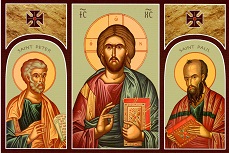
The last will be first, the first will be last

Sermon for Septuagesima

Matthew 20:1-16  +  Exodus 17:1-7  +  1 Corinthians 9:24-10:5

“The last will be first and the first will be last.” Jesus says that over and over again in the Gospels.  And every time he says it, man’s response is, “That doesn’t make sense.  That’s not fair.”

What could be more unfair than the parable of the workers in the vineyard?  The ones who worked only one hour receive the same full day’s wages as those who put in a twelve-hour day under the sun’s blazing heat.  Why should those who only worked one hour get full pay?  And, if those guys are going to get full pay, then why shouldn’t those who worked twelve hours get extra pay?  That doesn’t make sense.  That’s not fair.

And that’s exactly the point that Jesus drives home to us today with this parable that gives both the greatest comfort and the most serious condemnation.  The last will be first, and the first will be last.  What a beautiful saying!  What a terrifying saying!

The rich man who is stingy toward God is one of those who are first, in man’s eyes, but last in God’s eyes.  So Jesus taught his apostles in Matthew chapter 19. But Jesus’ apostles aren’t rich at all. In fact, they’ve left everything earthly behind in order to follow Jesus.  Shouldn’t they be rewarded by Jesus for all the sacrifices they made in order to follow him?  Shouldn’t we be rewarded by Jesus for living good, decent, Christian lives on earth?

No.  No, and if you expect to be rewarded for your work, then you, too, will be last in the eyes of God, that is, sent away from his presence and condemned, like the workers who put in their precious twelve hours of labor in the parable of Matthew chapter 20.

Who are the first who will be last?

They are the roughly 1.5 million member community of Israelites who were chosen by God to be his holy people, who were rescued by God from slavery in Egypt, who were led through the Red Sea on dry ground, who were given water to drink from out of a rock, who were fed by the hand of God with bread from heaven that appeared on six out of every seven days of the week while they journeyed to Mt. Sinai, where God would speak to them and give them his own Word and make a special covenant between him and them, out of all the nations on earth.  Israel was first.

But Israel became last, because they thought they were entitled to all of it.  When they suffered want for even a moment, their entitlement mentality showed itself, and they grumbled and complained against Moses and against God.  “How could you do this to us, make us eat this same bread every single day, let us go thirsty for a few whole hours!  How dare you treat us like this!  What kind of God are you?”  They grumbled and complained because they didn’t think they were getting what they deserved, and, as Paul said in our Epistle reading today, God was not pleased with most of them; their bodies were scattered over the desert.

Who are the first who will be last?

They are the Pharisees who believed that they were closer to God than the average Jew, closer to him because they kept his laws better; they gave bigger offerings at the Temple; they could compare themselves with all the sinners out there in the world and come out smelling pretty sweet. 

But the Pharisees were last in God’s eyes, because they thought they were entitled to a place in his kingdom.  They approached him on the basis of their behavior, and for as good as they thought it was, God said it wasn’t good enough.

Who are the first who will be last?

They are the apostles themselves, if they begin to rely on their own works in order to receive rewards from God.  They are the nation of Israel if they begrudge the Gentiles entrance into God’s kingdom because they haven’t worked hard enough for it, “like we Jews have.”

Who are the first who will be last?

It’s the man who never goes to church because he thinks he already believes in God well enough and figures that he’s entitled to God’s forgiveness, because, well, even though he’s not perfect, he stays away from what he considers to be the “big” sins – at least, most of the time.

It’s the church member who attends church only sporadically, but figures he’s going often enough to earn his heavenly pay.

It’s the life-long, every-Sunday-attending church member who confesses his or her sins, but deep down, doesn’t want the rabble out there to get too close to us in here, because they’re not good, deserving people “like we are.” 

Who are the first who will be last?

They are rich people and poor people. They are regular churchgoers and they are people who haven’t set foot in a church in years.  They are some of the greatest saints and some of the worst sinners. They are all those who seek good things from God because they’ve worked so hard for them. They see God’s grace as income they have earned.  They view the forgiveness of sins and divine blessing as something they’re entitled to.

This entitlement mentality with God shows itself most when we suffer, just like it did with the children of Israel coming out of Egypt. I’ll be honest with you, I ask myself, what if the Lord brought tragedy to my house and to those closest to me?  I’ve thought about that.  What would I do?  I’d like to think that I could be like Job who said, “The Lord gave and the Lord took away. Blessed be the name of the Lord!”  But I know how deep sin runs, and that I would be tempted to grumble against God.  “How could you?  I’ve served you my whole life.  I can count on one hand the number of Sundays I’ve missed church in 37 years.  I pray to you, I preach your Word to your people. And those people over there who don’t serve you nearly as well as I do – you haven’t brought tragedy on them. I deserve better treatment than this.”

But I don’t. And you don’t.  And the one who wants to be paid back by God can’t stand to hear God’s judgment that “All have sinned and fall short of the glory of God.” All of Jesus’ work, all his suffering, his sacrifice of himself on the cross, his coming to earth in humility in the first place – all will be for nothing for you if you claim a place in God’s house as an entitlement, as something God owes you, given the amount of work you’ve put in.

But who are the last who will be first?

They are the workers whom the landowner invited into his vineyard, who regard, not the denarius, but the goodness of the landowner which is the same to high and low, to the one who has labored much and to the one who has labored hardly at all.

Who are the last who will be first?

They are the Gentiles who had lived their whole lives alienated from God, not knowing him, not serving him, not loving him – but who heard and believed the message of Christ, who came to pay for the sin of all people and to do the works that redeem all people and satisfy the demands of God’s law.

Who are the last who will be first? They are the Jews who fell into grave and terrible sins – even theft, murder and prostitution – but were called by Christ back to repentance and faith in him as their advocate before the Father.

Who are the last who will be first? They are the apostles, if they will continue to guard against pride in their own great sacrifices and rely on the goodness of Christ alone for their reward in heaven.

Who are the last who will be first? They are the sinners and the saints, rich and poor, life-long Christians and recent converts who regard, not the denarius, but the goodness of the landowner, who seek all good things from God, even the forgiveness of sins, life and salvation, not because they’ve worked for it, but only because God is good and gracious to us in Christ.  Grace is the goodness of God that gives all things without the slightest bit of worthiness in those who receive it. 

Don’t get caught patting yourself on the back for your labor in God’s vineyard. There is only One whose labor earned anything from God, and in truth, it is his labor that earned everything from God – Jesus Christ, the Righteous One.  These are the four things that factor into your salvation: 1) The grace of God, 2) the merits of Christ, 3) the promise of the Gospel, and 4) faith that receives the mercy promised to you in Christ Jesus. Your labor never factors into the salvation equation.  You must never introduce it.

Spend your time basking in the glow of God’s grace. Spend your time wondering at Christ’s willing labor for you in the vineyard, especially as we are about to step into the season of Lent and turn the magnifying glass on his labor for us. Spend your time hearing the promise of the Gospel in Word and Sacrament. And that will also keep you from looking down your nose at those sitting around you.

The first will be last, Jesus says, a terrifying statement that strips you of every reason to boast in yourself and forbids you to exalt yourself any higher than the worst sinner you can think of.  But Jesus also says, “The last will be first,” a comforting statement that keeps you from falling into doubt and despair. Because even if you are the worst sinner you can think of, God’s grace in Christ exalts you higher than the highest saint.  By human standards, that doesn’t make sense and it isn’t fair.  But the kingdom of heaven isn’t about fairness.  It’s about grace – and that’s what gives us hope. Amen.

Posted in Sermons | Tagged , , | Comments Off on The last will be first, the first will be last

Wheat and weeds, growing together

Sermon for the Fifth Sunday after Epiphany

Matthew 13:24-30  +  Genesis 18:20-33  +  Colossians 3:12-17

Because of how late Easter falls this year, we get to celebrate a Fifth Sunday after Epiphany and receive the Gospel of Jesus in His great Parable of the Weeds, Matthew 13.  This parable doesn’t show up in the historic lectionary again until the year 2038, so as always, but maybe especially today, you’ll do well to listen carefully to what Jesus teaches you in this parable.

Jesus himself explains the meaning of it to his disciples a few verses later in Matthew chapter 13.  The one who sowed the good seed is the Son of Man.  But unlike the Parable of the Sower and the Seed, in which the seed stands for the Word of God, the seed, in this case, stands for the “sons of the kingdom,” Jesus says, for believers, true Christians who aren’t just subjects of his eternal Kingdom, but sons – legal heirs of all that is his.  The point here isn’t how people come to faith in Christ – which is through hearing his Word, but the fact that Christ is the one responsible for planting his believers throughout the field, which is the world.

The weeds are the “sons” – the legal heirs – “of the evil one,” and the devil is responsible for planting them in the field of the world – not off in a corner somewhere, but right alongside the wheat.  The weeds are unbelievers, but this parable is focusing on a particular set of unbelievers – the ones who grow together right alongside the believers, the ones who look like real Christians, but are not; the ones who seem to have a part in Christ’s kingdom, but do not. We’re talking about the Church on earth and the heretics and the false Christians who grow up right alongside the true Christians – not just down the road from one another, but in the same church building – wheat and weeds growing side by side.

And for awhile, you can’t tell the difference.  Notice, the parable said that it wasn’t until the weeds and the wheat matured and the wheat started producing its grain that the weeds were identified by the servants of the field owner.  That’s how it will be, Jesus says, in the Church on earth.  Everyone becomes an outward member of the Church in the same way – through baptism and confirmation. We all say we believe the same thing. We all say we hold to the apostolic doctrines.  No heretic ever looks like a heretic.  No false Christian is branded with a label on his forehead saying, “I’m actually a weed.”

But then the fruit starts to appear, fruits like the Apostle Paul talked about in the Epistle Lesson, the fruit that only a true Christian can produce: compassion, kindness, humility, gentleness and patience, love, thankfulness. Bearing with each other, forgiving whatever grievances you may have against one another. And a sincere love for the Word of Christ and for the worship of Christ in the congregation of believers.

God’s holy people are sinners –every last one! – but they are sinners who mourn daily over their sinfulness and cling to Christ in faith, trusting in his merits for the forgiveness of sins.  And God’s holy people will strive to put those things into practice that Paul encouraged – the things that are fitting for God’s holy people.  God’s holy people, the wheat in the field, the sons of the Kingdom, will strive to live like this and as they do, they show themselves to be stalks of wheat, almost ready to be harvested.

But the weeds balk at the idea of bearing with one another and forgiving their fellow members.  The weeds – even if they’re members in good standing in a Christian congregation, will get angry when reprimanded by a fellow member or by their pastor. They won’t waste their time showing self-abasing love and kindness and humility, and certainly not with the pure doctrine of the Word.  They want the pastor to say words that make them feel good about themselves, words that will help them improve their life on earth, words that allow them to hold onto their self-made worship and beliefs and gods.  The weeds may shift in their seats uncomfortably during the service, grow quickly bored with the service if they don’t find it stimulating or entertaining enough. They have little compassion on those sitting around them, and consider it a burden to practice gentleness and patience with a fellow member.

Even then, even then the owner of the field doesn’t want his servants to tear up the weeds and pluck them out of the world.  “Let them grow together until the harvest,” he says. “Because while you are pulling the weeds, you may root up the wheat with them.

It’s important to understand what kind of “weeding” the Lord does not want to happen yet.  He’s not talking about church discipline. He’s not saying a pastor should never reprimand or a church should never excommunicate an impenitent sinner.  “Expel the immoral brother from among you,” the Apostle Paul says.  Jesus is talking about pulling weeds out of the field, that is, the world.  He doesn’t want his Church ridding the world of heretics and false Christians.  No holy wars against the infidels.  No burning heretics at the stake.  God has not given the sword to his Church. He’s given her his Word, and he expects her to use it: to apply the balm of absolution – forgiveness of sins for the penitent, and to apply the binding key of unforgiveness to the one who refuses to repent.

But wouldn’t it go better for the wheat if God allowed the weeds to be pulled now? Wouldn’t the Church on earth be a better place if there were no heretics to attack her, no sin to distract her, no schisms to rend her asunder, no scandals to devastate a congregation? Some of you have lived through scandals like that. Wouldn’t the sons of the Kingdom thrive and flourish without all those weeds to mess up the field?  I would think, “Yes!” But God says, “No!”

“No! Because while you’re pulling the weeds, you may root up the wheat with them. Let both grow together until the harvest. A that time I will tell the harvesters: First collect the weeds and tie them in bundles to be burned; then gather the wheat and bring it into my barn.”

It’s all for the benefit of the wheat, the righteous, the sons of the Kingdom. Remember in the Old Testament reading how God assured Abraham that he would spare all the wicked – spare those wicked cities of Sodom and Gomorrah – for the sake of just a few righteous people. He would rather spare all the wicked than destroy them and have the righteous swept away with them.  So much the Son of Man loves his own.

He lets the weeds grow together with the wheat, first, because some who are now false Christians and heretics will repent and become true Christians, just as true Christians may fall away for a time and return in repentance.  If God would pull the weeds out of this world ahead of time, then they would have no opportunity to repent, and God is patient with you, not wanting anyone to perish, but everyone to come to repentance.  Imagine if he had pulled out the weed named Saul before he could be converted into the apostle named Paul!  Imagine if he had pulled out the weed King David had become after his adultery and murder, without giving him time to repent at the word of the prophet Nathan.  Imagine if he had struck you dead at any of those times when you turned your back on faith.  It’s for the good of the wheat that God allows the weeds to grow alongside them.

Not only that, but God, in his unfathomable wisdom, God, who works out all things for the good of those who love him, knows that it’s good for the wheat to have the weeds growing alongside it.  The evil one sowed the weeds to harm to wheat, but the Son of Man sees it and shakes his head in derision of the devil, because he knows, “Weeds all around are exactly what my wheat needs on this earth.”  That’s totally contrary to all farming and gardening wisdom, but the wisdom of God works in so many ways contrary to the way things work on this earth. 

The weeds – the heretics, the false Christians, those who cause scandals and factions and who add their bitterness and anger to the community of believers – the weeds force the wheat to be on guard – to be on guard against temptation and against all forms of pride.  No church or church body can ever peer down its nose at the rest of the world and claim to be a pure, pristine haven of perfection. Instead, we are forced to admit that we are always a hair’s breadth away from falling, to admit that we are nothing and Christ is everything and all our hope rests in him, and that’s the way it must be.  

The weeds force the wheat to send its roots down deeper, deeper into the Gospel of Christ. When factions and false teachings threaten the Church, then there’s no time to be lazy. It will not help you to say, “I already learned all that Bible stuff back in catechism class. Jesus loves me, this I know…and this is all I want to know. Don’t bother me with doctrine.”  No, false teachers are everywhere, and false beliefs, too, so it’s absolutely essential to seek out the pure teaching of Christ.  Unless that is your conscious purpose, you will always fall into error and be swept away, because your natural self is always more attracted to error than it is to the truth.  Friends, we have that truth faithfully passed down to us in the Lutheran Confessions. Study them and see!

The weeds all around force the wheat to thirst for the Gospel that speaks peace to the soul, because all around, even in the Church, we see unrest and false teaching and false Christians.  Because of the weeds, the wheat is forced to thirst for life-giving water, which we have in Christ’s baptismal promise that unites the baptized to his death and resurrection and gives daily comfort and strength. The wheat is forced to hunger and thirst for the Holy Supper, for the very body and blood of Jesus, because the weeds would sap the life out of the wheat, but for the body and blood of the Church’s Husband that sustain her week in and week out with all the nourishment she needs.

But this will not go on forever, this mingling of wheat and weeds in the field of the world.  There is a real day coming, not far off now, when the harvest will be gathered.  First the weeds – and the angels will have no trouble figuring out who they are. The Lord knows those who are his. The angels will cut them out of Christ’s kingdom and assign them their place in the burning hellfire, where there will be weeping and gnashing of teeth. And then the wheat will be gathered into God’s eternal harvest-home and his people will shine like the sun in the kingdom of their Father.

That’s when the Church will be a neat and tidy place – not before.  Until then, expect there to be weeds in the field. If you are one of them, repent before the harvest comes and believe the good news of forgiveness through faith in Christ Jesus.  If you’re among the wheat, then hold on until the harvest when Christ is revealed at his final epiphany.

Even so, Lord, quickly come
To your final harvest-home;
Gather all your people in,
Free from sorrow, free from sin,
There, forever purified,
In your garner to abide.
Come with all your angels, come;
Raise the glorious harvest-home. (CW, 613:4)

 Amen.

Posted in Sermons | Tagged , , | Comments Off on Wheat and weeds, growing together

A Prophet greater than Jonah is here

Sermon for the Fourth Sunday after Epiphany

Matthew 8:23-27  +  Jonah 1:1-17  +  Romans 13:8-10

The Gospel today is striking in its simplicity, isn’t it?  Jesus and his disciples get in a boat.  There’s a raging storm at sea, and while the disciples bail water, Jesus sleeps.  They finally wake him and plead for help.  He offers the solution, calming the storm immediately.  And the disciples are amazed at the Lord’s power.  It’s a simple story, an amazing story, a true story.

And you must have noticed how similar that story was to the Old Testament reading today from the prophet Jonah, didn’t you?  Jonah gets in a boat.  There’s a raging storm at sea, and while the crew bails water, Jonah sleeps.  They finally wake him and plead for help.  He offers the solution, calming the storm immediately.  And the men on the boat are amazed at the Lord’s power.  That story, too, is a simple story, an amazing story, a true story.

These two stories aren’t identical, but they share enough points in common that we need to ask the question, “Is God teaching us something here about a connection between the prophet Jonah and Jesus, or is it just a coincidence that the stories have so many parallels?”

Jesus himself gives us the answer. “The Scriptures testify about me.” After his resurrection from the dead, he explained this to his disciples: Beginning with Moses and all the Prophets, he explained to them what was said in all the Scriptures concerning himself. More than once during his short ministry, Jesus compared himself specifically to the prophet Jonah.  His conclusion?  “Now one greater than Jonah is here.”  As we compare the two stories before us today, that becomes clear:  A Prophet Greater Than Jonah Is Here.

BOTH WERE CALLED TO PREACH

Both Jonah and Jesus were called by God to preach.  Jonah, a sinful man from Israel, was called to preach to the people of Nineveh, the capital city of Assyria, Israel’s enemy. He was sent mainly to the Gentiles, although his message would be heard by the Jews as well.  His was to be a message of destruction, “40 more days and Nineveh will be destroyed!”  Destruction by the God of Israel, destruction for their sins was the main message. Destruction, unless they would repent.

Jesus, a sinless man from Israel, was called to preach to the people of Israel, although his message would be heard by the Gentiles as well.  His was to be a message of good news, “Forgiveness of sins, life and salvation by faith in me.”  Forgiveness of sins by the God of Israel was the main message.  Salvation, unless they would not believe in him. A prophet greater than Jonah is here.

BOTH GOT IN A BOAT

Both Jonah and Jesus got in a boat one day, and set out to sea.  Jonah got in the boat to flee the mission God had given him.  He hated the Gentiles of Nineveh and wanted to see them destroyed for their wickedness. He received God’s call to preach and he said, “No.”

Jesus got in the boat to pursue the mission God had given him, because he had already preached to the people on one side of the Sea of Galilee and he had more people to teach on the other side.  Jesus loved both Jew and Gentile and didn’t want to see them destroyed for their wickedness.  He received God’s call to preach and he said, “Yes!” A prophet greater than Jonah is here.

BOTH SLEPT THROUGH THE STORM

Both Jonah and Jesus fell asleep in the boat as a raging storm came up and threatened the lives of those on board.  Jonah fell asleep in guilt and shame, knowing he was rebelling against the Lord, but still, not ready to admit his sin, not willing to obey God’s command.  Jonah would do what he wanted to do, no matter what God said. And that kind of sinful rebellion takes a toll on a person.  It’s exhausting to fight against God.

Jesus fell asleep out of exhaustion, too.  But his exhaustion was the result of long hours dealing with people, teaching them, healing them, answering their questions, sometimes answering their accusations.  It’s exhausting to preach God’s Word, but Jesus did it gladly and willingly, out of love for God his Father and out of love for sinners.  A prophet greater than Jonah is here.

BOTH WERE WOKEN UP BY TERRIFIED SHIPMATES

Both Jonah and Jesus were woken up by terrified shipmates who had worked long and hard to steady the ship that was being tossed and battered by the wind and the sea.  They were all experienced sailors, but had never seen a storm like this before.  The men on Jonah’s boat were pagans who didn’t even know the true God, the LORD – Yahweh of Israel. And yet when they woke Jonah up, they asked him to pray to his God and were hopeful that Jonah’s God might just keep them from drowning. “Call on your god! Maybe he will take notice of us, and we will not perish.”

But Jesus’ disciples, who knew very well the God of Israel and even believed that Jesus was the Messiah promised by God – Jesus’ disciples were less hopeful, less trusting, more afraid than the pagan sailors of old.  “Lord, save us! We’re going to drown!”  The “Lord, save us” part is fine.  The “We’re going to drown” part is unbelief – the opposite of faith. Even though a prophet greater than Jonah was among them, even though they had believed he was the Christ, they somehow concluded that knowing Christ would do them no good, and that both he and they were destined to perish in the storm.  What good could a dead Christ do?

BOTH HAD AN ANSWER

Both Jonah and Jesus had an answer for their panicking friends.  Jonah confessed that he worshiped the LORD God of Israel, the Maker of the wind and the sea and everything else. And then Jonah admitted that the storm was his fault, because he was running away from the LORD’s mission.

Jesus’ response to his friends was different.  He didn’t need to tell them who made the wind and the sea and everything else.  They already knew that, for as much good as it did them.  And he had no sin to confess; this storm wasn’t his fault. Instead, he had a rebuke for them. “You of little faith, why are you so afraid?” 

That’s a stinging question, isn’t it?  It reveals the sin underneath, the sin that threatens even believers in Christ, the sin that shoves Jesus to the side and says, “OK, you know Jesus is the Christ. You’re a Christian.  So what?  That won’t help you with…fill in the blank.  Yeah, yeah, your soul, your spiritual life – all that’s fine.  But your real problem is finances or relationships or health or politics or – whatever.  Jesus is for Sunday morning – sometimes, but knowing him will do you no good in the real problems of life.”

Isn’t sin deceptive that way?  Isn’t Satan subtle?  He’ll let you keep the idea of Christ but wants to empty it of its significance.  He’ll let you believe that you’re a child of God, baptized into Christ and clothed with him, as long as, when the going gets tough, he can convince you that it simply doesn’t matter.  You still have to work things out on your own.  Christ can’t help you in your real needs.

Ah, but he can and he does.

BOTH OFFERED THEIR SHIPMATES THE SOLUTION

Both Jonah and Jesus offered their shipmates the solution that would save them.  Jonah’s solution?  “Throw me overboard.  Sacrifice me. Because it’s all my fault. And if you sacrifice me, then you’ll all be saved.”  And he was right, wasn’t he?  As soon as Jonah was tossed into the sea, the storm was gone; the seas were calm; and the men on board glorified the LORD, the God of Israel.

Jesus’ solution?  That day on the sea of Galilee, Jesus’ solution was to use his almighty power as God. He rebuked the wind and the sea with a word, and the forces of nature bowed down before him. The sea was calm, and the men on board glorified the LORD, the God of Israel, who was not only in the heavens, but also standing there with them in the boat. A prophet greater than Jonah is here.

And that message needed to stick with Jesus’ disciples, because in a short while, Jesus’ solution to their real problem of sin and condemnation would be the same as Jonah’s.  “Sacrifice me!  Because God, in his immeasurable grace, will take your fault and make it my fault. And when I am sacrificed, then you’ll be saved.”  Throughout his ministry, Jesus kept revealing to his disciples what John the Baptist meant when he said, “Look! The Lamb of God who takes away the sin of the world!”  The Prophet would be sacrificed, and the storm of God’s wrath against sinners would completely subside.  A prophet greater than Jonah is here.

BOTH SPENT THREE DAYS “DEAD”

And here’s where the comparison between Jonah and Jesus most significant.  Both Jonah and Jesus spent three days buried.  Jonah in the belly of a great sea monster, Jesus in the belly of the earth.  Jonah’s “death” was only figurative – he was alive in the fish’s stomach, and for as miraculous as it was that God kept Jonah alive and then caused that fish to vomit Jonah out onto the beach on the third day, it’s nothing compared with Jesus.  Jesus said, “A wicked and adulterous generation asks for a miraculous sign! But none will be given it except the sign of the prophet Jonah. For as Jonah was three days and three nights in the belly of a huge fish, so the Son of Man will be three days and three nights in the heart of the earth.” The prophet Jonah was a sign who pointed ahead to Jesus in many ways, but most of all, Jonah’s figurative death and resurrection after three days pointed ahead to Jesus’ very real death and resurrection after three days.

And as Jonah got up and finally went to preach to the people of Nineveh, so Jesus got up from the dead and sent forth his disciples to preach to all the nations of the earth: repentance and forgiveness of sins in Jesus’ name.  Salvation by faith alone in Christ. Justification in God’s courtroom for all who believe, for all who claim the righteousness of Christ before God.

CONCLUSION

And he who did not spare his only Son but gave him up for us all, how will he not, along with him, graciously give us all things?  Trust in him at all times, for everything you need in life. And when you’re afraid, you remember that to know Christ is not a meaningless thing.  To know Christ is to have God’s help in all things, at all times.  Jonah’s life, his story, points you to Christ and begs you to trust in him.  That is the epiphany of Jesus in the miraculous calming of the storm – the epiphany of this prophet who is so much greater than Jonah.  Amen.

Posted in Sermons | Tagged , , | Comments Off on A Prophet greater than Jonah is here

Faith in Christ makes clean the unclean

Sermon for the Third Sunday after Epiphany

Matthew 8:1-13  +  2 Kings 5:1-15a  +  Romans 12:16-21

Those of you who have been attending our Sunday morning Bible class on the Book of Acts have been reading there about all the turmoil in the early Christian Church regarding the question of the Gentiles – the non-Jews and their relationship to God and to the Jewish people and to the Law of Moses.  For fifteen hundred years, the Law of Moses had been telling God’s people what made a person “clean” or “unclean.”  It wasn’t dirt or the lack thereof.  Here’s what it meant to be ceremonially clean: to be able to approach God’s house and God’s family, able to stand in God’s presence without guilt or shame. To be unclean meant that you couldn’t approach God’s house or God’s family; you couldn’t stand in God’s presence. 

In order for a person to be clean, he or she had to fulfill all sorts of conditions prescribed by the Law of Moses – dietary conditions, medical conditions, behavioral conditions.  If you ate the wrong thing – like pork, if you touched the wrong thing – like a dead body, or even if you had certain medical conditions, like an infectious skin disease, you were unclean.  And the only way to get clean again was to get rid of the unclean things in your life.

It was hard enough for a Jew to remain clean all the time, and impossible for a Gentile, because the non-Jews didn’t follow the Law of Moses in the first place.  So the question for the early Church was, what makes a person clean now that Christ has come?  Is it still living according to the Law of Moses, following the right regulations and observing the right ceremonies? Or does New Testament cleanness not have anything to do with that?

It took the early Christians a few years to fully understand the ramifications of the work of Christ, but eventually the Holy Spirit led them to an epiphany, of sorts. He showed them that the Law of Moses was nothing but a shadow, a symbol pointing ahead to that which really makes a person unclean – sin, and to that which really makes a person clean.  As St. Matthew – the Gospel writer to the Jews – looked back at the life of Christ, he saw the answer there already, staring him in the face, plain as day, a real epiphany.  We see it in the two stories before us today, staring us in the face, too.  Faith in Christ makes clean the unclean.

THE FAITH OF THE LEPER

The leper was unclean, according to the Law of Moses, banned from approaching God’s house and God’s people.  It wasn’t because of anything in particular he had done wrong. It’s just that his skin was infected with this contagious disease called leprosy.  Most Jews who became unclean were only unclean for a little while.  But a leprous Jew was unclean permanently.

In the Gospel, this leper breaks all the rules as he not only approaches Jesus, but throws himself at Jesus’ feet and prays this amazing prayer, “Lord, if you’re willing, you can make me clean.”  Those are words of faith, faith that saw through the humble exterior of this man named Jesus and recognized God underneath, even before he was healed.

Where did that come from?  “Faith comes from hearing the message” – the report about Christ.  The leper had heard the report of how Jesus welcomed sinners into his presence. He’d heard about Jesus’ compassion and grace and willingness to help, and about his miracles of mercy and of healing.  And in that simple report he had heard about Jesus was the power of God to bring him to faith – miraculous, unreasonable faith that was certain of Jesus’ ability to make him clean, even though he had never met this man before in his life, even though he came bringing nothing to the table – no goodness, no worthiness, only his pathetic condition, only his uncleanness.

He brought his sin with him – rotting, decaying sin on the inside that was matched on the outside with rotting, decaying flesh. But in spite of his recognition of his own uncleanness, the leper trusted so fully in Jesus’ mercy that he made no demands of Jesus; he simply left the decision up to Jesus whether to make him clean or not.

That’s how faith always acts, still today.  It brings nothing to Jesus, demands nothing of Jesus.  A believer recognizes only sin and uncleanness in himself or herself, because the Law of God says, “Do this!” and you haven’t done it. Or “Don’t do this!” and you have done it.  And you carry around that uncleanness with you wherever you go.  A believer knows full well that he or she has no business asking Jesus for anything, but faith makes a person bold to approach him anyway.  Why?  Because the report you’ve heard about Christ is powerful, filled with the Holy Spirit himself.  The word on the street about Christ is that he wants to help the helpless.  In fact, those are the only ones he wants to help. He can and he does make clean the unclean.

The leper, in his uncleanness didn’t dare approach God’s house – the Temple in Jerusalem.  But he did approach God’s Dwelling Place – the Son of God, Jesus Christ, with the full assurance of faith, and he was not disappointed.  “Lord, if you are willing, you can make me clean.”  “I am willing,” Jesus said. “Be clean!” And at once, Jesus cleaned the leper – inside and out.  He made his condition on the outside match the clean condition on the inside – clean, not because the leper had no sins, but clean, because faith in Christ makes clean the unclean.

THE FAITH OF THE CENTURION

The centurion was also unclean, according to the Law of Moses, excluded from the fellowship of the people of Israel. It wasn’t because of anything in particular he had done wrong.  It’s just that he was a Roman soldier, a Gentile, permanently unclean, according to God’s Law.

In the Gospel according to St. Matthew it speaks as if the centurion himself came to Jesus. But Luke tells us that it was a delegation of Jews who came to Jesus on behalf of the centurion, because he didn’t even consider himself worthy to stand in Jesus’ presence.  Through these mediators, the centurion asked for Jesus’ help with his suffering servant. But when Jesus agreed to go and help, the centurion objected, “Lord, I do not deserve to have you come under my roof. But just say the word, and my servant will be healed.”  Just say the word, because I know what it is to have authority and to give orders and to have those orders obeyed without question, and just as I have authority over the soldiers under my command, so you, Lord, have authority over sickness and death, angels and demons, over all the powers of this universe.  Just say the word, and my servant will be healed.

Those are words of faith, faith that saw beneath the humble exterior of this man named Jesus and recognized God underneath, even before his servant was healed.  That faith came, again, by hearing, hearing the report about Jesus’ kindness and goodness and almighty power.

And Jesus was amazed, because the unclean Gentile centurion had the kind of faith that Jesus couldn’t find anywhere among the clean people of Israel – faith that confessed his total unworthiness, faith that didn’t offer Jesus anything – not a single good work, not a single reason why Jesus should have mercy on him.  The centurion’s faith didn’t need, didn’t even want to see or touch Jesus or be convinced by his reason that Jesus was the Son of God.  He believed it already, based on the word he had heard, and was content with a word – a word from the mouth of the Son of God, a healing word for his suffering servant.

Jesus granted him that and so much more.  Before saying the word that would heal the centurion’s servant, Jesus said the word that made clean the unclean Gentiles:  I say to you that many will come from the east and the west, and will take their places at the feast with Abraham, Isaac and Jacob in the kingdom of heavenBut the subjects of the kingdom will be thrown outside, into the darkness, where there will be weeping and gnashing of teeth.  Gentiles, too, Jesus says, from all over the earth will sit down with the Jewish patriarchs at the heavenly banquet, while many subjects of the kingdom – Jews who rely on the Law of Moses for their cleanness – will be thrown out of the banquet.

Why?  They were clean!  And why should the Gentiles be let it?  They were unclean! Because the message of Christ is that all are unclean on the inside by nature – both Jews and Gentiles.  All are together under sin, all are condemned.  Therefore all people are called to repent.  But Christ has come for all, both Jews and Gentiles, to be the righteousness of all people, to take the sins of all people on himself and pay for them with his holy, precious blood, shed on the cross.  The way to be able to approach God’s house and God’s family, the way to be able to stand in God’s presence without guilt and without shame is through faith alone in Christ.  Faith in Christ makes clean the unclean.  Unfaith, unbelief leaves a person in his own uncleanness, no matter how healthy he may look on the outside.

Jesus granted the centurion’s request, “Go! It will be done just as you believed it would.” And his servant was healed at that very hour.  Jesus said the word, and healing came.

He does not work like this among us today.  The direct, miraculous physical healings performed by Christ or in the name of Christ were special signs of grace that pointed people to Jesus’ compassion and divinity for a few short years.  They were recorded in the Holy Scriptures for us as appetizers, as it were, pointing ahead to the main course – to the heavenly banquet at the last day when Jesus will raise the dead and heal every weakness among his people, his saints.

You will have to wait until then to be healed on the outside. But you don’t have to wait until then to be clean on the inside, to have your sins washed away, to be able to approach God’s house, to enter God’s family, to be able to stand in God’s presence without guilt or shame.  Faith in Christ has already made you clean – faith in Christ’s baptismal promise that in those waters, you were made clean – faith in Christ’s word of Absolution that in your pastor’s word of forgiveness, you have Christ’s own word of forgiveness – faith in Christ’s sacramental promise that his body and blood will really be present with us today, given to those who participate in this Holy Communion to make you clean again and again and always.

For as much as the leper and the centurion teach us in today’s Gospel about faith, it’s not really a story about faith.  God’s message to you today isn’t, “Be like the leper! Be like the centurion!”  It’s not a story about faith.  It’s a story about Christ, the object of faith.  This word about Christ, all by itself, is what gives you the faith that makes clean the unclean. Amen.

Posted in Sermons | Tagged , , , , , | Comments Off on Faith in Christ makes clean the unclean

The kind of Messiah he will be

Sermon for the Second Sunday after Epiphany

John 2:1-11  +  Amos 9:11-15  +  Romans 12:6-16

On this Second Sunday after Epiphany, as we’re getting to know Jesus the Man as Christ, the Son of God, hear John’s words to the crowds as he points them to Jesus, “Look! The Lamb of God who takes away the sin of the world!” And then hear him say the same words again the very next day a bit more privately to a few of his disciples. “Look! The Lamb of God!”, he says, and points his disciples to Jesus.  They went to him to learn from him, to learn who he was, what he had to teach them, and why John proclaimed him the Lamb of God. After spending just one day with him, they were convinced: Jesus is the Messiah! – the Savior promised by God in the Old Testament.

But what kind of Messiah would he be?  They had just met him; they barely knew him.  And so the first thing Jesus does, on the very next day, is to take them along to a wedding up in the town of Cana, in Galilee, where Jesus and these first disciples were from.  He takes them to this wedding, where he performs his very first miracle, changing water into wine.  This is the occasion, this is the miracle Jesus chose to begin teaching his disciples about himself.

Changing water into wine at a wedding banquet may not seem like a miracle worthy of Jesus – or like a miracle that has much to teach you.  But the truth is, you can learn a lot about Jesus by this first miracle.  Jesus’ first miracle at Cana in Galilee shows his disciples and us the kind of Messiah he will be.

THE KIND WHO GOES TO WEDDINGS

First of all, it shows us that Jesus is the kind of Messiah who goes to weddings.  That was a real contrast, for Jesus’ first disciples, from their previous teacher – John the Baptist, who lived out in the desert and wore camel skins and ate bugs, who was only serious all the time, who spent all of his time, 24/7, secluded from society, preaching and warning and baptizing.

Now here’s the Messiah himself, and he begins his divinely appointed ministry to the people of Israel by going to a party.  Jesus would be no ivory tower Messiah – more blue collar than white collar; not part of the religious elite, not full of himself, not snooty, not aloof.  He would be always heavenly minded, but at the same time, fully at home among his people in their day-to-day activities.

Jesus shows his disciples that to be holy – as he was – means to be set apart from sin, but it doesn’t mean being set apart from people. That doesn’t mean he would have any part in drunkenness or carousing or erotic dancing, but he was fully in favor of celebration, joy and merriment.

By attending this wedding banquet, Jesus blessed and honored the callings of average people and especially the institution of marriage, marriage as God created it to be – the lifelong union of one man with one woman.  He blessed and honored these earthly celebrations with his presence and with his help.

It’s the same Messiah who goes to weddings today: who accompanies his people in whatever their calling may be: in the ups and downs of married life, in the workplace, on the street, at the store. He doesn’t hide here in the church building, although he is here among us in a special way in Word and Sacrament. Jesus isn’t allergic to people – he accompanies his friends in times of joy – like wedding celebrations, and also in times of tragedy, when sickness strikes or a loved one dies. That’s the kind of Messiah he is.

THE KIND WHO LETS HIS FRIENDS EXPERIENCE NEED

He’s also the kind of Messiah who lets his friends experience need. Jesus could have prevented the wine from running out at this wedding banquet. But he didn’t.  Instead he waited, waited until the all the wine was gone and the guests were getting grumpy and the groom – probably a poor man who spent his last dime on this once-in-a-lifetime banquet – was about to be embarrassed.  He let his friends experience this need, this lack of wine, and he waited until someone would look to him for help in their need.  In this case, it was his mother, praying for those who had invited her, “They have no more wine!”

Jesus lets his friends experience need still today, sometimes bigger, sometimes smaller. He could miraculously replenish the food in our pantry as soon as we take something out; he could make it so that our bodies never got sick, never got old; he could make gold coins fall from the sky and fill our bank accounts so that we’d never need anything from him ever again.

But he doesn’t, and he won’t. That’s not the kind of Messiah he is. He lets you suffer want, face affliction, endure hardship, and get old.  Not because he likes to see you suffer, but because you so easily forget about the “sin of the world,” including your own sin – not sins, actions, evil deeds, but sin – the complete corruption of your very self, which condemns you before God and brings hardship in to your life. Through those hardships, Jesus wants to teach you that you do need him, throughout your earthly life – not just to provide for your bodily needs, but to be the Lamb of God who takes away the sin of the world – including yours, and wipes it out before God so that, by faith in him, you are no longer condemned.  You need the kind of Messiah who will be your Helper, not your cheerleader, not your self-help coach, because you can’t help yourself, not a bit.  You depend on God’s Messiah for everything.  He wants you to pray to him in every need, to call and to cry out, so that he can step in with his forgiveness and with his providence.

THE KIND WHO WANTS TO HELP – ON HIS OWN TIMETABLE

And he does!  But he is the kind of Messiah who wants to help – on his own timetable, as he knows best.  His answer to his mother, Mary, was rather harsh, wasn’t it? “Woman, why do you involve me? My time has not yet come.” As the son of Mary, Jesus was obedient to his mother. But as the Messiah, Jesus was the one in charge. Neither Mary nor Jesus’ disciples were to get the impression that the Messiah asks “How high?” when his mother says, “Jump!”  He knows when to help and how to help.

Still, even though it seemed like Jesus was saying no to her, Mary’s faith kept expecting good things from Jesus.  She kept looking to Jesus for help and expected him to help, when he was ready, in the way he saw fit.  She didn’t know when or how that would be, but she told the servants there to do whatever he told them, because faith overcomes a harsh reply and knows that beneath it, there is a loving Messiah who has good plans for his people.

When you pray for Jesus to help, you must pray humbly, never placing your will above his will, always being ready to accept whatever he, in his wisdom, chooses to give.  His answer to your prayer, at first, may seem like a “no.”  It may seem like things are getting worse before they get better.  But he shows you here what kind of Messiah he is – the kind who does want to help, in spite of how it seems.  He wants you to trust first and see later.  Have faith in him and expect only good things from him.

THE KIND WHO IS POWERFUL, GRACIOUS AND HUMBLE

Because when he acts, he is the kind of Messiah who is powerful and gracious and humble.  How easily, how effortlessly Jesus forces the laws of nature to yield to his divine power!  When his time did come to help, 150 gallons of water turned into fine wine in the blink of an eye.  Jesus took that which was ordinary and merely sustains life and graciously turned it into a wedding present for his friends, into something festive that brought joy to life and to the people there at that wedding banquet.

It was also a miracle that heralded the arrival of the Messiah, the Savior of Israel, as Amos had said, “New wine will drip from the mountains and flow from all the hills, and I will bring my people Israel back from exile.”

But see how humbly he did it, without fanfare or trumpets heralding his gift.  Only the servants and his disciples knew who deserved the thanks.

The same is true today.  Most of the people in the world who enjoy the good things of this life don’t know that Christ is responsible for it.  Most people don’t know his almighty power that clothed itself in humility when he became Man, or the grace of our Lord Jesus Christ who wasn’t content to let you live a few years here on earth and then die in your sins, but made himself the sacrifice of atonement for all sin to give you the gift of forgiveness and everlasting life.  That gift is intended for all people, but only those who know him as the Messiah will receive it.

Now, in his power, grace and humility Jesus, our Messiah still provides the basics that we need each day – without fanfare, without trumpeting his gifts. But how often doesn’t he also provide all the extras that make life not just tolerable, but enjoyable?  Now, in true power, grace and humility, this Messiah that we have turns ordinary water into the cleansing bath of baptism, and he turns ordinary bread and wine into a joyful banquet of his body and blood, a banquet that is a foretaste of the great wedding banquet we’ll enjoy with him in heaven when Christ the Bridegroom and his Bride, the Church, begin their great wedding celebration.  That’s the kind of Messiah he is.

THE KIND WHO GIVES THE BEST AT THE LAST

He’s the kind who gives the best at the last.  The host of the wedding banquet in Cana was amazed when he tasted the water that had become wine.  It wasn’t just OK wine.  It was the best. And that was unusual. Most grooms at the time of Christ put out the best wine at the beginning of the multi-day wedding feast, starting out the banquet with a bang but letting it end with a fizzle.  But not when Jesus is there, not when Jesus steps in to help. Jesus wanted his disciples to know, right from the beginning, that’s not the kind of Messiah he would be. He would make it worth their while to stick it out to the end, where the best part would be waiting for them.

So, you who know the kind of Messiah you have in Jesus, you stick it out to the end, too, OK?  If you think you know joy in this life, you haven’t seen anything yet.  Or if all you know is pain here, you still haven’t missed out.  If you think your glory days have come and gone and that all that you have to look forward to is a life winding down – you just wait and see.  The best part is still waiting for you.  Because Jesus is the kind of Messiah who, when he comes, will take all the bitter trials of life and all the sweet joyful moments, too, and change them into something better at the last, into the finest of wine that makes everything else seem as tasteless as water.  The best part is still unseen, waiting to be revealed when Christ Jesus himself is revealed from heaven.

Really?  All of that from Jesus’ first miracle of changing water into wine?  Yes, all of that and much more.  In this one miracle, God has given you a taste of the kind of Messiah Jesus will be.  This, the first of his miraculous signs, Jesus performed at Cana in Galilee. He thus revealed his glory, and his disciples put their faith in him.  Keep following him, you disciples of his, and you put your faith in him, too. Amen.

Posted in Sermons | Tagged , , , | Comments Off on The kind of Messiah he will be