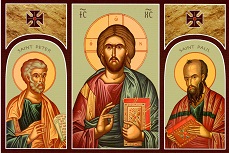
Behind a mask of rejection, faith finds a merciful Christ

Sermon for Second Sunday in Lent – Reminiscere

Matthew 15:21-28  +  Genesis 32:22-32  +  1 Thessalonians 4:1-7

A lot of people are put off by the Jesus who is presented to us in today’s Gospel – the one who appeared to act so harshly with that Canaanite woman. They don’t like this Jesus, they don’t even recognize this Jesus.  But friends, there is only one Jesus – the one whom we know in the Gospels, and this Gospel from Matthew 15 has been appointed to be read in Christian churches every single year on this Second Sunday in Lent – with good reason!

“Truly you are a God who hides himself, O God and Savior of Israel!” Those words from the prophet Isaiah proclaim the same truth that our Gospel proclaims today, the same truth that Jacob found as he wrestled with God through the night.  The Fall into Sin, which we considered last week, meant that sinful man no longer gets to deal face to face with the glorious, holy God. Our God hides himself behind a mask of hostility, a mask of rejection.  But as we learn in today’s Gospel, behind a mask of rejection, faith finds a merciful Christ.

This gentle Canaanite woman from the Gentile region of Sidon has a daughter who is, literally, “being badly tormented by a demon.”  She hears about Jesus, hears that he is the Jewish Messiah, hears a good report about him that he is kind and good and merciful to all who call on him for help. So when she hears that he has come into her country, she goes to him looking for help for her daughter, confident that she will find from him that mercy for which he has a reputation.

She calls out to him for help – just as you and I call out to him in our liturgy and in our litany, “Kyrie, eleison!”  “Lord, Son of David, have mercy!”

And the merciful Lord Jesus – acts like he can’t hear her.  He doesn’t answer a word.  And by ignoring her, Jesus implies that he doesn’t care about her, not even enough to acknowledge her existence.  What a trial!  What a hopeless situation – if God doesn’t care about you, if God doesn’t pay attention to your cries for mercy!

But the woman keeps crying out to Jesus for help, crying out to his seemingly deaf ears.  His disciples grow tired of it, uncomfortable with it.  They don’t plead the woman’s case with Jesus, as they might, she is “just an unclean Gentile sinner,” after all. But they can’t ignore her constant crying out.  It bothers them.  It’s terribly awkward. And so they ask the Lord to dismiss her, to send her away.

Finally, Jesus has a reply for the woman, but it isn’t what the woman is hoping for. “I was sent only to the lost sheep of Israel.”  That’s great news, if you’re an Israelite; devastating news if you’re a Canaanite, like this woman.  Jesus implies that he hasn’t come for her at all, that he won’t be her helper or Savior.  What a trial! What a hopeless situation, if God has only come to help other people, if you don’t qualify for God’s mercy.

Even then, Jesus’ reply doesn’t turn the woman away.  The woman came and knelt before him. “Lord, help me!” she said.  And his response startles us, “It is not right to take the children’s bread and toss it to their dogs.”  Implying that the “children” are the people of Israel, and the “dogs” are the Gentiles, like this desperate woman kneeling at his feet.  Jesus implies that she is not a child of God, but a dog in his house.  What a trial!  What a hopeless situation – to be counted less deserving of God’s help than others!

But right there, the desperate woman sees her opening – a door that Jesus intentionally opened for her.  “Yes, Lord,” she said, “but even the dogs eat the crumbs that fall from their masters’ table.”  “Fine, Jesus!  I have no problem with that.  I’ll happily be counted as a dog begging at the table of the Israelites, because I know that the God of Israel is merciful, and the crumbs of his providence are more than enough to satisfy my needs.”

Now, finally, Jesus lets the woman see with her eyes what her faith saw all along – a merciful Christ who is willing and eager to help.  He rewards her faith, first with words of high praise that no Israelite ever heard from his mouth, at least not recorded in Scripture – “O woman, great is your faith!”  If there was ever any doubt that the Gentiles, too, would become part of Christ’s New Testament Kingdom, that the Gentiles, too, would believe in Christ and be acceptable to God through faith, Jesus removes that doubt here.  He teaches his disciples once again that faith is what makes a person clean, not pedigree.

Then he rewards this woman’s faith with the miracle she was seeking, “Your request is granted.”  And the demon that had been afflicting her daughter was vanquished at that very moment, by the power and mercy of Christ – power that was hidden under weakness, mercy that was hidden behind a mask of rejection. 

Three times the faith of this Canaanite woman was challenged, run through the wringer, tested and tried.  Three times it seemed like Jesus wasn’t the merciful Savior she had heard about. But behind a mask of rejection, faith finds a merciful Christ.

This Gospel teaches us about both humility and faith.  If that Canaanite woman had had even an ounce of pride in herself, she wouldn’t have put up with the apparent rejection on the part of Jesus.  And I wonder, would you have “put up with” such treatment?  Would you have left in a huff because you thought you deserved better?  Or would you have left in despair because you lost hope in Jesus’ help?  Or, even now, do you sit there in judgment of the Son of God for his treatment of this woman?  Oh, how sin has corrupted mankind, that man should sit in judgment over his Creator or pretend to be more righteous than God himself!

You see, it was only in humility – in this recognition of total unworthiness in herself, that this woman was able to stay and look behind the mask of rejection that she saw in Christ.  What was it that kept her there? What was it that kept giving her hope?  Ah, yes, Jesus ignored her cries at first, but he didn’t send her away, even at his disciples’ urging. Yes, he implied that he had only come for Israel, that he had not come for her, a Gentile, but then, look where this took place, in the region of Tyre and Sidon, this woman’s home country! It was Jesus himself who left Israelite territory to come into this Gentile region.  Why would he do that if he had only come for Israel? Yes, Jesus implied that this woman was less deserving of his help than the people of Israel, but that’s the thing about mercy.  Mercy is never given to people who deserve it.  Mercy, by definition, is only and always given to people because of how pathetic they are, not because of how deserving they are.  So if this woman is like a pathetic dog begging at the table, then she is just the one who will be shown mercy by a merciful Christ – a thousand times more than the Jewish Pharisees who wouldn’t recognize humility even if they saw it before their very eyes, hanging on a cross.

That Canaanite woman couldn’t rely on her worthiness. She couldn’t rely on appearances or feelings, or guesses about the heart of Jesus.  All she had to rely on was this Word she had heard about the mercy of Christ. To that she clung, in spite of everything. For that, her faith was rewarded.

What that Gentile woman was privileged to see was a glimpse of God’s plan to extend his mercy out from Israel into the entire world.  Very soon Jesus would send his disciples to preach repentance and faith in Christ for the forgiveness of sins to all nations – that was God’s real plan and intention.  But for a few more months that plan had to be kept hidden behind a mask of rejection and suffering, behind the mask of ministry to the Jews only, so that when the Jews finally rejected Jesus and put him up on a cross, they had no absolutely no excuse.  They killed the one who loved them and came for them.  But behind that mask of scorn and shame was hidden the innocent, glorious Lamb of God who takes away the sin of the world. 

Even when Jesus rose from the dead, he only revealed himself to those who had seen behind the mask before his death, to those who believed his Word.  From the rest, his glory is still hidden for the moment. His good purposes are still hidden behind a mask of rejection and suffering.  He still hides himself behind that mask.  But soon, he will come again in glory to judge the living and the dead.  Then the time for masks will be over.

For now, God remains the hidden God.  What you see is a world falling apart.  What you see is sin running rampant, and even in yourselves as Christians, what you see is a constant struggle between the Old Adam and the New Self.  What you see more often than not is God’s rejection – in prayers that seem to go unanswered, in suffering that seems to know no end, in hardship and trial and painful self-denial.

So you see how beautifully our Gospel today shines in the midst of all that?  The way Jesus dealt with that Canaanite woman is the way God often deals with his children on earth.  We live under the cross.  But in the Gospel we learn to look past appearances and to stop relying on our feelings.  We learn what it looks like to approach the Son of God in true humility as sinners, and we learn to cling to the Word we have heard about Christ, to cling to the Word alone that assures us that the very body and blood of Jesus Christ are hidden under bread and wine for the forgiveness of sins of all who eat and drink.  And there in the Word of Christ we find that the cross itself is only a mask, that behind the mask of rejection is the true face of God – who is compassionate and merciful and forgives sins to those who believe in Christ Jesus.  Amen.

Posted in Sermons | Tagged , , | Comments Off on Behind a mask of rejection, faith finds a merciful Christ

Lenten meditations on the Small Catechism – The Ten Commandments, First Table

In true catechism form, let me begin this evening with a question: What do the Ten Commandments have to do with the season of Lent and with our preparation to remember the events of Holy Week?  The answer?  Everything.

The Ten Commandments are the law of God – his will for mankind, for all people of all time.  He gave them to his people Israel at Mt. Sinai after redeeming them from slavery in Egypt, the very first stop in their journey to the Promised Land.  Here in the Ten Commandments God has given mankind a summary of what it means to “be holy, for I, the LORD your God am holy.”

Contrary to popular belief, the Ten Commandments were not given by God to teach people what to do in order to get to heaven.  As the Apostle Paul says in Galatians, “If a law had been given that could impart life, then righteousness would certainly have come by the law.  But the Scripture declares that the whole world is a prisoner of sin.”

So, if the whole world is, by God’s own declaration, a “prisoner of sin,” for what purpose were the Commandments given?  There are three.  First, to serve as a curb, using both threats of punishment and the promise of reward to curb sinful behavior.  “The sinful mind is hostile to God,” Paul says in Romans.  The sinful nature hates God, but it also hates suffering, so when God’s law threatens pain and punishment on the evildoer, the evildoer thinks twice before running off and sinning, not out of love for God but out of love for himself – either to avoid punishment or to receive rewards.

Secondly, and this is the big one, the Commandments were given to serve as a mirrorThrough the law, Paul says, we become conscious of sin.  And so, as God reveals his will to us in the Ten Commandments, we are to see more and more how far short we fall of his glory.  That certainly goes for unbelievers.  But the mirror of God’s law is just as important for believers, because of the sinful flesh that clings to us and threatens to bring us back into work righteousness, impenitence and self-made worship.

This evening we have before us the first three commandments, sometimes referred to as the First Table of the Law.  God gave his law to Moses – twice! – on two stone tablets. We don’t know which commandments were on Tablet or “Table” #1 and which ones were on “Table” #2, nor are the commandments numbered for us in the Scriptures. But the first three, as Luther numbered them in the Small Catechism, deal with God alone, whereas the last seven deal with God and our neighbor.

The First Table of the Law, then, is summarized in Jesus’ words, “Love the LORD your God with all your heart and with all your soul and with all your mind and with all your strength.”

The First Commandment 

You shall have no other gods.

What does this mean? We should fear, love and trust in God above all things.

Simple, right?  The easiest catechism explanation to learn.  A few short words.  But all the commandments hang on this one.  Here the mirror is at its brightest.

People often ask, what does it mean to “fear” God?  They don’t like that word, “fear.”  The best explanation I’ve seen is from Martin Luther, like the Small Catechism itself.  Here’s how Luther explains it:

This is what it means to fear God: to have God in view, to know that He looks at all our works, and to acknowledge Him as the Author of all things, both good and evil.  To fear God is true worship… It is really nothing else than to keep God in sight. Whoever does this has enough for time and eternity. For he keeps His Commandments, gives God His honor, exalts God as He should be exalted… We lay hold on the heart of God by fearing Him, standing in awe of Him, and honoring Him in all things. We fear because He sees all we do, and we think of nothing else than the fact that His eyes rest on us. I do nothing except with this thought in mind: “O Lord, let it not displease Thee.”  

That’s what it means to “fear God.”  Add to that both “love” for God and “trust” in God above all things, and you understand God’s will in the First Commandment.

The Second Commandment

You shall not misuse the name of the Lord your God.

What does this mean? We should fear and love God that we do not use his name to curse, swear, lie or deceive, or use witchcraft, but call upon God’s name in every trouble, pray, praise and give thanks.

Of course, you notice how this commandment and every other depend on that first phrase, “We should fear and love God that…”  This is why the unbeliever can’t even begin to keep the Commandments, because the fear and love of God – the true God – is not behind their outward obedience.

So, God’s will for us, according to the Second Commandment has to do with his “name,” which includes everything he has revealed about himself in Scripture – his reputation.  God’s name, revealed to us in Scripture is to be precious to us, never just thrown around, never used to support sin, but instead, called upon and proclaimed.

And it must be called upon and proclaimed rightly, not falsely, so every pastor and preacher of God’s name had better take warning.  Doctrine matters! Because doctrine is nothing else than the teaching of God’s name.

The Third Commandment

Remember the Sabbath day by keeping it holy.

What does this mean? We should fear and love God that we do not despise preaching and his word but regard it as holy and gladly hear and learn it.

The Third Commandment is the one that confuses people the most, because only part of it still applies to us in the New Testament.  For Israel, keeping the Sabbath day holy meant doing no work on Saturday, the Day of Rest.  The New Testament reveals that part of the law as only a shadow of the true rest that Christ would bring.  It was one of those ceremonies that God required his Old Testament people to observe until Christ came.  Doing no work on Saturday is not a permanent prohibition from God.

But there is a part of the Sabbath Day commandment that remains for us, and has been part of God’s will for all people of all time: the part that has to do with hearing and honoring his Word.  The Jews were not to sit around playing sports on the Day of Rest.  They were to gather in sacred assembly to hear the Word of God.

The Psalmist writes, “You have exalted above all things your name and your word.”  Since God has done this, he expects us to do it as well. And notice that Luther’s explanation doesn’t only include “reading” the Word of God at home, but the “preaching” of his Word, too.  Having a pastor who proclaims God’s Word to you is not a nifty idea somebody came up with that you can take or leave as you wish.  It is Christ who gave some to be apostles, prophets, evangelists, pastors and teachers.  It’s God’s will that people gladly gather to hear and learn his Word publicly proclaimed. That is God’s will in the Third Commandment.

There are so many applications we could make for each of these three commandments.  For now, let the mirror of God’s law do its work in you from the little that has been said.  Weigh your words and actions and the thoughts of your heart against the First Table of the Law.  If only every decision in your life, every word out of your mouth, every interaction with your neighbor were preceded by the prayer, “O Lord, let it not displease Thee!”, followed by zeal for the name of God and for the Word of God.

The law always accuses. Left with the Ten Commandments alone, we would be left only with a knowledge of our sin.  That’s why we have a season of Lent: not only to consider our sin, but also sin’s cure: the righteousness of God’s Son – his obedience to the Ten Commandments, the will of God – and his sufferings and death that made payment for our disobedience.

The Ten Commandments show you your sin and drive you to Christ, to look to him for mercy. And in him God is merciful.

The season of Lent is a time for reflection, reflection in the mirror of God’s law.  It’s a time for repentance, repentance that may begin with tears of sorrow but that must end in faith and rejoicing because Christ has kept the First Table of the Law – as well as the Second – and received in his body all the punishment your sins deserve.  And the same God who is altogether serious about His law is also very serious about his Gospel in which he promises you the forgiveness of all your sins by faith in Christ Jesus.

All this time has been spent viewing the First Table of the Law chiefly as a mirror.  It does have a Third Use as well.  It serves as a guide for the believing and forgiven children of God, because the Commandments now show you the will of your Father, how you must live in God’s kingdom and how he wants you to serve him.  But even as they serve as a guide, they drive us back to repentance and faith over and over again, because the law always accuses.

The cure for the accusations of the law is always the same: the wounds of Christ and the promise of mercy for His sake.  From beginning to end, the Catechism preaches sin and grace, law and gospel, repentance and the forgiveness of sins.  The Catechism drives us to Christ.  That’s why we’re reviewing the Catechism in the season of Lent.

Posted in Sermons | Tagged , | Comments Off on Lenten meditations on the Small Catechism – The Ten Commandments, First Table

The Second Adam stood the test

Sermon for Lent 1 – Invocabit

Matthew 4:1-11  +  Genesis 3:1-21  +  2 Corinthians 6:1-10

Last week’s Gospel took us to the outskirts of Jerusalem, right on the doorstep of Palm Sunday.  We were just about ready to plunge into Holy Week and watch in admiration as Christ, the Suffering Servant of the Lord, took the punishment of our sins on himself and went willingly to the cross so that by his wounds we might be healed.  And then today’s Gospel came along and rewound the life of Christ about three years on us, taking us all the way back to the very beginning of his ministry, right after his baptism.  And now we have to wait another five weeks before we approach the gates of Jerusalem again.

You know why?  Because sinful man is not only healed by the wounds of the Son of Man, but also by the righteousness of that one Man who conquered the devil, not just with his innocent death, but also with his perfect life. For the next few weeks and especially today in the Gospel of the Temptation of Christ, the Holy Spirit puts Jesus on display as he willingly and obediently kept God’s holy law, fought against the devil’s temptations and conquered – conquered where every man before him and every man after him has failed. Since Adam, the first man, fell into temptation and plunged our race into sin, God sent his Son to be a Second Adam. The first Adam fell.  But The Second Adam Stood the Test.

Jesus, like Adam, didn’t go looking for temptation. Just as God himself placed that tree in the middle of the Garden of Eden, so it was God’s Spirit who led Jesus out into the desert. Adam was placed in a beautiful, lush garden and was forced by God to fast only in that he wasn’t permitted to eat from that one tree of the knowledge of good and evil. The Second Adam was sent out into the desert and forced to fast from all food for forty days and forty nights.

Forty days is a long time to go without food – humanly impossible, but God isn’t bound by human possibility.  At the end of the forty days and nights, Jesus was hungry.  Famished, deprived of food by God’s own command and prohibited by God’s Spirit from satisfying his hunger – that’s when Satan strikes.  The tempter came to him and said, “If you are the Son of God, tell these stones to become bread.”

And there we find that most common temptation of the devil who tries to convince man that he has nothing, that God has given him nothing, that patiently waiting for God to help you in your need is a waste of time. That’s what the devil did with Adam and Eve, isn’t it?  “Did God really say you couldn’t eat any fruit from any tree in this Garden? That’s terrible!”  Of course, it wasn’t true, but the truth matters very little to the devil, if he can get you to question God’s goodness with his lie.  If you’re a child of God, you shouldn’t have to suffer want, hunger, loneliness, or discomfort. But you do! So forget God, forget all of his gifts and blessings and benefits. You tend to your own needs first, and then, if there’s time left over, then worry about God’s Word. After all, man lives on bread.  You can’t eat the Word of God!

Well, actually you could if God so willed it.  Where Adam fell, the Second Adam stood the test. Jesus answered, “It is written: ‘Man does not live on bread alone, but on every word that comes from the mouth of God.’” That’s a quote from Deuteronomy 8, where Moses reminded the people of Israel that the very reason God deprived them of a ready supply of food was so that they would have to look to his own hand to feed them every day with that manna from heaven, just enough for one day. No more, no less.  They couldn’t trust in the ground to produce food or in their hands to work the ground or in the stockpiles of food in the barn.  They had to rely every day on the Word and promise of God to provide them with their daily bread.

Israel failed that test over and over, as did Adam and Eve who weren’t satisfied with God’s providence, either, and didn’t trust his Word.  But Jesus the Second Adam refused to doubt God’s goodness, even after forty days of nothing to eat.  He had the Word of God, and knew that as long as he had that, he had all he needed to live by.  The Second Adam stood the test.

When the devil couldn’t convince Adam’s Replacement that he had nothing from God, he went on to tempt Jesus to believe he had everything from God – and then some.  Then the devil took him to the holy city and had him stand on the highest point of the temple. 6 “If you are the Son of God,” he said, “throw yourself down. For it is written: “ ‘He will command his angels concerning you, and they will lift you up in their hands, so that you will not strike your foot against a stone.’” 

You might not think that jumping off a building would tempt many people, but it’s amazing how often we fall for it.  Not by jumping off of buildings, but by arrogantly assuming that you can go out and do just about anything you want, act any way you want, commit any sin you want, and God – his angels – will be there to catch you when you fall.  You don’t need to watch and pray, you don’t need to hear God’s Word all that much, and you can do without his Sacrament.  You know the Bible well enough already, don’t you?  I mean, remember that passage about commanding his angels concerning you? That’s in the Bible, right?  Just go with that!

The devil doesn’t need to rip God’s Word away from you completely.  He’s more than satisfied if he can just get you to focus on part of God’s Word, if he can get you to be satisfied with having a general idea about what God says.  What he’ll usually get people to believe is that God is so loving and kind – he’s not serious about all those threats of punishment for sinners.  He won’t speak to you harshly when you despise authority and despise his Word. 

So go ahead and throw yourself down, Jesus.  God wouldn’t let you fall.  You’re his Son, after all. You deserve his love and his help.  Jump!  You will not surely die.”

Oh, that’s just what the devil said to Adam and Eve, isn’t it?  Eat the fruit! You will not surely die!  God has promised to prosper you and bless you, right?  He wouldn’t put you to death for eating a piece of fruit, would he? 

But the Second Adam stood the test. Jesus answered him, “It is also written: ‘Do not put the Lord your God to the test.’” Jesus wouldn’t let the devil twist God’s word in Psalm 91.  Yes, God promises his angels’ help “to guard you in all your ways,” not to guard you as you create new paths for yourself that God has not ordained, like throwing yourself down from the top of the temple. The devil wanted Jesus to remember the promises of God while forgetting the warnings of God and the rest of the Word of God.  In the same way he wanted Adam and Eve to remember all the blessings God promised them while forgetting the warning of God and the rest of the Word of God.  He tempted them to throw themselves down, step off the ledge, eat the fruit, and test the limits of God’s love. Where Adam fell, the Second Adam stood the test.

The devil took him to a very high mountain and showed him all the kingdoms of the world and their splendor. 9 “All this I will give you,” he said, “if you will bow down and worship me.”

What do you want, Jesus? Power? Wealth? Comfort? Ease? Pleasure? Fine! Take it all! Whatever it is that you want that God is withholding from you, look to me!  I will fill your need. Don’t think of me as an idol.  Just think of me as an alternate source of blessings.

What is it you want, Adam and Eve?  That piece of fruit?  To be like God? To know good and evil?  God hasn’t given it, but I’ll tell you how you can get it.

What do you want, you sons and daughters of Adam?  Health? Happiness?  A certain standard of living? A comfortable retirement? Peace in the church at all costs? Friends?  More time in front of the TV? To be left alone so you don’t have to worry about anyone except for yourself? What do you want that God hasn’t given you?  What idol can I hold before your eyes and then fool you by not calling it an idol, so that you bow down to it without even realizing that you’ve turned away from God?

Where Adam fell, the Second Adam stood the test. 10 Jesus said to him, “Away from me, Satan! For it is written: ‘Worship the Lord your God, and serve him only.’” To worship the Lord God only is to look to him alone for all good things, to trust not in princes, not in man, not in yourself; to honor his Word above the word of anyone else and above the imaginations of your own heart, too.  To worship the Lord God and serve him only is to give thanks to God in times of hunger and in times of abundance, and to serve your neighbor, too, at all times, with no thought given to yourself.  It is to fear, love and trust in God above all things and to love your neighbor as yourself.

This is God’s command for all men.  But all men have failed.  All have sinned.  Adam sinned.  You have sinned, and so have I.  Only Christ, the Second Adam, has stood the test, to fear, love and trust in God above all things, at all times, and to deny himself at all times for the sake of God and for the sake of everyone else. That’s what righteousness looks like.

Satan caused Jesus to struggle and hurt under temptation, but he couldn’t get Jesus to waver. And so Jesus has become for us a suitable substitute, a Second Adam who stood the test. Because he stood the test, God now allows him to stand in for all the sinful descendants of Adam who repent of their sin and claim the righteousness, not of themselves, but of the Second Adam, Christ, our Brother.

Jesus did not just come to suffer and die for you.  He came to live for you, too, and to fight your battles for you against sin and against temptation and against the devil himself.  His victory over temptation has earned for you the forgiveness of all of your sins.  His victory over temptation now gives you also the strength to say “no” to sin and “yes” to righteousness, to gladly suffer all things for the sake of your Father in heaven and for the sake of your brother and sisters, too, because the same Christ lives in you. His body and blood dwell in you.  And his Word – the same Word that exorcised the devil in the desert – that Word is very near you, and will be just as effective a weapon against the devil for you as it was for Christ.  Amen.

Posted in Sermons | Tagged , , , | Comments Off on The Second Adam stood the test

The Miracle of Faith

Sermon for Quinquagesima

Luke 18:31-43  +  1 Samuel 16:1-13  +  1 Corinthians 13

We have two stories before us today in the Gospel for Quinquagesima. Blindness ties the two together.  We see both spiritual and physical blindness, and the miraculous cure for both: God’s miracle of faith in Christ Jesus.

Today’s Gospel brings us within just a few days of Palm Sunday and Jesus’ triumphal entry into Jerusalem.  And now, as they make their final approach to Jerusalem Jesus pulls his Twelve Apostles aside and plainly tells them – for a third time! – exactly what was about to occur: “We are going up to Jerusalem, and everything that is written by the prophets about the Son of Man will be fulfilled. He will be handed over to the Gentiles. They will mock him, insult him, spit on him, flog him and kill him. On the third day he will rise again.

Jesus sees it all so clearly, his path marked out for him, not only by his divine knowledge, but by the light of Holy Scripture, by the words of all the prophets, marking out his path like runway lights.  This is what the Christ would find in Jerusalem: Betrayal. Mockery.  Insults.  Spitting. A most torturous flogging.  Death. And after all that, also resurrection from the dead.  All of that must happen to the Son of Man in Jerusalem, and so to Jerusalem the Son of Man must go.  Of course he must!  He must give his life as a ransom for many.

And right there, in that willing journey of Jesus to Jerusalem you see personified what the Apostle Paul described in 1 Corinthians 13 – the definition of “love,” summed up in this one phrase: Love is not self-seeking.  Nothing – nothing Jesus would endure during Holy Week was for his own benefit. None of it was convenient for him or easy for him or pleasant to him.  It was all endured for the sake of his Father’s will and for the salvation of his brothers – that is, mankind.

Now, aren’t you amazed at how Jesus’ chosen Twelve Apostles reacted when Jesus told them of his loving plan to willingly endure sufferings and death and then to rise again in victory?  The disciples did not understand any of this. Its meaning was hidden from them, and they did not know what he was talking about.  In spite of the fact that the Holy Scriptures of the prophets shone like the sun and foretold the path of the Christ, in spite of the fact that Jesus spells out to these friends of his in plain and simple words the details of what he will willingly suffer for them, instead of words of thanks and praise, they give him blank stares of confusion.  They were, as Jesus would later rebuke them, slow to believe all that the prophets had written about the Christ.  They – even they – still struggled with spiritual blindness.

That’s how far gone human nature is.  Even clear, simple, plain words go right over the head of fallen human reason.  When it comes to spiritual matters, human reason is powerless to understand.

The problem is that man, by nature, cannot see, cannot grasp that the sufferings, death and resurrection of the God-Man, Jesus Christ, accomplish everything. The concept that every aspect of man’s salvation was accomplished for us by another – that concept is not just unknown to us by nature. It’s repulsive to us by nature.  Natural man cannot see that the Scriptures, that world history, that life itself revolves around Jesus, because by nature, man thinks that all things revolve around himself, or at least, they should, which is also why man, by nature, cannot see how a man like Jesus could willingly offer up himself with such pure, selfless love.  Our natural self is blind to real love.

Man’s problem, the disciples’ problem, is our problem, too.  We are not, by nature, what Jesus is. We are not the definition of “love.” We are, by nature, thoroughly self-seeking.  That is the summary of sin.  When I proclaim to you from God’s Word that you are a sinner, that is the same thing as saying that you are selfish and self-seeking, and no one likes to hear that, do they?  But search your heart and see it there, how sin drives you to anger and bitterness, because you didn’t like this or that, because you were wronged, and you didn’t like being wronged.  See how sin leads you away from forgiving the one who has offended you, because he or she doesn’t deserve to be forgiven – like you think you do, because he or she said things that hurt you and you are unwilling to be hurt for someone else’s wickedness. You are unwilling to be injured so that someone less deserving may prosper, because that would be love – like the love of Christ, and love is the opposite of what you are by nature.

Nonetheless, it is the very love of Jesus – his sufferings, death and resurrection – that produces the miraculous cure for spiritual blindness.  The blinding light of the love of Christ who was willing to forgive those who offended him, who was willing to be hurt for someone else’s wickedness, who was willing to be injured so that people less deserving may prosper – that blinding light shines into sin-darkened hearts and works the miracle of faith, when and where it pleases God.

But for now, today’s Gospel leaves the disciples in the dark, still blind to the Savior’s words.  In sharp contrast to their spiritual blindness we meet the blind beggar who was blind physically, but had better spiritual eyesight than the seeing apostles.

As Jesus came up to the town of Jericho, the blind beggar heard the commotion and asked about it.  “It’s Jesus of Nazareth passing by!” they told him.  And somehow, somewhere, that blind man had heard the report about Jesus and his love and compassion for the needy who cried out to him in their need.  He had heard enough to convince him that this same Jesus was the promised Son of David, the Messiah. And so he calls out to him over the noise of the procession, “Jesus, Son of David, have mercy on me!”  The ones leading the procession – some of Jesus’ followers who are excited to be traveling with him – try to shush the blind beggar.  “Shhh!  Don’t bother us, you blind beggar! Can’t you see we’re trying to have a glorious procession here?”  Well, no, he couldn’t see that, actually, nor did he care.  What he could “see,” however, was that he was needy and the Son of David was near, and he had faith that the Son of David would have mercy, so he called out all the louder, “Son of David, have mercy!”

Jesus stops the glorious procession.  Unlike the spiritually blind, self-seeking disciples who were leading it, Jesus was not seeking glory for himself, except the glory of suffering and dying for sinners.  He orders the people to lead the blind beggar to him and he asks, “What is it you want me to do for you?”  “Lord, I want to see!”  “Receive your sight,” Jesus told him. “Your faith has healed you – literally, saved you.”  Just that simple.  The Spirit-worked miracle of faith in that blind man led him to call out to Christ for mercy, and mercy he received, as well as his sight.

It wouldn’t be long now before Holy Week would be come and gone, and after the sufferings, death and resurrection of Christ, he opened the blind eyes of his disciples, too, and they finally grasped what he had been telling them all along. And once they grasped it, it changed everything for them, and the miracle of faith produced in them, as it must produce in all who believe, the very love of Christ, the very love Paul described in 1 Corinthians 13, that patient, kind, selfless love that looks so much like the love of Christ.

Our Gospel today drives home the point that faith alone in Christ saves, that faith is absolutely essential for our salvation, but that even faith is beyond the grasp of human reason.  Therefore, even faith is not man’s work.  It is God’s gift to man.  It’s a miracle. To trust in the mercy of Christ, promised to you in the Gospel and sealed with the Sacraments – that is the miracle of faith.

This morning we witnessed this miracle of faith in the baptism of Liam Heath.  Here is an infant boy, less than one week old, born alive and healthy on the outside – thank God! – but just as blind, corrupt, and dead in sin spiritually as everyone else is by birth.  And so his parents brought him to the waters of Holy Baptism for cleansing, life and light.

Stop! Wait!, some would object.  Baptism does him no good!  He’s too little to understand what’s going on!  Pray tell, how did being “big” help the Twelve Apostles in the Gospel today?  No, faith is not helped by human reason, but hindered.  The Spirit alone grants faith and spiritual understanding in ways that go beyond human understanding.  The Spirit, through water and the Word, gives new birth and new life.

Ah, but little Liam didn’t cry out for mercy like the blind man did.  But notice, Jesus doesn’t say to the no-longer-blind man, “Your cries for mercy have saved you!”  He says, “Your faith has saved you.” Ah, but little Liam is too little to have faith! Who are you, O man, to talk back to God who speaks of the little ones – even infants – who believe in Jesus?  Who are you, O man, to turn faith into a human decision when God calls it a gift, a rebirth brought about by his Holy Spirit?

How horrible it was for those disciples in glorious procession with Jesus to try to hinder the blind beggar from reaching Jesus!  How horrible it is when Christians imagine themselves to have made the great decision for Christ and to be following him in glorious procession, and then try to hinder their blind, needy children from reaching Jesus in the waters of Holy Baptism where he promises to heal their blindness!

But you, parents, you brought your son this morning to the very One who made his way to Jerusalem to suffer, die and rise again, and now the merits won by the sufferings, death and resurrection of Christ have been poured over your son and applied to his account, as they have been applied to all who are baptized.  You led the blind to the One who can make him see and we all prayed for the mercy of the Son of David on your son. Now we trust the promise of Jesus that the eyes of his heart have indeed been enlightened and will continue to be enlightened by the power of God’s Spirit working through Word and Sacrament for the rest of his life.

It’s perfect that we get to witness a baptism as we begin in earnest our countdown to Easter in the 40-day Lenten fast that begins this Wednesday, a time set aside to help us prepare our hearts to contemplate again the events that lie at the heart of our faith – the sufferings, death and resurrection of Jesus.  You’ve heard it all before, but so had Jesus’ Twelve apostles, and they’ve shown us today how difficult the struggle is between the new, reborn nature in us and the sinful, blind nature in us.  The only cure for blindness is the love of Christ. The love of Christ – that is, his very sufferings, death and resurrection as that which made atonement for the sins of men – the love of Christ is not one of those things we believe in.  It’s THE thing we believe in.  This is the object of faith, and that which produces and maintains the miracle of faith.  Amen.

Posted in Sermons | Tagged , | Comments Off on The Miracle of Faith

Four kinds of soil, four kinds of disciples

Sermon for Sexagesima

Luke 8:4-15  +  Isaiah 55:10-13  +  Hebrews 4:9-13

As the rain and snow come down from heaven, and do not return to it without watering the earth and making it bud and flourish…so is my word that goes out from my mouth: It will not return to me empty, but will accomplish what I desire and achieve the purpose for which I sent it.

The Word of God is powerful and effective, living and active.  God sends forth his Word into the world – his Word that centers in the Person and work of Jesus, the Christ.  His Word goes forth and calls sinners to repentance and faith in Christ Jesus for the forgiveness of sins.  That’s where true life begins, a life that will never end.

But the Word of God – the message of Christ – does not produce fruit in everyone who hears it. That is, it is not always understood, believed, retained, and confessed by its hearers. In fact, for as powerful and effective as it is, it only produces fruit in a minority of its hearers.  Whenever the Word of God goes out to the ears of men – even now as it is being preached, the message of Christ falls like seed on different kinds of soil – four kinds of soil. Four kinds of soil, four kinds of disciples – and only one kind bears fruit.

The seed of God’s Word is not sown in neatly arranged rows.  Jesus’ parable of the sower pictures a man taking a handful of seed and tossing it out over a wide area that includes a walking path, a rocky place, a weedy area, and a patch of good soil.

THE PATH

The seed that falls on the path is trampled by men, snatched up and eaten by the birds.  It doesn’t grow; it doesn’t bear fruit.  These, Jesus says, are the ones who hear, and then the devil comes and takes away the word from their hearts, so that they may not believe and be saved.

As in the other four soil types, we’re not talking about pagans and false religions out there in the world. We’re talking about hearers of God’s Word – the message of Christ.  Those along the path hear, but it goes in one ear and out the other. They’ve hardened their hearts to God’s message, like the hardened ground of a walking path. And men trample the seed of God’s Word, as the parable says – people teach false doctrine, and heretics gather around themselves a great number of people who will tell them just what their itching ears want to hear, as Paul says to Timothy.  And the devil comes and snatches the seed away from their hearts so that they don’t believe and can’t be saved.

So this category of disciples includes all the heretics of the world and the sects.  It includes those who refuse to believe God’s Word, no matter how clearly it reads.  They’ll believe what they want, and do as they want, and still pat themselves on the back for being such good Christians.  They listen to God’s Word but aren’t serious about understanding it or guarding it against the devil’s theft, and so they live under the delusion that they have it, but they don’t. 

THE ROCKY SOIL

Then there’s the seed that falls on rocky soil, that sprouts quickly, but then withers just as quickly because its roots don’t penetrate deep enough into the soil.  When the sun gets hot, there is no moisture to sustain the growing plant and it dies.  These, Jesus says, are the ones who receive the word with joy when they hear it, but they have no root. They believe for a while, but in the time of testing they fall away.

These disciples have the pure Word of God and hear it gladly at first.  They hear the Word and hold onto it – loosely. But then they realize, it’s hard to learn doctrine and keep it straight.  It hurts when people ridicule you for stubbornly sticking to the truth of Holy Scripture.  It’s painful to address false doctrine and practice in your own church body.  And don’t even think about threatening their income or their livelihood or their life.  And when the cross comes and persecution strikes, these disciples wither and die.  They’re too afraid to do what they know they ought. They give up and give in; they either walk away from the church or they hunker down and remain silent when they see error and false practice creeping into their midst, because they know it will be too painful to speak up and speak out.  The cross will be too heavy. It just isn’t worth it.

These disciples wither and produce no fruit.  That doesn’t mean they stop being nice people who do nice things.  The fruit of which Jesus speaks is the fruit, first of all, of confessing the faith of God’s Word, speaking it, preaching it and spreading it so that God’s kingdom grows, and serving your neighbor in love.  But those who fall away or keep silent in fear of the cross do their neighbor no good at all.

THE THORNS

Then there’s the seed that falls among the weeds, the thorns that grow up with the plant and choke it and make it unfruitful.  These, Jesus says, are those who hear, but as they go on their way they are choked by life’s worries, riches and pleasures, and they do not mature.  The cross attacks the flesh on one side of the path, but these disciples who grow up among the thorns are dragged off by their flesh in a different direction, not running away from the cross, but running to the things of this life – worries, riches and pleasures.  They have the pure Word of God, but they also have a standard of living that needs preserving and a job that needs doing, and if that comes before hearing the Word and receiving the Sacrament, if that comes before serving your neighbor, then, well, so be it.  They have the pure Word of God, but they also have family issues to deal with and an education to pursue, and if the Word of God has to take backseat to some of those things for awhile, then so be it.  They have the pure Word of God, but they also have friends to see and a party to attend and sleeping in to do and music to listen to and an ego that needs stroking, and if that means that the Word of God has to wait until I’m ready to listen, if that means that the message of Christ is but one of many priorities that require my attention, then so be it.

And when the plant is surrounded by thorns in the kingdom of heaven, guess who always wins?  Not the plant.  It’s choked by the weeds and becomes unfruitful.  Those disciples whose faith is choked by the worries, riches and pleasures of this life – are no good to anyone.  They’re too busy attending to their flesh and to their earthly life to worry about confessing their Lutheran faith in their daily life and spreading the Word of Christ to those around them and living out their Christian vocation in the world.  They’re distracted, and useless.

Don’t the prospects look bleak for the Word of God and the kingdom of heaven that grows up out of it?  “Preach the Word!” Paul says to Pastor Timothy.  “Preach the Gospel!” Jesus says to his disciples. But realize what the results will be.  Most of your hearers will not hear rightly.  Most of your hearers will never mature into fruit-bearing plants that will survive the winter freeze or the summer blast of heat.

THE GOOD SOIL

But then there are a few – some disciples who are like the seed that fell on good soil and yielded a crop.  These, Jesus says, are those with a noble and good heart, who hear the word, retain it, and by persevering produce a cropa hundred times more than was sown.  Some hear the Word of God – the message of Christ – and take it seriously.  They hear God’s law and are cut to the heart as with a sword and they agree with God that they are wretched sinners who deserve only his wrath and punishment.  They hear the Gospel – that God has sent his Son into the world to redeem sinners to purchase the forgiveness of sins by his death on the cross and to hand it out in the promise of the Gospel, in Baptism, in Holy Communion, and they believe.  And the devil comes and tries to snatch the Word away, but they’re constantly on guard, watching out for him, clinging to the Word of God for dear life, and the devil flies away defeated.  And the cross comes and life gets hot with one battle after another, but their roots go deep into the Water of Life, and God’s baptismal promise sustains them.  And the flesh calls to them, too, with the same worries, riches and pleasures that seduce so many others, but unlike so many others, these disciples struggle against the flesh and crucify each day the sinful nature, and rely on the body and blood of Christ to keep the thorns at bay.

These disciples know this simple truth: that doctrine is life, that the Word of Christ is worth hearing, learning and also retaining and confessing – at all costs!  They know it will not be easy, but they keep going with patient endurance, with perseverance, and they make the good confession, not once at their confirmation, but all the time, confessing their faith in their vocations, looking for ways to spread the Word of Christ and extend the kingdom of God, serving their neighbor in love.

Where does a good and noble heart like this come from?  That, too, is a creation of God’s Word, that even now is plowing your heart to make it into good soil, to wake you up from your apathy, to strengthen you for the cross, to clear away the thorns and make you into a fruit-bearing plant that understands God’s Word, holds onto it and bears the fruit of a Christ-centered life.

“He who has ears to hear,” Jesus cries out, “let him hear!”  These words are written for your instruction, because the knowledge of the secrets of the kingdom of God has been given to you by God’s grace.  Take warning from Jesus’ words, lest the birds and the rocks and the thorns make his Word unfruitful in your heart.  And take comfort in Jesus’ words and in the reckless grace of God who sends his Word out into the world knowing full well that most will not receive it in a good and noble heart, even within the visible Church.  God does not consider that a defeat, and neither should we, because he also knows and sees to it that whenever his Word goes out, it also falls on some good soil and produces a harvest for eternal life.  It is for their sake that the Word of God is preached, and for that, we rejoice. Amen.

Posted in Sermons | Tagged , , | Comments Off on Four kinds of soil, four kinds of disciples