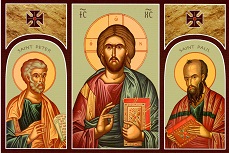
Martin Luther’s Sermon on Christ’s Descent into Hell

Third Sermon for Easter Day, Torgau, 1533

by Martin Luther
translated by Paul A. Rydecki, 2023, from the Weimar edition, vol. 37
(referenced in the Formula of Concord, Article IX: On Christ’s Descent into Hell)

Since we have now buried the Lord Christ and heard how He was cut off from this life, we must also raise Him up again and celebrate Easter Day, when He stepped into another life, a new life in which He can no longer die and where He has become a Lord over death and all things in heaven and earth. The following article also demonstrates this in which we say:

He descended into hell. On the third day He rose again from the dead.

For before He rose and ascended into heaven, while He still lay in the grave, He also descended to hell, in order that He might also deliver us out from there who should have lain captive therein. It was for this same reason that He also had gone into death and was laid in the grave, that He might bring His own out from there. But I do not want to treat this article in a lofty or detailed manner—how it was done or what it means to go to hell. Instead, I want to stick with the simplest understanding—what the words mean, how one would describe it to children and to the simpleminded. For there have indeed been many who have tried to grasp this with reason and the five senses. But they have not succeeded or attained anything in so doing. Instead, they have only gone further astray from the faith. Therefore, the surest thing of all is this: Whoever wishes to keep from veering off the straight path, let him only stick to the words and imagine them for himself in a simple way, as best he can.

Thus also one finds it often painted on the walls, how He descended with a choir cape and with a banner in His hand. He comes before hell and strikes and slays the devil with the banner. He storms hell and brings out His own. This is also how they depict it when they put on a drama for the children on Easter Eve. It pleases me greatly when they depict Christ’s descent in this way for the simple—whether they play or sing or recite. We should let it remain just this simple and not trouble ourselves so much with high and lofty thoughts about how it might have taken place, since, indeed, it did not happen bodily, as Christ surely remained in the grave for the three days.

For even though one would wish to offer his own strong and detailed opinion about it—even as some teachers have debated whether He personally and actually descended according to the soul, or only through His might and power—it is, nevertheless, not something to be grasped or fathomed with our thoughts, and not even these teachers themselves have understood it. For the idea that I should explain with words or grasp with the five senses how something that is very far above and beyond this life actually occurs—I will gladly leave it alone. Indeed, if I cannot grasp all that pertains to this life (for example, what Christ experienced in the Garden in mind and spirit when He sweat blood), but must let it remain a matter of Word and faith, then much less will I be able to grasp with words or thoughts how He descended into hell. But, since we must, indeed, picture for ourselves that which the words depict for us, being unable to consider or understand any of it without such pictures, therefore it is good and right that one should, according to the Word, consider the matter just as it is often depicted, that Christ descended with His banner to break open and to destroy the gates of hell, and we should leave the high and incomprehensible thoughts behind.

For such a picture demonstrates well the power and use of this article. This is why the article exists and is preached and believed, to show how Christ has destroyed the power of hell and has taken away from the devil all his might. If I grasp that, I have the proper knowledge and understanding of it and shouldn’t investigate or speculate further how it happened or how it is possible, even as in other articles such speculation and mastery of reason is forbidden and is also unable to obtain anything. Otherwise, if I also wanted to be just as wise as others who like to delve deeply into these matters and who make fun of our simplicity, then I could certainly also joke around and ask what kind of banner He had, whether it was made of cloth or paper, and how it happened that it was not burned up in hell. Likewise, what kind of door and bars hell has, etc., and thus I could mock the Christians, as the heathen do, as if they were the greatest fools for believing such things. That is, indeed, a wicked, frivolous art in which anyone could engage, even a pig or a cow. In the same way, I could also masterfully extract allegories out of it and explain what the banner and staff is, or what the cloth and the door of hell stand for.

For, praise God, we are surely not so crude as to believe or assert that it took place in such a bodily manner, with outward show or with banners made of wood and cloth, or that hell is a building made of wood or iron. But we leave such questions, speculations and explanations at home and speak about it simply, so that one may grasp with such crude pictures what this article teaches, even as the doctrine concerning divine matters is presented in other matters through crude, outward pictures, as Christ Himself, throughout the Gospels, reveals to the people the mystery of the kingdom of heaven through visible images and parables, or as one depicts the baby Jesus treading on the head of the serpent, and as Moses depicts Him to the Jews in the wilderness through the bronze serpent. John the Baptist likewise depicts Him as a lamb when he calls Him “the Lamb of God.” For such images are quite clear and bright, enabling us to grasp and to focus on a single thing, and, what is more, they are lovely and comforting, and they serve this good purpose, even if they served no other, that they cause us to beware of the devil with his perilous darts and temptations, who wants to lead us astray from the Word with lofty thoughts, so that we climb around and speculate in the lofty articles until he finally destroys us.

And surely this is also what has come down to us from the ancient fathers as they spoke and sang about this article, as even now the old hymns ring out and we sing on Easter Day: “He who shattered hell and bound the rotten devil therein, etc.” For when a child or a simple person hears such things, he thinks of nothing else but that Christ has defeated the devil and taken all his power away from him. That is proper Christian thinking. It gets at the truth and the meaning of this article, even though it is not a precise manner of speaking and does not spell out how it happened. But so what? If it doesn’t corrupt my faith and it highlights the proper understanding clearly enough, then I can and should hold onto it. And even if I sought long and hard after greater precision, I would, nevertheless, be unable to grasp it, but would much sooner lose the proper understanding, if I were not very careful to hold fast to the Word. Indeed, one must depict things for the people in as simple and as childlike a manner as possible, or else one of two things will happen. Either they will learn and understand nothing, or, if they also want to be wise and get carried away with their reason into lofty thoughts, then they will surely wander away from the faith.

I say this, because I see that the world now wants to be wise in the name of the devil and to master the articles of faith and fathom everything according to its own way of thinking. Thus here, when it hears that Christ descended to hell, it immediately goes off and wants to speculate how it occurred, and it asks all sorts of wild and useless questions, whether only His soul descended, or whether His divinity went with it. Likewise, what exactly He did there, and how He dealt with the devil, and many such things about which they cannot possibly know anything at all. But we should let such trivial questions go and very simply attach and bind our heart and thoughts to the word of the Creed, which says: “I believe in the Lord Christ, God’s Son, who died, was buried, and descended into hell.” That is, I believe in the whole person, God and man, undivided with body and soul, born of the virgin, who suffered, died and was buried. Thus here also I should not divide anything, but should believe and say that the same Christ, God and man in one person, went to hell, but did not remain there. As Psalm 16 says of Him: “You will not abandon My soul in hell nor allow Your Holy One to see decay.” But it means “soul” according to the Scriptural use, not as we speak of it as a distinct entity from the body; it means the whole man, even as He is called “the Holy One of God.”

But how this may have happened that the man lay there in the grave and yet went to hell, that we should and must leave unfathomed and not understood. For it certainly did not happen in a bodily or comprehensible way, although one must depict it and think of it crudely and in a bodily way and thus refer to it by way of analogy, as when a mighty hero or giant enters a fortified castle with his army and his flag and his weapons and breaks it down and takes his enemy and binds him, etc. Therefore, simply say this, if someone asks you about this article: “How it took place, that I certainly don’t know, nor will I think too much about it, nor can I explain it. But I can surely paint a crude picture for you and capture it in an analogy, to speak clearly about these hidden things. Christ went and took his banner as a conquering hero and flung the door wide open with it and caused such an uproar among the devils that this one over here fell out through a window, and that one over there fell out through a hole.”

Then you come along, you untimely smart-aleck, with your toxic wisdom and mock: “Is that right? Do I hear correctly that hell has a wooden door built by a carpenter? How is it that it has stood for so long and not burned down, etc.?” Answer: Long before your wisdom was born, I was well aware of this and never pretended to teach that hell is made of wood and stone, or that it has such doors and windows, towers and bars, like a house or a castle on earth, or that He destroyed it with a banner made of cloth. I, too, praise God, can surely speak of it as accurately as any such smart-aleck, and, in addition, I can easily explain such pictures and symbols and describe exactly what they mean. But I would rather remain with a childlike understanding and use simple, clear words that depict this article for me well enough, rather than go around in lofty thoughts with those who do not understand it themselves and whom the devil leads astray from the path. For such a picture cannot harm me nor lead me astray, but serves and helps me to grasp and preserve this article even better. And the understanding remains pure and uncorrupted (God grant that the gates, door, and banner should have been made of wood or iron or of nothing at all), as we, indeed, must grasp everything that we are unfamiliar with through pictures, whether they are a bit imprecise or whether it is, in fact, just as one depicts it. Thus I also believe here that Christ Himself personally broke into hell and bound the devil, whether the banners, gates, door and chains are made of wood, iron, or of nothing at all. It matters nothing at all, as long as I grasp that which is demonstrated through this picture, what I should believe about Christ, which is the main point, use and power which we have from this, that neither hell nor devil can take or harm me and all who believe in Him.

Let that now be said in the simplest possible way about this article, so that one holds to the words and remains with this main point, that hell has been torn apart for us through Christ, and that the devil’s kingdom and power have been destroyed, which is why Christ died, was buried, and descended, so that they should no longer harm us or subdue us, as He Himself says in Matthew 16:18. For although hell remains hell, per se, and holds the unbelievers prisoner—as also death, sin, and all misfortune—so that they must remain and perish therein; and although it still terrifies and threatens us, too, according to the flesh and the outward man, so that we must be smiting and biting; nevertheless, all of that, in faith and spirit, is destroyed and torn apart, so that it can no longer harm us at all.

All of that has been accomplished by this one Man, in that our Lord Christ descended into hell. Otherwise, the whole world, with all its powers, would not have been able to rescue anyone from the devil’s bonds or remove the torment and power of hell for a single sin, even if all the saints had gone to hell for the sins of a single man. But everyone—as many as have come onto the earth—would have had to remain there eternally, if the Holy One, the Son of the almighty God, had not descended there with His own person and mightily conquered and destroyed it through His divine power. For no Carthusian cowl, nor Barefoot’s cincture, nor the holiness of all the monks, nor the might and power of the whole world could blow out a single spark of hellfire. But this is what does it, that this Man Himself comes down with His banner. Now all the devils must run away and flee from Him, for He is death to them and poison to them, and all of hell, with its fire, is extinguished before Him, so that no Christian has to be afraid of it anymore. And even if a Christian went to hell, he should no longer suffer its torment, just as he also does not taste death through Christ, but through death and hell he comes to eternal life.

But our Lord Christ has not left it at that, that He died and descended into hell, (for that would not yet have helped us in the end), but He also left death and hell again, brought life back again and opened heaven wide and thus publicly demonstrated His victory and triumph over death, the devil, and hell, that He, according to this article, rose again from the dead on the third day. That is the goal and the best thing about all of it, in which we have everything. For in this truth lies all authority, power, and might in heaven and earth. For by rising from the dead, Christ has become a mighty Lord over death and everything that has the power of death or that serves death, so that it can no longer consume or hold Him. Sin can no longer fall upon Him or drive Him to death. The devil can no longer bring a complaint against Him, nor can the world or any creature trouble Him or harm Him. None of these things can do anything against us any longer, for they serve death and hell as their officers and henchmen, who drive us to death and hand us over to it. But He who has escaped from death and its bonds, so that it can no longer hold Him or trap Him—He has also escaped for all the others and is a Lord over the world, devil, hangman’s rope, sword, fire, gallows, and all afflictions, so that He can well stand against it and confront it.

Once again, this boast now belongs to the Lord Christ alone. For He has accomplished it through His almighty, divine power. But not for Himself; He did it for us poor, miserable people who otherwise would have had to be eternal captives of death and the devil. For prior to this, He, for His own part, certainly did not have to die or go to hell. But since He clothed Himself in our flesh and blood and assumed all our sin, punishment, and misfortune, He also had to help us out of these things by coming back to life and becoming a Lord of death, even in a bodily way and according to His human nature, in order that we, too, might also finally come out of death and all misfortune in Him and through Him. Therefore He is called in Scripture the “firstborn from the dead,” as the One who forged the path for us and has gone before us to eternal life, so that we, through His resurrection, may also prevail and thus achieve a glorious victory over death and hell, that we, who were once their prisoners, might not only be redeemed, but also conquer and become lords, through faith, by which we are clothed in His resurrection and thus, by the same token, should also bodily and certainly rise and be exalted, so that all things must finally lie under our feet.

Here a strong faith belongs, which makes this article strong and good and writes this saying upon the heart in large letters, “Christ is arisen,” making this phrase as big as heaven and earth, so that faith sees, hears, thinks, and knows nothing else but this article, as if nothing else were written in the whole creation. Faith should have the kind of image upon which it can focus entirely and live only on this article, as St. Paul is wont to say, as a master painter painting this article, always having both heart and mouth full of it: “Christ is arisen!” He lays it out over and over again with such simple words. To the Ephesians in chapter 2: “He has made us alive together with Christ and has raised us together with Him and has seated us together with Him in the heavenly places.” Likewise in Galatians 2: “I no longer live, but Christ lives in me.” And to the Romans, chapter 8: “Who will bring a charge against God’s elect? It is God who justifies. Who will condemn? It is Christ who has died, yes, much more, who has risen from the dead, etc.”

If we would only believe this, we would live and die well. For such faith would teach us splendidly that Christ did not only rise for His own person, but that we are linked together in such a way that His resurrection avails for us, and that we, too, stand and are included in that cry, “He is risen!” Yes, we would understand that, on account of or through His resurrection, we, too, must rise and live with Him forever, that our resurrection to eternal life has already begun in Christ (as St. Paul also says), and is so certain that it is as if it had already happened, although it is still hidden from us and unseen. From now on we should focus so sharply on this article that every other sight, compared to it, is as nothing, as if you saw nothing else in all heaven and earth, so that, when you see a Christian die and be buried, seeing nothing but a corpse lying there, observing nothing but death with both eyes and ears, you, nevertheless, perceive through faith another image in place of that image of death, as if you saw no grave and no death at all, but only life, and a beautiful, delightful garden, or a green meadow, and in it, nothing but a man who is made new, alive, and happy.

For, if it is true that Christ is risen from the dead, then we have already received the best portion and the most important part with regard to the resurrection, such that the bodily resurrection of the flesh from the grave (which is still to come) is counted as a small thing compared to this. For what are we and the whole world compared to Christ our Head? We are like a drop compared to the ocean or a piece of dust compared to a great mountain! Since Christ, the Head of all Christians, through whom they live and possess all things, who is so immense that He fills heaven and earth, is risen from the grave and has thereby become a mighty Lord over all things, even over death and hell, as we have heard, then we, too, as His members, must be affected and touched by His resurrection. Yes, we must even be made partakers of that which He has accomplished, since it was done for our sake. And even as He, through His resurrection, has taken everything along with Him, so that heaven and earth, sun and moon must be made new, so will He also take us along with Him, as St. Paul says in 1 Thessalonians 4 and Romans 8. The same God who raised up Christ from the dead, will also give life to our mortal bodies, and all creation with us, which is now subjected to vanity and sighs anxiously for our glorification, and which should also be glorified and freed from this fleeting existence, in such a way that we already have more than half of our resurrection, since the Head and Heart is already above. All that remains to be done is the smallest part, that the body be buried in the ground, so that it, too, may be made new. For where the Head is, there must the body also follow after, as we see in all creatures when they are born into this life.

Half of this, too, has already taken place—indeed, much more than half—namely, that through Baptism, by faith, we are already risen spiritually, that is, according to the best part of us. And thus not only has the best part of all taken place in a bodily way in that our Head has ascended to heaven from the grave, but also, in a spiritual way, our soul has already received its part, being in heaven with Christ (as St. Paul likes to say). Now only the husks and shells or shards remain here below, but they must also be taken up afterwards on account of the Head or the Chief Part. For this body is, as St. Paul says, only a tent for the soul, like something made of earth or clay, and a worn-out garment or an old, shabby coat. But since the soul is already alive, through faith, with a new, eternal, heavenly life and cannot die or be buried, the only thing we still need to wait for is for this poor tent, this old coat, to be made new, so that it can no longer perish, since the best part is above and cannot leave us behind. And just as He who is called the Resurrection has left death and grave, so must he who says “I believe” and who clings to Him also follow afterward. For this is why He has gone ahead of us, so that we should follow after Him. Indeed, this has already begun, for we daily arise in Him through the Word and Baptism.

See, we should learn to become accustomed to such thoughts of faith over against the outward, physical appearance of the flesh which places nothing but death before our eyes and would terrify us with that image and place the article of the resurrection in doubt again. For it gives great offense when a person allows his reason, with its thoughts, to dwell on what the eyes see without drawing the Word into the heart to counteract it. For in that case a person can think about nothing but death, since all he sees is the body lying there, miserable and wretched. For rotting corpses smell so bad that no one on earth can stomach it; there is no remedy but to burn it up or to bury it underground, as deep as possible.

But when you grasp the Word by faith, your vision changes. You are enabled to see through this death into the resurrection. You capture only thoughts and images of life. This in itself is a part of the resurrection and the beginning of the new life, which also creates new thoughts and new senses, which no one could have who had not already died by faith and laid hold of the resurrection, and thus also dragged the outer man along, that he should think and live accordingly. Therefore he can conclude and speak thus against all human nature and thoughts: “If I want to judge according to reason, according to what I see and understand, then I am lost. But I have a higher understanding than what the eyes see and the senses feel, an understanding that faith has taught me. For there stands the text. It says, ‘He is risen!’—and not for Himself, but for our sake. It says that His resurrection is ours and that we will also rise with Him and not remain in death and the grave, but that in our bodies also we will celebrate an eternal Easter with Him.”

For watch what the farmer does. He sows the seed in his field and casts it into the earth where it must decompose and perish. It appears as though it were lost, nor does he give it any thought, as if it were unimportant. Indeed, he forgets where the seed fell. He does not ask after it how it is doing, whether the worms have eaten it or whether it perishes in some other way. No, he goes forward thinking only about how, at Easter time, or by Pentecost, beautiful stalks will have sprung up, bearing many more crops and seeds than he had originally sown. Now, if someone who is unfamiliar with how seeds grow were to see this, he would surely say to the farmer: “What are you doing, you fool? Are you out of your mind, burying your seed so carelessly in the ground, where it must surely rot and decay and thus be of no use to anyone?” But if you ask him, he will give you a much different answer, saying: “Dear friend, I knew very well, before you did, that I should not throw away my seed in vain. But I do not do it in order that it should be lost forever. I do it so that, as it decays in the ground, it may take on another form and bring forth much fruit.” This is how everyone thinks who sees or does such a thing. For we do not judge according to what we see with our eyes, but from the fact that we have seen and experienced God’s work year after year, and still we cannot know or understand how it happens. Much less are we able, with our power, to bring forth even a tiny stalk from the earth.

If this is what we must do in this earthly life, much more should we learn it in this article of faith (which we are much less able to grasp or understand), since we have God’s Word, as well as the experience that Christ is risen from the dead. We do not judge according to what we see with our eyes as our body is buried, burned, or otherwise committed to the ground. No, we let God do the work and take care of what should come out of it. For if we were to see it at once with our eyes, then we would have no need of faith, and God would have no room to demonstrate His wisdom and power, which surpass our wisdom and understanding. Therefore it is called the skill and wisdom of Christians, in times of weeping and mourning, to be able to produce comforting and joyful thoughts of life, to consider that God allows us to be buried and to decay in the ground for the winter, in order that we may come forth again in the summer even lovelier than the sun, as if the grave were not a grave at all, but a lovely flower garden in which beautiful cloves and roses are planted which are to sprout and bloom in the summertime, just as the tomb of the Lord Christ had to be emptied and never smelled of death, but rather became something lovely, glorious, and beautiful.

This is also how the beloved martyrs and virgins spoke and thought when they were taken away to prison and to death, as we read about Saint Agatha that she allowed herself to imagine that she was going to a dance, and all the torture and suffering with which they were threatening her she viewed as someone inviting her to a ball where she could dance. Similar things are written about Saint Vincent and others, that they went to their death with joy and laughter, holding their judges and executioners in derision. For they looked forward to the resurrection with more certainty than any farmer looks forward to the harvest of his field, and they clung to it so tightly that they considered the executioner, death, and the devil as ridiculous when compared to it.

Let us learn this lesson, too, so that we may engrave this article on our hearts and thus be able to comfort ourselves with it and boast in it whenever the devil sharpens his skewer against us and threatens us with death and hell. For, as we have said, since our Head, upon whom everything depends, is risen and lives, and since we are baptized into Him, we have already received far more than half of the victory that is ours. All that remains is a small little piece, namely, that we must finally allow this old skin to be removed, so that it, too, may be made new. For since we already have practically the whole inheritance, the husks and shells must certainly also come after it.

Let this suffice for today’s sermon about our Lord Jesus Christ on this article, that we may see how all the wisdom and skill that a Christian should know are summarized and included in this article—a lofty wisdom which transcends all wisdom and skill, but which was not invented on earth, nor did it grow up out of our heads. No, this wisdom was revealed from heaven and is called a divine, spiritual wisdom, the kind (as St. Paul says) that lies shrouded in mystery. For human reason cannot obtain the smallest part of it by itself, nor could it grasp it or understand it even if it were laid out for it. On the contrary, reason does the opposite. It takes offense at such teaching and considers it pure foolishness. Yes, God, with His Word, must be a fool, in reason’s eyes, and a liar, too. And what He says and teaches must all be condemned; it must be labeled the most wicked heresy and deception that comes from the devil, as we ourselves are experiencing at the moment and are forced to suffer at the hands of our own people, although we teach nothing but this text, which they themselves sing and speak with us every day. Indeed, we are scolded by them as heretics for no other reason than that we so clearly and powerfully emphasize and herald this article about the Lord Jesus Christ, that He alone is and counts as everything that we have. He alone is the reason why we are called Christians, and we wish to know no other Lord, no other righteousness or holiness. But it gives us great comfort to know for certain that we are persecuted for no other reason on earth than on account of the Lord Christ and the faith that we have received from the apostles and that has gone out and abides in the whole world to this very day. That is our sin and our heresy in the eyes of the world, but it is our boast, our glory, and our joy before God, with all the saints since Christianity began. Let us abide in it and learn this skill better and better each day, for all our wisdom, well-being, and salvation rests in it. Where this article remains, there remains everything of which we are certain. There we have a rightly formed judgment, so that we can speak about all other doctrines and life. On the other hand, if this article is absent or comes to ruin, then all our salvation and comfort and wisdom come to ruin, so that no one can any longer think or judge rightly concerning doctrine or life. May God help us in this matter, through His beloved Son, Jesus Christ, our Lord, to whom be praise forever and ever. Amen.

Posted in Sermons | Tagged , | Comments Off on Martin Luther’s Sermon on Christ’s Descent into Hell

You can handle not seeing Jesus, for a little while

Sermon
Download Sermon

Service
[vimeo https://vimeo.com/822554065 w=540&h=360]
Download Service Download Bulletin

Sermon for Easter 3

1 Peter 2:11-20  +  John 16:16-23

A little while, and you will not see me. And again, a little while, and you will see me, because I am going to the Father.” That saying of Jesus confused His disciples greatly at the time, but it would all begin to make sense within just a few days. He spoke those words on Maundy Thursday evening, before they arrived at the Garden of Gethsemane, and sure enough, in a little while, in just a couple of hours, He would be arrested and they would flee from Him. Within less than 24 hours, they would see Him crucified, dead, and buried, and then they wouldn’t see Him at all until the evening of Easter Sunday. They were sorrowful and sad for that little while, and the world rejoiced that they didn’t have to see Jesus anymore. But then all the disciples’ sorrow was washed away in a moment when they saw Jesus again, alive.

But is that what He was talking about? It was surely part of it. But His saying, because I am going to the Father, indicates a different little while of not seeing Him. Jesus told Mary Magdalene after His resurrection that He had not yet ascended to the Father. When He did, His disciples wouldn’t see Him “for a little while”—until their earthly lives ended, just a little while from God’s perspective, when it’s eternity on the other side. But because Jesus would die and rise again and go to the Father to reign over all things for the good of His Church, they would see Him again, in glory, “soon.”

That’s fine for the disciples. But what about us? Do these words have any meaning for us who have never seen Jesus, even for a little while, and who won’t see Him until our earthly life comes to an end? Of course they do! Because the promise is for all who believe in Him. As He prayed in the next chapter of John’s Gospel, Father, I desire that they also whom You gave Me may be with Me where I am. And because that’s true, you can handle not seeing Jesus, for a little while.

That first little while of not seeing Jesus was literally a little while for the disciples, then literally a little while before they saw Him again. It would be nice if it were literally just a little while before we could see Jesus. But then, think about the reason why the disciples didn’t see Jesus. They didn’t see Him, because He was literally dead. Crucified, dead, and buried. Be thankful you’ve never known a time, not even a little while, when Jesus was literally dead. Since the moment you were born, the One who gave His life for you on the cross has been alive, the whole time. Alive and ruling over all things. There has never been even a little while in your life when the Lord of life was lying dead in a tomb.

You never had to experience that little while of not seeing Jesus, the little while when He was literally dead. But you may have experienced a little while in your life when you thought He was dead, when you didn’t believe in the living Lord Jesus. Even on that first Easter, between the morning when Jesus rose from the dead and the evening when He appeared to His disciples, He wasn’t dead any longer, but they were still sorrowful, because they still thought He was dead.

If you had to deal with your own sins and bad behavior and self-absorption, you would be sorrowful, too. You’ve messed up, in God’s sight. You’ve been messing up on the inside since the moment you were born, and it quickly moved to the outside. You know that your flesh, your old man, still doubts God, still doesn’t want to be under His rule, still focuses on serving himself. To live with the holy God, you have to be holy like God, not just a “good person” or a “decent person,” but a holy person. And you aren’t that. Without an advocate, with a mediator to make your case before God, you have no hope, only sorrow.

There was a time in your life, even if you were too little to remember it, when you were in that position, without an advocate before God, without a mediator. But then you learned that God has, in fact, provided a mediator for every sinner. You learned that the Mediator was crucified for your sins, and you learned that He was raised from the dead, that you can rely on Him to make your case before God, based on His own record of goodness and holiness. And so you began to use the living Christ as your Mediator before God. You began to trust in Him as your Redeemer from sin. And the sorrow that came with guilt, the sorrow that came with despair was replaced with joy. You didn’t see Jesus for a little while, before you heard and believed the Gospel. But when you heard it and believed it, every time you hear it and believe it, sorrow gives way to joy in the living Christ.

Still, we don’t see Jesus now, and we won’t see Him until the day of our death, or until the day He comes again. And that’s hard. It gets harder by the day, because we have entered an age in which so-called science rules all, and the vast majority of people around us don’t even bother with religion anymore. It’s easier than you might think for Christians to be affected by that mindset of “seeing is believing,” especially when what we see is a world that hates Jesus (even without seeing Him) and that hates Christians, and that hatred is becoming more and more open as people move closer and closer to their G/god.

For unbelievers, that means moving closer to the devil, the father of lies, the first hater to ever exist. He rules by deception, fear, chaos, mockery, timidity, anger, selfishness, and lawlessness. He wants people to lie, to deceive, and to hate other people, and he rewards people with a twisted kind of joy in showing hatred. You can see that if you watch the behavior of unbelievers. As Jesus told His disciples, Truly, truly, I tell you, you will weep and lament, but the world will rejoice. The world rejoices that Jesus is gone, that the Christian religion seems to be dying out, that they don’t have to talk about God anymore, that they can do whatever delights them, whatever pleases them, without cost and without consequence.

But Christians during this time also draw closer and closer to our God. We take refuge more and more in the risen Lord Jesus and find joy and peace in knowing that, even though we can’t see Him now, we will see Him soon, in a little while, when He comes to rescue us from this evil world. And even the reason we don’t see Him now gives us comfort: we don’t see Him now because he’s ruling as King at the right hand of God. He rules by truth, boldness, peace, kindness, courage, wisdom, justice, and love. And even though we don’t see those things flourishing in the world, we pray that they may flourish in us and among us, even as we believe in the One who rules by those things. And when we trust in Him and when we strive to live like Him, we win. We overcome the world and its master, the devil, through faith in the Lord whom we don’t see now, but will see in a little while.

Peter has some advice for Christians while we wait to see Jesus. As the world pursues fleshly lusts more and more, Peter says, abstain from fleshly lusts. As the world behaves badly, Peter says, behave well among the Gentiles, so that, when they speak against you as evildoers, they may see your good works and glorify God on the day of visitation. Notice, Peter doesn’t expect unbelievers to praise God for the good works of Christians during this life. Now they will speak against you as evildoers. But on the day of visitation, when Jesus returns, they will have to begrudgingly acknowledge before God that His people did good, not evil.

Of course, that means, as Peter also points out, that we need to be especially careful not to do evil, but to do good. Don’t give people another reason to hate God, because the people of God behave so badly, behave just like the children of the devil. Even if unbelievers stoke the fires of hatred and violence, don’t behave as the devil’s children do, with rage and anger and gnashing of teeth, but as God’s children who know that, as Peter said, it is commendable if a person, for the sake of conscience toward God, endures grief when suffering wrongfully.

You can handle all this, because none of this will last more than a little while (relatively speaking). Then we will see Jesus again, and the world’s dreams of becoming their own god will vanish in an instant, and we will have all eternity to live in total peace and safety, and in the presence of the One who loved us and gave Himself for us, seeing Him with our own eyes. You have sorrow now, Jesus says. But I will see you again, and your heart will rejoice, and no one will take your joy away from you. Remember that Jesus rose from the dead. Remember that He reigns on His throne. Remember that He’s coming again, that you may be with Him where He is. And when you remember, rejoice! Amen.


Posted in Sermons | Tagged , , , | Comments Off on You can handle not seeing Jesus, for a little while

Smoke and locusts from the abysss

Sermon
Download Sermon

Service
[vimeo https://vimeo.com/822192540 w=540&h=360]
Download Service Download Bulletin

Sermon for Midweek of Easter 2

Revelation 9:1-12

Let’s spend a moment reviewing the outline of Revelation. There are seven series of visions, with each series of visions essentially covering the entire New Testament period, offering different details and focusing on different things. The first series of visions was the seven letters to the seven churches, offering divine counsel to all God’s churches on earth until Christ comes again. The second series of visions was the vision of the seven seals, which taught us that the Gospel will go on, as did the rider on the white horse, even in the midst of all kinds of wars and famines and tribulations, during which time the elect are kept safe both on earth and in heaven.

We began last week looking at the third series of visions, the vision of the seven trumpets. After the first four trumpets sounded, we saw a third of all sources of life on earth damaged: the vegetation, the seas, the springs of drinking water, and the sun, moon, and stars. And it seems clear that the trumpets should be interpreted as signaling, not the destruction of natural sources of life, but of spiritual sources of life: the corruption of the Word of God and of the witness of the Church through various false doctrines and heresies.

This evening we’re going to focus on the sounding of the fifth trumpet and the events that followed.

The trumpet sounds, and a star falls from heaven to earth. But it’s not really a star at all. It’s a person or a personality. He is given the key to the bottomless pit, otherwise known as “the abyss.” The abyss is clearly a symbol of hell. And this key to the abyss isn’t to lock people in or let people out. It’s to let out this billow of smoke that darkened the sun and the air, and the grotesque swarm of locusts that came out of the smoke.

Who is the star? A few verses later he’s called the angel (or messenger) of the abyss, whose name in Hebrew is Abaddon, but in Greek he has the name Apollyon. (Those Hebrew and Greek words each mean “Destroyer” or “the one who brings ruin.”) And he serves as king over the locusts that came out of the abyss. There are two main interpretations of this star. It’s either Satan himself, or it’s Satan’s servant, the Antichrist.

Let’s look at a few pieces of evidence pointing to Satan as the star that fell from heaven to earth, as the angel of the abyss. Jesus once said, “I saw Satan fall like lightning from heaven.” There are also references in the apocryphal book of Enoch and possibly a reference from the book of Isaiah talking about the fallen angels as stars that fell from heaven. In chapter 12, which begins the fourth series of visions, the Devil is clearly identified as the fiery dragon whose tail drew a third of the “stars” of heaven to earth, and who himself was cast out of heaven to the earth, together with his angels. So this star or angel with the key to let the smoke and locusts out of the abyss could be Satan.

Or it could be the primary servant of Satan who works within the boundaries of the Christian Church on earth, namely, the Antichrist. In the first series of visions, stars represented the “angels” or the pastors of the seven churches. A star can signify a notable teacher in the Church, or a notable institution of teachers in the Church that started out “in heaven,” that is, teaching the truth of God, but eventually “fell to earth,” that is, moved away from the truth of God. This angel is called Destroyer. And in 2 Thessalonians 2, St. Paul calls the Antichrist the “son of destruction.” Historically, we have identified the Roman papacy as the Antichrist. The first bishops of Rome were good. But over the first six centuries of the Church, the bishop of Rome grew in power and influence until he became the primary teacher in the Church, not of the truth, but of error. In the next series of visions beginning in chapter 12, the devil is cast down to earth in the beginning of the series, but then the Antichrist shows up later in the visions, as this “star that fell from heaven” shows up later here, in the vision of the seven trumpets.

I favor the interpretation of this as the Antichrist. But in either case, it’s someone (or someone representing a corrupt institution within the Church) who releases false teaching into the world.

That false teaching is represented first, with smoke coming up from the abyss—smoke that obscures the light of the sun and darkens the air, making it hard to see. That’s what false teaching does. It makes it hard to see the truth of God’s Word. It makes it hard to see what’s truly good, right, salutary. It makes it hard to see clearly who Jesus is and what His will is for His people. Is it hard to find the truth of the Gospel today? You bet it is! Why? Because so much smoke has gone up from hell, making the truth hard to see and hard to find.

Smoke, and also demonic locusts. Now, in the past, God has used real swarms of locusts to plague His enemies. He did it in Egypt. He did it again at the time of the prophet Joel to the people of Israel who had turned away from God to idols. But the locusts in this vision aren’t bugs at all. You can tell that from how they’re described and from the fact that they don’t attack vegetation at all. To them was given power, as the scorpions of the earth have power. They were commanded not to harm the grass of the earth, or any green thing, or any tree, but only those men who do not have the seal of God on their foreheads. So these “locusts” don’t attack the crops. They attack people, and not all people, but only those who are not marked with God’s seal, that is, those who are not the elect children of God. They’re attacking unbelievers, or those who believe for a time, but in the hour of testing, fall away.

And they were not given authority to kill them, but to torment them for five months. Their torment was like the torment of a scorpion when it strikes a man. In those days men will seek death and will not find it; they will desire to die, and death will flee from them. The locusts bring, not death, but torment. Sharp, stinging torment, like a scorpion sting, except these locusts aren’t stinging the body; they’re stinging the soul, to the point that people want to die to escape this torment, not realizing, of course, that death doesn’t end any torment for the unbeliever.

Hear again the description of these locusts: The shape of the locusts was like horses prepared for battle. On their heads were crowns of something like gold, and their faces were like the faces of men. They had hair like women’s hair, and their teeth were like lions’ teeth. And they had breastplates like breastplates of iron, and the sound of their wings was like the sound of chariots with many horses running into battle. They had tails like scorpions, and there were stings in their tails. What can we make of this strange, impossible description? They’re like war horses, determined to race to battle and attack. They have crowns made of something like gold—they appear to be victorious and glorious, but their glory is a sham. Men’s faces, women’s hair—they don’t look entirely like monsters. There is something innocent-looking, harmless-looking about them, until they open their mouths and you see their teeth like lions’ teeth. Breastplates of iron mean they’re not able to be killed. Tails like scorpions mean they don’t only attack from the front, with the mouth, with their doctrine, but also from the back, with their poisonous practices.

The locusts represent heretical teachings and practices sponsored by demons and governed by hell. There’s a whole swarm of them, attacking all who fail to hold firmly to the Word of Christ and to faith in Christ.

Shall we list some of the heresies that sprang forth from the Roman papacy and that attacked people’s souls and consciences? Purgatory, indulgences, prayers to the saints, the pope as infallible, the pope as the head of all Christians, tradition over Scripture, tradition as necessary for Christians to follow, the sacrifice of the Mass, the inequality and hierarchy among ministers, abusive behavior by the ministers, Communion in only one kind, pilgrimages, relics, apparitions of the supposed Virgin Mary, believers being told to doubt their salvation, justification by faith + works. We could go on. For those who have been led away from God’s Word to believe in such things—it’s a constant tormenting of the conscience.

But the locusts were only give power to hurt men for five months. That’s the usual lifespan of a locust, apparently. It’s also half of ten, so, maybe, not the whole time of the New Testament period. We could suggest that the time of the Antichrist’s real and almost-universal hold on people came to an end at the time of the Reformation when the Roman lies were exposed with the light of Scripture, although the false doctrines of Rome are certainly still around today. And any number have come along since.

In any case, this is one of the three great “woes” that God said would come upon those who did not receive the love of the truth, as St. Paul says in 2 Thess. 2. And we still see the fallout of it today.

For as hard as some of these images are to interpret, the message for us in our time is really very simple. It’s no different from what Jesus told His disciples plainly: Beware of false prophets, who come to you in sheep’s clothing, but inwardly they are ravenous wolves… He who endures to the end shall be saved. Take your Christian faith and life seriously. Take God’s Word seriously. Know that the devil will try to obscure God’s Word and poison people’s minds with false doctrine, and he will do major damage in the world. See all the many denominations and all the false teachings within Christianity, not as a sign that the Word of Christ is unclear, but as a sign that the devil is doing with it exactly what Jesus said he would do with it. And pray that the merciful Lord will keep you safe from the smoke, safe from the locusts, and able to see His truth clearly. He won’t abandon you in that endeavor. You have His Spirit. You have His promise. And you have the protection of your Good Shepherd to keep you safe from the wolf—and from the locust—who seeks to destroy you. Amen.

Posted in Sermons | Tagged , | Comments Off on Smoke and locusts from the abysss

The Good Shepherd as Savior and example

Sermon
Download Sermon

Service
[vimeo https://vimeo.com/820311073 w=540&h=360]
Download Service Download Bulletin

Sermon for Easter 2 – Misericordias Domini

1 Peter 2:21-25  +  John 10:11-16

If you follow the daily devotions our ministerium has been publishing, this last week you read the account from the last chapter of John’s Gospel, how Jesus took Peter aside and commended His sheep to Peter’s care (and not to Peter alone, but to all who hold the office of “pastor” or minister in Christ’s Church). “Feed My lambs. Tend My sheep. Feed My sheep.” Those words and that imagery would make little sense if it weren’t for the words Jesus spoke in today’s Gospel and in the larger context of John chapter 10, known as the Good Shepherd Chapter.

In the verses before our Gospel begins, Jesus began teaching the Jews about who He was and why He had come using the imagery of sheep and shepherd, which, of course, should have been familiar to them, because the Old Testament used that imagery often. There’s the famous Psalm 23. The LORD (Yahweh) is my Shepherd, who makes me to lie down in green pastures and leads me beside the still waters. And there are other Psalms where the Lord God is called the shepherd of His people Israel, who are called “His flock.”

On the other hand, the prophets also compared the false prophets and the wicked leaders of Israel to bad shepherds who only looked out for themselves and not for the sheep: His watchmen are blind, They are all ignorant…they are shepherds Who cannot understand; They all look to their own way, Every one for his own gain…. Son of man, prophesy against the shepherds of Israel, prophesy and say to them, ‘Thus says the Lord GOD to the shepherds: “Woe to the shepherds of Israel who feed themselves! Should not the shepherds feed the flocks?”

And finally, there were the Old Testament passages that promised that the Messiah would come as a shepherd: Behold, the Lord GOD shall come with a strong hand, And His arm shall rule for Him… He will feed His flock like a shepherd; He will gather the lambs with His arm, And carry them in His bosom, And gently lead those who are with young…. thus says the Lord GOD: “Indeed I Myself will search for My sheep and seek them out. As a shepherd seeks out his flock on the day he is among his scattered sheep, so will I seek out My sheep and deliver them from all the places where they were scattered on a cloudy and dark day. And I will bring them out from the peoples and gather them from the countries, and will bring them to their own land.”

That’s the backdrop against which Jesus taught in John 10, where He essentially identified Himself as the LORD God and as the promised Messiah. He is more than just the owner of the people of God. His individual knowledge of each child of God and His deep love for the people of God mirrors the knowledge and the tender care of a dedicated shepherd for his sheep’s safety and wellbeing. And the way God’s people hear the voice of Jesus and trust in Jesus implicitly mirrors the way sheep hear and trust in the shepherd who is their constant companion.

But the people didn’t understand His point, so He went on to compare Himself to the door or the gate of a sheepfold. He is the only way into God’s kingdom. No one can enter in any other way but by trusting in Him. No one can stand before God the Father but by relying on the intercession of God the Son. In Him alone is peace, safety, security, salvation, eternal life, and eternal happiness. That’s why He came, to give people that. And those who wish to receive it from Him are His sheep.

But all of that came at a cost—not a cost the sheep had to pay, but a cost the Shepherd had to pay—made it His purpose to pay! And that’s where our Gospel picks up the narrative.

“I am the good shepherd. The good shepherd lays down his life for the sheep. But the hireling, who is not the shepherd and to whom the sheep do not belong, sees the wolf coming and abandons the sheep and flees. And the wolf catches the sheep and scatters them. The hireling flees, because he is a hireling and does not care about the sheep. I am the good shepherd, and I know my sheep, and I am known by my own, as the Father knows me and I know the Father. And I lay down my life for the sheep.

What, above all, makes Jesus the Good Shepherd? It’s His willing choice to lay down His life for His sheep. Like a faithful shepherd who saw the wolf approaching and placed himself between the wolf and the sheep, knowing he would be taken down and killed, the Lord Jesus saw our sin separating us from God, and so He bore our sins in His own body on the tree of the cross, as Peter wrote in today’s Epistle. He saw death coming to swallow us up forever, and so He allowed Himself to be swallowed up by death for us. He saw the devil coming for us, and so He allowed the devil to come for Him instead.

But by bearing the penalties our sins had earned for us, He earned for us the forgiveness of sins. By allowing Himself to be swallowed up by death and then forcing death to spit Him out on the third day, He made it so that not even death can snuff out the life He has given to those who believe in Him, and the grave will have to spit us out again at the last day. By allowing the devil to strike Him down, He saved us who believe in Him from all the devil’s power to accuse us and drag us away to hell.

No one else has ever loved sinners so much. No one else has ever sacrificed so much so that sinners could be turned into children of God. There is only one Good Shepherd.

And that Shepherd has sent out shepherds of His own, pastors, to carry out the work He talked about in today’s Gospel. I have other sheep that are not of this fold. I must bring them also, and they will hear my voice; and there will be one flock and one shepherd. “I must bring them,” Jesus said. But how would Jesus bring other sheep into His fold? He would not wander the earth, speaking the Word of God to people, calling them to repentance and faith and baptism. No, as we heard St. Paul say last week, it was Christ who gave some to be apostles, some prophets, some evangelists, and some pastors and teachers.

But there have been many hirelings along the way, before the time of Christ, at the time of Christ, and after the time of Christ—many religious leaders who were supposed to watch over God’s precious flock but who compromised along the way in order to be popular among the sheep or accepted by the world, who, in some cases, mistreated the sheep in order to gratify their own sinful desires, who stopped feeding the sheep the entirety of the Word of God in order to keep their jobs, in order to avoid making people mad, in order to avoid suffering.

Ah, but suffering can’t be avoided by a shepherd who serves under Christ. A true shepherd who serves under the Good Shepherd will face opposition, both from outside the Church and from inside the visible assembly of those who call themselves the people of God, just as Jesus did. In fact, right after Jesus charged Peter with the feeding of His sheep, He warned Peter that he would face suffering and death for doing his appointed work in the name of Christ. Yes, shepherds under the Good Shepherd must be willing to suffer for Christ and for His flock. Any pastor who runs away from that suffering is just another hireling. That’s the hard truth.

But here’s the other hard truth: The sheep must be willing to suffer, too. The apostle Peter told you that in today’s Epistle. To this you were called, because Christ also suffered for us, leaving us an example, that you should follow in his steps. Follow in His steps, first, by speaking the truth at all times and living a life that is holy and devoted to God, a life of love and humility and confidence in God’s direction. Then follow in His steps by enduring the suffering that is brought on you for living such a life. That suffering may come from outside the Church or from inside the Church, from strangers or from family members and loved ones, and you have to be willing to endure it rather than speak or live contrary to the Gospel.

But following in Christ’s steps, as Peter goes on to explain, also means enduring all that suffering without bitterness, without complaining, without threatening those who cause you to suffer, and without any deceit being found in your mouth. We are in a time already when speaking and living according to the truth of Christ will get you attacked, sometimes violently. The raging mob is out for blood. The Christian can’t respond in kind. You don’t defeat the devil by imitating the devil’s tactics, by shouting down those who try to shout you down, by ridiculing those who ridicule you. You defeat the devil by walking in the footsteps of Christ, your Good Shepherd. He himself bore our sins in his own body on the tree, that we, having died to sins, should live for righteousness. By his wounds you were healed. For you were like sheep going astray. But you have now been brought back to the Shepherd and Overseer of your souls.

Stay with Christ and take comfort in His pastoral care. He died for you so that you could be in His flock for eternity. Do you think He’ll abandon you now that He’s risen from the dead? Hear the Word of Christ, your Good Shepherd and follow on the path His Word lays out for you. Follow in His steps, even through the valley of the shadow of death. He is with you. His shepherd’s rod and staff will comfort you. And as you follow Him, righteous by faith and living for righteousness, be assured that goodness and mercy will follow you all the days of your life, and you will dwell in the house of the LORD forever. Amen.

Posted in Sermons | Tagged , , | Comments Off on The Good Shepherd as Savior and example

Pray to escape the punishment of heresy

Sermon
Download Sermon

Service
[vimeo https://vimeo.com/819356150 w=540&h=360]
Download Service Download Bulletin

Sermon for Midweek of Easter 1

Revelation 8:1-13

John’s vision of the seven seals revealed the destruction that God would bring on the world in various ways leading up to the end, even as the Gospel would also be going forth, even as the believers on earth and the saints in heaven would be guarded in God’s safe-keeping. Chapter 8, before us this evening, has the seventh and final seal being opened by the Lamb, which serves as the introduction to the next vision, the vision of the seven trumpets.

Now, I’ll tell you, there’s a lot in this chapter that is hard to interpret. For the most part, we’re going to follow the interpretation of Johann Gerhard, the sound Lutheran teacher of the 17th century. His understanding fits well with the text, with the larger context of Scripture, and with the ancient commentators on Revelation whom he cites repeatedly in his commentary, but it’s far different from the modern scholars and the modern fanatics. So be it. We’ll do our best, trusting ultimately in the Lord to guide us. And since this is a sermon and not a Bible study, we’ll focus on the main points and leave the details for a different setting.

The Lamb opens the seventh seal, and there’s silence in heaven for half an hour. It seems best to view this as a “pregnant pause” as the anticipation builds for the next vision, or as a “reset,” because the vision of the seals took us all the way through the New Testament era up to the end of the world, and now we’re going back to the beginning again in the vision of the seven trumpets.

The seven angels standing before God were given seven trumpets. These don’t need to be seven literal spirit-being angels. They’re messengers in the vision, set aside for God’s sacred purpose. And that purpose is, largely, destruction. It’s depicted as destruction rained down from heaven on the trees and grass, seas and ships, streams and rivers, and the sun, moon, and stars. But only a third of all these things are destroyed, which is clearly not literally possible. It seems clear that the destruction being described in this vision isn’t done within nature, but within the Church, namely, the destruction that’s brought about by heresy, by false doctrine. Not that God is the source of false doctrine. But He does use it as a punishment against those who refuse to love the truth of His Word. That’s the understanding we’re going to work with.

Now, before the seven angels blow their trumpets, we’re told of “another angel” standing at the golden altar, like the golden altar of incense that stood in the ancient temple. He offers incense combined with the prayers of all the saints, making them all pleasing to God. Now, who is this angel, and what is this incense that makes prayers acceptable to God? I think the best interpretation is that this angel is Christ Himself, who is even at the right hand of God, who also makes intercession for us, as Paul writes. Christ is the true High Priest of the New Testament who stands before the altar of God, holding His merit, His works, His worthiness before the Father on our behalf, so that we have access to the throne of God, so that our prayers are acceptable in His sight.

Our prayers are mentioned here because they, together with Christ’s intercession, are the best stronghold against the false doctrine and resulting persecution that are about to be unleashed on the world. “Prayers prevent heresies from advancing as far as Satan attempts to sow them.”

He fills His censer with fire from the altar and then throws it on the earth. That sounds like a bad thing, but not if this fire is the fire of the Holy Spirit, whom Christ pours out on His believers starting on the Day of Pentecost in order to spread the Gospel and strengthen us in these difficult days. The noises, thunderings, lightnings, and earthquake sound scary, unless they are the thundering of the Gospel in the world, the lightning of miracles done in the first century Church, and the earthquake of the world being shaken by the Word of God as it takes hold in the world and as the Christian Church fills the earth.

But what happened shortly after the Day of Pentecost, as the apostles the Gospel far and wide? Heretics arose. False teaching, already by the time of St. Paul and surely by the time of John’s writing.

The first angel sounded: And hail and fire followed, mingled with blood, and they were thrown to the earth. And a third of the trees were burned up, and all green grass was burned up. Destruction rained down from heaven and destroyed the trees and the green grass. Some of this sounds similar to some of the ten plagues in Egypt, which brought destruction on the Egyptians while the children of Israel were kept safe. Here a third of the trees are burned up. If we’re right in identifying these calamities as heresies and the heretics who teach them, then we may be dealing, not with a single false teacher, but with certain groups of false teachers who appeared over the first few centuries, or who have appeared over and over again ever since then. Gerhard suggests certain heretics of the first and second centuries who may be represented by the hail and fire, but we won’t go into that here. The trees, then, would be prominent Christian teachers. Remember, Jesus compared prophets to trees that bear fruit, either good or bad. By their fruits you will know them. Not all teachers of the Church are wiped out by this heresy; the universal apostasy from the faith hasn’t taken place yet. But a “third” of them are.

Then the second angel sounded: And something like a great mountain burning with fire was thrown into the sea, and a third of the sea became blood. And a third of the living creatures in the sea died, and a third of the ships were destroyed. This may be another group of false teachers who followed after the first group. There were dozens of them in the early church, and some of them had large followings. The sea, in this case, would be the Church, and the creatures in the sea who died would be believers who allowed themselves to be led astray by the false teachers. The ships represent those who were looked up to for their understanding and for their holy lives. But a third, of them, too, were destroyed by false doctrine.

Then the third angel sounded: And a great star fell from heaven, burning like a torch, and it fell on a third of the rivers and on the springs of water. The name of the star is Wormwood. A third of the waters became wormwood, and many men died from the water, because it was made bitter. Don’t think of asteroids here, or of Armageddon by asteroid. I’m not aware of an asteroid that can target the drinking water in the rivers and springs. No, again, this is a spiritual destruction, the fresh drinking water that sustains men’s souls is the Word of God. But the Word of God is poisoned, made bitter and deadly, by the heresy of these false teachers. We still see the results of that poisoning today, don’t we?, among all those who claim to be Christians but whose perverted understanding of the Bible ends up killing any faith that was there to begin with, so that the water of life has become for them a water of death.

Then the fourth angel sounded: And a third of the sun was struck, a third of the moon, and a third of the stars, so that a third of them were darkened. A third of the day did not shine, and likewise the night. Christ, in Scripture, is called the Sun of Righteousness. The Church is sometimes represented with the moon that reflects the light of Christ to the world, and the stars are the teachers of the church, as in Revelation chapters 2 and 3. Many heretics in the early centuries of the Church obscured the doctrine of Christ and obscured the confession of the Church and of its teachers. The great apostasy and the universal falling away hadn’t happened yet. But you might say that a third of the world’s light sources were darkened by false doctrine in those early centuries of Christianity.

And I looked, and I heard an angel flying through the midst of heaven, saying with a loud voice, “Woe, woe, woe to the inhabitants of the earth, because of the remaining blasts of the trumpet of the three angels who are about to sound!”

Heretics and their false doctrine did terrible damage to the Christian Church in its early days. But more was to come, and that’s the theme of the next chapter. What do we take away from all this?

Well, instead of viewing all the false doctrine and all the different denominations in the world as sign that Christianity isn’t the true religion, or as some sort of problem that we have to solve, understand that the situation we see today and that we see throughout the history of the last 2,000 years is exactly what God said it would be: a Church that is assaulted over and over again by false teachers, who do tremendous damage, at least to the Church in its outward form. Those who cling to Christ as our one Mediator and Intercessor, who pray for God’s help, and who take His Word seriously will be kept safe through all this destruction. But those who have refused to love the truth, who have loved the doctrines of men more than the word of God, who have allowed themselves to be impressed by flashy teachers or by nice-sounding teachings—they will perish with the world.

So, cling to Christ as your one Mediator and Intercessor. Send up your prayers for God’s help to escape the punishment of heresy and the spiritual destruction that is already running rampant throughout the world. And keep taking His Word seriously, so that, as Paul wrote to the Ephesians, we may no longer be children, tossed to and fro and carried about with every wind of doctrine, by the trickery of men, in the cunning craftiness of deceitful plotting, but, speaking the truth in love, may grow up in all things into Him who is the head, which is Christ. Amen.

Posted in Sermons | Tagged , | Comments Off on Pray to escape the punishment of heresy