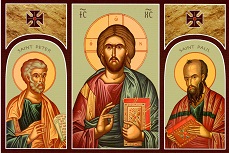
Of His fullness we have all received, and grace for grace


Right Click to Save

Sermon for the Second Sunday after Epiphany

Romans 12:6-16  +  John 2:1-11

You want to know who Jesus is? Every word of the Old Testament Scriptures tells you that, from Genesis to Malachi. Every phrase, every story, every account of God’s goodness, God’s power, God’s wrath, God’s favor, God’s punishment, God’s forgiveness, every law given to Israel, every sacrifice, every prophecy about the coming Christ—it all reveals who Jesus is.

But now that He has come in the flesh, now that He has been baptized and tempted and heralded by John the Baptist as the Lamb of God who takes away the sin of the world, now that He has just met and called His first little band of disciples—five in all—how will He introduce Himself to them? How will He set the tone for His ministry?

He’ll attend a wedding with His disciples, and with His mother, and there He will reveal many things about who He is and what we should of Him.

The Son of God goes to a wedding. And a wedding reception. He “rejoices with those who rejoice,” as Paul wrote to the Romans. The time will come for Jesus to go to the synagogue, to preach on the mountain, to weep with those who weep, and to give His life on the cross. But there is also time to honor God’s institution of marriage between a man and a woman, to do this act of love for the bride and groom whom He knew personally and who had invited Him to their wedding, and to participate in the celebration of God’s earthly gifts. Jesus is no Stoic Messiah, no somber, stone-hearted saint. He does not despise the earthly, material blessings that God has given. He celebrates them.

The celebration was about to take a sad turn, though, as they ran out of wine too early. Not a major crisis by any means. But wine was simply a part of feasting, of celebrating among the Israelites. It was a symbol of joy and happiness and of God’s abundance providence for His people. It was a good gift. And like all good gifts, it could certainly be abused, as it still is today, but it didn’t have to be abused. It could be rightly used for joyful celebration.

What would the bridegroom do, if it became known that he was too poor or too cheap to provide enough wine for his guests? Mary thought she had an answer. She suspected that Jesus might wish to do something about it, so she informed Him of the shortage. She had good reason to expect that He might do something about it, since He had walked away from her home in Nazareth only a couple of months earlier to officially begin His God-given service. Here He was, with His first five disciples. Maybe this was His hour to shine.

It wasn’t. Not really. Jesus replied, Woman, what does your concern have to do with Me? My hour has not yet come. John’s Gospel mentions Jesus’ “hour” several times. Every time, it was, “My hour has not yet come,” not yet come, not yet come, right up until Holy Week, when, finally, Jesus announced to His disciples, “The hour has come that the Son of Man should be glorified.” But when Jesus said, “glorified,” He meant glorified in His sacrificial death on the cross. That was the “hour” that Jesus’ whole life was leading up to.

It hadn’t come yet, here at the beginning of His ministry. But a little hour had come: the time for beginning to reveal His divine majesty and glory, very quietly, very discreetly, to a very small group of people, including His disciples. Mary, again, suspected that Jesus would do something, so she told the servants, Whatever He says to you, do it.

He told the servants to fill six large pots with water—roughly 150 gallons worth. Then He told them to draw some and take it to the master of the feast, so that he could test it and either give it his seal of approval to be served to the guests, or spit it out in disgust. You know what happened. The water had been miraculously changed into wine, and not just mediocre wine, but, “the good stuff,” as the master of the feast declared it.

What does that reveal about Jesus? If you set aside your experience with SyFy, with Harry Potter and other stories of magic, and just stop and think about the miracle of taking regular H2O and turning it into a product of grapes that have grown on a vine, been harvested, squeezed, and properly fermented, without any of that having ever happened, without any hocus-pocus or incantations or magic wands, just with the power of a thought, of a word—that’s who Jesus is, the Creator of water and earth and grapes and the fermentation process itself. Truly Jesus manifested His glory with this miracle, as St. John writes.

How different this miracle was from the changing of water into a red substance back at the time of Moses. God granted Moses the power to change water into blood as the first plague against the Egyptians. That power was mimicked by the dark forces of the devil as he enabled the magicians in Egypt to do the same thing. Water into blood. Something good into something harmful, something horrible, something disgusting and deadly.

See the contrast in Jesus’ first miracle! He hasn’t come to threaten or to coerce or to punish. He hasn’t come to bring condemnation on the world. He has come to save it. He has come to help, not to harm. He takes something good and turns it into something far better, something joyful, something pleasant and good. St. Paul exhorted the Romans in the Epistle: Having then gifts differing according to the grace that is given to us, let us use them. He who gives, let him give with liberality, with generosity. That’s Jesus.

Just a few verses before our Gospel begins, St. John already gave us the summary statement of who Jesus is: And of His fullness we have all received, and grace for grace. For the law was given through Moses, but grace and truth came through Jesus Christ.

Grace—God’s abundant generosity, His undeserved love that overflows toward sinners, who deserve only His wrath and punishment. Jesus has come, not to overlook sin or to excuse sin, but to suffer for it, to make up for it, to call sinners to repentance. And not so that we can go around with a frown on our face all day long or beating our chest in sorrow all the time. We should sorrow, we should mourn over our sins, but the goal is not to mourn. The goal to rejoice in God’s forgiveness, earned and handed out freely by Jesus. That’s what He reveals by the miracle at Cana’s wedding feast as the pattern and purpose of His ministry. Of His fullness we have all received, and grace for grace. Amen.

Posted in Sermons | Tagged , , | Comments Off on Of His fullness we have all received, and grace for grace

Luther Sermon for Epiphany 2

SECOND SUNDAY AFTER EPIPHANY.

Sermon by Martin Luther

TEXT: John 2:1-11 (KJV)

1. Enough has been written heretofore on marriage; hence we leave that subject for the present, and treat the following three topics in this Gospel text: first, the consolation this history affords married people by virtue of their marriage; secondly, the faith and love revealed in this Gospel lesson; thirdly, the spiritual significance of this marriage.

I. THE CONSOLATION OF MARRIED PEOPLE AND THE GLORY OF THE MARRIED STATE.

2. In the first place, it is indeed a high honor paid to married life for Christ himself to attend this marriage, together with his mother and his disciples.

Moreover, his mother is present as the one arranging the wedding, the parties married being apparently her poor relatives or neighbors, and she being compelled to act as the bride’s mother; so of course, it was nothing more than a wedding, and in no way a display. For Christ lived up to his doctrine, not going to the rich, but to the poor; or, if he does go to the great and rich, he is sure to rebuke and reprove, coming away with disfavor, earning small thanks at their hands, with no thought of honoring them by a miracle as he does here.

3. Now the second honor is his giving good wine for the poor marriage by means of a great miracle, making himself the bride’s chief cup-bearer; it may be too that he had no money or jewel to give as a wedding present. He never did such honor to the life or doings of the Pharisees; for by this miracle he confirms marriage as the work and institution of God, no matter how common or how lowly it appears in the eyes of men, God none the less acknowledges his own work and loves it. Even our Caiaphases themselves have often declared and preached that marriage was the only state instituted by God. Who then instituted the others? Certainly not God, but the devil by means of men; yet they shun, reject and revile this state, and deem themselves so holy that they not only themselves avoid marriage — though they need it and ought to marry — but from excess of holiness they will not even attend a marriage, being much holier than Christ himself who as an unholy sinner attends a wedding.

4. Since then marriage has the foundation and consolation, that it is instituted by God and that God loves it, and that Christ himself so honors and comforts it, everybody ought to prize and esteem it, and the heart ought to be glad, that it is surely the state God loves and cheerfully endure every burden in it, even though the burdens be ten times heavier than they are. For this is the reason there is so much care and unpleasantness in marriage to the outward man, because everything that is God’s Word and work, if it is to be blessed at all, must be distasteful, bitter and burdensome to the outward man.

On this account marriage is a state that cultivates and exercises faith in God and love to our neighbor by means of manifold cares, labors, unpleasantnesses, crosses and all kinds of adversities, that are to follow everything that is God’s Word and work. All this the chaste whoremongers, saintly effeminates and Sodomites nicely escape, serving God outside of God’s ordinance by doings of their own.

5. For this is what Christ also indicates by his readiness to supply any want arising in marriage, bestowing wine where it is needed, and making it of water; as though he would say: Must you drink water, that is, suffer affliction outwardly, and is this distasteful? Very well, I will sweeten it for you and change the water into wine, so that your affliction will be your joy and delight. I will not do this by taking the water away or having it poured out; it shall remain, yea, I will have it poured in and the vessels filled up to the brim. For I will not deprive Christian marriage of its cares and trials, but rather add to it. The thing shall be wondrous, so that none, except they themselves who experience it, shall understand it. It shall be on this wise: 6. God’s Word shall do it, by which all things are made, preserved and transformed; that Word which turns your water into wine, and distasteful marriage into delight. That God has instituted marriage ( Genesis 2:32) the heathen and unbelievers do not know, therefore their water remains water and never becomes wine; for they feel not God’s pleasure and delight in married life, which if they did feel they would experience such delight in my pleasure as not to feel the half of their affliction, feeling it outwardly only, but inwardly not at all. And this would be the way to turn water into wine, mixing my pleasure with your displeasure and placing the one against the other, so that my pleasure would drown your displeasure, and turn it into pleasure; but this pleasure of mine nothing will reveal and give to you except my Word, Genesis 1:31: “God saw everything that he had made, and, behold, it was very good.”

7. Here too Christ indicates that he is not displeased with a marriage feast, nor with the things belonging to a wedding such as adornments, cheerfulness, eating and drinking, according to the usage and custom of the country; which appear to be superfluous and needless expense and a worldly matter; only so far as these things are used in moderation and in keeping with a marriage. For the bride and groom must be adorned; so also the guests must eat and drink to be cheerful. And such dining and doing may all be done in good conscience; for the Scriptures occasionally report the like, even the Gospel lessons mentioning bridal adornment, the wedding garment, guests and feastings at weddings. Thus Abraham’s servant in Genesis 24:53 presents ornaments of gold and silver to Rebecca, the bride of Isaac, and to her brothers; so that in these things no one need pay attention to the sour-visaged hypocrites and self-constituted saints who are pleased with nothing but what they themselves do and teach, and will not suffer a maid to wear a wreath or to adorn herself at all.

8. God is not concerned about such external things, if only faith and love reign; provided, as already stated, it be in moderation and in accord with each person’s station. For this marriage, although it was poor and small, had three tables; which is indicated by the word Architriclinus, showing that the ruler of the feast had three tables to provide for; moreover, the groom did not himself attend to this office, but had servants; then too there was wine to drink; all of which, if poverty were to be urged, might have been dispensed with, as is frequently the case with us. So also the guests did not merely quench their thirst with the wine; for the ruler of the feast speaks of how the good wine ought first to be set on, then, when men have freely drunk, that which is worse.

All this Christ allows to pass, and we likewise should let it pass and not make it a matter of conscience. They were not of the devil, even if a few drank of the wine a little beyond what thirst required, and became merry; else you would have to blame Christ for being the cause by means of his presence, and his mother by asking for it; so that both Christ and his mother are sinners in this if the sour-visaged saints are to render judgment.

9. But the excess customary in our times is a different thing, where men do not eat and drink but gorge themselves with food and drink, revel and carouse, and act as though it were a sign of skill or strength to consume overmuch: where, moreover, the intention is not to be merry, but to be full and crazy. But these are swine, not men; to such Christ would not give wine, nor would he visit them. So also in the matter of dress, it is not the marriage that is kept in mind, but display and pomp; as though the most admirable were those most able to wear gold, silver and pearls, and to spoil much silk and broadcloth, which even asses might do and switches.

10. What then is moderation? Reason should teach that, and cite examples from other countries and cities where such pomp and excess are unknown.

But to give my opinion, I would say a farmer is well adorned if for his wedding he have clothes twice as fine as he daily wears at his work; a burgher likewise; and a nobleman, if he have garments twice as costly as a townsman; a count, twice as costly as a nobleman; a duke, twice as costly as a count, and so in due order. In like manner food and drink and the entertainment of guests should be governed by their social position, and the purpose of the table should be pleasure not debauchery.

11. Now is it a sin to play and dance at a wedding, inasmuch as some declare great sin is caused by dancing? Whether the Jews had dances I do not know; but since it is the custom of the country, like inviting guests, decorating, eating and drinking and being merry, I see no reason to condemn it, save its excess when it goes beyond decency and moderation.

That sin should be committed is not the fault of dancing alone; since at a table or in church that may happen; even as it is not the fault of eating that some while so engaged should turn themselves into swine. Where things are decently conducted I will not interfere with the marriage rites and customs, and dance and never mind. Faith and love cannot be driven away either by dancing or by sitting still, as long as you keep to decency and moderation. Young children certainly dance without sin; do the same also, and be a child, then dancing will not harm you. Otherwise were dancing a sin in itself, children should not be allowed to dance. This is sufficient concerning marriage.

II. THE DOCTRINE AND EXAMPLE OF LOVE AND OF FAITH.

12. In the second place, to return to. our Gospel lesson, we here see the example of love in Christ and his mother. The mother renders service and takes the part of house-keeper: Christ honors the occasion by his personal presence, by a miracle and a gift. And all this is for the benefit of the groom, the bride and the guests, as is the nature of love and its works.

Thus Christ lures all hearts to himself, to rely on him as ever ready to help, even in temporal things, and never willing to forsake any; so that all who believe in him shall not suffer want, be it in spiritual or temporal things; rather must water become wine, and every creature turned into the thing his believer needs. He who believes must have sufficient, and no one can prevent it.

13. But the example of faith is still more wonderful in this Gospel. Christ waits to the very last moment when the want is felt by all present, and there is no counsel or help left. This shows the way of divine grace; it is not imparted to one who still has enough, and has not yet felt his need. For grace does not feed the full and satiated, but the hungry, as we have often said. Whoever still deems himself wise, strong and pious, and finds something good in himself, and is not yet a poor, miserable, sick sinner and fool, the same cannot come to Christ the Lord, nor receive his grace.

14. But whenever the need is felt, he does not at once hasten and bestow what is needed and desired, but delays and tests our faith and trust, even as he does here; yea, what is still more severe, he acts as though he would not help at all, but speaks with harshness and austerity. This you observe in the case of his mother. She feels the need and tells him of it, desiring his help and counsel in a humble and polite request. For she does not say: My dear son, furnish us wine; but: “They have no wine.” Thus she merely touches his kindness, of which she is fully assured. As though she would say: He is so good and gracious, there is no need of my asking, I will only tell him what is lacking, and he will of his own accord do more than one could ask.

This is the way of faith, it pictures God’s goodness to itself in this manner, never doubting but that it is really so; therefore it makes bold to bring its petition and to present its need.

15. But see, how unkindly he turns away the humble request of his mother who addresses him with such great confidence. Now observe the nature of faith. What has it to rely on? Absolutely nothing, all is darkness. It feels its need and sees help nowhere; in addition, God turns against it like a stranger and does not recognize it, so that absolutely nothing is left. It is the same way with our conscience when we feel our sin and the lack of righteousness; or in the agony of death when we feel the lack of life; or in the dread of hell when eternal salvation seems to have left us. Then indeed there is humble longing and knocking, prayer and search, in order to be rid of sin, death and dread. And then he acts as if he had only begun to show us our sins, as if death were to continue, and hell never to cease. Just as he here treats his mother, by his refusal making the need greater and more distressing than it was before she came to him with her request; for now it seems everything is lost, since the one support on which she relied in her need is also gone.

16. This is where faith stands in the heat of battle. Now observe how his mother acts and here becomes our teacher. However harsh his words sound, however unkind he appears, she does not in her heart interpret this as anger, or as the opposite of kindness, but adheres firmly to the conviction that he is kind, refusing to give up this opinion because of the thrust she received, and unwilling to dishonor him in her heart by thinking him to be otherwise than kind and gracious-as they do who are without faith, who fall back at the first shock and think of God merely according to what they feel, like the horse and the mule, Psalm 32:9. For if Christ’s mother had allowed those harsh words to frighten her she would have gone away silently and displeased; but in ordering the servants to do what he might tell them she proves that she has overcome the rebuff and still expects of him nothing but kindness.

17. What do you think of the hellish blow, when a man in his distress, especially in the highest distress of conscience, receives the rebuff, that he feels God declaring to him: “What have I to do with thee?” Quid mihi et tibi? He must needs faint and despair, unless he knows and understands the nature of such acts of God, and is experienced in faith. For he will act just as he feels, and will not think of God in a different way and mean the words. Feeling nothing but wrath and hearing nothing but indignation, he will consider God only as his enemy and angry judge. But just as he thinks God to be so will he find him. Thus he will expect nothing good from him.

That is to renounce God with all his goodness. The result is that he flees and hates him, and will not have God to be God; and every other blasphemy that is the fruit of unbelief.

18. Hence the highest thought in this Gospel lesson, and it must ever be kept in mind, is, that we honor God as being good and gracious, even if he acts and speaks otherwise, and all our understanding and feeling be otherwise., For in this way feeling is killed, and the old man perishes, so that nothing but faith in God’s goodness remains, and no feeling. For here you see how his mother retains a free faith and holds it forth as an example to us. She is certain that he will be gracious, although she does not feel it.

She is certain also that she feels otherwise than she believes. Therefore she freely leaves and commends all to his goodness, and fixes for him neither time nor place, neither manner nor measure, neither person nor name. He is to act when it pleases him. If not in the midst of the feast, then at the end of it, or after the feast. My defeat I will swallow, his scorning me, letting me stand in disgrace before all the guests, speaking so unkindly to me, causing us all to blush for shame. He acts tart, but he is sweet I know. Let us proceed in the same way, then we are true Christians.

19. Here note how severely he deals with his own mother, teaching us thereby not only the example of faith mentioned above, but confirming that in things pertaining to God and his service we are to know neither father nor mother, as Moses writes in Deuteronomy 33:9: “He who says of his father and of his mother, I know them not, observes thy Word, Israel.” For although there is no higher authority on earth than that of father and mother, still this ends when God’s Word and work begin. For in divine things neither father nor mother, still less, a bishop or any other person, only God’s Word is to teach and guide. And if father and mother were to order, teach, or even beg you to do anything for God, and in his service that he has not clearly ordered and commanded, you are to reply: Quid mihi et tibi? What have I and you to do with each other? In this same way Chris there refuses absolutely to do God’s work when his own mother wants it.

20. For father and mother are in duty bound, yea, God made them father and mother for this very purpose, not to teach and lead their children to God according to their own notions and devotion, but according to God’s command; as St. Paul declares in Ephesians 6:4: “Ye fathers; provoke not your children to wrath: but nurture them in the chastening and admonition of the Lord;” i.e. teach them God’s command and Word, as you were taught, and not notions of your own.

Thus in this Gospel lesson you see the mother of Christ directing the servants away from herself unto Christ, telling them not: Whatsoever I say unto you, do it; but: “Whatsoever he saith unto you, do it.” To this Word alone you must direct everyone, if you would direct aright; so that this word of Mary (whatsoever he saith, do it) is, and ought to be, a daily saying in Christendom, destroying all doctrines of men and everything not really Christ’s Word. And we ought firmly to believe that what is imposed upon us over and above God’s Word is not, as they boast and lie, the commandment of the church. For Mary says: Whatsoever he saith that, that, that do, and that alone; for in it there will be enough to do.

21. Here also you see, how faith does not fail, God does not permit that, but gives more abundantly and gloriously than we ask. For here not merely wine is given, but excellent and good wine, and a great quantity of it. By this he again entices and allures us to believe confidently in him, though he delay. For he is truthful and cannot deny himself; he is good and gracious, that he must of himself confess and in addition prove it, unless we hinder him and refuse him time and place and the means to do so. At last he cannot forsake his work, as little as he can forsake himself — if only we can hold out until his hour comes.

III. THE SIGNIFICANCE OF THIS MARRIAGE.

22. In the third place, we must briefly touch upon the spiritual significance of the text. This marriage and every marriage signifies Christ, the true bridegroom, and Christendom, the bride; as the Gospel lesson of Matthew 22:1-14 sufficiently shows.

23. This marriage took place in Cana of Galilee; that is, Christendom began in the days of Christ among the Jewish people, and continues still among all who are like the Jews. The Jewish nation is called Cana, which signifies, zeal, because it diligently practiced the Law and zealously clung to the works of the Law, so that even the Gospel lessons always call the Jews zealots, and especially St. Paul in Romans 9 and Romans 10. It is natural too that wherever Law and good works are, there zeal will be and contention, one claiming to be better than the other, first of all, however, opposing faith which cares naught for works and boasts only of God’s grace. Now wherever Christ is there such zealots will always be, and his marriage must be at Zeal City, for you always find by the side of the Gospel and faith work-righteous people and Jewish zealots who quarrel with faith.

24. Galilee signifies border or the edge of the country, where you pass from one country into another. This signifies the same people in Zeal City who dwell between the Law and the Gospel, and ought to emigrate and pass from works to faith, from the Law into the Christian liberty; as some also have done, and now still do. But the greater part remain in their works and dwell on the border, achieving neither good works nor faith, shielding themselves behind the shine and glitter of works.

25. Christ’s being bidden to the marriage signifies that he was promised long ago in the Law and the prophets and is earnestly expected and invoked to turn water into wine, fulfill the Law and establish faith, and make true GalileansOF US.

26. His disciples are bidden with him; for he is expected to be a great King, hence to need apostles and disciples in order to have his Word freely and fully preached everywhere. Likewise, his mother is the Christian church, taken from the Jews, who herself most of all belongs to the marriage, for Christ was really promised to the Jewish nation.

27. The six waterpots of stone, for the purification of the Jews, are the books of the Old Testament which by law and commandment made the Jewish people only outwardly pious and pure; for which reason the Evangelist says, they were set there after the Jews’ manner of purifying, as if to say: This signifies the purification by works without faith, which never purifies the heart, but only makes it more impure; which is a Jewish, not a Christian or spiritual purification.

28. There being six waterpots signifies the labor and toil which they who deal in works undergo in such purification; for the heart finds no rest in them, since the Sabbath, the seventh day, is wanting, in which we rest from our works and let God work in us. For there are six work-days, in which God created heaven and earth, and commanded us to labor. The seventh day is the day of rest, in which we are not to toil in the works of the Law, but to let God work in us by faith, while we remain quiet and enjoy a holiday from the labors of the Law.

29. The water in the pots is the contents and substance of the Law by which conscience is governed, and is graven in letters as in the waterpots of stone.

30. And they are of stone, as were the tables of Moses, signifying the stiffnecked people of the Jews. For as their heart is set against the Law, so the Law appears outwardly to be against them. It seems hard and difficult to them, and therefore it is hard and difficult; the reason in that their heart is hard and averse to the Law; we all find, feel and discover by experience that we are hard and averse to what is good, and soft and prone to what is evil. This the wicked do not feel, but those who long to be pious and labor exceedingly with their works. This is the significance of the two or three firkins apiece.

31. To turn water into wine is to render the interpretation of the Law delightful. This is done as follows: Before the Gospel arrives everyone understands the Law as demanding our works, that we must fulfill it with works of our own. This interpretation begets either hardened, presumptuous dissemblers and hypocrites, harder than any pot of stone, or timid, restless consciences. There remains nothing but water in the pot, fear and dread of God’s Judgment. This is the water-interpretation, not intended for drinking, neither filling any with delight; on the contrary, there is nothing to it but washing and purification, and yet no true inner cleansing. But the Gospel explains the Law, showing that it requires more than we can render, and that it demands a person different from ourselves to fulfill it; that is, it demands Christ and brings us unto him, so that first of all by his grace we are made in true faith a different people like unto Christ, and that then we do truly good works. Thus the right interpretation and significance of the law is to lead us to the knowledge of our helplessness, to drive us from ourselves to another, namely to Christ, to seek grace and help of him.

32. Therefore, when Christ wanted to make wine he had them pour in still more water, up to the very brim. For the Gospel comes and renders the interpretation of the Law perfectly clear (as already stated), showing that what belongs to us is nothing but sin; wherefore by the law we cannot escape sinning. When now the two or three firkins hear this, namely the good hearts who have labored according to the law in good works, and are already timid at heart and troubled in conscience, this interpretation adds greatly to their fear and terror; and the water now threatens to rise above the lid and brim. Before this, while they felt disinclined and averse to what is good, they still imagined they might yet succeed by their good works; now they hear that they are altogether unfit and helpless:, and that it is impossible to gain their end by good works. That overfills the pot with water, it cannot hold more. This is to interpret the Law in the highest manner, leaving nothing but despair.

33. Then comes the consoling Gospel and turns the water into wine. For when the heart hears that Christ fulfills the law for us and takes our sin upon himself, it no longer cares that impossible things are demanded by the Law, that we must despair of rendering them, and must give up our good works. Yea, it is an excellent thing, and delectable, that the Law is so deep and high, so holy and righteous and good, and demands things so great; and it is loved and lauded for making so many and such great demands.

This is because the heart now has in Christ all that the Law demands, and it would be sorry indeed if it demanded less. Behold, thus the Law is delightful now and easy which before was disagreeable, difficult and impossible; for it lives in the heart by the Spirit. Water no longer is in the pots, it has turned to wine, it is passed to the guest, it is consumed, and has made the heart glad.

34. And these servants are all preachers of the New Testament like the apostles and their successors.

35. The drawing and passing to the guests is, to take this interpretation from the Scriptures, and to preach it to all the world, which is bidden to Christ’s marriage.

36. And these servants knew (the Evangelist tells us) whence the wine was, how it had been water. For the apostles and their successors alone understand how the law becomes delightful and pleasant through Christ, and how the Gospel by faith does not fulfill the Law by works, every thing being unchanged from what it formerly was in good works.

37. But the ruler of the feast does indeed taste that the wine is good, yet he knows not whence it is. This ruler of the feast is the old priesthood among the Jews who knew of naught but works, of whom Nicodemus was one, John 3:9; he indeed feels how fine this cause of Christ would be, but knows not how it can be, and why it is so, clinging still to works. For they who teach works cannot understand and apprehend the Gospel and the actions of faith.

38. He calleth the bridegroom and reproacheth him for setting on the good wine last, whereas every man setteth on last that which is worse. To this very day it is the surprise of the Jews that the preaching of the Gospel should have been delayed so long, coming first of all now to the Gentiles, while they are said to have been drinking the worse wine for so long a time, bearing so long the burden and heat of the day under the Law; as is set forth in another Gospel lesson. Matthew 20:12.

39. Observe, God and men proceed in contrary ways. Men set on first that which is best, afterward that which is worse. God first gives the cross and affliction, then honor and blessedness. This is because men seek to preserve the old man; on which account they instruct us to keep the Law by works, and offer promises great and sweet. But the out-come is stale, the result has a vile taste; for the longer it goes on the worse is the condition of conscience, although, being intoxicated with great promises, it does not feel its wretchedness; yet at last when the wine is digested, and the false promises gone, the wretchedness appears. But God first of all terrifies the conscience, sets on miserable wine, in fact nothing but water; then, however, he consoles us with the promises of the Gospel which endure forever.

Posted in Sermons | Tagged , , | Comments Off on Luther Sermon for Epiphany 2

Everything a boy should be


Right Click to Save

Sermon for the First Sunday after Epiphany

Romans 12:1-5  +  Luke 2:41-52

There aren’t many accounts in the Bible of the early life of Jesus. Between the time of the holy family’s flight to Egypt, when Jesus was still just a baby, until the day of Jesus’ Baptism at age 30, we are told of exactly one event in the life of Christ—today’s Gospel about the 12-yr-old Jesus and the scare He gave to Mary and Joseph when He stayed behind in Jerusalem. We’d like to know more about Jesus’ childhood, of course, what He did, what He was up to, but the words of the Gospel really tell us all we need to know, as a summary of the whole childhood and adolescence of Jesus. Even as a boy, Jesus loved God His Father will all His heart, soul, mind and strength. He honored His earthly father and mother and was obedient to them. He grew in wisdom and stature, and in favor with God and men. What else should a young man be up to? Jesus was everything a boy should be.

Let’s turn to the Gospel again and review this story. Luke tells us that it was the custom of Jesus’ parents to go to Jerusalem every year at the Feast of the Passover. That was required of every Jewish male as part of the observance of the Law of Moses. The fact that Mary normally went along, too, shows us that this was no mere outward observance, going because they had to go. They gladly went up to the House of the Lord. They gladly celebrated the Passover feast given to them by God as both a remembrance of His past redemption of Israel and as a shadow of the great Redemption that their Son—the very Lamb of God—would one day bring about.

Whether or not Jesus went along with them before His twelfth birthday, we don’t know for sure. But it was (and still is) Jewish custom that at age thirteen a Jewish boy became responsible to perform all the ceremonies required by the Law, and that at age twelve, he started “practicing,” as it were, so that he was ready at age thirteen.

They travel from Nazareth to Jerusalem. They spend the days of the feast in the holy city. And then Mary and Joseph, together with all the company of relatives and neighbors from Nazareth, start heading back. But the Boy Jesus lingered behind in Jerusalem. And Joseph and His mother did not know it; How could they not? I suppose because they just didn’t expect it. Jesus was always with them, always following, always obedient. He was wise—very wise for His age, not absent-minded, not one to go off and do His own thing.

They had already traveled a day’s journey. It took them another day to get back to Jerusalem. It wasn’t until the third day that they found Him in the Temple, where it says that He was sitting in the midst of the teachers, both listening to them and asking them questions. And all who heard Him were astonished at His understanding and answers. So when they saw Him, they were amazed; and His mother said to Him, “Son, why have You done this to us? Look, Your father and I have sought You anxiously.” And He said to them, “Why did you seek Me? Did you not know that I must be about My Father’s business?”

We should be amazed, too, just as amazed as Mary and Joseph were. We should be amazed at the deep love and zeal that this twelve-year-old demonstrated for the Word and the works of His Father. We should be amazed that a twelve-year-old boy should be so in love with the Temple and with the Holy Scriptures that He doesn’t want to leave, that He wants to stay there, not to play around or sight-see, but to discuss the Word of God with the teachers of the Law.

Truly this is the ideal child. And there wasn’t a hint of defiance in Him or of superiority over His parents, even though He was far superior to them. He had no concern for His life, His works, His business, His pleasure, His future, His entertainment. Just the innocent love for His Father in heaven. Jesus is the perfect Child of God, who perfectly fulfills the words of the Psalmist: Oh, how I love Your law! It is my meditation all the day. And again, LORD, I have loved the habitation of Your house, and the place where Your glory dwells. And again, Blessed is the man Who walks not in the counsel of the ungodly, Nor stands in the path of sinners, Nor sits in the seat of the scornful; But his delight is in the law of the LORD, And in His law he meditates day and night. He shall be like a tree Planted by the rivers of water, That brings forth its fruit in its season, Whose leaf also shall not wither; And whatever he does shall prosper.

Jesus, even at the age of 12, was fulfilling His task of being the perfect human being, the One whom you don’t have to command or coerce to go to church, to read His Bible, to be a student of Scripture. He is a willing student of Scripture, excited to learn God’s Word, eager to discuss it. And He does it all on His own, because He is absolutely devoted to His God. His will is perfectly connected to His Father’s will. As Jesus would later say to the Jews: Most assuredly, I say to you, the Son can do nothing of Himself, but what He sees the Father do; for whatever He does, the Son also does in like manner.

After astounding the teachers with His understanding and after amazing His parents with His behavior, it says that He went down with them and came to Nazareth, and was subject to them, but His mother kept all these things in her heart. And Jesus increased in wisdom and stature, and in favor with God and men.

There He is, the boy who loves God with His whole heart and who honors His earthly parents gladly and willingly. In all His actions, in all His attitudes, in all His behaviors, Jesus increased in favor with God and men. This was a Child, a Boy, a young Man, who never complained, who never grumbled, who was not self-centered, not a brooding teenager, but kind, thoughtful, considerate of others, and perfectly obedient. Of course He grew in favor with God and men. He was everything a boy should be.

Jesus’ perfect childhood, His sincere love for God, His obedience to His parents, His love for His neighbor—this is how it was meant to be, for all of us. This is how it would have been in the world, if Adam and Eve hadn’t fallen into sin. Instead, you children, you teenagers, and you who once were children and teenagers—you know that you have not loved God like that, that you have not been aching to stay at church and keep listening and studying Scripture, while your parents are already out the door. Sometimes it’s the exact opposite, isn’t it? And you know that you have not so willingly and gladly obeyed your parents, or lived your life for the benefit of your neighbor. Jesus’ childhood serves as a warning for young people and adults alike: the life  Jesus led is the life that God requires of all the sons of men. It’s not OK for you, even in your youth, to despise the Word of God, to get bored with it, to fail to pay attention to it, to wish you were somewhere else on Sunday morning. Nor is it OK for you to dishonor your parents, or to grumble against them, out loud or just in your heart. Nor is it OK for you to become so self-absorbed that you sit around doing nothing all day instead of serving your neighbor and growing in wisdom.

At the same time, Jesus didn’t lead a perfect childhood in order to condemn you for not doing it. He did it happily, so that you might be brought to repentance and faith in Him as your Substitute. He did it so that you might be able to call God your Father, not because you have loved Him with your whole heart, but because Jesus did, and you are bound to Him by Baptism. He was everything a boy should be, so that you could inherit from Him as a gift everything that a perfect son of a perfect Father deserves, even the forgiveness of sins, life and salvation.

With the forgiveness of sins comes a new heart, a new purpose, to be imitators of God, as dearly loved children, to walk in love, as Christ also has loved us and given Himself for us, an offering and a sacrifice to God for a sweet-smelling aroma. With the mercy of God in view, you are to present your bodies a living sacrifice, holy, acceptable to God, which is your reasonable service. And do not be conformed to this world, but be transformed by the renewing of your mind, that you may prove what is that good and acceptable and perfect will of God, as you heard in the Epistle.

So young people, and you who once were young, see your Savior working on your behalf in today’s Gospel. Repent and believe in Him, and see how your Father was working through Jesus as your Substitute, to bring you into His house. But also, learn from Jesus. Learn what it looks like to love God and His Word so completely, to be a willing student of the Scriptures. Learn what it looks like to be respectful of your parents at all times and obedient to those whom God has placed in authority over you. Learn what it looks like to devote your childhood, and your adulthood, and every breath of your life to God and to your neighbor. By faith in Christ Jesus, God now sees you as already being everything a child of God should be. Make it your goal to live that way, too, and you, too, will continue to increase in wisdom, and in favor with God and men. Amen.


Posted in Sermons | Tagged , , | Comments Off on Everything a boy should be

The radiant appearance of the King of Jews and Gentiles

Sermon for the Epiphany of Our Lord

Isaiah 60:1-6  +  Matthew 2:1-12

Christmas is over, as of today, but Epiphany has at least as much joy for us Christians. It’s the season of light, of brightness, of the shining light of Christ, who is “a Light to lighten the Gentiles, and the glory of His people Israel,” as old Simeon once sang about baby Jesus. Epiphany is a Greek word that means “radiant appearing.” God’s Son was finally born into the world. And following His birth, there were many appearances, many revelations of His glory. Today, on January 6th, in the ancient Church, three such revelations were traditionally celebrated: The revelation of Jesus to the wise men as the King of Jews and Gentiles. But also the revelation of Christ as the Son of God and our Savior at His Baptism. And the revelation of Christ’s divine power and goodness at the wedding at Cana, which we’ll hear about in a couple of weeks.

For now, our Gospel turns our attention to the visit of the wise men. There was literally a light that shined on Israel at the birth of Christ—a miraculous light, a “star” that was no ordinary star, but, as Isaiah prophesied, The glory of the Lord is risen upon you…The Gentiles shall come to your light, and kings to the brightness of your rising. It led the wise men to the land of Judah. But it wasn’t really the star that led them.

There was another light that led the wise men to the Light in Israel. As the Psalm says, Your Word is a lamp to my feet and a light for my path. These wise men from the East had clearly been exposed to the Holy Scriptures of the Hebrews, probably from the time of the Babylonian captivity. These wise men had learned about the LORD God of Israel and had found some of the prophecies of the Old Testament about the coming Savior-King who would be born from King David’s line and rule, not only over the Jews, but over all the nations, all the Gentiles. God used His Word to enlighten them, to bring them to understand and believe the prophecies about this divine King.

The light of the star only took them as far as Jerusalem, where they had to inquire, Where is He who has been born King of the Jews? For we have seen His star in the East and have come to worship Him. Now the light of the prophet Micah had to guide them, as Herod had the priests and scribes search the Scriptures for the answer: But you, Bethlehem, in the land of Judah, are not the least among the rulers of Judah; for out of you shall come a Ruler who will shepherd My people Israel. See how God always drives His people back to His Word, so that we ground our faith, not in outward signs that are so often misinterpreted, but in His sure, unfailing Word.

So the Word of God shined the light on Bethlehem. But not everyone cared to see it. The king and the priests of Jerusalem, and most of the city with them, were not happy to hear about the birth of the King of the Jews. They were “troubled,” it says. They were upset. Others were obviously apathetic; they didn’t follow the wise men to Bethlehem to worship the newborn King.

So, as we heard on Christmas morning, the light shines in the darkness, but the darkness did not comprehend it. Or as Jesus would later say, He who believes in Him is not condemned; but he who does not believe is condemned already, because he has not believed in the name of the only begotten Son of God. And this is the condemnation, that the light has come into the world, and men loved darkness rather than light, because their deeds were evil. For everyone practicing evil hates the light and does not come to the light, lest his deeds should be exposed. But he who does the truth comes to the light, that his deeds may be clearly seen, that they have been done in God. The world, in its darkness, in its idolatry, in its sin and love for sin, doesn’t love the idea of the true God sending His Son into the world. And that’s tragic, because the true God, while His Laws are demanding and His wrath is severe—the true God has given His own Son to suffer the punishment for our sins, to obey His own Law in our place, and to give us eternal life as a gift. The Son of Man came, not to condemn the world, but that the world through Him might be saved. Salvation is by faith in Him, faith that the Holy Spirit Himself creates through the light of His Word.

The Holy Spirit was resisted by most of Israel; He can be resisted. But He worked faith in the hearts of the non-Jewish wise men. They journeyed to Bethlehem, and then, led by the Word of God, they were again blessed with the light of the star to point them to the exact place where the Child was.

They found the humble Baby with His humble mother in a humble house—not a palace, not a mansion. He had no attendants, no servants, no other worshipers. Their eyes told them that this must not be the place, that He must not be the One. But Scripture told them otherwise, and they believed the Scriptures over their own eyes. They knelt before the Baby. That’s what you do in the presence of royalty, or in the presence of divinity, or in this case, both.

The gifts they gave, too, demonstrate their beliefs about this Child: gold and frankincense and myrrh.

Gold is what you give a king. Gold was the best, most expensive gift this Child could receive from the hands of men. But it wasn’t the best gift He could give to the sons of men. He would redeem us, not with gold or silver, but with His holy, precious blood, and with His innocent suffering and death. Forgiveness of sins, life and salvation are the gifts He brings. A Father in heaven to call your own. The promise of His help and guidance to make it through this life into the next. Those are the gifts that Jesus gives.

Frankincense was used to make perfume—the perfume of kings. It was required in some of the offerings the Israelites brought to the Temple, and it was used in the incense that was burned in the inner sanctuary, the incense that symbolized the prayers of God’s people rising up as a sweet-smelling aroma to God. Another fitting gift! Because Jesus was a King. He is also the one who adds Himself—His holiness—to the offerings of God’s people, to the good works that we do as believers, making them holy and acceptable in God’s sight. And He is also the One who makes our prayers acceptable to God, the One Mediator between God and man, the Man Christ Jesus.

Myrrh was also used to make perfume, and together with frankincense, it was the perfume that King Solomon, the son of David, wore for the day of His wedding, which all, in the Song of Solomon, was an allegory of the great Son of David, Jesus, and His beloved Bride, the Christian Church, made up of Jews and Gentiles—of all who believe in Him.

But there’s still more to myrrh. It was also a main ingredient in the recipe for the sacred anointing oil in the Old Testament, the oil with which prophets, priests, kings, and even the very furnishings of the Temple were to be anointed. It was used as a pain-killer and was offered to Jesus, mixed with wine, before His crucifixion, although at that time He refused it as a gift. Finally, it was one of the precious spices that Nicodemus offered as a gift to King Jesus—for the burial of His body on Good Friday. Again, such a fitting gift for the King of Jews and Gentiles, who was anointed at His Baptism as the true Prophet, Priest, King, and Savior, who, by His death and by our baptism, which unites us to His death, has saved us from sin, death and the devil.

So celebrate this Epiphany—all these epiphanies of the Lord Jesus, with great joy. For as important as His birth was, it would have meant nothing if God had kept His Son a secret from the world and hidden Him away. Instead, little by little, Christ was revealed as the promised Savior. Even now the Holy Spirit is revealing Him to you, another Epiphany, the radiant appearance of the King of Jews and Gentiles, right here in our midst, here in the Word, and here in the blessed Sacrament. Come, let us follow that light, that we, too, may worship Him all our days! Amen.

Posted in Sermons | Tagged , , | Comments Off on The radiant appearance of the King of Jews and Gentiles

The Christian celebration of Christ’s circumcision


Right Click to Save

Sermon for the Feast of the Circumcision and the Name of Jesus

Galatians 3:23-29  +  Luke 2:21

Happy 8th day of Christmas! The world moved on from Christmas already as of last Tuesday. But we haven’t moved on, have we? On the 8th day of Christmas, we celebrate what happened on the 8th day of Christ’s birth: His circumcision, and His naming ceremony. Why on earth has the Christian Church made this a part of the Christmas season? Why on earth make a big deal about the removal of a piece of skin from a little boy? Because that little boy was our Lord Jesus. He was the One who endured this momentarily painful procedure on the 8th day of His birth. And He endured it, because God had made it a big deal under the Old Testament. Without this event in the life of Jesus, He would never have been able to institute the New Testament in His blood. He would never have been our Savior from sin. So, if you would understand who Jesus is and why He came, and what the benefit is for us in being His Christians, then you have to understand this Biblical practice that was so important to God’s Church for 2,000 years before the birth of Christ, and that still has a spiritual significance for us, 2,000 years later.

As you certainly remember, circumcision was not a practice that the Jews just decided on their own one day to institute. God instituted it. God commanded Abraham, back in Genesis 17, I will establish My covenant between Me and you and your seed after you in their generations, for an everlasting covenant, to be God to you and your seed after you. Also I give to you and your seed after you the land in which you are a stranger, all the land of Canaan, as an everlasting possession; and I will be their God.” And God said to Abraham: “As for you, you shall keep My covenant, you and your seed after you throughout their generations. This is My covenant which you shall keep, between Me and you and your descendants after you: Every male child among you shall be circumcised; and you shall be circumcised in the flesh of your foreskins, and it shall be a sign of the covenant between Me and you. He who is eight days old among you shall be circumcised, every male child in your generations, he who is born in your house or bought with money from any foreigner who is not your descendant. He who is born in your house and he who is bought with your money must be circumcised, and My covenant shall be in your flesh for an everlasting covenant. And the uncircumcised male child, who is not circumcised in the flesh of his foreskin, that person shall be cut off from his people; he has broken My covenant.”

If you want God to be God for you, if you want to inherit the promises made to Abraham and to his seed, if you want to be a part of the people of God at all, then you—if you’re a male 8 days old or older—must be circumcised; that’s the way it was from the time of Abraham till the time of Christ. It was the sign of the covenant God made with Abraham.

It seems like a foolish sign, doesn’t it? Human reason sneers at such a practice. What does this removal of a bit of skin have to do with a person’s spiritual state, with a person’s relationship with God, with a person’s eternal future? Well, God likes to spit in the face of our fallen human reason. It deserves it. He chooses things that human reason can’t grasp. He attaches His best promises to things that seem the humblest and the smallest and forces us to live by faith and not by sight, so that only those people benefit from God’s promises who trust in His Word, not in their own reason or strength.

Our Lutheran Confessions (printed on the back of your service folder) identify well the purpose of circumcision: (a) that Abraham might have a written sign in his body—a permanent mark on his body to remind him of the covenant God had made with him, to remind him that he was to fear and love God as one who had been made an heir of eternal life; (b) so that, admonished by this, he might exercise faith—so that he would keep trusting in God’s Word and in God’s promises all his life; and (c) that by this work he might also confess his faith before others and, by his testimony, invite others to believe. Obviously circumcision was a private kind of mark; no one would see it. But Abraham would tell other people of the covenant God had made with him, of the promises God had given to all those who were connected to Abraham, and he could use himself as an example of one who had been marked, according to God’s Word, for eternal life as a participant in God’s covenant, inviting others, including his own descendants to believe in this God and to join Abraham in this covenant of grace.

Abraham circumcised Isaac, the son whom God promised, on the 8th day of his birth, and so it continued among Abraham’s descendants until the practice was codified in the Law of Moses some 400 years later. It physically marked a man (and his family!) as belonging to the people of Israel, and it signified that the whole life of the circumcised should be lived under the Law.

By the time of Jesus, the Jews had begun to abuse the sign of circumcision. They had turned it into a meritorious good work—something that they did that made them worthy to be God’s people, worthy to inherit eternal life. They put their faith in their physical descent from Abraham and from their obedience to the Law that God had given to Abraham and to Moses. They boasted that, just as Abraham was justified by his good works, beginning with circumcision, they, too, would be justified by their good works.

It was the especially the Apostle Paul who demolished their false faith in Romans 4, where Paul points out that, according to the book of Genesis, Abraham was justified long before he was ever circumcised. He was justified, not by any work of his own, but by faith alone. Abraham believed God, and it was accounted to him for righteousness…He received the sign of circumcision, a seal of the righteousness of the faith which he had while still uncircumcised, that he might be the father of all those who believe, though they are uncircumcised, that righteousness might be imputed to them also, and the father of circumcision to those who not only are of the circumcision, but who also walk in the steps of the faith which our father Abraham had while still uncircumcised.

But none of that faith would matter, unless the sign of circumcision had been fulfilled and then set aside by Abraham’s true Seed and Heir.

So along came the baby, born of Mary, exactly one week after he was born, still without a name, because Hebrew boys weren’t given their name until after they were circumcised. And Mary and Joseph fulfilled for their Son what the Law required. Since He was the long-promised Seed of Abraham, this was the day that the whole Old Testament had been foreshadowing, the day when the Son of Abraham would be brought under the Covenant, under the Testament, under the Law that God had given to Abraham and to Moses, with all of its promised blessings for obedience, and with all of its promised curses for disobedience. This was the day that the Son of God entered into the Old Testament, to fulfill it and, later, to replace it with a New and better Testament: the New Testament in His blood—blood that was first shed on this day of His circumcision, a token of the blood that would be spilled about 33 years later on the cross.

What does all of this mean for us? It means that the baby Jesus, on the day of His circumcision, embarked on a lifelong journey of obedience to the Law, not as an example to us, but as a Substitute for us. As Paul wrote to the Galatians in chapter 4, When the fullness of the time had come, God sent forth His Son, born of a woman, born under the law, to redeem those who were under the law, that we might receive the adoption as sons.

And how do we receive that adoption? You heard it this morning in the Epistle: For you are all sons of God through faith in Christ Jesus. For as many of you as were baptized into Christ have put on Christ. There is neither Jew nor Greek, there is neither slave nor free, there is neither male nor female; for you are all one in Christ Jesus. And if you are Christ’s, then you are Abraham’s seed, and heirs according to the promise.

As those who have been baptized into Christ Jesus, believing in Him as your Savior from sin, you now inherit everything that Christ inherits, both as the Son of God and as the Son of Man, and that is…everything. But first and foremost, it’s the ability to call God your Father. He is not only the God and Creator of the universe. He is God for you. He claims you as His own son—as members of the one body of Christ. That’s why it doesn’t matter if you’re male or female, Jew or Greek (or any other race), slave or free, rich or poor, because, in God’s sight you all wear Christ Jesus as a garment; you are all clean, holy, perfect heirs of heaven through faith in Him.

Now circumcision has been set aside as the entrance into God’s family and as the mark of His adoption. It has been set aside and replaced with Holy Baptism. Listen to how the Apostle Paul makes the connection between circumcision and Baptism as he writes to Gentile Christians in Colossians 2: In Christ you were also circumcised with the circumcision made without hands, by putting off the body of the sins of the flesh, by the circumcision of Christ, buried with Him in baptism, in which you also were raised with Him through faith in the working of God, who raised Him from the dead. And you, being dead in your trespasses and the uncircumcision of your flesh, He has made alive together with Him, having forgiven you all trespasses, having wiped out the handwriting of requirements that was against us, which was contrary to us. And He has taken it out of the way, having nailed it to the cross.

Circumcision used to be all-important for people to receive God’s forgiveness. It was all-important for Christ, in order for Him to be our Savior. But now, circumcision no longer counts for anything. Now, if you would have God for your God, if you would be counted among His children, then you must believe and be baptized in Christ Jesus, the Son of God and the Son of Abraham. And if you have already been baptized, then you must keep using your baptism, as a sign and seal of the forgiveness of sins that is yours through faith in Christ, and as a constant reminder that, as a member of the New Testament in the blood of Christ, you are to live, not as pagans, not as atheists, not as idolaters who will perish in the judgment, but as baptized children of God who will live eternally with Him, and with your fellow baptized. As Paul wrote to the Galatians in chapter 5, Circumcision is nothing and uncircumcision is nothing, but keeping the commandments of God is what matters…For in Christ Jesus neither circumcision nor uncircumcision avails anything, but faith working through love.

That is the calling of the Christian: to be baptized, and then to live as baptized members of Christ, in love—in self-sacrifice, in self-denial, in devotion to God’s Word and in service to our neighbor, not in order to earn our salvation, but because we have been made members of Christ Jesus. Jesus. Savior. The name that was given to our Lord on the 8th day of His birth. Jesus. The name assigned to that child from eternity and proclaimed by the angel Gabriel to Joseph. Jesus. The name that is above every name, for there is no other name under heaven given among men by which we must be saved. Happy 8th day of Christmas! Amen.

Posted in Sermons | Tagged , , , , | Comments Off on The Christian celebration of Christ’s circumcision